Open a jewellery box that has been left to its own devices for a year and you will know the problem at once. Chains have knotted themselves into a single stubborn mass, silver has dulled to a yellow-grey film, a favourite pair of earrings has lost its back somewhere in the lining, and a ring you loved has picked up a scratch you cannot quite explain. None of this is bad luck. It is what happens when beautiful, delicate things are stored as if they were hardy.
Good storage is not about the prettiest box on the shelf. It is about three quiet jobs done well: keeping pieces apart so they cannot scratch or tangle, keeping air and moisture away from metals that tarnish, and keeping everything somewhere you can actually find it. A system that does those three things will protect a ten-pound pair of hoops just as well as a diamond pendant, and a system that does not will let even the finest pieces down.
This guide covers the nine storage solutions that work best in 2027, from a classic compartment box to a wall-mounted organiser, with honest notes on what each one does well and where it falls short. It also explains why jewellery tarnishes and tangles in the first place, the mistakes that cause the most damage, and a short checklist for setting up storage that lasts. Whatever the size of your collection, there is a setup here that fits it.
Key takeaways
- Separate every piece. One piece per compartment, pouch or hook is the single most effective habit in jewellery care — it stops chains tangling, stones scratching each other, and clasps catching.
- Silver tarnishes in air and humidity, so anti-tarnish lining, sealed pouches and a silica gel packet slow the process far more than polishing after the fact.
- Store necklaces hanging or flat and fully clasped, never loose in a pile. A clasped chain cannot knot itself, and a hung chain cannot tangle with its neighbours.
- Keep jewellery cool, dry and out of direct sunlight — a bedroom drawer beats a bathroom shelf every time, whatever the box looks like.
- Caveat: no storage system prevents all damage. Very soft stones and pearls still need regular professional checks, and storage cannot undo tarnish or wear that has already happened.
What storing jewellery actually covers
Storing jewellery is really three separate tasks, and most storage fails because it only does one of them. The first is preventing tangles: chains, especially fine ones, will knot if they touch, and a knot pulled tight can weaken or snap a link. The second is preventing tarnish and dulling: silver reacts with sulphur in the air, and humidity speeds the reaction, so an open dish on a dressing table is the worst possible home for silver. The third is preventing scratches and chips: metals and stones are harder than they look, and a diamond will happily scratch gold, glass and softer gems if they share a compartment.
That is why the best storage always separates, cushions and closes. Separate compartments or pouches keep pieces apart; soft lining cushions them against knocks; a lid or a drawer keeps out dust, light and some of the air. If you own diamond pieces, separation matters even more — diamonds are the hardest gemstones, which makes them excellent at scratching everything else in the box, including each other, so they deserve their own compartments. Our diamond buying guide explains the 4Cs and certification if you are building a collection worth protecting properly.
How to choose the right storage for your jewellery
Start with an honest count of what you own and how you wear it. A small collection of everyday pieces needs one good box; a large collection with statement necklaces, stacks of rings and a dozen pairs of earrings needs drawers or an armoire. Think about where the storage will live — a deep drawer, a dressing-table top, a wardrobe shelf — and measure before you buy, because a beautiful box that does not fit its spot will end up on the floor. The nine options below cover most collections, and most people will end up combining two or three of them.

1. The classic jewellery box with compartments
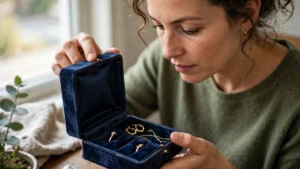
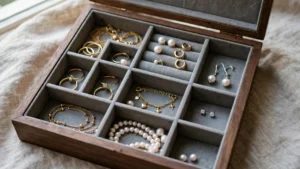
The default for a reason. A good box has a lift-out tray for rings and earrings, a deeper layer for bangles and watches, and necklace hooks or a long compartment so chains can lie flat and clasped. Look for soft velvet or suede lining, a lid that closes firmly, and compartments you can rearrange as the collection changes. It suits a small to medium collection and sits happily on a dressing table or in a drawer.
What We Like: Everything in one place, easy to see at a glance, and the closed lid keeps out dust and light.
What to Consider: Fixed compartments can waste space if your collection is mostly rings or mostly necklaces, and cheap boxes shed lining fibres.
2. The travel jewellery case
A small, structured case with a zip closure, a necklace panel with hooks, earring strips and a ring roll. The point is that every piece is held in place, so nothing can tangle or knock together in a suitcase. Choose one with a firm shell rather than a soft pouch if you check luggage, and pack it in hand luggage whenever you can.
What We Like: Keeps a holiday or weekend set tangle-free, and doubles as a tidy way to carry pieces to a jeweller.
What to Consider: Holds only a handful of pieces, and a soft case offers little protection against a heavy suitcase. Diamond studs travel best in a case with a dedicated earring strip and secure backs; see our roundup of the best diamond earrings of 2027 for styles with the most secure settings.
3. The jewellery armoire
A tall, narrow cabinet with a door that opens to reveal hooks, drawers and trays, often with a mirror on the front. It is the best option for a large collection, because it holds everything upright and visible, and it keeps pieces out of the light when the door is closed. It needs floor or wardrobe space, so measure carefully.
What We Like: Huge capacity, everything visible at once, and necklaces hang at full length without folding.
What to Consider: The most expensive option, and a cheap armoire with flimsy hooks will drop necklaces.
4. The wall-mounted organiser and mirror cabinet
A slim cabinet that hangs on a wall or over a door, opening to reveal rows of hooks and small shelves, sometimes with a full-length mirror on the front. It turns storage into display and keeps long necklaces hanging straight. It suits bedrooms and dressing areas where drawer space is short.
What We Like: Saves surface space, keeps necklaces tangle-free, and makes choosing an outfit faster.
What to Consider: Needs a solid wall fixing, and open-hook designs let dust settle on pieces.
5. Velvet tray inserts for drawers
Shallow, velvet-lined trays that sit inside a drawer, with compartments sized for rings, earrings, bracelets and watches. They are the most discreet option — the collection is invisible until the drawer opens — and they can be stacked or combined to fit almost any drawer. Measure the drawer first and leave room for the tray to lift out.
What We Like: Uses space you already have, keeps pieces flat and separated, and costs far less than a cabinet.
What to Consider: Necklaces longer than the drawer will still need folding, and trays slide around if they are not sized to the drawer.
6. The necklace stand and bust display
A T-bar stand or a velvet bust that holds necklaces at full length, with a base for bracelets and rings. It is the best way to stop chains tangling, and it makes a dressing table look considered rather than cluttered. It suits the three or four necklaces you wear most; the rest belong in a box.
What We Like: Chains stay straight and tangle-free, and you can see your most-worn pieces at a glance. For longer styles, our roundup of the best diamond necklaces of 2027 shows which lengths suit a stand and which are better stored flat.
What to Consider: Open display collects dust and exposes pieces to light, so rotate what is on show.
7. The ring box and ring holder
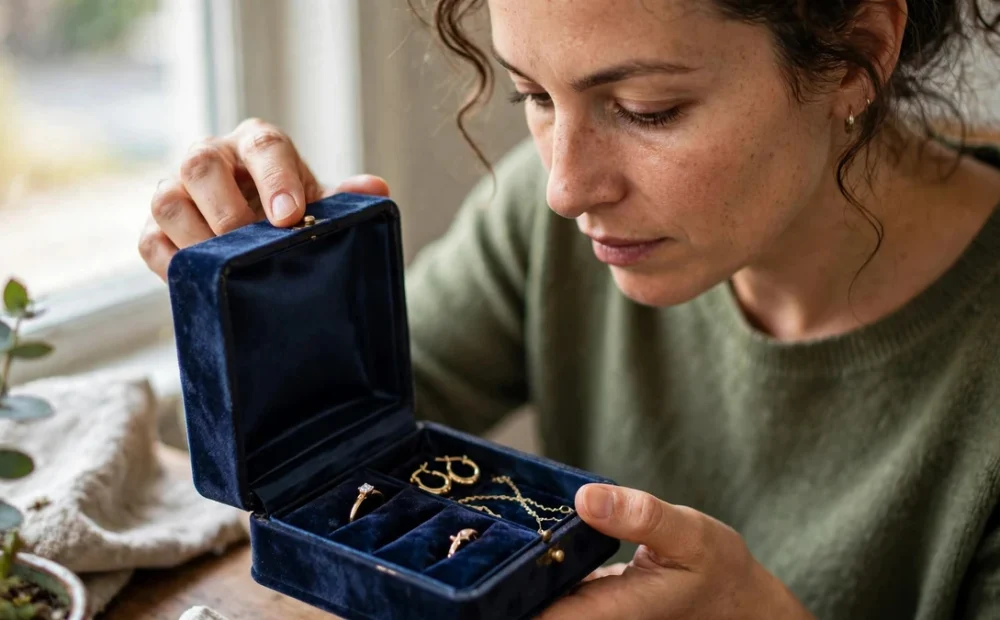
A small box with slots that hold rings upright, or a dish or cone holder for the one or two rings you wear daily. Rings are the pieces most likely to be put down and forgotten, so a dedicated spot by the bedside is worth more than any elaborate system. Keep the rest of the collection in a compartment box.
What We Like: Stops rings rolling away or being left on a windowsill, and slots keep bands from knocking together.
What to Consider: A single dish holds only a few rings, and an open holder by a sink risks a ring going down the drain.
8. Anti-tarnish pouches and cloth bags
Soft pouches, often made from treated cloth or lined with anti-tarnish fabric, that hold one piece each. They are the simplest storage there is, and the best for silver, because the pouch limits the air around the piece. They also travel well and are ideal for pieces you wear rarely. Use one piece per pouch, always.
What We Like: Cheap, portable, and genuinely effective against tarnish when the pouch is closed properly.
What to Consider: You cannot see what is inside without opening each pouch, so label them or use clear-fronted versions.
9. Stackable modular trays and acrylic drawers
Clear or velvet stackable trays and small acrylic drawer units that can be combined into a system that grows with the collection. They suit people whose collection changes often, because trays can be rearranged, added or removed. Clear acrylic makes finding a piece fast, but it shows dust, so keep the unit out of direct sun.
What We Like: Flexible, affordable, and easy to expand one tray at a time as the collection grows.
What to Consider: Acrylic scratches and can look cluttered if overfilled; velvet trays are better for delicate stones.
Background: why jewellery tarnishes, tangles and scratches
Silver tarnishes because it reacts with sulphur compounds in the air, and the reaction speeds up in humidity, heat and pollution. That is why silver kept in a bathroom dulls fastest, and why a sealed pouch in a cool drawer keeps it bright for months. Gold does not tarnish in the same way, but it is soft — 18-carat gold scratches more easily than most people expect — and gold-plated pieces wear through to the base metal if they are rubbed against other pieces.
Pearls are the most delicate of all: they are porous, they dislike perfume, hairspray and acids, and they should be stored flat in a soft pouch, never hung, because the silk thread stretches. Diamonds sit at the other end of the scale — they are hard enough to scratch almost anything, so they should never share a compartment with softer stones or with each other. Knowing which of your pieces is hard, soft, porous or reactive is the whole of jewellery storage, and it is what decides whether a box, a pouch or a stand is the right home for a given piece.
The caveats that matter
Most storage damage comes from a handful of avoidable mistakes rather than from the storage itself. The table below gathers the ones that cause the most harm, and the simple change that prevents each.
| Storage choice | What to watch for |
|---|---|
| Silver left in the open air | Tarnishes within weeks; use anti-tarnish pouches or a lined, lidded box. |
| Pearls in sealed plastic bags | Trapped moisture can damage the nacre; use a soft cloth pouch instead. |
| Jewellery kept in the bathroom | Humidity and perfume speed tarnish and wear; store in a bedroom. |
| Diamonds stored loose together | Stones scratch each other and softer gems; give each its own slot. |
| Gold-plated pieces in a crowded box | Plating rubs off against harder pieces; store separately in pouches. |
| Necklaces tossed in a pile | Chains knot and links weaken; hang them or lay them flat and clasped. |
| Velvet boxes in a damp room | Lining absorbs moisture and can mildew; add silica gel and air the room. |
| Travel case in checked luggage | Theft and rough handling; carry valuable pieces in hand luggage. |
Checklist: setting up jewellery storage that lasts
- Count and sort your collection before buying anything — storage should fit what you own, not the other way round.
- Give every piece its own compartment, pouch or hook, with diamonds separated from everything else.
- Keep jewellery in a cool, dry bedroom drawer or cupboard, never in a bathroom.
- Clasp necklaces before storing them, and hang long chains or lay them flat.
- Add a silica gel packet and, for silver, an anti-tarnish strip to each closed box or drawer.
- Check stored pieces every few months for loose stones, worn clasps and early tarnish.
Frequently asked questions
Can I store all my jewellery in one box?
Yes, if the box has enough separate compartments and you keep diamonds apart from softer pieces. One box works well for a small to medium collection. If pieces are touching, clashing or piled on top of each other, the box is too small and a second box or a set of trays is the safer choice.
How do I stop silver from tarnishing?
Limit its exposure to air and humidity. Store silver in anti-tarnish pouches or a lined, lidded box, add a silica gel packet, and wipe each piece with a soft cloth after wearing. Polishing removes tarnish that has already formed, but prevention is far less work than regular polishing.
Should necklaces be hung or laid flat?
Either works, as long as each necklace is clasped and not touching another. Long chains hang best on a stand or in an armoire, where they stay straight. Fine, delicate chains are often safer laid flat in a long compartment, where they cannot catch on a hook or swing against a hard surface.
Is it safe to store jewellery in the bathroom?
No. Steam, humidity and airborne perfume and hairspray all speed up tarnish and wear, and a bathroom is the worst room in the house for storage. A bedroom drawer or dressing-table box is better, even if it is less convenient when you are getting ready.
How should I store pearls?
Flat, in a soft cloth pouch, away from perfume and acids. Pearls are porous and easily scratched, so they should never share a compartment with diamonds or metal pieces, and they should never be hung, because the silk thread stretches over time. Have pearl strands restrung every few years if you wear them often.
Do I need anti-tarnish strips or silica gel?
They are not essential, but they are cheap and genuinely effective, especially for silver. An anti-tarnish strip absorbs the sulphur compounds that cause tarnishing, and silica gel absorbs moisture. Replace strips every six to twelve months and recharge or replace silica gel when it changes colour.
The bottom line
The best jewellery storage is the system you will actually use. A single well-chosen box with separate compartments, a travel case for trips, and a pouch or two for silver will protect most collections for years, and it costs far less than replacing a tangled chain or a tarnished set. Start by sorting what you own, give the diamonds and pearls their own homes, and keep everything cool, dry and out of the bathroom.
If the collection grows, add trays or an armoire rather than cramming more into the same box. Storage that is overfull is barely storage at all — pieces touch, clasps catch and the lid will not close, which defeats the point. A little space around each piece is the cheapest insurance a collection can have.
Note: This guide covers everyday storage at home. Valuable, heirloom or insured pieces should also be checked by a jeweller regularly, and high-value items may need a safe or a bank deposit box rather than a dressing-table box.
Meet Our Experts
This guide was prepared by the BrassSmile fashion and jewellery editors, who cover diamonds, fine jewellery and accessories throughout the year. Storage and care advice is checked against jewellers’ published guidance and the care notes issued by jewellery brands.
Why Trust BrassSmile
BrassSmile covers jewellery as part of its fashion and lifestyle reporting, with guides built from brand specifications, published care advice and editor experience. We do not accept payment for placement in our guides, and we update care advice when brands change their recommendations.