A cashmere blend cardigan is one of the easiest pieces to style badly and one of the easiest to style well. Worn well, it softens a sharp outfit, adds warmth without bulk, and makes a simple dress or pair of trousers look considered. Worn badly, it sags, pills, stretches at the shoulders, and makes everything underneath it look untidy. The difference is rarely the price. It is the blend, the fit, and a few small habits that keep the knit looking good.
The first thing to know is that the blend decides the styling, not just the feel. A cashmere-wool cardigan is warm and structured, so it works as a real layer in cold weather. A cashmere-silk cardigan is lighter and smoother, so it works best as a polished layer over a dress.
Below are nine steps for styling a cashmere blend cardigan in 2027, from reading the label before you buy to storing it properly when the season ends. Each step is practical, specific to this fibre and this garment, and written for real wardrobes, not for a photoshoot.
Key takeaways
- Check the cashmere percentage before you style anything: 20 to 30 percent cashmere is a real blend, while 5 percent or less is mostly a marketing word.
- Cashmere-wool cardigans suit cold days and structured outfits, while cashmere-silk cardigans suit mild days, evenings and dresses.
- Fold a cashmere blend cardigan, never hang it, because hangers stretch the shoulders out of shape within a season.
- Wash it rarely in cool water and remove pills with a cashmere comb, not a razor, which pulls at the fibres.
- No styling trick fixes a cardigan that is mostly acrylic, so the blend on the label is the first style decision, not the last.
What a cashmere blend cardigan actually is
A cashmere blend cardigan is a knitted cardigan made from cashmere mixed with at least one other fibre. The cashmere, combed from the soft undercoat of cashmere goats, gives the fabric its softness and its warmth without weight. The second fibre does the practical work: wool adds structure and warmth, silk adds smoothness and a gentle sheen, cotton adds breathability, and a small amount of nylon or elastane helps the cardigan hold its shape.
The blend exists because pure cashmere is expensive and fragile. It pills easily, stretches on a hanger, and needs careful washing. A poor blend, mostly acrylic with a little cashmere, solves neither problem and just borrows the name. That is why the first styling step is not about outfits at all: it is about reading the label.
The cardigan shape matters too. An open-front cardigan is a layering piece, worn over something else, and it does not need to button neatly. A buttoned cardigan is a top in its own right, and it needs to sit well when fastened, without gaping or pulling. Both shapes appear in the steps below, and the right one depends on how you plan to wear it.
How to choose the right cashmere blend cardigan
Look first at the fibre content on the label, not the product name. A blend that lists 30 percent cashmere and 70 percent wool is a real cashmere cardigan. A blend that lists 5 percent cashmere and 95 percent acrylic is an acrylic cardigan with a cashmere story. The order of the fibres tells you the proportions, and a brand that hides the percentages is worth questioning.
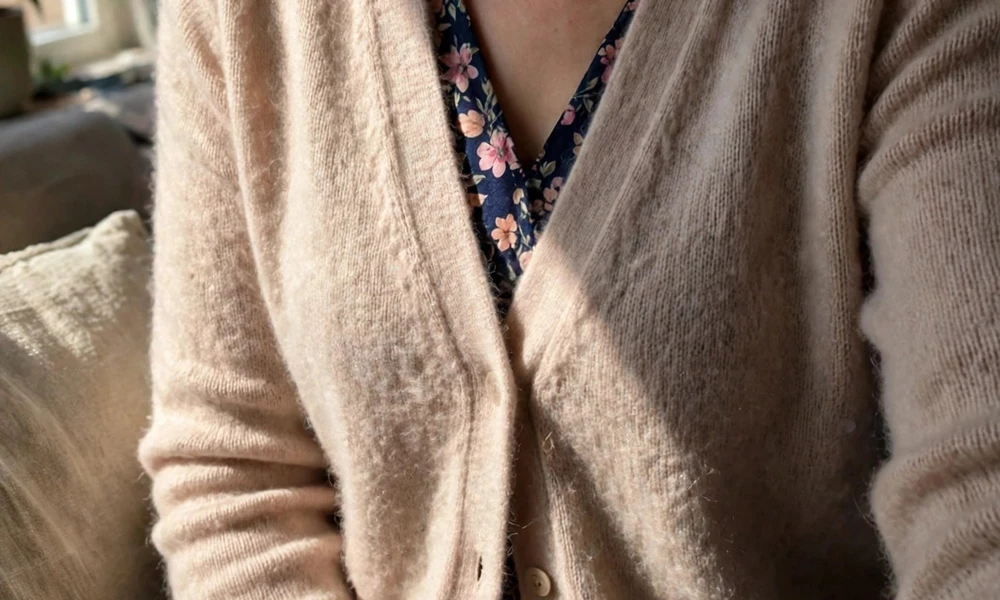
Look next at the weight and the knit. A fine, dense knit drapes smoothly and layers well under a coat, while a chunkier knit is warmer but bulkier and harder to wear under anything fitted. Hold the cardigan up to the light: a very loose, open knit will snag and lose its shape faster, while a tight, even knit usually lasts longer. Run your hand across it. A good cashmere blend feels soft without feeling slippery, and it should not shed fibres onto a dark sleeve.
Finally, think about the shape before you buy. If you mostly wear tailored trousers, a buttoned cardigan that sits at the waist works better. Our guide to styling a cashmere blend sweater covers the same fibre questions for pullovers, and much of it applies here, because the blend, not the shape, is what decides how a piece feels and lasts.
9 steps to style a cashmere blend cardigan
Feel the cashmere share before you trust the label
What to do: Read the fibre content before you try the cardigan on, and look for 20 to 30 percent cashmere with wool, silk or cotton as the rest. What to avoid: Do not buy on the word “cashmere” alone, and do not assume a high price means a high cashmere share. Best For: Anyone buying a first cashmere blend cardigan. Time Needed: Two minutes in the shop. Standout Tip: If the label only says “cashmere blend” with no percentages, ask the shop or move on.
Stretch a summer dress into autumn with a cashmere blend cardigan
What to do: Wear a mid-length cardigan open over a sleeveless summer dress, with tights and ankle boots when the weather turns. What to avoid: Do not pair a very long cardigan with a very short dress, because the proportions fight each other. Best For: Transitional weather and making a summer wardrobe last longer. Time Needed: Five minutes to put the outfit together. Standout Tip: A cardigan in a darker shade than the dress anchors the outfit and makes it look like autumn, not leftover summer.
Pick cashmere-wool for cold days and cashmere-silk for mild ones
What to do: Choose a cashmere-wool cardigan when the temperature drops, and a cashmere-silk cardigan when the day is mild or the evening is indoors. What to avoid: Do not wear a cashmere-silk cardigan as your only layer on a cold day, because it is too light to keep you warm. Best For: Building a small rotation of cardigans for different weather. Time Needed: A minute to check the label before you dress. Standout Tip: If you can only buy one, buy cashmere-wool: it covers more of the year.
Choose a V-neck when you want a longer, slimmer line
What to do: Pick a V-neck cardigan, worn open or buttoned low, when you want the outfit to look longer and less bulky. What to avoid: Do not wear a high crew-neck cardigan buttoned to the top with a wide skirt, because the outfit can look top-heavy. Best For: Shorter frames and outfits with wide-leg trousers or full skirts. Time Needed: A minute to try both necklines on. Standout Tip: A V-neck also gives you somewhere to wear a simple necklace, which a crew neck does not.
Let it soften a sharp tailored outfit
What to do: Wear a soft, open-front cardigan over a tailored shirt and trousers, letting the knit relax the sharp lines of the tailoring. What to avoid: Do not wear a stiff, structured cardigan over tailored clothes, because two sharp shapes compete instead of balancing each other. Best For: Office days when a blazer feels too formal. Time Needed: Five minutes to put the outfit together. Standout Tip: A cardigan in a warm neutral, like camel or soft grey, softens a black or navy tailored outfit without clashing.
Wear it open over a printed dress to calm the pattern down
What to do: Layer a plain, open-front cardigan over a bold printed dress, so the knit covers the shoulders and breaks up the pattern. What to avoid: Do not wear a patterned cardigan over a printed dress, because two patterns in one outfit rarely work. Best For: Bold prints that feel like too much on their own. Time Needed: Two minutes to layer it on. Standout Tip: Pick the cardigan in a colour taken from the print, so the two pieces look connected rather than random.
Keep pills in check with a cashmere comb, not a razor
What to do: Run a cashmere comb gently over the cardigan every week or two, working in one direction, and collect the pills as you go. What to avoid: Do not use a razor, a sticky roller or a fabric shaver on a cashmere blend, because they pull at the fibres and can thin the knit. Best For: Keeping a favourite cardigan looking new for a second season. Time Needed: Five minutes, once a week. Standout Tip: Pills form most where fabric rubs, under the arms and where a bag strap sits, so check those spots first.
Wash it less often than you think
What to do: Air the cardigan out after wearing it, spot-clean small marks, and wash it only when it genuinely needs it, in cool water with a gentle soap. What to avoid: Do not wash a cashmere blend cardigan after every wear, and never put it in a tumble dryer or wash it hot. Best For: Making a good cardigan last for years instead of one season. Time Needed: A few minutes to air it out after each wear. Standout Tip: Hang it on a chair overnight after wearing it: most of the smell and creasing disappears by morning.
Store it folded, because hangers stretch cashmere shoulders
What to do: Fold the cardigan loosely and store it on a shelf or in a drawer, with the buttons done up so the fronts stay even. What to avoid: Do not hang a cashmere blend cardigan on a hanger, even a padded one, because the weight of the knit pulls the shoulders out of shape. Best For: End-of-season storage and everyday drawer storage. Time Needed: A minute to fold it properly. Standout Tip: Put a cedar block or a lavender sachet in the drawer: it keeps moths away without the smell of mothballs.
Cashmere-wool or cashmere-silk: which blend to choose
Cashmere-wool is the most common blend, and the most practical. Wool gives the cardigan structure, warmth and resilience, while cashmere softens it and takes away the scratchiness that some people feel from pure wool. A 70 percent wool and 30 percent cashmere cardigan is warm enough for winter, holds its shape, and costs far less than pure cashmere.
Cashmere-silk is the smoothest blend, and the lightest. Silk adds a gentle sheen and a fluid drape, and it makes the cardigan feel cool against the skin, which suits mild weather and evenings. It is less warm than cashmere-wool, and it needs more careful washing, but it looks more polished, especially over a dress. Our guide to styling a wool blend cardigan is a useful comparison, because it shows how a cardigan without any cashmere behaves, and the difference is mostly in the softness, not the shape.
Cashmere-cotton is the easiest blend to live with in spring and early autumn. Cotton breathes, washes more easily, and keeps the cardigan light, while the cashmere softens the cotton and stops it feeling stiff. A small amount of nylon or elastane, usually 5 percent or less, is often added to any of these blends to help the cardigan keep its shape, and that is normal, not a flaw.
The caveats that matter
Cashmere blend cardigans are not maintenance-free, and the most common disappointment is pilling. Almost every cashmere blend pills a little in the first weeks, especially under the arms and where a bag strap rubs. That is normal, and it usually slows down after the loose surface fibres wear away.
| Detail | What is known |
|---|---|
| Meaningful cashmere content | 20 to 30 percent cashmere is a real amount; 5 percent or less adds almost nothing |
| Warmest blend | Cashmere-wool, best for cold weather and everyday winter wear |
| Smoothest blend | Cashmere-silk, best for evenings and mild weather |
| Easiest blend for spring | Cashmere-cotton, light, breathable and easier to wash |
| Pilling | Some pilling in the first weeks is normal; remove it with a cashmere comb |
| Storage | Fold, never hang; hangers stretch the shoulders out of shape |
| Washing | Wash rarely, in cool water, reshape while damp and dry flat |
| What it does not do | A blend does not feel like pure cashmere, and a cheap blend is usually mostly acrylic |
If your skin is very sensitive, check the second fibre before you buy. Some people react to wool even in a blend, and a cashmere-silk or cashmere-cotton cardigan is usually more comfortable for them than a cashmere-wool one.
Checklist: styling a cashmere blend cardigan honestly
Use these checks before you buy, and again after a month of wear.
- Read the label: look for 20 to 30 percent cashmere, and check what the rest of the blend is.
- Match the blend to the weather: cashmere-wool for cold days, cashmere-silk for mild days and evenings.
- Choose the neckline for the outfit: a V-neck lengthens the line, a crew neck is warmer and simpler.
- Keep the rest of the outfit calm: one soft knit is enough, so let the cardigan be the soft layer.
- Care for it between wears: air it out, comb off pills, and wash it only when it needs it.
- Store it folded: never hang it, because the shoulders will stretch out of shape.
Frequently asked questions
Can I wear a cashmere blend cardigan to work?
Yes, if the shape is right. A buttoned cardigan with a neat collar, worn over tailored trousers or a skirt, looks polished enough for most offices. An open-front, oversized cardigan is better for casual days. A smooth, fine knit in a neutral colour is the safest choice for work.
Is it better to wear a cashmere blend cardigan open or buttoned?
It depends on the cardigan. An open-front cardigan is designed to be worn open, over something else, and it usually looks best that way. A buttoned cardigan is designed to be worn as a top, and it usually looks best fastened, at least at the waist.
Does a cashmere blend cardigan work with dresses?
Yes, and it is one of the best pairings. A mid-length cardigan worn open over a dress adds warmth without hiding the dress, and it can stretch a summer dress into autumn.
What is the safest way to wash a cashmere blend cardigan?
Wash it rarely, in cool water, with a gentle soap made for wool or delicates. Soak it briefly, press the water out gently without wringing, reshape it while it is damp, and dry it flat on a towel away from direct heat. Do not put it in a tumble dryer, and do not hang it up to dry, because the weight of the wet knit will stretch it out of shape.
Cashmere-wool or cashmere-silk: which blend should I choose?
Choose cashmere-wool if you want warmth, structure and everyday wear in cold weather. Choose cashmere-silk if you want smoothness, a gentle sheen and a lighter layer for mild weather and evenings. If you already have a warm cardigan, cashmere-silk is the more elegant second one.
Will a cashmere blend cardigan pill after a few wears?
Most will, at least a little, in the first few weeks. Pilling happens where fabric rubs against itself or against a bag strap, and it is a normal part of wearing a soft knit. It usually slows down once the loose surface fibres wear away. A cashmere comb removes pills gently, and washing the cardigan less often helps too, because washing loosens more fibres.
The bottom line
The best way to style a cashmere blend cardigan in 2027 is to start with the label, not the outfit. A cardigan with a real cashmere share, 20 to 30 percent, in a blend that suits your weather, will drape softly, hold its shape, and respond to styling. A cardigan that is mostly acrylic will not, whatever you pair it with. Our guide to cashmere cardigans for women is a useful comparison if you want to see how pure cashmere cardigans compare, because the difference is mostly in the price and the care, not the look.
Buy one cardigan, wear it for a month, and judge it on how it looks after ten wears, not on how it looks in the shop. If it still drapes well, pills only a little, and keeps its shape when folded, you have found a blend worth keeping. That is the honest test, and it is the one that matters.