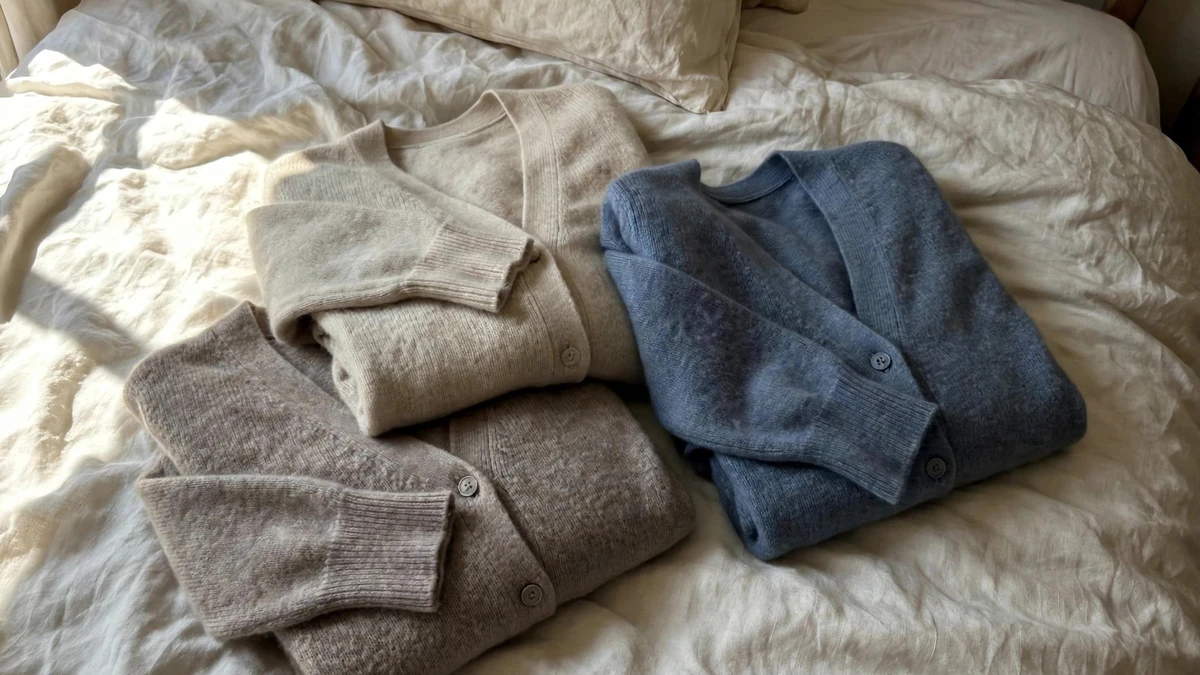

A cashmere blend cardigan is the quiet luxury of a winter wardrobe. It has the softness and warmth people buy cashmere for, without the price of a pure cashmere piece, and without the fuss that comes with it. The trouble is that “cashmere blend” can mean almost anything. One cardigan might be 30 percent cashmere and 70 percent merino wool, soft, warm and fairly priced. Another might be 5 percent cashmere and 95 percent acrylic, trading on the word while delivering almost none of the feel.
That gap is why the label matters more here than with most knitwear. The percentage of cashmere, the fibre it is blended with, and the weight of the knit decide whether a cardigan feels like a treat every time you reach for it, or like an ordinary acrylic jumper with a luxury name stitched in.
Below are nine cashmere blend cardigans worth considering in 2027, from open-front everyday layers to smarter buttoned styles that work for the office. Each one is described by what it does well, what to watch for, and who it suits best, so you can choose by the blend and the fit, not just by the word on the label.
Key takeaways
- A cashmere blend cardigan mixes cashmere with wool, silk, cotton or a synthetic fibre, which makes it softer than wool alone and usually cheaper and hardier than pure cashmere.
- Check the cashmere percentage on the label: 20 to 30 percent cashmere is a meaningful amount, while 5 percent or less adds almost nothing to the feel.
- Cashmere-wool blends are the warmest choice, cashmere-silk blends are the smoothest and lightest, and cashmere-cotton blends are the easiest to wear in spring.
- Fold a cashmere blend cardigan, never hang it, and wash it rarely in cool water, because heat and hanging are what stretch it out of shape.
- No blend is pill-proof, and a very cheap cardigan that calls itself cashmere is usually mostly acrylic, so price and fibre content are both worth checking.
What a cashmere blend cardigan actually is
A cashmere blend cardigan is a knitted cardigan made from a mix of cashmere and at least one other fibre. The cashmere, combed from the soft undercoat of cashmere goats, is what gives the fabric its softness and its ability to feel warm without being heavy. The second fibre does the practical work: wool adds structure and warmth, silk adds smoothness and a gentle sheen, cotton adds breathability, and a small amount of nylon or elastane can help the cardigan hold its shape and survive regular wear.
The blend exists because pure cashmere has two problems. The first is price: a good pure cashmere cardigan is expensive, because the fibre is scarce and the combing is slow. The second is fragility: pure cashmere pills easily, stretches on a hanger, and needs careful washing. Blending solves both, up to a point. A poorly made blend, mostly acrylic with a whisper of cashmere, solves neither problem and just borrows the name.
The cardigan shape matters too. An open-front cardigan is a layering piece, worn over a camisole, a T-shirt or a dress, and it does not need to button neatly. A buttoned cardigan is a top in its own right, and it needs to sit well when fastened, without gaping at the bust or pulling at the waist. Both shapes appear in this guide, and the right one depends on how you plan to wear it: open fronts for layering at home and in mild weather, buttoned styles for the office and for evenings when the cardigan is the outfit.
How we chose these cardigans and what to look for
Look first at the fibre content on the label, not the product name. A blend that lists 30 percent cashmere, 70 percent wool is a real cashmere cardigan. A blend that lists 5 percent cashmere and 95 percent acrylic is an acrylic cardigan with a cashmere story. The order of the fibres tells you the proportions, and a brand that hides the percentages is worth questioning.

Look next at the weight and the knit. A fine, dense knit drapes smoothly and layers well under a coat, while a chunkier knit is warmer but bulkier and harder to wear under anything fitted. Hold the cardigan up to the light: a very loose, open knit will snag and lose its shape faster, while a tight, even knit usually lasts longer. Run your hand across it. A good cashmere blend feels soft without feeling slippery, and it should not shed fibres onto a dark sleeve after a minute of handling.
Finally, look at the details that decide whether a cardigan survives the season. Check the buttons: are they sewn on firmly, with a spare button included? Check the seams: are they neat and flat, or loose and puckered? Our guide to cashmere blend sweaters for women covers the same fibre questions for pullovers, and much of it applies here, because the blend, not the shape, is what decides how a piece feels and lasts.
The 9 best cashmere blend cardigans for women of 2027
COS Cashmere Blend Cardigan
What we like: A clean, open-front cardigan in a fine, even knit, with a soft hand feel and a restrained colour range that works with almost everything in a wardrobe. What to consider: The open front means it is a layering piece rather than a standalone top, and it comes in fewer colours than some rivals. Best For: Everyday layering over a camisole or T-shirt. Material: Cashmere and wool blend, approximately 30% cashmere. Price Range: Around $120 to $150. Standout Feature: The fine, dense knit that drapes smoothly under a coat.
Arket Cashmere Blend Cardigan
What we like: A relaxed, slightly oversized cardigan with dropped shoulders and a soft, brushed finish, in muted colours that suit a minimal wardrobe. What to consider: The relaxed fit can look shapeless on a small frame, so check the size guide carefully. Best For: Relaxed weekends and working from home. Material: Cashmere and wool blend, approximately 20% cashmere. Price Range: Around $110 to $140. Standout Feature: The brushed finish that feels softer after a few wears.
Massimo Dutti Cashmere Blend Cardigan
What we like: A smarter, buttoned cardigan with a neat collar and a tailored cut, in a smooth knit that looks polished enough for the office. What to consider: The tailored fit runs slim, so it can pull at the bust if you size down. Best For: Office wear and smarter daytime looks. Material: Cashmere and wool blend, approximately 25% cashmere. Price Range: Around $130 to $170. Standout Feature: The neat collar and buttoned front that work as a top on their own.
& Other Stories Cashmere Blend Cardigan
What we like: A cropped cardigan with a soft, slightly fluffy texture and a gentle V-neck, in colours that range from cream to deep green. What to consider: The cropped length suits high-waisted trousers and skirts best, and it can feel short with low-rise bottoms. Best For: High-waisted skirts and trousers, and evening layering. Material: Cashmere and wool blend, approximately 20% cashmere. Price Range: Around $100 to $130. Standout Feature: The cropped length that pairs well with a long skirt or wide-leg trousers.
Mango Cashmere Blend Cardigan
What we like: An affordable, long-line cardigan with pockets and a relaxed drape, in a mid-weight knit that works from autumn into spring. What to consider: The long length can overwhelm a petite frame, and the pockets can sag if they are overfilled. Best For: Long, relaxed layering over dresses and jeans. Material: Cashmere and wool blend, approximately 15% cashmere. Price Range: Around $80 to $110. Standout Feature: The long-line length and pockets, which make it a practical everyday layer.
J.Crew Cashmere Blend Cardigan
What we like: A classic crew-neck cardigan with a neat button front and ribbed trims, in a smooth, even knit that holds its shape well. What to consider: The classic cut is safe rather than fashionable, and the colour range is conservative. Best For: Classic, preppy styling and smart-casual days. Material: Cashmere and wool blend, approximately 25% cashmere. Price Range: Around $140 to $180. Standout Feature: The ribbed trims that keep the cuffs and hem from stretching out.
Banana Republic Cashmere Blend Cardigan
What we like: A soft, mid-weight cardigan with a V-neck and a slightly relaxed fit, in warm neutrals that layer easily over work clothes. What to consider: The V-neck is fairly deep, so it usually needs a camisole underneath for the office. Best For: Workday layering over a camisole and tailored trousers. Material: Cashmere and wool blend, approximately 20% cashmere. Price Range: Around $130 to $160. Standout Feature: The warm neutral palette that works with most work wardrobes.
Quince Cashmere Blend Cardigan
What we like: A straightforward, affordable cardigan with a good cashmere percentage for the price, in a fine knit with a clean, unfussy shape. What to consider: The shape is simple, with little detail, and the colour range is mostly neutrals. Best For: Anyone buying a first cashmere blend cardigan on a budget. Material: Cashmere and wool blend, approximately 30% cashmere. Price Range: Around $70 to $100. Standout Feature: The high cashmere content for the price, which is unusual at this level.
LilySilk Cashmere Blend Cardigan
What we like: A cashmere-silk blend cardigan with a smooth, slightly lustrous surface and a light, fluid drape, in a fine knit that feels cool and elegant. What to consider: The silk makes it less warm than a cashmere-wool blend, so it is not the best choice for the coldest days. Best For: Evenings, mild weather, and layering over dresses. Material: Cashmere and silk blend, approximately 30% cashmere. Price Range: Around $150 to $200. Standout Feature: The smooth, lightly lustrous surface that looks more polished than a wool blend.
Cashmere-wool, cashmere-silk and cashmere-cotton, explained
Cashmere-wool is the most common blend, and the most practical. Wool gives the cardigan structure, warmth and resilience, while cashmere softens it and takes away the scratchiness that some people feel from pure wool. A 70 percent wool and 30 percent cashmere cardigan is warm enough for winter, holds its shape, and costs far less than pure cashmere. It is the blend to choose if you want one cardigan for cold weather and everyday wear.
Cashmere-silk is the smoothest blend, and the lightest. Silk adds a gentle sheen and a fluid drape, and it makes the cardigan feel cool against the skin, which suits mild weather and evenings. Our guide to silk blend cardigans for women covers the silk side of this story in more detail, including how silk blends behave when layered.
Cashmere-cotton is the easiest blend to live with in spring and early autumn. Cotton breathes, washes more easily, and keeps the cardigan light, while the cashmere softens the cotton and stops it feeling stiff. It is not as warm as cashmere-wool, and it can lose its shape if it is washed too hot, but for the months between seasons it is the most comfortable choice. A small amount of nylon or elastane, usually 5 percent or less, is often added to any of these blends to help the cardigan keep its shape, and that is normal, not a flaw.
The caveats that matter
Cashmere blend cardigans are not maintenance-free, and the most common disappointment is pilling. Almost every cashmere blend pills a little in the first weeks, especially under the arms and where a bag strap rubs. That is normal, and it usually slows down after the loose surface fibres wear away.
| Detail | What is known |
|---|---|
| Meaningful cashmere content | 20 to 30 percent cashmere is a real amount; 5 percent or less adds almost nothing |
| Warmest blend | Cashmere-wool, best for cold weather and everyday winter wear |
| Smoothest blend | Cashmere-silk, best for evenings and mild weather |
| Easiest blend for spring | Cashmere-cotton, light, breathable and easier to wash |
| Pilling | Some pilling in the first weeks is normal; remove it with a cashmere comb |
| Storage | Fold, never hang; hangers stretch the shoulders out of shape |
| Washing | Cool water, gentle soap, reshape while damp and dry flat |
| What it does not do | A blend does not feel like pure cashmere, and a cheap blend is usually mostly acrylic |
If your skin is very sensitive, check the second fibre before you buy. Some people react to wool even in a blend, and a cashmere-silk or cashmere-cotton cardigan is usually more comfortable for them than a cashmere-wool one.
Checklist: buying a cashmere blend cardigan honestly
Use these checks before you buy, and again after a month of wear.
- Read the label: look for 20 to 30 percent cashmere, and check what the rest of the blend is.
- Feel the knit: it should be soft without feeling slippery, and it should not shed fibres onto a dark sleeve.
- Check the weight: a fine, dense knit layers well, while a chunky knit is warmer but harder to wear under a coat.
- Check the buttons and seams: buttons should be sewn on firmly, with a spare included, and seams should be neat and flat.
- Think about the shape: open fronts are for layering, buttoned styles are for wearing as a top.
- Plan the care: fold it, wash it rarely in cool water, and keep a cashmere comb for the first weeks of pilling.
Frequently asked questions
What makes a cashmere blend cardigan different from a pure cashmere one?
A pure cashmere cardigan is made entirely from cashmere, which makes it very soft and very expensive, but also more fragile and more likely to pill and stretch. A blend mixes cashmere with wool, silk or cotton, which makes it cheaper, hardier and easier to care for, while keeping much of the softness.
How much cashmere should the blend contain?
Around 20 to 30 percent is a meaningful amount: enough to feel soft and warm without the price of pure cashmere. The higher the cashmere share, the softer the cardigan, but also the more it will pill and the more careful the washing needs to be.
Are cashmere blend cardigans warm?
Yes, especially cashmere-wool blends, which are warm enough for most winter days. Cashmere is warm for its weight, and wool adds structure and insulation, so a mid-weight blend cardigan under a coat is a practical cold-weather outfit. Cashmere-silk blends are lighter and less warm, so they suit mild weather and evenings better than the coldest days.
Do cashmere blend cardigans pill?
Most do, at least a little, in the first few weeks. Pilling happens where fabric rubs against itself or against a bag strap, and it is a normal part of wearing a soft knit. It usually slows down once the loose surface fibres wear away. A cashmere comb removes pills gently, and washing the cardigan less often helps too, because washing loosens more fibres.
How do I wash a cashmere blend cardigan?
Wash it rarely, in cool water, with a gentle soap made for wool or delicates. Soak it briefly, press the water out gently without wringing, reshape it while it is damp, and dry it flat on a towel away from direct heat. Do not put it in a tumble dryer, and do not hang it up to dry, because the weight of the wet knit will stretch it out of shape.
Are cashmere blend cardigans worth the price?
Usually yes, if the cashmere content is real. The value disappears when the cashmere content is tiny: a 5 percent cashmere cardigan is an acrylic cardigan with a luxury label, and it is not worth paying extra for.
The bottom line
The best cashmere blend cardigan in 2027 is not the one with the most cashmere, or the highest price. It is the one whose blend suits your weather, whose shape suits how you actually wear a cardigan, and whose label you have read properly. For cold days and everyday wear, a cashmere-wool blend with 20 to 30 percent cashmere is the practical choice. For evenings and mild weather, a cashmere-silk blend is smoother and more polished. Our guide to wool blend cardigans for women is a useful comparison if you want to see how a blend without cashmere feels and wears, because the difference is mostly in the softness, not the shape.
Buy one cardigan, wear it for a month, and judge it on how it feels after ten wears, not on how it feels in the shop. If it still looks good, pills only a little, and keeps its shape when folded, you have found a blend worth keeping. That is the honest test, and it is the one that matters.