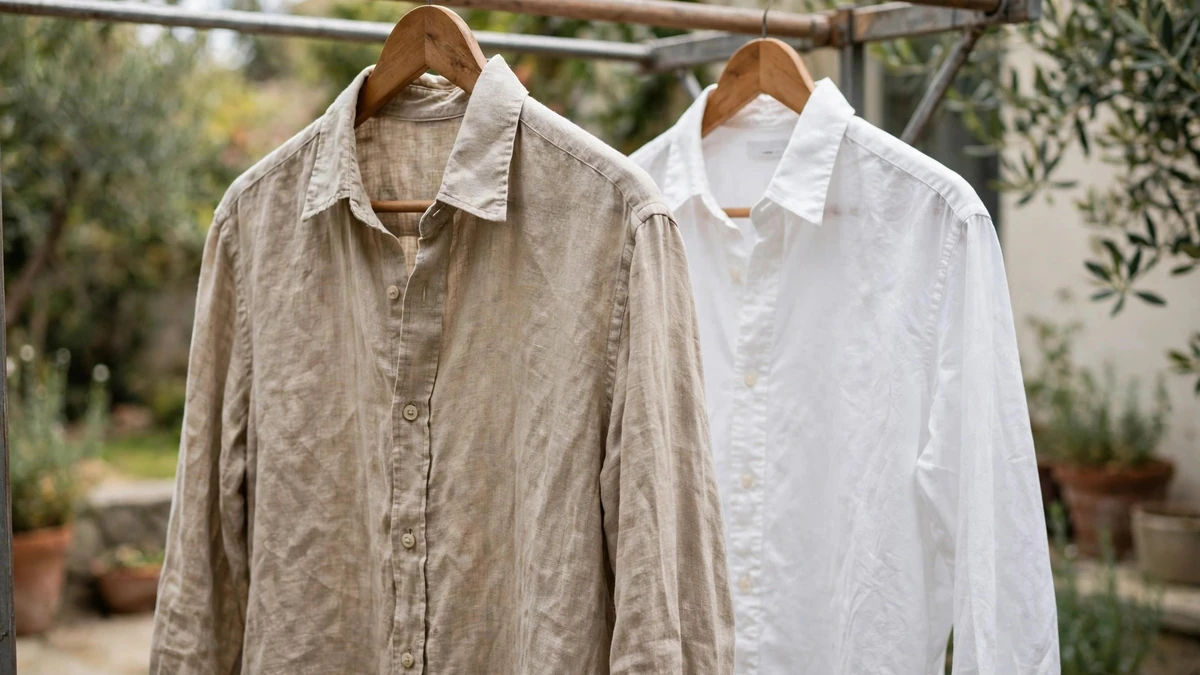
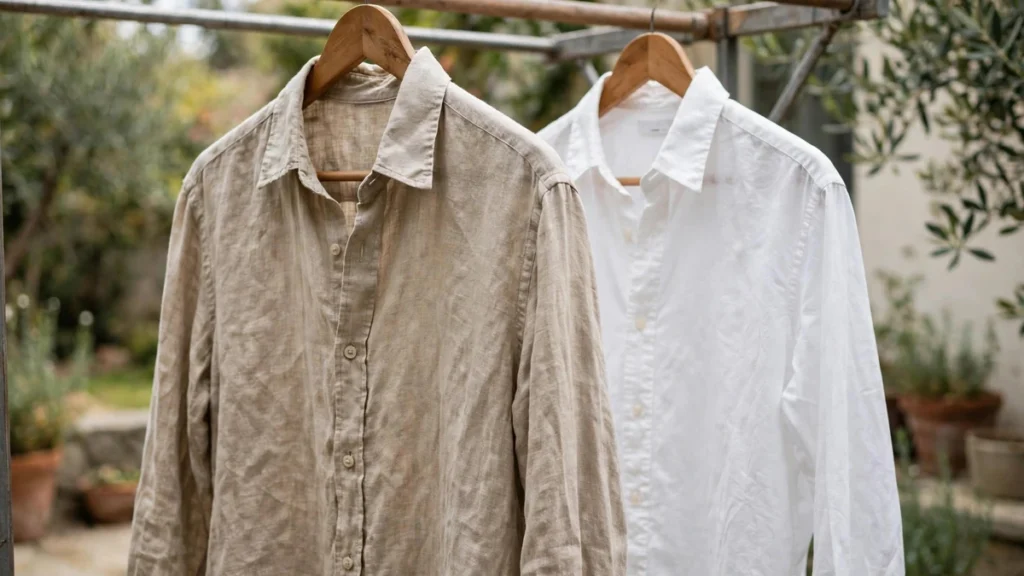
Linen and cotton shirts look almost identical on a hanger. Both are natural fibres, both come in white, blue and stripes, and both are sold as the classic shirt for warm weather. Wear them for a day, though, and the difference is obvious. One keeps you cool when the air is thick and humid, but creases the moment you sit down. The other holds its shape, irons easily, and stays neat through a long working day, but it can feel heavy and damp when the heat rises.
Linen is made from the flax plant. Its fibres are long, strong, and slightly irregular, which gives linen its characteristic texture and its famous slub. It breathes exceptionally well, it absorbs moisture without feeling wet, and it dries quickly. Cotton is made from the cotton plant, and its fibres are shorter and softer. It is smoother to the touch, easier to weave into a crisp, even cloth, and far more forgiving when it comes to ironing and care.
Below are nine comparisons that matter in 2027, from breathability and comfort to cost, care, and how long each shirt honestly lasts. Each one is judged on its own terms, so you can see where linen wins, where cotton wins, and where the answer depends on how you live and work.
Key takeaways
- Linen is the cooler, more breathable shirt in heat and humidity. Cotton is the neater, more versatile shirt for work and everyday wear.
- Linen creases fast and visibly, which is part of its relaxed character. Cotton holds a press, irons easily, and stays smart through a long day.
- Linen is stronger when wet and often lasts longer, but it costs more. Cotton is cheaper, softer, and easier to care for.
- Blends of the two fibres are often the best compromise, giving you linen’s breathability with cotton’s structure.
- Neither shirt is right for every occasion, and neither is maintenance-free, so fabric quality and fit matter more than the fibre on the label.
What linen and cotton shirts actually are
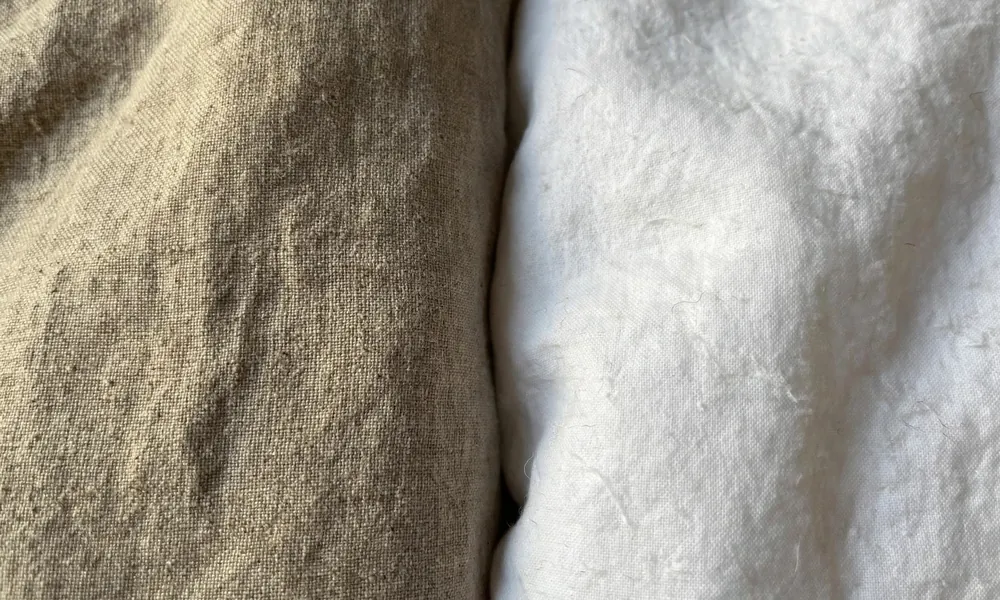
A linen shirt is woven from flax fibres, which are longer and stiffer than cotton fibres. That stiffness is what gives linen its crisp, airy drape and its slightly uneven surface. A good linen shirt feels cool and dry against the skin, even in humidity, because the fibres wick moisture away and let air move through the weave. Linen is also naturally strong, and it gets softer with every wash, which is why a well-loved linen shirt feels better after a year than it did when it was new.
A cotton shirt is woven from cotton fibres, which are shorter, softer, and more uniform. That uniformity is what makes cotton so smooth and easy to finish. A good cotton shirt, especially one made from long-staple cotton, feels soft from the first wear, holds a crease where you want one, and takes a dye evenly, which is why cotton comes in such a wide range of colours and prints.
The two fibres also come from very different plants and processes. Flax grows with less water and fewer pesticides than cotton, and almost the whole plant can be used, which is part of why linen has a reputation as the more sustainable fibre. Cotton, especially conventional cotton, uses more water and more chemical inputs, though organic cotton closes much of that gap. Both fibres are biodegradable, and both can be produced well or badly, so the farming and the weaving matter as much as the fibre itself.
How we chose these comparisons and what to look for
Look first at the weave and the weight. For linen, a plain weave in a mid-weight cloth is the most versatile, holding its shape without feeling stiff. Very lightweight linen can be sheer and fragile, while very heavy linen can feel rough. For cotton, look at the weave too. Poplin is smooth and crisp, oxford is textured and casual, and twill has a diagonal pattern and a slightly heavier hand. A shirt’s weight, usually given in grams per square metre, tells you how it will feel. Around 120 to 150 grams is a good all-round weight for a shirt you will wear through the year.
Look next at the construction. Check the stitching at the collar and cuffs, where a shirt wears first, and check that the buttons are sewn on securely with a shank, so they do not pull through the fabric. On a linen shirt, check that the seams are flat and neat, because linen frays more easily than cotton if the finishing is poor. On a cotton shirt, check that the collar stays sit up and does not flop, which is a sign of a cheap interlining.
Finally, look at the fit with the clothes you already own. A linen shirt is usually worn a little looser, with the sleeves rolled, and it suits a relaxed, unstructured look. A cotton shirt can be fitted or relaxed, and it works tucked into tailored trousers or worn open over a top. Our guide to the best natural fibres in clothing is a useful companion here, because it explains how linen, cotton, wool and silk behave differently, and why the fibre matters as much as the cut.
The 9 comparisons that matter in 2027
1. Breathability and heat
What we like: Linen is the clear winner in heat. Its fibres let air pass through freely, it wicks moisture away from the skin, and it feels cool even in humid weather. Cotton breathes well too, but it holds moisture longer and can feel clammy when you sweat.
Heat is where linen earns its reputation. On a humid day, a linen shirt feels dry and airy while a cotton shirt can stick to your back. That is not a small difference if you live somewhere hot, or if you spend summer outdoors. In a cool office, though, the advantage disappears, and cotton’s smoother, warmer feel is often the more comfortable choice.
2. Creasing and wrinkles
What we like: Cotton holds a press and stays neat for hours, which is why it is the default for work. Linen creases within minutes of sitting down, but those creases are part of its relaxed character, and a linen shirt is not supposed to look pressed.
Creasing is the trade-off that decides most purchases. Cotton irons easily and stays looking smart, which is why it dominates the office. Linen creases the moment you move, and no amount of ironing will keep it smooth for long. The honest question is whether you mind. If creases bother you, buy cotton. If you like the relaxed look, linen’s creases are part of the charm.
3. Softness and comfort
What we like: Cotton is soft from the first wear, gentle on sensitive skin, and comfortable against the body all day. Linen starts a little stiff and textured, then softens beautifully with washing until it feels almost like a second skin.
Softness is partly a matter of time. Cotton gives you comfort immediately, and it stays comfortable. Linen asks for a few washes, and in return it gives you a shirt that feels better every year. If you want a shirt that feels perfect on day one, buy cotton. If you are willing to wait, linen will catch up and, for many people, overtake it.
4. Durability and lifespan
What we like: Linen is one of the strongest natural fibres, and it is actually stronger when wet, which is unusual. A good linen shirt can last many years and gets better with age. A good cotton shirt is durable too, but it thins and fades faster, especially at the collar and cuffs.
Lifespan depends on quality and care. A well-made linen shirt, washed gently, can outlast several cotton shirts. But a cheap linen shirt with poor seams will fray and fail faster than a well-made cotton one. As with most things in fashion, the quality of the making matters as much as the material.
5. Care and washing
What we like: Cotton is easy. Machine wash it, dry it, iron it, and it looks good. Linen is also machine washable, and it dries faster than cotton, which is a real advantage when you are travelling or washing by hand.
Care is simple for both, but the details differ. Wash linen cold or warm, never hot, and let it air dry. Wash cotton warm, and iron it while it is still slightly damp for the best result. If you know you will throw a shirt in a hot wash and tumble-dry it, cotton will forgive you more often than linen will.
6. Versatility and styling
What we like: Cotton works everywhere, from the office to the beach, and it comes in every colour, print, and finish. Linen works best in a relaxed, warm-weather wardrobe, and it brings a texture and a lightness that cotton cannot match.
Versatility depends on your life. If you work in an office, cotton will get far more wear. If you spend summers outdoors or live somewhere warm, linen will earn its place quickly. Our guide to the best silk blouses is worth a look if you want a third option, because silk brings a different kind of lightness again, though it needs more careful handling than either linen or cotton.
7. Price and value
What we like: Cotton is cheap and widely available, and a good cotton shirt is one of the best value items in any wardrobe. Linen costs more, but it lasts longer and improves with age, so the cost per wear can be similar or better.
Value is about wear, not price. A £40 cotton shirt worn twice a week for two years costs almost nothing per wear. A £100 linen shirt worn all summer for five years costs even less. Buy the shirt you will actually wear, and the maths will look after itself.
8. Sustainability and sourcing
What we like: Flax grows with less water and fewer pesticides than cotton, and almost the whole plant is used, which gives linen a strong sustainability story. Organic cotton closes much of the gap, and recycled cotton is increasingly available.
Neither fibre is perfect, and the most sustainable shirt is usually the one you already own, or the one you buy second-hand and keep for years. If you are buying new, look for European flax linen, or for organic or recycled cotton, and be wary of green claims that come without certification or detail.
9. Fit and body shape
What we like: Cotton is easy to fit. It has a little give, it holds its shape, and it works in fitted, relaxed, and oversized cuts. Linen drapes beautifully in a relaxed fit, and its airy texture flatters a looser silhouette.
Try both on in the fit you actually wear. A linen shirt that is too tight will pull and crease in the wrong places. A cotton shirt that is too loose will look shapeless. Fit is the comparison that matters most in the shop, and it is the one no guide can settle for you.
Which shirt is right for you
If you want one shirt for everyday life, buy cotton. It is cheaper, easier to care for, comfortable from day one, and it works in the office, at home, and on holiday. Choose a good poplin or oxford in a colour you wear often, and it will work for years.
If you want a shirt for heat, for holidays, and for a relaxed, elegant summer wardrobe, buy linen. Choose a mid-weight cloth, a relaxed fit, and a colour that suits you, and accept the creases as part of the look. And if you are building a shirt wardrobe rather than buying a single shirt, our comparison of formal shirts versus casual shirts will help you decide how many of each you actually need.
The caveats that matter
Both shirts have limits that are easy to overlook in the shop. Linen creases, and if that bothers you, it will bother you every day. Cotton holds moisture in heat, and if you sweat easily, it will show. Cheap versions of both fail quickly, and the failure is visible. Thin, limp cotton and rough, scratchy linen are both worse than no new shirt at all, because they make an outfit look unfinished.
| Detail | What is known |
|---|---|
| Breathability | Linen is cooler and drier in heat; cotton holds moisture longer |
| Creasing | Cotton holds a press; linen creases within minutes |
| Softness | Cotton is soft at once; linen softens with washing over time |
| Lifespan | Good linen lasts longer and improves; cotton thins and fades faster |
| Care | Cotton is the easiest to wash and iron; linen needs cooler washes |
| Price | Cotton £25 to £150; linen £50 to £200 |
| Versatility | Cotton works everywhere; linen suits relaxed, warm-weather looks |
| What neither does | Neither is perfect for every occasion, and neither is maintenance-free |
Checklist: choosing between linen and cotton honestly
Use these checks before you buy, and be honest about your answers.
- Check the fabric: good linen is textured but not scratchy; good cotton is smooth and even, not thin or see-through.
- Check the fit with movement: sit down in a linen shirt before you buy it, because that is when the creases appear.
- Check the weather you actually face: hot and humid means linen, mild and office-based means cotton.
- Check the care you will do: if you iron every shirt, cotton rewards the effort; if you never iron, linen’s relaxed look suits you better.
- Check the price per wear, not the price tag: a shirt you wear weekly is cheap, however much it cost.
- Check the rest of your wardrobe: the right shirt is the one that works with what you already own.
Frequently asked questions
Is linen cooler than cotton in summer?
Yes, noticeably. Linen fibres let air through and wick moisture away, so a linen shirt feels dry and cool in heat and humidity. Cotton absorbs moisture and holds it, which can feel clammy on a hot day. In mild weather the difference is small.
Why does linen crease so much?
Linen fibres are stiff and inelastic, so they do not spring back when they are bent. Every fold leaves a crease. That is a property of the fibre, not a flaw in the shirt, and it is why linen is associated with a relaxed, lived-in look rather than a pressed, formal one.
Does linen get softer with washing?
Yes, and this is one of its best qualities. Good linen softens with every wash, and a linen shirt that has been washed a dozen times feels much better than a new one. Cheap linen softens less, because its fibres are shorter and lower grade.
Can I wear a linen shirt to work?
It depends on the workplace. In a relaxed or creative office, a neat linen shirt in a solid colour works well. In a formal office, cotton is the safer choice, because it holds a press and looks sharp all day. A linen-cotton blend is a good compromise for work.
Is linen worth the extra money?
Often yes, if you will wear it in heat and keep it for years. A good linen shirt lasts longer than a cotton one and improves with age, so the cost per wear can be lower. If you will only wear it occasionally, or you dislike creases, cotton is the better value.
Can I put linen in the washing machine?
Yes, on a cool or warm cycle, with a gentle detergent. Avoid hot water, which causes shrinkage, and let it air dry rather than tumble-drying. Iron it while it is still slightly damp if you want it smoother, or wear it as it dries for the relaxed look.
The bottom line
Linen and cotton shirts are not really rivals. Cotton is the everyday shirt: cheap, soft, easy to care for, and happy in almost any situation. Linen is the summer shirt: cooler, more breathable, longer-lasting, and worth more money and a little more tolerance for creases. Most wardrobes have room for both, and the honest answer for many people is to own cotton for work and linen for heat.
If you can only buy one, choose by your life, not by the season’s trends. If you work in an office, want a shirt that stays neat, and value easy care, buy cotton. If you live somewhere hot, spend summers outdoors, and like a relaxed, textured look, buy linen and let it crease. Either way, spend a little more on quality and a little less on the label, and the shirt will repay you for years.