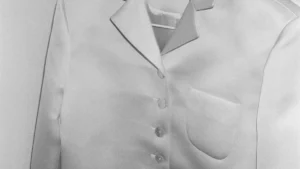

A satin blazer is a tailored jacket cut from satin cloth, and it is the glossiest blazer you can buy. It has the familiar shape of a blazer — lapels, a button front, pockets, a vent at the back — but the fabric changes everything about how it looks and behaves. Where a wool blazer absorbs light and holds a pressed line, a satin blazer reflects it and shows every crease.
The confusion starts with the word itself. Satin is not a fibre. It is a weave, a way of interlacing threads so that most of them float on the surface of the cloth, and it can be made from silk, polyester, viscose or acetate. Two blazers can both be called satin and feel completely different, so knowing which satin you are looking at matters more than the brand on the label.
This guide explains the garment plainly: what satin is, how the cloth is made, how a good satin blazer is built, how it compares with wool and linen, when it works and when it does not, and how to judge one before you buy. It is not a styling guide — there are no outfit formulas here, only the facts you need to understand the jacket itself.
Key takeaways
- A satin blazer is a tailored jacket whose shell cloth is satin — a weave with a glossy face and a dull reverse, not a fibre.
- Satin can be woven from silk, polyester, viscose or acetate, and the fibre decides the feel, the drape, the price and the care.
- The sheen is the point of the jacket: it catches light, flatters in the evening and makes the blazer the visual centre of any outfit.
- Good satin blazers are lined, lightly structured at the shoulder and cut from a heavier satin.
- No satin blazer is crease-proof or low-maintenance, and one that never wrinkles is almost certainly not what its label claims.
What a satin blazer actually is
Strip away the marketing and a satin blazer is simple to define: a blazer whose outer cloth is satin, either pure satin or a satin-faced blend. The cut follows the familiar blazer pattern — notched or peak lapels, a button front, flap or welt pockets, and a vent at the back — but the execution changes with the cloth. Satin drapes rather than holds, so the jacket follows the body.
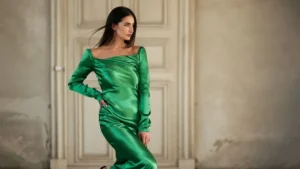
The first thing to understand is the sheen. Satin reflects light in broad, smooth bands, which is why it looks liquid under evening light and almost wet under a camera flash. That reflection flatters the cloth and punishes the cut: a well-fitted satin blazer looks expensive from across a room, while a poorly fitted one shows every pull and wrinkle. The fabric hides nothing, so the tailoring has to be right.
The second thing is the hand of the cloth. Satin feels smooth, cool and slippery, with almost no surface texture, so it slides over whatever is worn underneath and needs a lining. It also snags easily: a ring or a coarse bag strap can pull a thread.
The fabric: satin is a weave, not a fibre

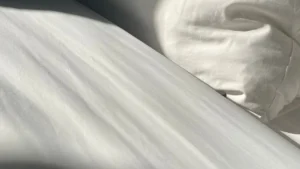
Satin is made by floating most of the warp threads on the face of the cloth and tucking the weft threads behind. With few interlacings to interrupt the surface, light reflects evenly instead of scattering, and that is where the shine comes from. Turn the cloth over and the reverse is dull: a true satin always has two faces, and that asymmetry is the easiest way to recognise it.
The fibre underneath the weave is a separate question, and it changes the jacket completely. Silk satin is the original and the most expensive: cool, fluid, with a soft glow, and it needs dry cleaning. Polyester satin is the most common today: cheaper, stronger and usually washable, but warmer to wear and shinier. Viscose satin sits between the two, with a silk-like drape and a tendency to watermark, while acetate satin is light but fragile. For a wider sense of how these fibres compare, our guide to the best natural fibres in clothing sets silk, wool, linen and cotton side by side.
Weight matters as much as fibre. Lightweight charmeuse, around 100 to 140 grams per square metre, is fluid but creases at a touch and holds no shape. Medium satin, around 150 to 220 grams, is the safest weight for a first satin blazer: it drapes without collapsing. Heavyweight duchess satin, from 220 grams upward, is stiff and almost sculptural.
How a satin blazer is built
Construction is where a good satin blazer separates itself from a bad one. A wool blazer is built around a canvas — horsehair and cotton stitched between the cloth and the lining that gives the chest its shape. A satin blazer usually has little canvas or none at all, because a full canvas would fight cloth that wants to drape. The shape comes from the cut and the lining, not from internal armour.
The lining is the most important part of the build. A satin blazer should be fully lined, usually in smooth cupro, silk or polyester, so the shell glides over clothing instead of gripping it. An unlined satin blazer is a warning sign: the slippery shell will cling to a cotton shirt and catch on knitwear. Check the inside before you buy: the lining should be smooth and the seams finished, because raw edges fray fast in slippery cloth.
The shoulders decide whether the blazer reads as tailored or sloppy. Satin has no body of its own, so a completely soft shoulder can collapse and make the jacket look like loungewear. Look for a lightly structured shoulder — a thin pad or a shaped sleeve head — that gives the jacket a line. The lapel should lie flat and roll cleanly, and the button should close without pulling.
Satin versus wool and linen blazers
| Quality | Satin blazer | Wool blazer | Linen blazer |
|---|---|---|---|
| Sheen | High — glossy, light-reflecting face | Low — matte, absorbs light | Low — dry, matte surface |
| Drape | Fluid — follows the body | Structured — holds a pressed line | Soft — relaxed, slightly limp |
| Wrinkling | Moderate — creases and shows marks | Low — wool springs back | Heavy — creases within an hour |
| Structure | Light — little or no canvas | Firm — full or half canvas | Soft — unstructured |
| Formality | Evening and formal | Smart to formal, all year | Casual to smart-casual |
| Durability | Fragile — snags and pulls easily | Hard-wearing for years | Strong fibre, frays at seams |
| Care | Dry clean or gentle wash, steam only | Dry clean, holds a press | Steam or dry clean, wrinkles return |
Satin wins on glamour and loses on practicality. Wool wins on versatility and durability and loses on drama. Linen wins on comfort in heat and loses on holding a shape. A satin blazer is not a replacement for either of them. It is a third jacket for the occasions the other two cannot dress: the evening event, the formal dinner, the moment when the jacket itself is meant to be noticed. Velvet is the only other blazer cloth that plays the same role, and our guide to why velvet is the luxury fabric of 2027 explains how pile creates richness through depth.
When a satin blazer works — and when it does not
A satin blazer works best after dark. Evening light is kind to satin: the sheen reads as luxury rather than glare, and the drape looks fluid rather than limp. Formal dinners, evening events and celebrations are its natural territory, and dark colours — black, navy, deep burgundy, emerald — are at their best there, because a dark satin has a quieter shine. Pale satin reflects far more light, so it suits occasions where the blazer is meant to be the centre of attention. The same fabric turns up in the best satin dresses, where the drape and sheen behave the same way.
Daytime is harder. In bright daylight the same sheen can look slippery, and under a camera flash it can blaze. A dark satin blazer can work in the daytime in a formal setting, but a pale or jewel-toned one rarely does. Satin also marks with water and creases where you sit, so it is a jacket for arriving and sitting, not for working through a busy day.
Checklist: before you buy a satin blazer
Run through these checks before you buy. They take two minutes and they separate a blazer that will look expensive for years from one that will look tired after a month.
- Check the fibre on the label. Silk, polyester, viscose and acetate behave differently, and the label is the only honest source.
- Feel the weight. Hold the blazer up and let it fall. It should drape smoothly, not crinkle, and the sheen should be a soft glow.
- Look inside. A good satin blazer is fully lined, with smooth lining and finished seams.
- Test the shoulder. A lightly structured shoulder keeps the jacket tailored. A completely soft shoulder collapses into a dressing-gown shape.
- Try it in more than one light. Satin changes under daylight, lamplight and flash. Check it in the light you will wear it in.
- Read the care label before you buy. If it needs dry cleaning and you will not dry clean it, do not buy it.
Care: keeping a satin blazer looking its best
Satin care is simple but unforgiving. Steam is the safest way to remove creases: hang the blazer on a wide padded hanger and steam it from a few inches away, never pressing the iron directly onto the satin, which can leave a permanent shine mark. If you must iron, use the lowest heat and a pressing cloth.
Water is the enemy of satin in a way it is not of wool or cotton. A splash leaves a visible mark on many satins, especially silk and viscose, and the mark can remain after drying. Keep the blazer away from rain, and if it gets wet, blot it gently and let it dry flat rather than rubbing the spot. Dry cleaning is safest for silk satin, while polyester satin can usually be hand washed cold.
Frequently asked questions
What is a satin blazer made of?
The shell is satin, a weave rather than a fibre. The fibre underneath can be silk, polyester, viscose or acetate.
Is satin the same as silk?
No. Silk is a fibre, from the silkworm, and satin is a weave. Most satin blazers today are polyester satin rather than silk.
Can you wear a satin blazer during the day?
Yes, but with limits. A dark satin blazer in black or navy can work in the daytime in a formal setting. Pale and jewel-toned satin is better saved for the evening.
Why does a satin blazer crease so easily?
Satin is a smooth cloth with little surface texture, so a fold presses straight into the face of the fabric. Lightweight satin creases worst, and a heavier satin, such as duchess satin, creases less. Steaming is the best way to remove creases.
Is a satin blazer formal?
Yes, it is one of the most formal blazer fabrics, and it is most at home at evening and formal occasions.
How do you stop a satin blazer snagging?
You cannot make satin snag-proof, but you can reduce the risk. Keep it away from rough surfaces and rings with sharp edges. If a thread does pull, do not cut it: push it gently back to the reverse side with a fine needle.
The bottom line
A satin blazer is a tailored jacket cut from satin cloth, and its whole character follows from that one fact. The satin weave gives it a glossy face, a fluid drape and a presence no matte blazer can match, and the same weave makes it crease, mark and snag more than wool or linen. It is a jacket for the evening and for formal occasions.
If you buy one, buy it for what it is. Choose a medium or heavyweight satin, a fully lined body, a lightly structured shoulder and a dark colour, and accept the steaming and the dry cleaning as part of the bargain.
Note: Satin varies by fibre and weave, from silk to polyester, and care labels differ between makers. Always check the label on your own blazer before steaming, ironing or cleaning it.
Meet Our Experts
Our fashion editors cover fabrics, tailoring and wardrobe guides for BrassSmile, drawing on published tailoring references and brand specifications. Fabric and construction guidance in this article reflects standard textile and tailoring practice.
Why Trust BrassSmile
BrassSmile fashion guides are written from verifiable fabric and construction facts, checked against published references, and updated when standards change. We do not accept payment for coverage, and we describe garments as they are made, not as they are marketed.
Sources
Textile and tailoring references on satin weave structure, fibre properties and blazer construction, including standard fabric guides and published fashion references. No source text has been reproduced in this article.