
A silk blazer is the most quietly luxurious jacket you can own, and the easiest to style badly. Its soft sheen and close drape make everything else look more expensive in the right outfit, and limp or overdressed in the wrong one. The difference is rarely the blazer itself — it is what you put with it.
The rule behind almost every good silk blazer outfit is simple: let the silk be the only shine. Silk reflects light, so the pieces around it should absorb it — matte cotton, wool, denim, crepe and suede. One lustrous surface reads as deliberate; a satin top, patent shoes and a metallic bag beside it turn the whole look slippery. Everything here follows from that idea.
This guide stays strictly on styling: the fit and proportions that make a silk blazer work, outfits for daytime, work, evenings and formal occasions, what to layer underneath it, and the colour and care habits that keep it looking new. No shopping picks or brand lists — just the combinations that decide whether the blazer carries the outfit or fights it.
Key takeaways
- Let the silk be the only shine; pair it with matte cotton, wool, denim, crepe and suede, and keep other glossy fabrics out.
- Choose a defined shoulder, a single-button closure and a hip-length cut, sleeves ending at the wrist — structure stops silk looking limp.
- Dark silk works for daytime and the office; pale, ivory and jewel tones belong to the evening, when their shine reads as glamour.
- Layer thin underneath: a silk camisole, a fine-gauge knit, a crisp cotton shirt or a plain T-shirt. Bulky knits bunch under silk and spoil the line.
- Silk marks easily: water, perfume and deodorant stain it, it creases where you sit, and it needs steaming, not a hot iron — check it in daylight before you leave.
The starting point: fit, shine and proportion
Fit decides a silk blazer before anything else does. Silk is fluid, so it follows the body instead of holding its own shape, and a blazer without structure collapses into softness within minutes. Look for a lightly defined shoulder, a single button at your natural waist, and a cut that ends at the hip. Sleeves should end at the wrist bone.
Proportion works in the opposite direction from the fabric: because silk is soft and fluid on top, the bottom half should be firmer. Tailored trousers, a pencil skirt, straight-leg jeans or a structured A-line skirt all give the outfit the backbone the blazer does not provide. Two fluid pieces together — a silk blazer over a slip dress — can work in the evening, but in daylight it usually looks unfinished. An oversized blazer needs a slim bottom; a fitted one suits a wider trouser.
Shine is the decision people get wrong most often. One lustrous surface reads as luxury; three read as a costume. The same control applies to the closest cousin of the silk blazer: our guide to styling a satin blazer follows the same one-shine rule, and the habits transfer directly. Colour is your other control: dark silk has a quieter glow that works in daylight, while ivory, champagne and blush reflect far more light, so they belong after dark. Check the blazer in daylight first: silk can blaze under a camera flash.

Daytime outfits: work, weekends and smart casual
The most reliable daytime formula is also the simplest: a dark silk blazer, a plain white or black cotton T-shirt, straight-leg jeans in a mid or dark wash, and loafers or clean white trainers. The jeans and T-shirt do the casual work and the blazer does the polish, and the matte fabrics calm the silk so it reads as an everyday jacket. Wear the blazer open: silk pulls and creases across a closed front when you sit.
For the office, swap the jeans for tailored trousers in wool or cotton twill and the T-shirt for a crisp white shirt or a fine-gauge knit in a neutral tone. A black silk blazer over a white shirt and charcoal trousers suits most workplaces, provided the silk is dark. Avoid a silk camisole underneath at work — two silk surfaces double the shine.
For a smart lunch, try a navy or deep green silk blazer half-buttoned over a fine knit, with wide-leg wool trousers and leather loafers. The half-buttoned front gives the outfit a waist without the stiffness of a fully closed blazer, and the wide trousers balance the fluid top. On warmer days, the same idea works lighter: an open silk blazer over a plain camisole and linen-look trousers. For the warm-weather comparison, our guide to styling a linen blazer covers the relaxed, breathable end of blazer dressing.
Evening outfits: dinner, parties and formal occasions
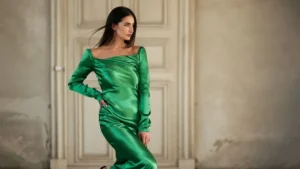
Evening is where a silk blazer earns its place. After dark, the sheen that felt loud at lunch becomes exactly right, and the blazer can lead the outfit. The classic pairing is a black silk blazer over a slip dress in a darker or complementary tone — deep green, burgundy or navy — so the two silks do not compete. For the dress half of that pairing, see our guide to styling a silk dress. A black blazer over a champagne slip dress is striking but high-shine, so keep the shoes and bag matte and dark.
Trousers are the safer evening partner when a dress feels like too much. Wide-leg black trousers, a simple silk camisole and a silk blazer make a dinner outfit that is comfortable and elegant, from a restaurant table to a drinks party. Add a pointed heel, a small clutch and one piece of statement jewellery, and stop there — the blazer is the statement, and the jewellery is the accent. Evening is also the moment for colour: a jewel-toned silk blazer — emerald, sapphire, ruby or plum — reads as deliberate and glamorous after dark, worn with black underneath and black shoes.
At a party, wear the blazer closed as a top on its own, with a camisole underneath and high-waisted trousers — the single button does the work of a waistline. For formal occasions, keep the blazer dark or jewel-toned, pair it with a tonal slip dress, and choose classic court shoes: the blazer adds coverage and structure to a dress that might otherwise feel too bare.
What to wear underneath and with it
What goes under a silk blazer decides whether the outfit reads as tailored or sloppy, so choose the under-layer for the occasion first. A crisp cotton shirt is the work option, worn tucked in, and a fine-gauge knit is the cold-weather option, thin enough to sit flat without bunching.
A silk camisole is the evening under-layer, and the one that needs the most care. It works in a darker or deeper tone than the blazer — black under navy, burgundy under black. A lace-trim camisole adds texture for date nights, but keep it simple: the trim should be the only detail.
Bottoms follow the same firm-versus-fluid logic. Tailored trousers in wool or cotton twill are the default partner, straight-leg jeans are the casual partner, and a pencil skirt or A-line midi skirt are the dressier partners. Shoes should be matte wherever possible: loafers, pointed flats, block heels and clean trainers for the day; pointed heels, heeled sandals and court shoes for the evening. Patent leather and metallic shoes fight the blazer for attention, so save them for outfits where the blazer is not the shine.
Jewellery should be the last thing you add, and the first thing you edit. Silk already catches the light, so one strong piece is enough. The test is always the same: if you took the blazer off, would the rest of the outfit still look finished? If not, the outfit needs a firmer base.
Occasions at a glance
| Occasion | Blazer | Underneath | Bottoms | Shoes |
|---|---|---|---|---|
| Daytime casual | Dark silk, open | White cotton T-shirt | Straight-leg jeans | Loafers or white trainers |
| Office | Black or navy silk | Crisp white shirt | Charcoal tailored trousers | Pointed flats or block heels |
| Smart lunch | Dark silk, half-buttoned | Fine-gauge knit | Wide-leg wool trousers | Leather loafers |
| Dinner | Black silk | Matte camisole | Wide-leg black trousers | Pointed heels |
| Evening party | Jewel-tone silk | Camisole | High-waisted trousers | Strappy heeled sandals |
| Formal event | Black or champagne silk | Slip dress underneath | Matching slip dress | Classic court shoes |
| Weekend brunch | Muted silk, open | Plain T-shirt | Dark denim trousers | Clean trainers or flats |
| Date night | Deep burgundy silk | Lace-trim camisole | Slim black trousers | Heeled sandals |
Checklist
- Check the blazer in daylight before you leave: silk looks very different under a camera flash than at home.
- Keep the outfit to one shine — if the blazer is silk, the top, shoes and bag should all be matte.
- Wear the blazer open during the day; button it only for the evening, when a closed front reads as deliberate.
- Pair fluid silk on top with something structured below: tailored trousers, a pencil skirt or straight-leg jeans.
- Steam the blazer before wearing it and hang it on a wide padded hanger; never press it with a hot iron.
- Keep perfume, deodorant and water away from the silk — it marks fast and shows every spot.
Frequently asked questions
Can you wear a silk blazer during the day?
Yes, provided the silk is dark and the rest of the outfit is matte and casual: a black or navy silk blazer over a cotton T-shirt and straight-leg jeans reads as polished daytime dressing.
Is a silk blazer appropriate for work?
Yes, in most workplaces: dark silk, a crisp shirt or fine knit underneath, and tailored trousers. Very formal workplaces may prefer wool, which holds its shape through a long day of sitting. Avoid a silk camisole underneath at work, and keep the blazer open or half-buttoned rather than belted.
What should you not wear with a silk blazer?
Do not pair it with other glossy fabrics: satin tops, patent shoes, sequins, metallic bags and shiny leggings all compete with the silk. Avoid bulky knits underneath, which bunch at the shoulders, and a matching silk suit in daylight, which reads as sleepwear rather than tailoring.
Does a silk blazer crease?
Yes, silk creases where you sit and where the fabric folds, especially across the back and at the elbows. It creases less than linen and more than wool, and the creases are softer than linen’s sharp folds. The fixes are simple: wear the blazer open during the day and steam it before wearing.
Can you wear a silk blazer with jeans?
Yes — it is one of the best combinations in this guide. Straight-leg jeans in a mid or dark wash with a dark silk blazer and a plain T-shirt is the most reliable casual outfit a silk blazer offers. Keep the jeans free of rips or heavy fading, and keep the shoes simple: loafers, clean trainers or pointed flats.
How do you keep a silk blazer looking new?
Steam it rather than ironing it, hang it on a wide padded hanger, and keep it away from perfume, deodorant and water, which can spot silk. Brush off dust after wearing, air it before putting it away, and dry-clean it only when it genuinely needs it. If it does mark, do not rub the spot — blot with a clean, dry cloth and take it to a cleaner promptly.
The bottom line
A silk blazer works when it is the only shine in the outfit, the fit has enough structure to hold its shape, and the pieces around it are matte, firm and simple. Dark silk carries the day and the office; jewel tones and ivory carry the evening. The formulas are forgiving: a dark blazer, a plain top, tailored trousers or straight jeans, and one quiet accessory — and the same blazer can move from a work meeting to dinner without a change of jacket.
The mistakes are forgiving too, because they are all the same mistake: too much shine, too little structure, or an under-layer that fights the blazer. Fix any one of those and the outfit usually fixes itself. Start with the dark blazer and the matte partners, add colour and shine one piece at a time, and check the result in daylight before you leave.
Note: This guide is general style advice, not a personal styling service. Fit and colour suit different body shapes and skin tones, so try pieces on where possible and treat the outfit formulas as starting points, not rules.
Meet Our Experts
This guide was written by the BrassSmile style editors, who cover fashion, wardrobe building and seasonal trends. Our editors research each guide from brand specifications, fabric information and published style guidance.
Why Trust BrassSmile
BrassSmile covers fashion and lifestyle with an emphasis on practical, wearable advice rather than fast trends. Our guides focus on pieces that last, fabrics that perform, and wardrobes that work in real life.
Sources
Vogue, Elle, Harper’s Bazaar and Byrdie style guides on blazer styling, silk care and occasion dressing, consulted for general styling practice. No text was copied from any source.