


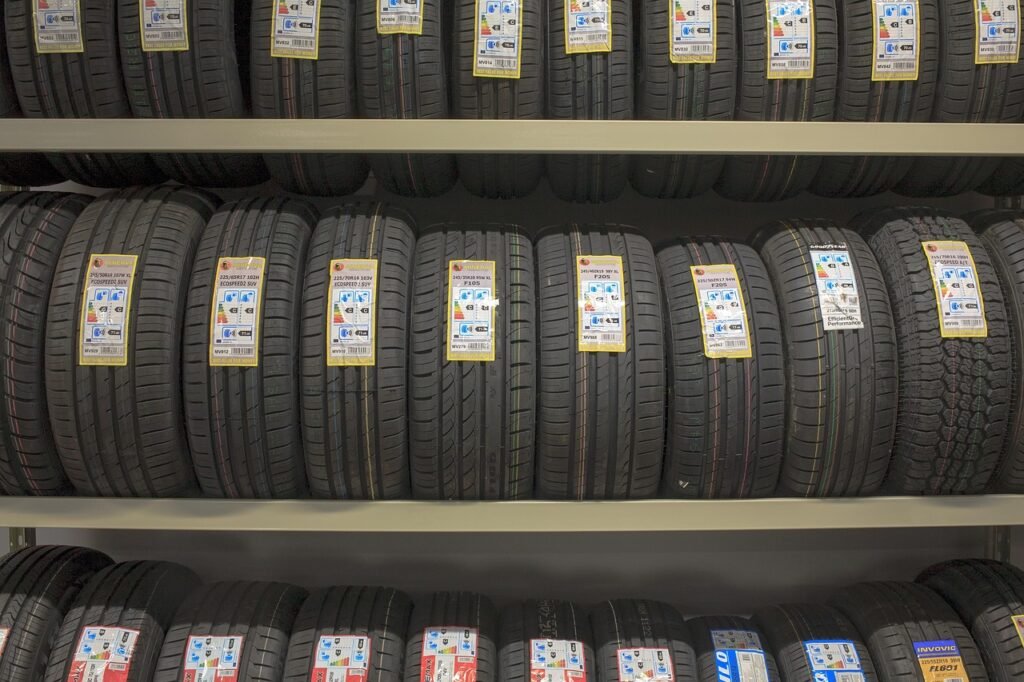
Quick Answer: How long do car tires last?
Most car tires last between 20,000 and 40,000 miles in everyday driving, though premium all-season tires can stretch to 50,000 miles or more with careful maintenance. The other clock is time: tires should be replaced once they reach six to ten years of age, regardless of tread depth, because rubber hardens and cracks as it ages.
Mileage and age are two separate limits, and whichever arrives first wins. Driving style, road conditions, vehicle weight, and how faithfully you rotate and inflate your tires all shift the numbers up or down.
Before deciding whether to replace or keep going, check tread depth, sidewall condition, the manufacture date code, wear evenness across the tread, and your driving habits.
Why Your Tire’s Clock Has Two Hands

Tires are one of those wear items that ask for almost no attention, right up until they demand all of it. A set of tires can look perfectly fine in the driveway and still be past its safe service life, and that gap between appearance and reality is where drivers get caught out.
The reason is simple: a tire ages in two ways at once. It wears down as you drive, and it deteriorates as it sits. Rubber compounds lose flexibility over time, and the bonding between tread and casing weakens. That means a low-mileage car can still need new tires long before the tread runs out.
The question of how long car tires last, then, has no single answer. It has a mileage answer and a calendar answer, and smart drivers track both.
How Many Miles Should a Set of Tires Last?
Mileage is the number most drivers want first. The ranges below reflect typical all-season tires, which are the most common fitment on passenger cars.
| Tire position | Typical mileage | Why |
|---|---|---|
| Front tires | About 20,000 miles | Carry steering, braking, and engine loads; wear fastest |
| Rear tires | Up to 40,000 miles | Mostly driven along, not steered |
| Full set, rotated regularly | 30,000 to 60,000 miles | Even wear spreads the load |
| All-season tires, broad range | 50,000 to 85,000 miles | Premium compounds and careful driving |
| Budget tires | 20,000 to 40,000 miles | Softer, faster-wearing compounds |
The spread is wide, and that is not a cop-out. A heavy SUV driven hard on rough roads will chew through a set far faster than a light sedan cruising highways. Premium tires tend to outlast budget options, with some reaching around 60,000 miles.
One useful reality check: many drivers cover roughly 12,000 to 15,000 miles a year, which means a good quality all-season tire typically lasts somewhere between three and five years in service. If you drive more than that, your tires will hit their mileage limit before their age limit. If you drive less, the reverse happens.
The Age Limit Nobody Thinks About
Here is the part that surprises people. Tires have a shelf life. Tire makers and motoring organizations broadly agree that tires should be replaced once they reach ten years from the date of manufacture, regardless of appearance, mileage, or actual wear. In practice, most tires need replacing well before that mark.
A stricter view is worth knowing: some tire manufacturers recommend replacing tires after six years in service, or ten years from manufacture, whichever comes first. Others advise that once a tire has been on a vehicle for five years or more, it should be inspected professionally at least once a year.
Why the caution? Rubber becomes brittle with age and develops minor cracks. That affects grip and braking performance and raises the risk of punctures or, worse, a blowout. The tread can look deep and healthy while the structure underneath is quietly giving up.
Finding the age is easy. Every tire carries a four-digit date code on the sidewall, stamped after the letters DOT. The first two digits are the week of manufacture and the last two are the year, so a code ending in 23 means the tire was built in the 23rd week of that year. Check it before you buy, and check it again when you are deciding whether to keep a set.
What Actually Shortens Tire Life?
Several forces pull tire lifespan in different directions. Understanding them helps you predict your own replacement interval instead of relying on a generic number.
Driving style
Hard acceleration, late braking, and fast cornering all scrub rubber off the tread. Smooth inputs are the cheapest tire upgrade available.
Road conditions
Rough, potholed, and poorly maintained surfaces take a toll. Extreme temperature swings and harsh winters accelerate wear and aging. Drivers in regions with cold winters and rough roads often find tires wear out faster than the national averages suggest.
Vehicle load and alignment
A heavy vehicle presses harder on its tires. Poor wheel alignment concentrates wear on one shoulder of the tread, which is why uneven wear is a red flag worth investigating rather than ignoring. If your tires are wearing strangely, it is worth understanding tire alignment and what those three angles actually do to your car, because a cheap alignment can add thousands of miles to a set.
Inflation pressure
Underinflation flexes the sidewall more than it should and builds heat. Overinflation crowns the tread and wears the center. Neither is dramatic on its own, but both add up over tens of thousands of miles.
Storage and parking
Tires parked on hot asphalt, in direct sun, or sitting for long stretches age faster. So do tires stored improperly between seasons. If a set sits in a garage for months, its calendar clock keeps ticking.
Maintenance habits
Regular rotation and balancing genuinely extend life. A driver who rotates on schedule and keeps pressures correct can push a set well past the average.
How to Tell Your Tires Are Near the End
Mileage charts are a guide. The tire itself is the real authority, and it gives several clear signals.
- Check the tread depth. The legal minimum in most places is around 1.6 mm (2/32 inch). Insert a tread depth gauge, or use the wear indicator bars built into the tread grooves. When the tread is level with those bars, the tire is done.
- Try the coin test. Push a coin into a groove. If the tread does not reach a recognizable landmark on the coin, the tire is close to its limit.
- Look for cracks. Fine cracks in the sidewall or between tread blocks are aging signs. Cracking means the rubber is losing its flexibility, and the tire should be assessed by a professional.
- Feel for uneven wear. A feathered or scalloped pattern points to alignment or suspension issues. Fix the cause before fitting new tires, or the new set will wear the same way.
- Watch for bulges and blisters. Any bulge in the sidewall is a structural failure. Replace that tire immediately.
- Note the vibration. A tire that suddenly vibrates or pulls may have internal damage or a shifted belt.
A driver who has looked after a set carefully can sometimes run it well past 80,000 km and still have usable tread. Even then, age matters. Once tires pass five to six years in service, the rubber is getting brittle, and the recommendation is replacement regardless of how much tread remains.
Front Versus Rear: Why the Difference Matters
Front tires almost always wear out first. They handle steering, most of the braking force, and the engine’s power delivery, and they take the brunt of potholes and rough surfaces. That is why rotation matters so much: swapping front to rear at regular intervals spreads the wear and lets the whole set finish at roughly the same time.
Without rotation, you end up replacing tires in pairs, which costs more over the life of the car and leaves you with mismatched grip. Rotating every 5,000 to 8,000 miles is the usual guidance, and it is one of the few maintenance chores with a direct, measurable payoff.
Making a Set Last Longer
There is no secret trick, just consistency. Keep pressures at the vehicle manufacturer’s recommended figures, checked when the tires are cold. Rotate on schedule. Get an alignment when you notice uneven wear or after a hard knock against a curb. Drive smoothly. Park in shade where possible. Clean off road salt and grime, which degrade rubber over time.
It also pays to think about the systems around the tires. A car that pulls to one side or stops unevenly puts extra stress on specific tires. If your air conditioning is struggling, that is a separate headache, but it is worth knowing how to fix your car’s AC when the air isn’t cold and repair it right, since a comfortable cabin makes for calmer, smoother driving.
And if you are the type who tracks how long everything lasts, from batteries to power backups, you will recognize the pattern: car batteries have real-world lifespans that shorten with heat and short trips, just as tires shorten with heat, load, and hard use. The same logic applies to a home office: knowing how long an uninterruptible power supply actually lasts before its battery degrades is the same kind of age-versus-use calculation.
When to Replace Rather Than Repair
Patching a small, centrally located puncture is often fine. But some damage cannot be safely repaired: sidewall punctures, bulges, cracks, and any damage near the shoulder of the tread. When in doubt, have a professional look at it.
The broader rule is that replacement decisions should weigh tread depth, age, visible condition, and how the tire performs. A tire with 4 mm of tread but visible sidewall cracking is not a safe tire, no matter what the depth gauge says. Conversely, a five-year-old tire with even wear and no cracking may have plenty of life left, provided it is inspected annually.
Cost is the other factor. Tires are a safety item, and stretching a worn set too far is a false economy. The National Highway Traffic Safety Administration reports that a driver is three times more likely to crash due to poor tire condition. That statistic alone justifies replacing a set before it feels urgent.
Conclusion
How long car tires last comes down to two clocks running at once. Mileage typically lands between 20,000 and 40,000 miles for most drivers, with premium all-season rubber reaching 50,000 to 85,000 miles in favorable conditions. Age sets a hard ceiling of six to ten years, whichever comes first, because rubber degrades whether or not the car moves.
The practical approach is to check tread depth monthly, note the manufacture date code, rotate on schedule, keep pressures correct, and treat cracks, bulges, and uneven wear as stop signs. Do that, and you will get the full life out of every set, replace tires on your own terms rather than at the roadside, and drive on rubber that is actually doing its job.
FAQ
How often should tires be rotated for longest lifespan?
Every 5,000 to 8,000 miles is the common recommendation. Rotation evens out the wear between front and rear, which is important because front tires typically wear about twice as fast as rear tires due to steering and braking loads.
Can tires last more than ten years if the tread looks fine?
No. Ten years from the date of manufacture is the outer limit recommended by tire makers, regardless of tread depth or mileage. Most tires should be replaced earlier, and any tire that has been in service five years or more should get an annual professional inspection.
Do premium tires really last longer than budget tires?
Generally, yes. Premium compounds tend to wear more slowly, and some premium tires reach around 60,000 miles while budget tires often fall in the 20,000 to 40,000 mile range. The trade-off is upfront cost, so compare price per mile rather than sticker price alone.
How do I find out how old my tires are?
Look for the four-digit DOT date code on the sidewall. The first two digits indicate the week of manufacture and the last two indicate the year. A code reading 1823 means the tire was built in the 18th week of 2023.
Is it safe to replace only two tires at a time?
It can be, provided the new pair matches the existing tires in size, type, and tread depth reasonably closely. Best practice is to fit the new pair on the rear axle for stability in wet conditions. Mismatched tires across an axle can affect handling and braking balance.
What tread depth means a tire must be replaced?
The legal minimum in most regions is about 1.6 mm (2/32 inch). Many safety experts recommend replacing well before that, often around 3 mm, because wet grip and resistance to aquaplaning drop sharply as tread wears down.











