

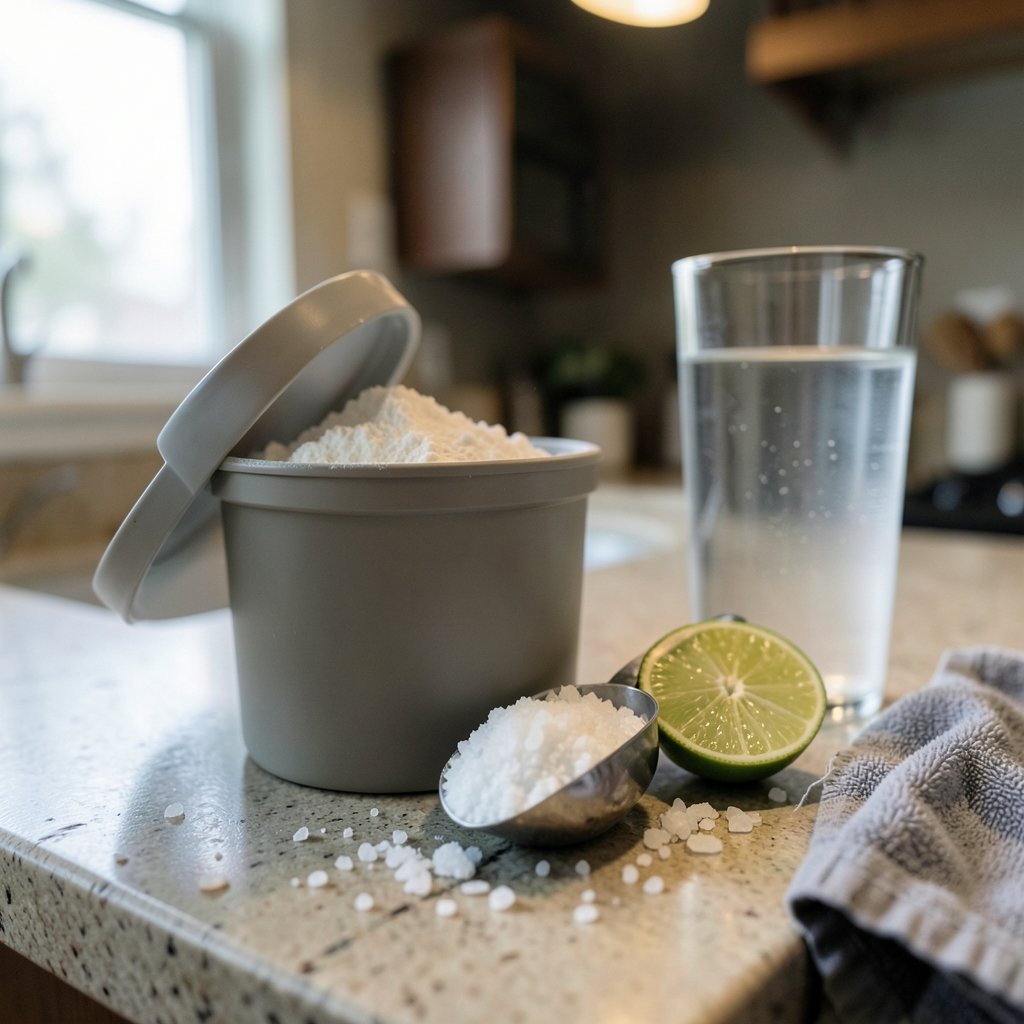
What if the best electrolyte powder for you is the one nobody puts at the top of a list? That sounds like a dodge, but it happens to be true. Electrolyte products are not ranked by any official body, formulations change constantly, and the sodium your body actually needs depends on how much you sweat and how salty that sweat is. So instead of crowning a single winner, this guide shows you how to judge a powder like someone who knows what they are looking at. By the end, you will be able to scan a label in ten seconds and know whether it fits your body, your workout, and your day.
What electrolytes actually do in the body
Electrolytes are minerals that carry an electric charge once they dissolve in body fluids. The main players are sodium, potassium, chloride, calcium, magnesium, phosphate, and bicarbonate. They keep fluid balanced across cell walls, help muscles contract, and carry nerve signals. When you sweat, you lose some of them, and your body has to rebalance.
Sweat is mostly sodium chloride, with potassium, magnesium, and calcium in much smaller amounts. Sodium is the electrolyte lost in the largest quantity through sweat. That single fact explains why almost every sports drink and electrolyte powder is sodium-forward. It also explains why a product loaded with potassium and magnesium but light on sodium may look impressive on the front of the tub and underdeliver where it counts.
Why “best” depends on your sweat, not a ranking
Here is the uncomfortable truth about shopping for electrolyte powder: there is no single official best product ranking. No health agency publishes one, and formulations change frequently enough that any list is dated the moment it goes live. What exists instead is a set of principles that let you match a powder to your situation.
Sweat sodium concentration varies widely between individuals. Two people doing the same workout in the same gym can lose very different amounts of sodium. That means a product that is perfect for a heavy, salty sweater may be overkill for someone who barely glistens. The American College of Sports Medicine’s guidance on exercise and fluid replacement emphasizes preventing excessive dehydration, generally more than about 2% of body mass loss, and avoiding overdrinking. It does not hand out one sodium number for everyone, because there isn’t one.
For context on the general population side, the Institute of Medicine (now the National Academy of Medicine) set an Adequate Intake for sodium at 1,500 mg per day for adults aged 19 to 50 in its 2005 Dietary Reference Intakes report. The 2015–2020 Dietary Guidelines for Americans recommended limiting sodium to less than 2,300 mg per day for most adults. Both figures are about long-term health, not about replacing what you lose in a two-hour ride. Keep those two conversations separate, because mixing them up is one of the most common mistakes in this category.
The label numbers that actually matter
Most people compare electrolyte powders by flavor, price, and the size of the font on the front. The useful comparison lives in the supplement facts panel. Here is what to check, in order.
Sodium content per serving
This is the headline number. A powder with 100 mg of sodium per scoop is a light flavored drink. A powder with 500 to 1,000 mg is built for serious sweat replacement. Neither is wrong; they serve different jobs. If you train hard for over an hour in heat, the low-sodium option may not cover your losses. If you are sipping something during a desk day, the high-sodium option may be more than you need.
Sugar versus sweetener
Sugar-free and zero-sugar powders typically replace sugar with non-nutritive sweeteners. The trade-off is worth understanding. Glucose can help the gut absorb sodium and water through sodium-glucose co-transport, a mechanism long described in oral rehydration science. The World Health Organization’s oral rehydration salts standard uses roughly 75 mmol/L sodium and 75 mmol/L glucose in its reduced-osmolarity formulation. Consumer electrolyte powders are not held to that standard, so their sodium and glucose levels can differ substantially. A little sugar is not a flaw; it is a design choice with a physiological reason behind it.
Potassium, magnesium, and the supporting cast
Potassium and magnesium matter, but they are supporting actors next to sodium in most sweat-loss scenarios. Be suspicious of a powder that shouts about ten electrolytes while burying a modest sodium number. Count the milligrams, not the marketing words.
Serving size reality check
A scoop is not a universal unit. Some brands expect one scoop per 8 ounces of water, others per 16 or 20 ounces. Compare cost and electrolyte content per actual serving, not per tub.
| What to check | Why it matters | Practical benchmark |
|---|---|---|
| Sodium per serving | Largest electrolyte lost in sweat | Low for casual use, high for heavy sweaters |
| Sugar or sweetener type | Affects sodium and water absorption | Some glucose can help; zero-sugar is a trade-off |
| Potassium and magnesium | Supporting electrolytes | Useful, but not a substitute for sodium |
| Serving size and scoops per tub | Changes true cost | Calculate per serving, not per container |
| Third-party testing | Confirms label accuracy | Look for independent verification marks |
Common mistakes people make with electrolyte powder
A few habits show up again and again, and each one is easy to fix.
Mixing too weak. Dropping half a scoop into a full bottle to “make it last” dilutes the sodium concentration below what the product was designed to deliver. If cost is the concern, buy a cheaper product rather than watering down a good one.
Chasing hype over milligrams. Bright packaging and long electrolyte lists sell tubs. The sodium number tells you more than any front-label claim.
Drinking to a schedule instead of to thirst. Exercise-associated hyponatremia, or low blood sodium, is a documented risk when endurance athletes over-drink plain water or low-sodium fluids. Consensus guidance from the 2015 Third International Exercise-Associated Hyponatremia Consensus Development Conference stresses drinking to thirst rather than to a fixed schedule. More fluid is not always better.
Using a workout powder as a all-day drink. A high-sodium sports powder is formulated for sweat loss. Sipping it all day, every day, stacks sodium on top of your meals without the sweat to justify it.
Ignoring how the powder behaves in the bottle. Clumping, grit, and stubborn residue are real annoyances. A powder that will not dissolve gets skipped, and a skipped powder helps nobody. Shake hard, use water at room temperature, and add powder after the water rather than before.
How to choose a powder for your situation
The fastest path is to match the product to the scenario rather than to a brand name.
- Define your sweat profile. A 30-minute walk in mild weather is a different job from a two-hour match in August. Estimate your sweat rate by weighing yourself before and after a typical session.
- Set a sodium target range. Casual exercisers can do fine with a lower-sodium flavored powder. Heavy, long-duration sweaters usually need higher-sodium products, and some athletes benefit from individual sweat-rate and sweat-sodium testing.
- Decide on sugar. If you want the absorption assist, choose a product with some glucose. If you are watching sugar for other reasons, a zero-sugar option can work, as long as you understand the trade-off.
- Check the regulatory framing. In the U.S., electrolyte powders are generally sold as conventional foods or dietary supplements, which fall under different FDA rules, not as drugs. That means label claims deserve a careful read.
- Test one tub before buying three. Tolerance, taste, and mixability are personal. A single container is a cheap experiment.
If you enjoy comparing ingredient lists across categories, the same label-reading discipline pays off elsewhere. The approach in this dip powder nails guide to checking what is actually in a product applies surprisingly well to tubs of sports drink mix, and the broader dip powder manicure archive shows how much formulations can vary within a single category. The same is true of dip powder nails products generally: the label, not the packaging, tells the story.
That habit of reading closely carries into completely unrelated products too. Anyone who has tried to decode a skincare ingredient list will recognize the frustration described in this piece on face mask powder and how to actually use it right, where the instructions matter as much as the ingredients. And if you have ever wondered whether a white residue means a metal has gone bad, this explainer on whether aluminum rusts and the real answer behind that white powder is a good reminder that “powder” means very different things in different contexts.
What good looks like in practice
A well-chosen electrolyte powder does a few simple things. It replaces the sodium you actually lost, in a concentration your gut tolerates. It tastes good enough that you will drink it. It dissolves without a fight. And its label is honest about what is inside.
A poorly chosen one usually fails on the same few points: too little sodium for the workout, too much sweetener for the taste, or a serving size that quietly doubles the cost. None of these failures show up in a glossy product photo. They show up in the supplement facts panel and in how you feel on a hot day.
One more practical note: individual needs shift with climate, fitness, and season. A powder that worked in a mild spring may feel inadequate in a humid July. Reassess rather than assume. The best electrolyte powder is a moving target, and that is fine, as long as you know which numbers to watch.
Conclusion
The best electrolyte powder is not a fixed product on a fixed list. It is the one whose sodium content matches your sweat losses, whose sugar or sweetener choice fits your goals, and whose serving size makes sense for how you actually drink it. Population sodium limits and athlete replacement needs answer different questions, so keep them apart. Sweat sodium varies widely between people, so no single formulation can be universally right. Read the milligrams, test one tub at a time, drink to thirst, and let your own sweat profile make the final call.
Frequently Asked Questions
How much sodium should an electrolyte powder have?
There is no universal number, because sweat sodium varies widely between people. Casual exercisers often do fine with a lower-sodium powder, while heavy, long-duration sweaters usually need higher-sodium products. Individual sweat-rate and sweat-sodium testing can narrow it down further.
Is a sugar-free electrolyte powder as good as one with sugar?
It depends on your goal. Glucose can help the gut absorb sodium and water through sodium-glucose co-transport, a mechanism long described in oral rehydration science. Sugar-free powders replace sugar with non-nutritive sweeteners, which is a reasonable trade-off for some people but not a free upgrade for everyone.
Can electrolyte powder replace sports drinks?
Often yes, and sometimes it is the better choice because you control the concentration. The key is mixing it as directed. Diluting a scoop into too much water lowers the sodium concentration below what the product was designed to deliver.
Do I need electrolyte powder for a normal gym session?
Not necessarily. A moderate workout in a comfortable gym usually does not demand heavy replacement. Powders earn their place with long duration, high heat, heavy sweating, or repeated sessions in a day. For short, mild exercise, water and normal meals often cover it.
Is it possible to drink too much fluid with electrolyte powder?
Yes. Exercise-associated hyponatremia, or low blood sodium, is a documented risk when endurance athletes over-drink plain water or low-sodium fluids. Consensus guidance stresses drinking to thirst rather than to a fixed schedule, so more fluid is not automatically safer.
Why is there no official ranking of the best electrolyte powders?
No health agency publishes a best-product list, and formulations change frequently, so any ranking is time-sensitive. In the U.S., these products are generally sold as conventional foods or dietary supplements under FDA rules, not as drugs. That makes label reading and personal testing more useful than any static list.














