

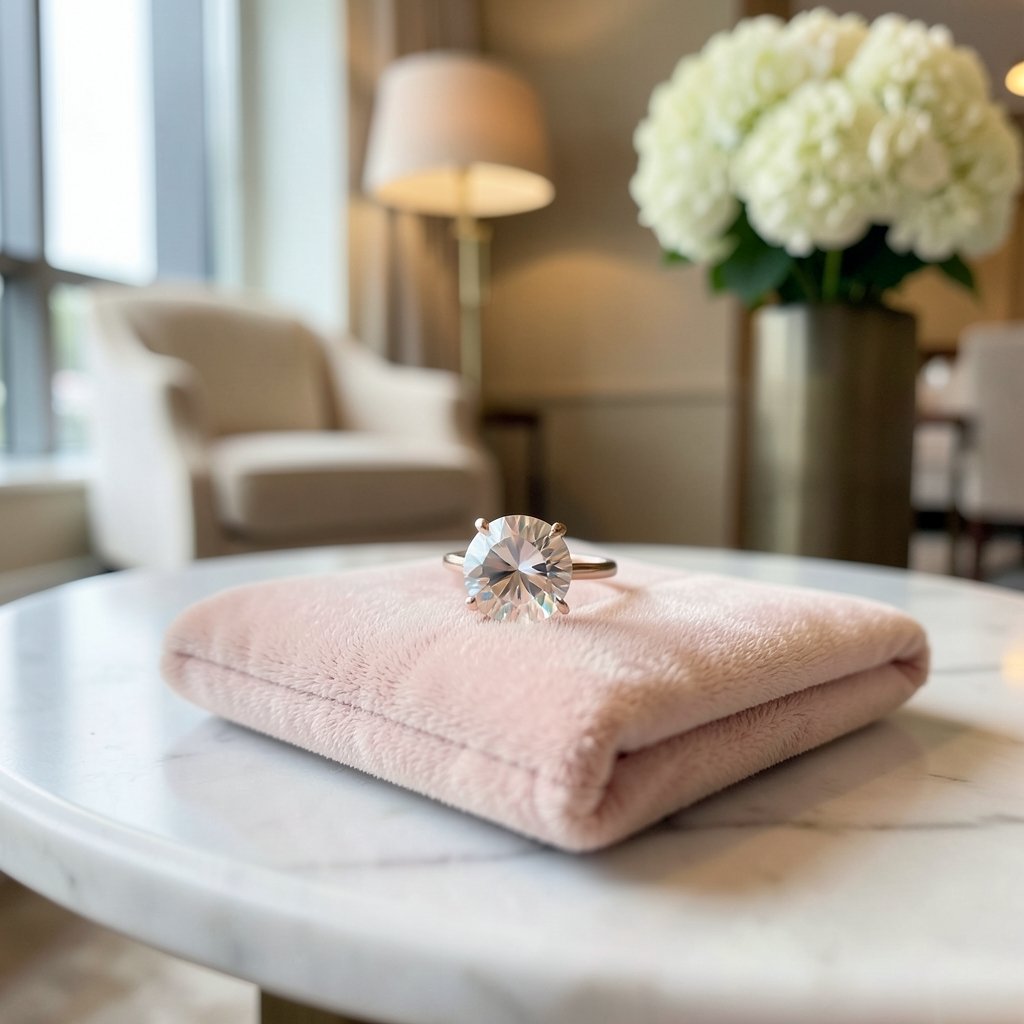
What if the sparkliest stone in the jewelry case wasn’t a diamond at all, and wasn’t even mined from the earth? That’s the surprise many shoppers get when they first ask, “what’s a moissanite?” The stone looks like a diamond from across the room, costs a fraction of the price, and has a backstory that involves a meteorite, a Nobel Prize, and a laboratory. It also has real differences that matter once you look closely. Here’s the honest breakdown of what moissanite is, how it behaves, and whether it deserves a spot in your jewelry box.
Moissanite Is Silicon Carbide, Not a Diamond Copycat Brand
Strip away the marketing and moissanite is a mineral: silicon carbide, written as SiC in chemistry shorthand. That’s the first thing to understand, because plenty of people assume “moissanite” is a company name or a clever trademark. It isn’t. It’s the name of a material with its own chemical identity, its own crystal structure, and its own set of optical properties.
That matters practically. A diamond is pure carbon arranged in a cubic lattice. Moissanite is a compound of silicon and carbon, and it grows in a different crystal structure. Those structural differences are why moissanite behaves a little differently under light, under a jeweler’s loupe, and on a thermal tester.
In nature, silicon carbide is astonishingly rare. It turns up in a small number of meteorites and in a few unusual rocks formed deep in the earth. You are not going to stumble across a natural moissanite in a riverbed. Nearly every gem-grade moissanite sold in stores today is lab-grown, created under controlled conditions so that the resulting crystal is clean enough to cut into a gemstone.
A Meteorite, a Nobel Prize, and a Very Long Wait
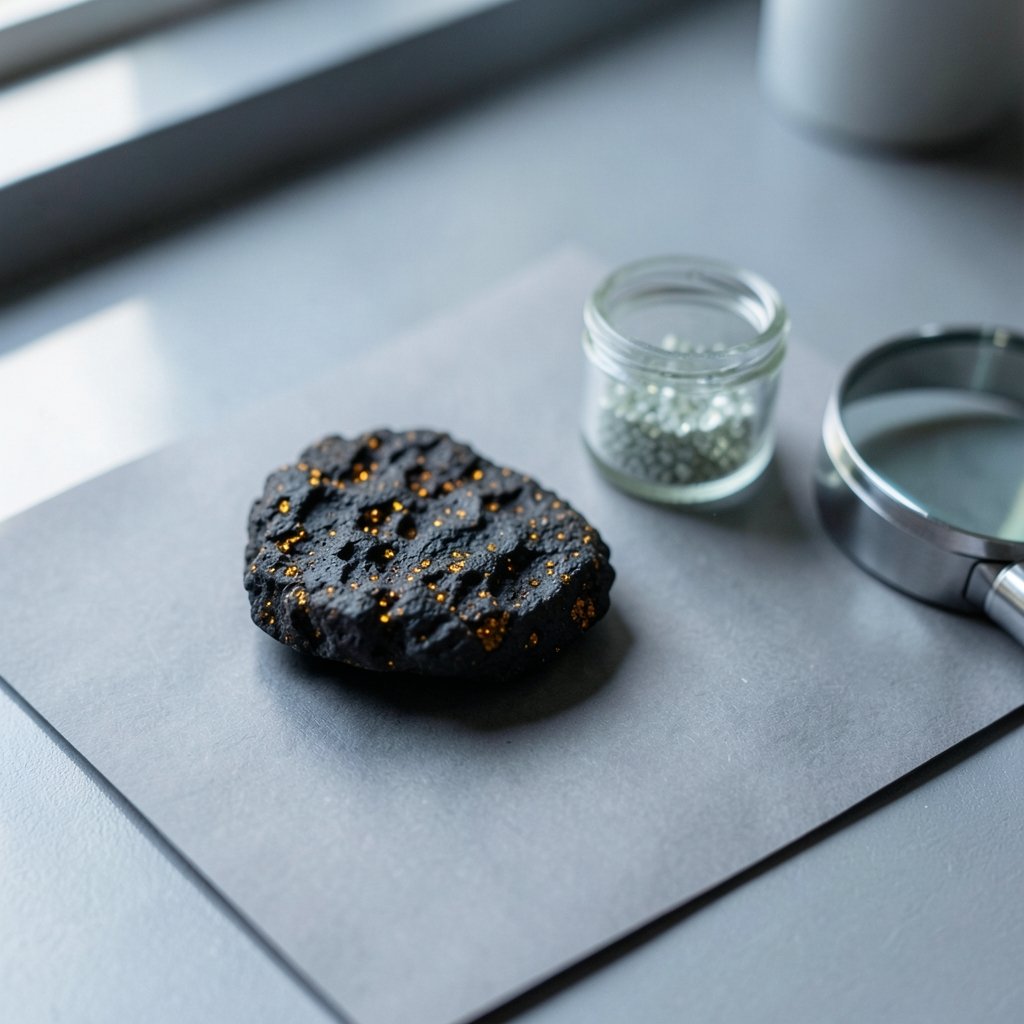
The discovery story is genuinely good. In 1893, the French chemist Henri Moissan was examining fragments of the Canyon Diablo meteorite from Arizona when he identified silicon carbide inside the extraterrestrial rock. The mineral was later named moissanite in his honor. Moissan went on to win the Nobel Prize in Chemistry in 1906, recognized for his work isolating fluorine and for the electric furnace he developed.
Here’s the twist that surprises people: Moissan found the material, but he never saw a gemstone made from it. Natural crystals were far too tiny and too scarce to facet. For most of the twentieth century, silicon carbide was an industrial curiosity, valued for being extremely hard and heat-resistant rather than for being pretty. It took decades of materials science before anyone could grow crystals large and clear enough to cut. Commercial gem-grade moissanite reached the jewelry market only in the late 1990s, which makes it a very young gem by jewelry-industry standards.
So when someone asks what a moissanite is, the short answer is: a space-born mineral that became a laboratory product and then a jewelry staple. That’s an unusual arc for any gemstone.
How Moissanite Compares to Diamond
This is where most buying decisions get made. Moissanite and diamond look similar at arm’s length, but they are measurably different materials. The table below lays out the practical comparisons.
| Feature | Moissanite | Diamond |
|---|---|---|
| Hardness (Mohs) | 9 to 9.5 | 10 |
| Refractive index | Higher than diamond | Lower than moissanite |
| Dispersion (“fire”) | Very high, strong rainbow flashes | High, but less rainbow |
| Chemical makeup | Silicon carbide (SiC) | Carbon |
| Typical origin | Lab-grown | Mined or lab-grown |
| Double refraction | Yes | No |
| Thermal conductivity | Close to diamond’s | Very high |
| Typical cost | Much lower per carat | Much higher per carat |
A few notes on that table, because the numbers hide some nuance.
Hardness is measured on the Mohs scale, which is ordinal, not linear. A 9 to 9.5 rating sits below diamond’s 10 but above corundum (ruby and sapphire) at 9. In plain terms, moissanite is tough enough for daily wear in a ring, but it will collect microscratches over years where a diamond would stay sharper. It is not a stone you can treat carelessly forever.
Dispersion is the property that splits light into colors, and it’s the reason moissanite throws those vivid rainbow flashes. Moissanite’s dispersion is higher than diamond’s, so the “fire” is more pronounced. Some people love that; others find it a giveaway that the stone isn’t a diamond. Neither reaction is wrong. It’s a taste question, and it’s the single most common reason people return moissanite jewelry.
Double refraction is a technical detail with a visible consequence. Moissanite splits light into two paths as it travels through the stone, which can create a slight doubling of facet edges when you look closely under magnification. It’s one of the ways a trained jeweler separates moissanite from diamond. To the naked eye at normal viewing distance, you won’t notice it.
Why Thermal Testers Get Fooled
Here’s a practical trap worth knowing about. Many jewelry stores use a simple thermal probe to check whether a stone is a diamond: diamond conducts heat extremely well, so the probe beeps. Moissanite’s thermal conductivity is close enough to diamond’s that a basic thermal tester can flag it as diamond. That’s not dishonesty on the tester’s part; it’s a limitation of the tool.
The fix is a tester that measures electrical conductivity or uses optical methods, which separate the two materials reliably. If you’re buying a stone described as diamond and the only check performed was a thermal probe, ask for a second test. This is one of the most common mistakes shoppers make, and it cuts both ways: some people have paid diamond prices for moissanite because a single thermal reading was treated as proof.
Color, Cut, and What to Look For
Moissanite is generally near-colorless, though many stones carry a faint warmth that reads as slightly yellow or green in certain lighting. Colored moissanite exists too, including pinks, blues, and greens, and some stones receive coatings or treatments to shift their appearance. If color matters to you, view the actual stone rather than a stock photo, and ask directly whether any treatment has been applied.
Cut quality matters as much for moissanite as for any gem. A well-cut moissanite returns light beautifully; a poorly cut one looks flat no matter how high its dispersion. Because moissanite is grown rather than mined, it’s often available in larger sizes at prices that would be out of reach in diamond, which makes cut quality an easy place to overspend or underspend depending on the seller.
One more practical point: moissanite is a diamond simulant, not a diamond. Reputable sellers and gemological labs disclose it as moissanite or silicon carbide. If a listing is vague, uses the word “diamond” loosely, or leans on phrases like “diamond alternative” without naming the material, slow down. Clear disclosure is the mark of a seller worth dealing with.
Caring for Moissanite Jewelry
Moissanite is durable, but it isn’t indestructible. Standard care is simple: warm water, mild soap, and a soft brush, then dry with a lint-free cloth. Skip ultrasonic cleaners if the stone is coated, and avoid harsh chemicals, which can dull a coating or loosen settings over time. Store moissanite pieces separately from harder stones so they don’t scratch each other.
Because moissanite can be damaged by a hard enough knock, take rings off for heavy lifting, gym sessions, and garden work. The same advice applies to diamonds, but moissanite’s slightly lower hardness means the margin for carelessness is a little thinner. A yearly check with a jeweler to tighten prongs is cheap insurance.
Who Moissanite Actually Suits
Moissanite tends to work well for people who want maximum sparkle for their budget, who like the idea of a lab-grown stone with a small environmental footprint compared to mining, or who simply prefer a stone that isn’t a diamond. It’s a popular choice for engagement rings, especially in larger carat weights, and for travel jewelry where losing a stone wouldn’t be financially devastating.
It suits people less well if they want a stone that reads as diamond to a trained eye, if they dislike rainbow fire, or if they place a premium on hardness above all else. Those are legitimate reasons to choose diamond, lab-grown diamond, or something else entirely. The right answer depends on which properties you actually care about, not on which stone wins an abstract contest.
If you’re comparing stones across the board, it helps to understand how different hair and beauty contexts get discussed too, since the same “know your material” logic applies everywhere. Readers exploring textured hair often start with resources on 4c hair or 2b hair to understand how structure changes behavior, and the same principle holds for gemstones: structure explains performance. Meanwhile, if you want to see how a single topic can carry a whole editorial series, the row is a good example of focused coverage done well.
Conclusion
So what is a moissanite? It’s silicon carbide: a mineral first identified in a meteorite in 1893, named after the chemist who found it, and now grown in laboratories to be cut into gemstones that sparkle with more rainbow fire than diamond. It’s harder than ruby or sapphire, softer than diamond, and dramatically less expensive per carat. It’s not a fake diamond any more than a sapphire is a fake ruby. It’s its own material with its own strengths and its own tells. Know those, and you can choose with confidence rather than guesswork.
Frequently Asked Questions
Is moissanite a real diamond?
No. Moissanite is silicon carbide, a completely different material from diamond, which is pure carbon. It is classified as a diamond simulant because it looks similar, but it has a different chemical makeup, different optical properties, and a different hardness rating.
Is moissanite natural or lab-made?
Both exist, but the natural form is extraordinarily rare. It has been found in a small number of meteorites and a few unusual terrestrial rocks. Essentially all gem-grade moissanite sold in jewelry today is lab-grown.
Does moissanite scratch easily?
It’s quite scratch-resistant at 9 to 9.5 on the Mohs scale, but not scratch-proof. Diamond, at 10, is harder. Over years of daily wear, moissanite can develop fine surface marks that diamond would resist, so store it separately and remove rings during rough activity.
Why does moissanite look more colorful than diamond?
Because of dispersion, the property that splits light into spectral colors. Moissanite’s dispersion is higher than diamond’s, so it produces stronger rainbow flashes. Some people love the effect; others prefer a subtler look.
Can a jeweler tell moissanite from diamond?
Usually, yes. A basic thermal tester may misread moissanite as diamond because their thermal conductivity is similar, but electrical and optical tests separate them reliably. Moissanite is also doubly refractive, which can produce slight facet-edge doubling under magnification.
Is moissanite a good choice for an engagement ring?
For many people, yes. It’s durable enough for daily wear, available in large sizes at lower cost, and lab-grown. It’s a weaker choice if you specifically want a diamond, dislike strong rainbow fire, or want the hardest stone available.
The takeaway is straightforward: choose moissanite because you like what it is, not because you hope it passes for something else. Buy from sellers who name the material plainly, ask what tests were run, and inspect the actual stone when you can. Treated with ordinary care, a moissanite piece will keep its brilliance for decades. Treat it as its own stone with its own character, and it rewards you with exceptional sparkle at a fraction of diamond’s price.









