

Quick Answer: Why is my car leaking oil?
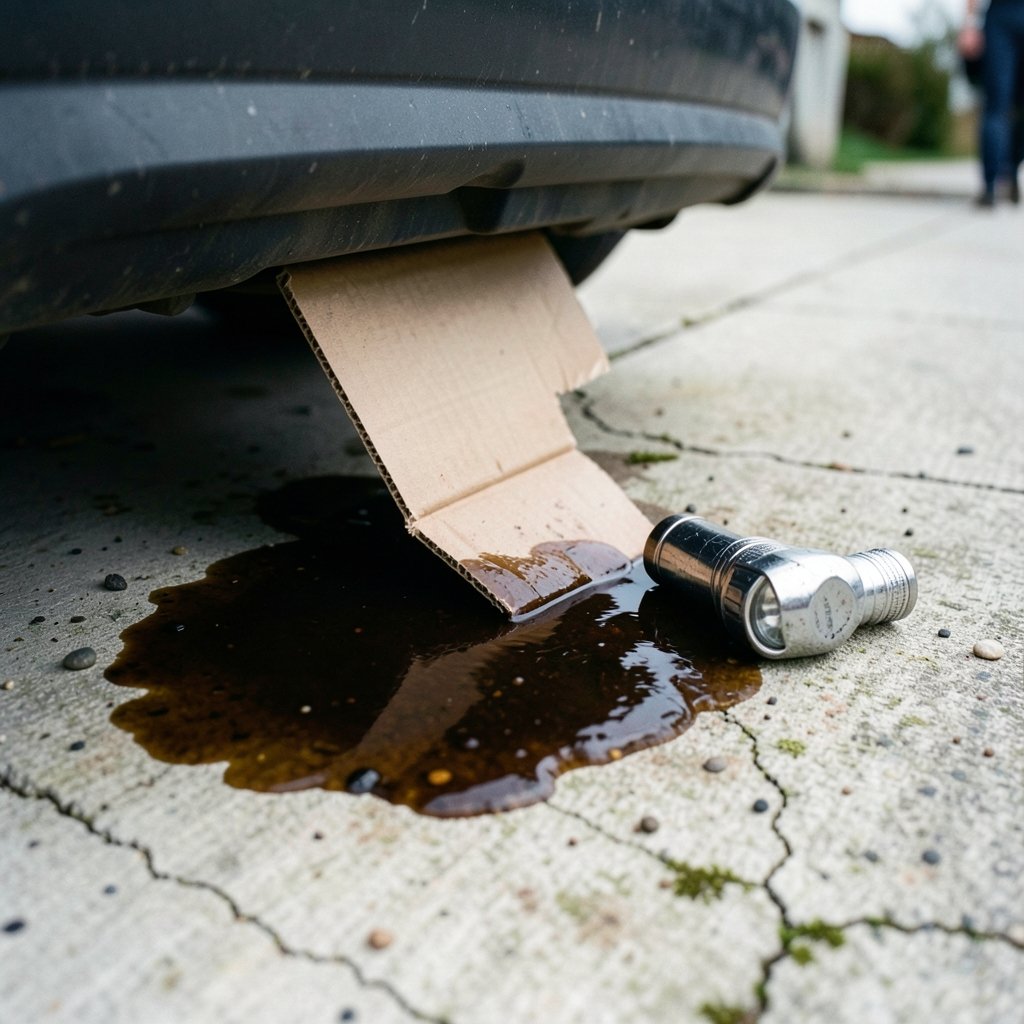
A car leaks oil because a seal, gasket, plug, or filter has stopped holding pressure, and the oil escapes where parts meet or where a fitting has loosened. The most common sources are the valve cover gasket, oil pan gasket, rear main seal, drain plug, and oil filter, and most drivers can narrow down which one is guilty with a clean engine, a piece of cardboard, and a flashlight. (Avocado oil eczema science says about flares moisture)
Not every drip is engine oil, though. Transmission fluid, power steering fluid, coolant, and brake fluid can all leave puddles that look similar, and the color and texture of the spot usually give it away. A slow seep that never lowers the dipstick is a very different problem from a steady drip that empties the sump in a week.
Before spending money, check the oil level and color, the exact spot location under the car, whether the leak only appears after parking, any burning smell, and how fast the level drops.
A Drip on the Driveway Is Your Engine Talking
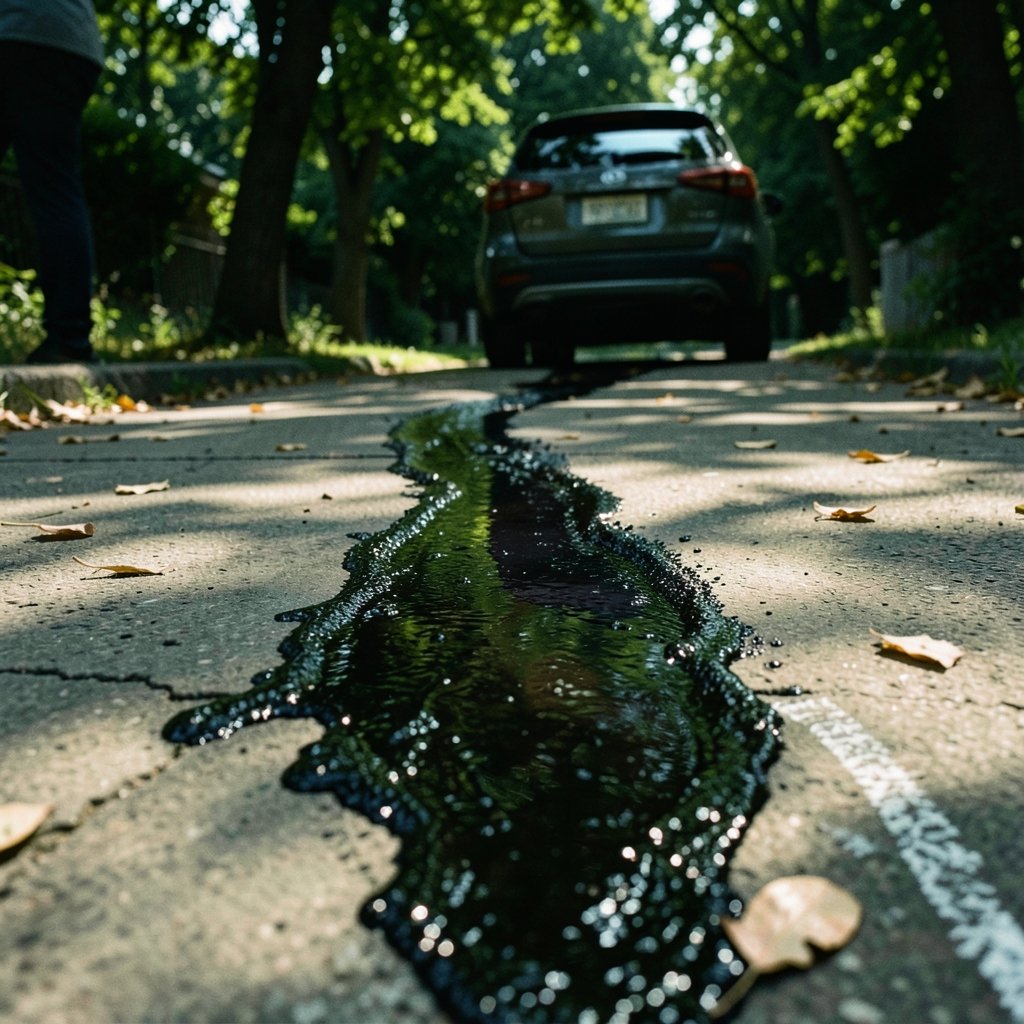
Ever walked out to your driveway and spotted a dark, glossy stain where your car sat overnight? That little puddle is one of the most common complaints mechanics hear, and it is also one of the most misunderstood. An oil leak is rarely an emergency in the first hour and rarely harmless in the first month. The difference between the two comes down to where the oil is escaping and how fast.
The tricky part is that the spot on the ground almost never sits directly under the leak. Oil runs along the engine, drips onto splash trays, and blows backward while you drive. A leak at the front of the engine can leave its mark near the rear bumper. That is why guessing from the stain alone wastes time and money.
First, Confirm It Is Actually Engine Oil
Before chasing gaskets, make sure you are chasing the right fluid. Engine oil is typically amber to black, slippery, and smells like petroleum. Transmission fluid is often reddish and has a sharper smell. Coolant tends to be green, orange, or pink and smells sweet. Brake fluid is nearly clear and feels thin.
A simple trick works well: slide a clean sheet of cardboard under the engine overnight and check the color and position of the stain in the morning. Note whether the drip lands toward the front, middle, or rear of the engine bay. That one detail narrows the suspect list enormously.
Also check the oil level on the dipstick. A leak that has not moved the level in a week is a seep. A leak that drops the level noticeably between checks is active and needs attention soon.
The Usual Suspects, Ranked by How Often They Fail
Most leaks come down to a handful of parts that wear out on a predictable schedule. Rubber hardens, heat cycles take a toll, and pressure finds the weak point.
Worn valve cover gaskets
The valve cover sits on top of the engine, and its gasket seals the joint. Heat makes the rubber brittle and flat over time, and oil seeps down the side of the engine. This is one of the most frequently reported leak sources, and it often shows up as oil on the exhaust manifold, which produces a burning smell after you park.
Oil pan gasket and drain plug
The oil pan holds the oil when the engine is off, so its gasket and drain plug are prime leak candidates. A missing or crushed drain plug washer, or a plug that was never torqued properly after an oil change, is a classic cause of a fresh drip. If the leak started right after a service, start here.
Oil filter problems
A filter that was installed with dirty threads, double-gasketed, or simply left loose will leak under pressure. Filters also degrade over thousands of miles, and a clogged filter can force oil out at the seams. It is a cheap part to check and a cheap part to replace.
Rear main seal and front crank seal
There are two crankshaft seals, one at each end of the engine. The rear main seal is the expensive one because the transmission usually has to come out to reach it. Oil appearing at the bell housing is the telltale sign, though that area can be misleading, as one technical service bulletin points out.
Timing cover and head gasket
Timing cover leaks are common on higher-mileage engines and often get mistaken for oil pan leaks because the oil runs down the same path. A head gasket leak is more serious and usually comes with coolant loss or white exhaust smoke.
| Leak source | Typical location of drip | Difficulty | Rough cost pattern |
|---|---|---|---|
| Drain plug or washer | Directly under the pan | Easy | Low |
| Oil filter | Under the filter housing | Easy | Low |
| Valve cover gasket | Side of engine, top area | Moderate | Moderate |
| Oil pan gasket | Under the engine, spread out | Moderate | Moderate |
| Rear main seal | Rear of engine, bell housing | Hard | High |
Why the Spot on the Ground Lies to You
Here is a fact that surprises a lot of drivers: the puddle is often nowhere near the leak. Oil follows gravity along the engine block, crossmembers, and underbody panels, then drips off the lowest point it can find. Cars with a splash tray make this worse because the oil pools on the tray and spills off one edge.
The fix is to clean the engine first. Degrease the block, let it dry, then drive normally for a day or two and inspect with a bright light. A fresh trail of oil leading upward to its origin is far easier to read than a stain on concrete.
The Cardboard and UV Dye Method That Actually Works
Two low-tech tools solve most leak mysteries.
The cardboard test: park over clean cardboard overnight and mark where the stain appears relative to the engine bay. Repeat for two or three nights to confirm the pattern.
The dye test: many factory engine oils already contain a UV leak detection dye, so a black light can make a fresh trail glow. Aftermarket dye kits are inexpensive and work the same way. One caveat comes straight from a manufacturer service bulletin: some fluids that look like oil, such as rust-preventive coatings applied during assembly, contain no dye and will not glow, which can send you hunting in the wrong place.
If you are also fighting a weak air conditioner at the same time, the diagnostic logic is similar: find the component that stopped sealing rather than topping up and hoping. The same patient approach in this guide to fixing air that isn’t cold pays off.
How Serious Is It, Really?
It depends on the rate. A seep that leaves a faint film and never changes the dipstick reading can often wait for your next service visit. A drip that produces a quarter-sized spot nightly deserves a look within weeks. A leak that drops the oil level between fill-ups, or that produces blue smoke and a burning smell, needs attention now.
Running low on oil is what actually kills engines. Oil lubricates, cools, and carries away contaminants, and once the level falls far enough, bearings and camshafts wear fast. A cheap gasket today beats a rebuilt engine later.
There is also a safety angle. Oil dripping onto a hot exhaust manifold can smoke, and oil on a driveway is a slip hazard. Oil that reaches a drive belt can cause squealing and slipping.
What It Costs and What You Can Do Yourself
The price range for oil leak repairs is enormous because the parts are usually cheap and the labor is usually not. A drain plug washer is pocket change. A valve cover gasket is a modest job on most engines. A rear main seal can run into four figures because of the transmission removal.
Drivers who want to handle the easy end themselves should start with the filter, the drain plug, and a visual inspection of the valve cover. Anything requiring the pan to come off or the transmission to be separated is best left to a shop with a lift.
Mistakes People Make When Chasing a Leak
The most common error is overfilling. Adding oil every week without finding the leak masks the problem and can cause foaming and seal damage. The second is assuming the first visible wet spot is the source, when it is usually just the lowest point. The third is using stop-leak additives as a permanent fix. They can swell seals temporarily, but they do not repair cracked gaskets and can clog narrow passages.
A fourth mistake is skipping the PCV system. A clogged crankcase ventilation valve builds pressure inside the engine and pushes oil out of every weak seal. Checking it is cheap and often explains a sudden increase in seepage.
When to See a Mechanic
Book a diagnosis if the oil level drops noticeably within a week, if the leak returns right after a repair, if you see smoke from the engine bay, or if the oil warning light comes on. Also go in if the drip is at the rear of the engine, since that area hides the expensive seals. A technician with a lift and a black light can trace in twenty minutes what might take you a weekend on your back.
Owners of European models should know that some leaks are known patterns rather than random failures. Shops that specialize in these cars keep notes on recurring issues, and there are dedicated resources on Mercedes-Benz oil leak trends worth mentioning to your mechanic if you drive one. (Mercedes electric car)
Prevention That Genuinely Helps
Change oil on schedule with the right specification, and replace the drain plug washer at every change. Keep the PCV system clean. Fix small seeps before they become drips. Wash off oil residue so you can spot a new leak quickly. And check the dipstick monthly, which takes thirty seconds and catches almost every problem early.
Conclusion
An oil leak is a message, not a mystery. The puddle is the engine telling you that a seal, gasket, or fitting has stopped doing its job, and the sooner you trace it, the cheaper the conversation gets. Start with the fluid color, the cardboard test, and a clean engine bay. Check the easy parts first, respect the ones that require a lift, and never let the dipstick run low while you decide. A few careful minutes of diagnosis will save you hours of guessing, and quite possibly the engine itself.
Frequently Asked Questions
Can I drive with a small oil leak?
Usually yes, for a short time, if the dipstick level stays in range and you check it often. A slow seep that never moves the level is low risk. A steady drip that lowers the level within days is not, because oil starvation damages bearings quickly. Check the level before every drive until it is fixed.
Why does my car only leak oil after it sits overnight?
Gravity is the reason. While the engine runs, oil circulates under pressure and much of it stays inside the galleries. After shutdown, oil drains back to the pan and sits against seals and gaskets for hours, so a weak seal that holds under running conditions can still weep overnight. Parking on a slope makes it worse.
Is a rear main seal leak always the rear main seal?
No, and this is a costly misdiagnosis. Fluid pooling at the bell housing can come from the back of the valve cover, the oil pan, or even a coating applied during assembly that looks exactly like oil. Cleaning the area and using UV dye is the reliable way to tell the difference before authorizing an expensive repair.
Does thicker oil stop a leak?
It can slow a seep temporarily by making the oil harder to push past a worn seal, but it does not fix anything and it changes how the engine lubricates. Modern engines are designed around a specific viscosity. Use the grade the manufacturer specifies and put the money toward the actual repair.
How much oil loss is normal?
Some consumption between changes is normal for many engines, and the owner’s manual usually states an acceptable rate. What is not normal is a sudden change. If consumption jumps from negligible to a quart every few hundred miles, something has failed, whether that is a seal, a gasket, or internal wear.
Can a loose oil filter cause a fast leak?
Yes. A filter that is loose, double-gasketed, or has damaged threads can leak heavily as soon as the engine builds oil pressure, and the drip will land right under the filter housing. If a leak started immediately after an oil change, check the filter and drain plug before anything else.











