

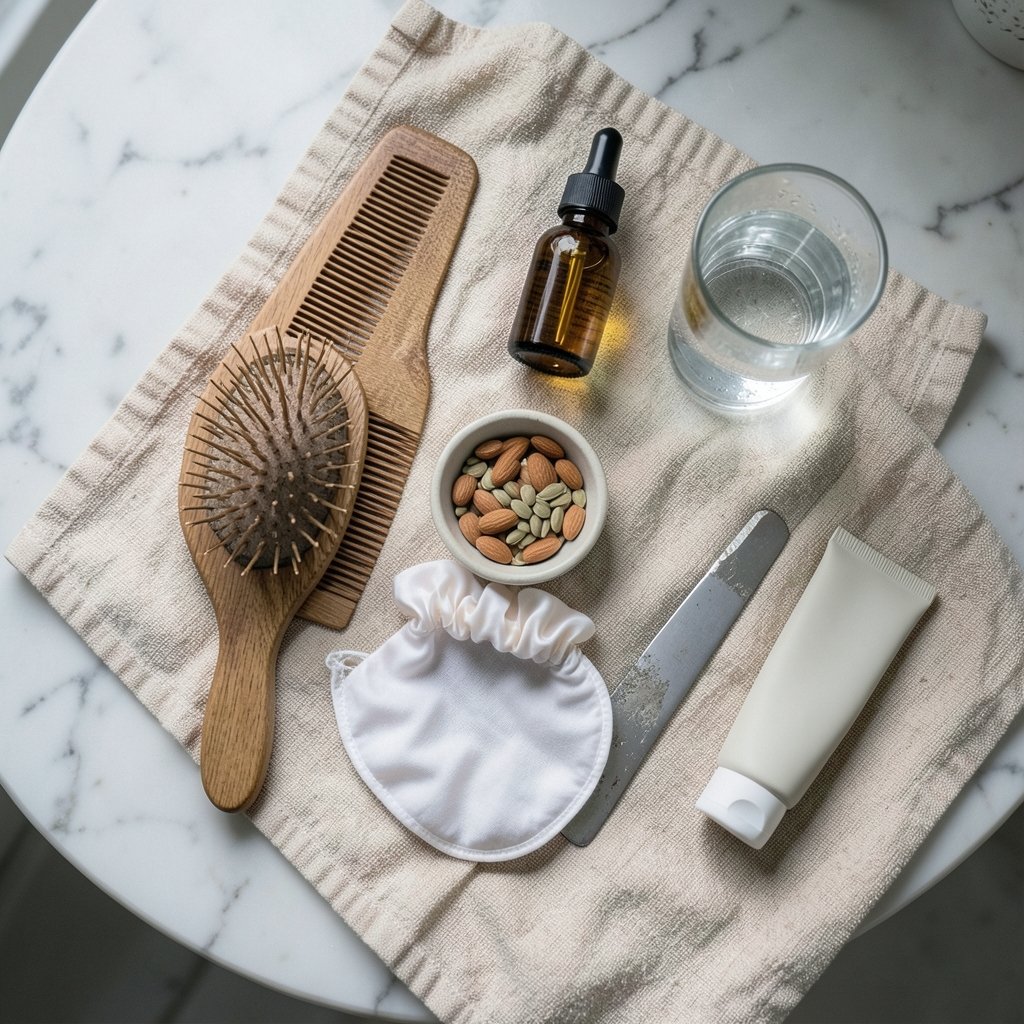
What if the reason your hair, skin, and nails never seem to change isn’t the products you buy, but the way you navigate the process of growing them? Most people treat growth like a shopping problem. They buy one more serum, one more supplement, one more miracle cream. Then they wait two weeks, see nothing, and conclude that their body simply doesn’t cooperate. The truth is less dramatic and far more useful: growth is a slow system, and the people who see results are the ones who learn to steer that system instead of fighting it.
This guide is about navigation, not magic. It covers how to set a realistic course for hair, skin, and nail growth, which habits actually move the needle, where people go wrong, and how to tell whether something is working before you give up on it.
Why Growth Feels So Hard to Navigate
Growth is one of the few areas of self-care where effort and results are separated by time. You can eat well, sleep eight hours, and apply a treatment every night for a month and see almost nothing in the mirror. That delay is not a sign of failure. It is biology.
Hair grows roughly half an inch per month on average, though the pace varies widely from person to person. Fingernails grow a bit faster, around a tenth of an inch per month. Skin renews itself on a cycle of roughly four to six weeks. None of these timelines respond to urgency. They respond to consistency.
The practical takeaway is that any growth plan needs a review window measured in months, not days. People who judge a routine after ten days are not testing it. They are guessing. A better approach is to pick a small number of habits, commit to them for at least eight to twelve weeks, and track something concrete along the way, such as a photo taken in the same light on the first of each month.
Start With the Basics Before You Buy Anything

It is tempting to begin with products, because products feel like action. But the foundation of any growth routine is unglamorous: sleep, nutrition, hydration, and gentle handling. Skip these and even the best serum has little to work with.
A few practical anchors help most people:
- Aim for consistent sleep and wake times, since growth and repair processes follow the body’s internal clock.
- Eat enough protein, iron-rich foods, and a varied diet, because hair and nails are built from what you eat.
- Drink water throughout the day rather than in one large glass at night.
- Reduce physical stress on hair and nails, including tight styles, harsh brushing, and using nails as tools.
None of this is exciting, and that is precisely why it works. When someone says a product “did nothing,” the honest question is often whether the basics were in place at all. A body that is short on sleep and nutrients will deprioritize hair and nail growth long before it deprioritizes vital functions.
Choosing Products Without Getting Lost
Once the basics are steady, products can help. The key is to choose fewer, better-targeted ones. If you are comparing options, a solid starting point is understanding what a well-formulated hair growth serum actually contains and how it is meant to be used, rather than buying whatever is trending.
Ingredients matter more than packaging. Some of the most discussed include caffeine, rosemary oil, peptides, niacinamide, and minoxidil, which is a clinically studied ingredient rather than a cosmetic one. Each works differently, and each has a realistic timeline. It helps to know the best hair growth ingredients before spending money, because a label full of botanical extracts can still be mostly water and fragrance.
For anyone building a routine from scratch, browsing a curated set of hair growth serums is more efficient than scrolling through endless reviews. Look for short ingredient lists, clear usage instructions, and a stated timeframe. A product that promises results in three days is telling you something about its marketing, not its science.
Navigating Growth for Different Hair Types
Growth advice is not one-size-fits-all. Tightly coiled hair, for example, faces different challenges. Curl patterns make it harder for natural oils to travel down the strand, so dryness and breakage become the real enemies. Length retention matters more than raw growth speed.
If that describes your hair, the priority shifts toward moisture, gentle detangling, protective styling, and avoiding over-manipulation. A detailed guide to 4C hair care is worth reading before investing in growth products, because breakage can quietly cancel out every inch of new growth. The same logic applies to anyone with fine or fragile hair: if you are losing length as fast as you gain it, no serum will fix the math.
This is where many people go wrong. They chase growth when the actual problem is retention. A simple test helps: look at the hair that ends up in your brush or shower drain. If it is more than you expect, address breakage and shedding first.
Nails and Skin Follow the Same Rules
The navigation principle carries over to nails. Strong nails come from consistent care rather than occasional rescue treatments. Keeping nails filed, moisturized, and protected from harsh cleaning chemicals does more than most strengthening products. Cutting back on acetone-based removers and giving nails breaks between polish sessions also helps.
If you want a structured approach, a guide to nail growth can help you separate habits that genuinely strengthen nails from habits that only feel productive. Biting, picking, and using nails to open packages are the quiet saboteurs. They undo weeks of progress in seconds.
Skin works the same way. Sun protection, gentle cleansing, and patience outperform elaborate routines. Adding five new actives at once makes it impossible to know what is helping and what is irritating. Introduce one change at a time, and give it several weeks.
What Actually Works in Practice
After looking at how people succeed and fail with growth routines, a few patterns stand out.
| Approach | What It Looks Like | Typical Outcome |
|---|---|---|
| Product hopping | New serum every few weeks | Little visible change, wasted money |
| Single-ingredient focus | One proven active used consistently | Modest but measurable improvement |
| Basics-first routine | Sleep, nutrition, gentle handling, then products | Steady progress with fewer setbacks |
| Tracking and review | Monthly photos, same light, same angle | Clear evidence of what works |
The most common mistake is changing too many variables at once. If you start a new serum, a new shampoo, and a new supplement in the same week, you learn nothing when things improve or worsen. Change one thing, hold everything else steady, and give it a fair window.
The second mistake is confusing sensation with results. A tingling scalp or a cooling cream feels like proof that something is happening. It is not. Mild irritation is a side effect, not a signal of growth.
The third mistake is ignoring the cost of stress on the body. People often underestimate how much illness, poor sleep, crash dieting, and high stress affect hair and nails. In practice, fixing sleep does more than adding a fourth product.
Building a Routine You Can Actually Keep
Navigation is mostly about route planning. A routine that fits your real life beats an ambitious one you abandon in two weeks. A workable structure looks like this:
- Pick two or three core habits and write them down.
- Attach each habit to something you already do, such as applying a treatment after brushing your teeth.
- Set a review date eight to twelve weeks out and put it in your calendar.
- Take a baseline photo and repeat it on the review date.
- Adjust one variable at a time based on what you observe.
For those who prefer natural routes, exploring natural hair growth treatments can be useful, but the same rules apply: consistency and realistic timelines matter more than the label on the bottle.
When to See a Professional
Some growth concerns are not routine. Sudden shedding, patchy hair loss, brittle nails that break constantly despite good care, or skin changes that do not improve over months are worth a medical conversation. These can point to thyroid issues, iron deficiency, hormonal shifts, or other conditions that no cosmetic product will resolve.
Knowing when to escalate is part of navigating well. A dermatologist or doctor can run tests that reveal what a mirror cannot. Treating an underlying cause is faster and safer than layering more products on top of a problem you cannot see.
Conclusion
Growth is not a product you buy. It is a direction you choose and then hold, patiently, for longer than feels comfortable. The people who see results are rarely the ones with the most products. They are the ones who fix the basics, choose a small number of evidence-backed steps, track honestly, and give their bodies the time they actually need. Whether you are working on hair, skin, or nails, the route is the same: start simple, stay consistent, and review before you revise.
Frequently Asked Questions
How long does it take to see growth results?
Most people need at least eight to twelve weeks of consistent habits before visible change appears. Hair grows slowly, roughly half an inch per month on average, and skin renews on a cycle of several weeks. Judging a routine before two months have passed usually leads to abandoning something that was quietly working.
Do growth serums actually work?
Some do, and many do not. Results depend on the ingredients, the concentration, how consistently the product is applied, and whether the basics like sleep and nutrition are in place. Serums with clinically studied actives have more support than those built mainly on fragrance and botanical extracts. A fair trial lasts months, not days.
What is the biggest mistake people make with growth routines?
Changing too many things at once. When someone starts a new serum, shampoo, and supplement in the same week, they cannot tell what helped or what caused a reaction. Changing one variable at a time and holding everything else steady is slower but far more informative.
Can diet really affect hair and nail growth?
Yes. Hair and nails are built from nutrients, so protein, iron, and a varied diet matter. Severe restriction, crash dieting, and nutrient gaps often show up first in hair shedding and weak nails. Fixing the diet is usually more impactful than adding another topical product.
Should I see a doctor about hair loss?
If shedding is sudden, patchy, or accompanied by other symptoms, yes. Sudden changes can point to thyroid issues, iron deficiency, or hormonal shifts that no cosmetic product will fix. A medical professional can run tests and identify causes that are invisible in the mirror.
How do I know if a product is working?
Track it. Take a photo in the same light and at the same angle on the first of each month, and note any changes in shedding, breakage, or nail strength. Objective records beat memory, especially over weeks when progress is subtle. If nothing changes after a fair trial, move on without guilt.
One last practical note: write your plan down and keep it where you will see it. A short list on the bathroom mirror or a note in your phone beats a mental checklist that quietly dissolves by week three. Share the plan with someone who will ask about it, because gentle accountability keeps routines alive when motivation dips. And set a realistic budget. Consistent basics and one well-chosen product cost far less over a year than a drawer of abandoned experiments. Growth rewards the boring, repeatable choice made on an ordinary Tuesday, not the dramatic overhaul made once and forgotten. Start where you are, with what you already have, and let time do the rest.














