

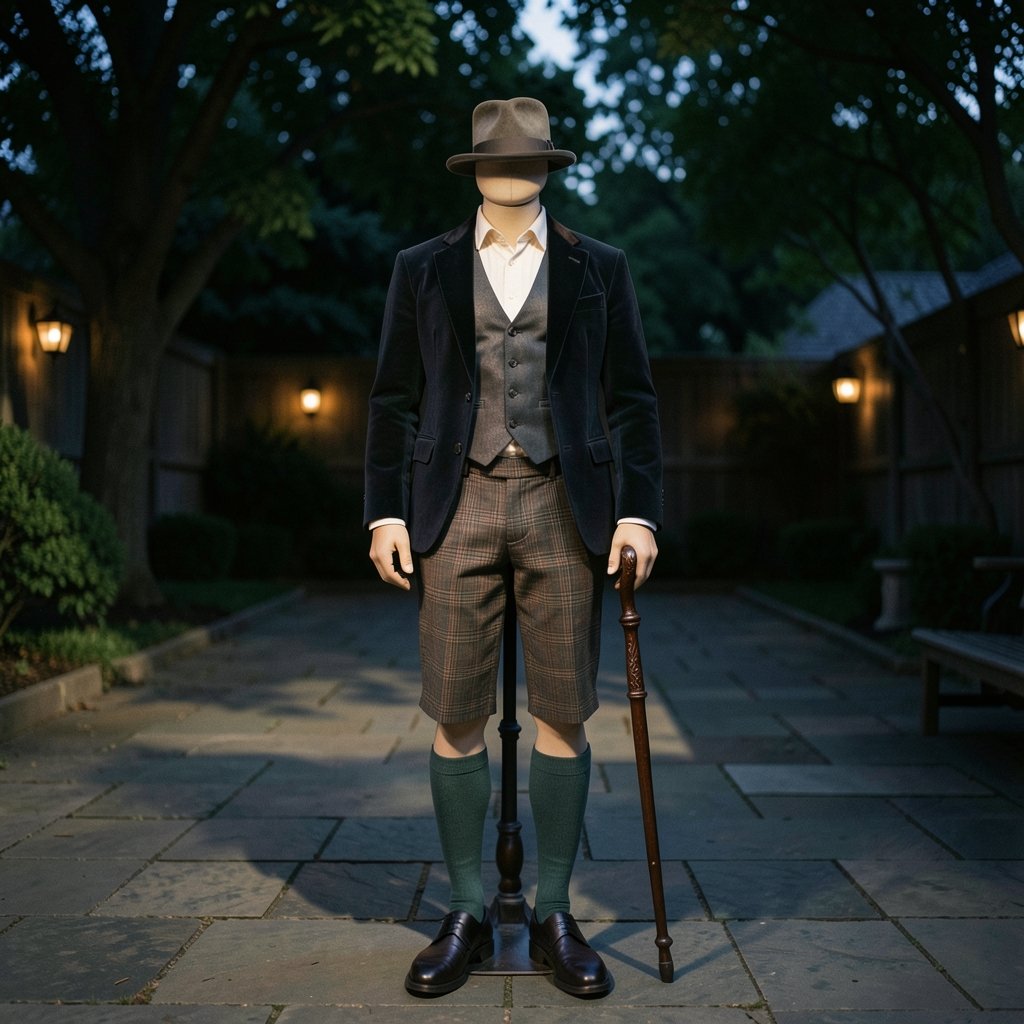
What happens when a fashion subculture borrows the wardrobe of a storybook prince and then hands it to anyone who wants to wear it? That question runs through ouji fashion, a Japanese street style that turns knee shorts, waistcoats, and knee socks into a full visual identity. It is playful, meticulous, and often misunderstood. It is also one of the most quietly radical corners of the alternative fashion world.
Ouji (王子) literally means “prince” in Japanese. In practice, the term describes a style built around the silhouette of an aristocratic boy: cropped trousers or knickerbockers, high socks, button-up shirts, tailored jackets, and accessories that range from top hats to walking canes. Think less “royal family portrait” and more “character who wandered out of a Victorian children’s book and onto a Tokyo street.”
Where Ouji Fashion Comes From
Ouji is usually grouped with Lolita fashion, the Japanese street style known for bell-shaped skirts, petticoats, and ornate detailing. If Lolita is the “girl mode” of that scene, ouji is often described as its “boy mode” counterpart. The two share boutiques, indie brands, and a whole ecosystem of conventions and photo meetups. They also share a certain seriousness about construction: trims, fabrics, and tailoring details matter enormously.
The style is closely tied to the Gothic and Lolita scene and to publications like Gothic & Lolita Bible, a Japanese magazine that helped codify the look from the early 2000s onward. That magazine gave readers a visual vocabulary for the style and connected it to brands, sewing patterns, and community events. The exact origins of the pairing between Lolita and ouji are uncertain, and different communities tell slightly different stories about how the “prince” look emerged as its own category.
What is clear is that ouji grew up inside a scene that treated dressing up as a craft, not a costume. That distinction matters. Ouji is not typically treated as cosplay. It is a wearable style with its own rules, its own etiquette, and its own internal debates.
Ouji, Boystyle, and Kodona: Sorting Out the Terms

One of the first things a newcomer notices is that the vocabulary is messy. Ouji, boystyle, and kodona get used almost interchangeably, and usage varies by community. There is no single authority defining these terms, which means arguments about labels are common and rarely resolved.
Broadly speaking, boystyle is the umbrella label for the masculine-leaning side of the Lolita scene. Ouji is the most widely used term for the prince-inspired look. Kodona is often used for a more casual, punk-adjacent variant, though some people use it as a synonym for ouji itself.
| Term | Typical use | Vibe |
|---|---|---|
| Ouji | Prince-inspired look with shorts, socks, vests | Storybook, tailored, ornate |
| Boystyle | Umbrella term for masculine-leaning Lolita fashion | Broad, scene-level label |
| Kodona | More casual or punk-adjacent variant | Relaxed, edgier, less formal |
| Aristocrat | Longer trousers, more mature and formal | Adult, understated, elegant |
The practical takeaway: don’t expect precision. If someone says “kodona,” they may mean something specific or they may just mean “the prince thing.” Ask, don’t assume. The terminology is contested, and that is part of the culture.
The Anatomy of an Ouji Outfit
The visual markers of ouji are commonly cited and fairly consistent across the scene. The core pieces are knee-length shorts or knickerbockers, high socks or tights, button-up shirts, waistcoats, and tailored jackets. Accessories like canes, hats, and gloves show up often, though the more theatrical the accessory, the more it tends to be reserved for events rather than daily wear.
The silhouette
The silhouette is the whole point. Ouji works because it plays with proportion: cropped legs, high socks, and a fitted top half create a deliberate, almost doll-like line. Getting that line right matters more than any single piece. A perfect vest with the wrong trouser length will read as “office casual,” not “prince.”
Fabric and detail
Look closely at well-executed ouji outfits and you’ll notice the details: piping, contrasting buttons, lace trim at the collar, ribbon ties, and structured shoulders. These are the same craft signals that define Lolita fashion, redirected into a different shape. This is why the style rewards patience. Cheap versions of these garments tend to lose the details that make the look work.
Color and pattern
Classic ouji leans toward deep tones: navy, black, burgundy, forest green, and cream. Plaids, stripes, and subtle prints appear often. The palette tends to be more restrained than Lolita’s, which is one reason ouji can read as surprisingly wearable to people who find frills intimidating.
The Brands Behind the Look
Brands often named in this space include Moi-même-Moitié, Atelier Boz, and Alice and the Pirates, a line of Baby, the Stars Shine Bright. These associations come from the scene’s own history and may shift over time as brands change direction or close. The broader point is that ouji has always depended on a small network of indie and specialty labels rather than mainstream retail.
That niche status cuts both ways. On one hand, it keeps the style distinctive and community-driven. On the other, it makes shopping harder. Sizing is often limited, restocks are unpredictable, and secondhand markets carry real weight. For anyone serious about the style, learning to navigate resale communities and sewing your own pieces is not a hobby but a practical skill.
The Gender Conversation
Ouji has a cross-dressing and gender-play dimension that writers often discuss, and it is one of the most interesting things about the style. But how participants themselves frame it varies widely. Some wearers see ouji as a way to explore masculine presentation. Others see it as pure aesthetics, a costume-adjacent joy with no gender statement attached. Others still treat it as a form of drag or performance.
There is no single correct reading, and the community does not agree on one. What can be said is that ouji, like much of Japanese street fashion, treats gender presentation as a material to work with rather than a fixed rule. That openness is part of why the style attracts people who feel boxed in by conventional menswear and womenswear alike.
If you want a sense of how deeply gender play runs through modern fashion, the story of how 2010s fashion athleisure streetwear and Instagram rewrote the rules is a useful parallel. The same decade that made streetwear global also made room for niche styles to find audiences far beyond their home cities.
How to Start Wearing Ouji Without Getting It Wrong
Practical advice matters more than theory here. Here is what actually works, based on how the style is worn in practice.
- Start with the silhouette, not the accessories. Get the shorts-and-socks proportion right before you buy a top hat. A single well-fitted outfit beats a pile of statement pieces.
- Invest in one good vest or jacket. Tailoring is where the style lives. A structured waistcoat in a deep tone will carry an outfit further than three cheap shirts.
- Choose sock height deliberately. Knee socks and over-the-knee socks read differently. Match the height to the trouser length so the leg line stays intentional.
- Keep the palette tight. Two or three colors, repeated across pieces, will look more considered than a rainbow of separates.
- Check the details in person or in close-up photos. Piping, buttons, and trim quality are what separate ouji from generic “vintage boy” dressing.
- Learn the etiquette. Ouji is worn in community spaces, and conventions and meetups have norms about photography, touching, and personal space. Respect them.
Common mistakes
The most common mistake is treating ouji as a costume. Full theatrical accessories at a casual meetup can read as tone-deaf. The second most common mistake is ignoring fit: oversized shorts and baggy shirts destroy the silhouette. The third is buying cheap imitations that photograph well but fall apart after two wears. The style rewards patience and a bit of research.
If you are building a wardrobe from scratch, it helps to study how fashion media frames seasonal change. A resource like the 2026 fashion trends guide can help you spot which broader trends, such as tailoring revivals or gender-fluid silhouettes, are worth borrowing and which will date fast. Ouji has its own internal logic, but it does not exist in a vacuum.
Ouji in the Wider Fashion Conversation
Ouji is niche even within Japanese street fashion. It is far more visible online and at conventions than in mainstream retail. That has not stopped its ideas from leaking outward. Tailored shorts, waistcoats, and gender-fluid tailoring appear regularly in high fashion, and the line between “runway” and “subculture” has never been blurrier.
Part of that blur comes from how fashion now circulates. Illustrators and creators translate runway moments into shareable images, and those images travel faster than the garments themselves. Work like Angelica Hicks’ fashion illustration shows how a single drawing can carry a silhouette into a thousand wardrobes. Ouji has benefited from the same dynamic: it spreads through photos, drawings, and community posts rather than through advertising budgets.
The style also sits comfortably alongside the broader interest in Italian luxury fashion and its emphasis on tailoring, fabric, and construction. Ouji is not luxury fashion, but it shares the same respect for craft. That overlap is why so many people who love classic menswear find themselves drawn to the prince look.
For readers tracking how niche aesthetics move into the mainstream, the fashion trends 2026 conversation is worth following. So is the way 2026 fashion trends for women keep borrowing from menswear tailoring. Ouji has been doing that borrowing for two decades, and it has lessons to offer.
Why Ouji Still Matters
Ouji is small, contested, and occasionally confusing. It is also a genuinely interesting example of how a subculture can build a complete visual language from a simple idea: dress like the boy from the storybook, but do it with intention. It rewards craft, punishes laziness, and refuses to settle the question of what it means.
That refusal is the point. In a fashion landscape that often rewards speed and sameness, ouji asks wearers to slow down, learn the rules, and then decide which ones to break. Whether you come to it for the tailoring, the gender play, or the sheer joy of a well-chosen pair of knee socks, the style offers something rare: a look that is unmistakably yours.
Frequently Asked Questions
What does ouji mean in fashion?
Ouji is Japanese for “prince.” In fashion, it names a style modeled on a storybook or aristocratic boy, built around cropped trousers or knickerbockers, high socks, button-up shirts, waistcoats, and tailored jackets. It is usually grouped with Lolita fashion as its masculine-leaning counterpart.
Is ouji the same as Lolita fashion?
No, but they are closely related. Ouji is often described as the “boy mode” of the Lolita scene, sharing boutiques, indie brands, and community events. The two styles share a craft-first approach to clothing, but the silhouettes and typical garments are different.
What is the difference between ouji and kodona?
The terms overlap heavily. Ouji is the most common label for the prince-inspired look, while kodona is often used for a more casual or punk-adjacent variant. Usage varies by community, and there is no single authority defining either term.
Can anyone wear ouji fashion?
Yes. Ouji is worn by people of many genders and body types. The style is built on proportion and tailoring rather than a specific body, so the key is getting the silhouette right: cropped legs, high socks, and a fitted top half. Community etiquette matters more than any physical requirement.
Do you have to buy from Japanese brands to wear ouji?
No. Specialty Japanese labels are central to the scene’s history, but many wearers sew their own pieces, buy secondhand, or adapt mainstream tailoring. What matters is the silhouette and the details, not the label inside the collar.
Is ouji fashion expensive?
It can be, especially if you chase rare pieces from specialty brands. But it does not have to be. Starting with one well-fitted vest or jacket, learning basic alterations, and shopping resale communities can keep costs manageable. The style rewards patience more than spending.














