


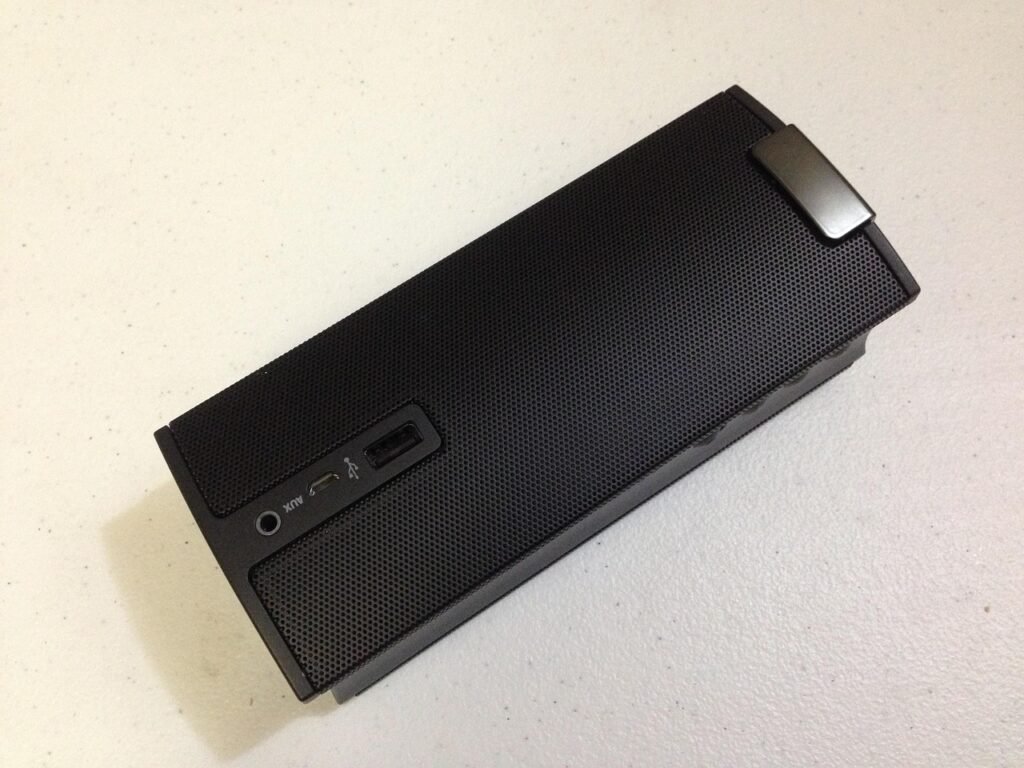
What if the speaker with the biggest wattage number sounds worse than the one that costs half as much? That happens more often than shoppers expect. The “best” Bluetooth speaker is not a single model. It is the one that matches how you actually listen, where you listen, and what you are willing to carry.
This guide skips the hype and focuses on the specs that genuinely change your experience: codecs, IP ratings, battery claims, and the features that separate a good buy from a regret.
Start With Where the Speaker Will Live
Buying decisions usually go wrong at step one: people shop by brand or price before thinking about the room. A speaker that shines on a kitchen counter may struggle at a beach, and a rugged trail companion can sound thin in a living room.
Ask three questions before comparing models:
- Will it stay in one room, move between rooms, or travel outdoors?
- Do you need it to survive water, dust, or drops?
- Will you listen alone at moderate volume, or fill a space for a group?
A portable speaker traded for maximum volume often sacrifices bass depth and clarity. A larger home speaker gives up portability. Deciding which trade-off you can live with narrows the field fast.
Bluetooth Versions: What Actually Matters
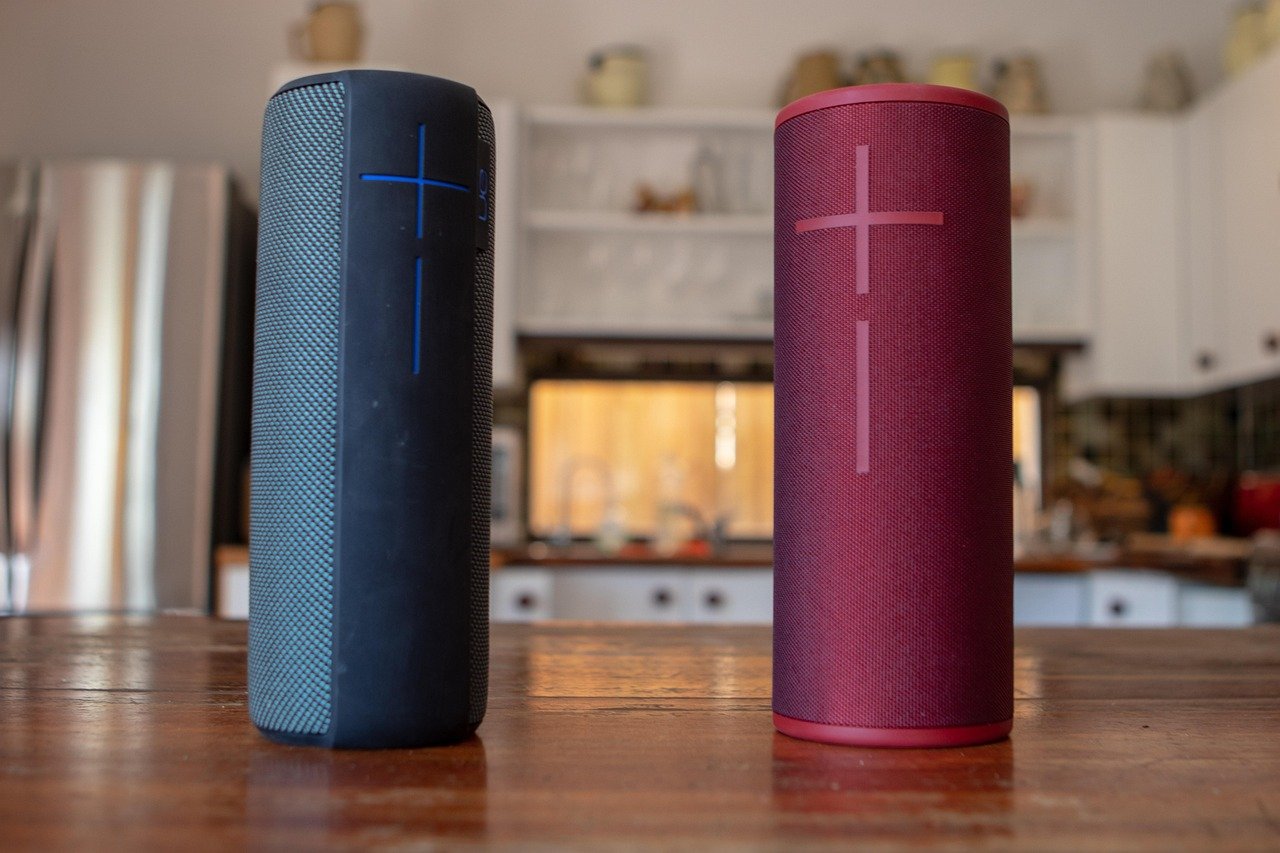
Bluetooth is a short-range wireless standard managed by the Bluetooth SIG. The version number tells you which capabilities the hardware can support, not how good it will sound. Major releases include 5.0 (2016), 5.1 (2019, which added direction finding), 5.2 (2020, which introduced LE Audio), 5.3 (2021), and 5.4 (2023). Reports of a 6.0 release exist, but buyers should verify current details against official specification pages rather than marketing copy.
For speaker shoppers, two version-related features matter most:
- LE Audio and the LC3 codec. Introduced with Bluetooth 5.2, LE Audio is designed to use less power and handle audio more efficiently. LC3 is its codec, and it aims to deliver good quality at lower bitrates than older codecs.
- Auracast. This is broadcast audio over LE Audio, letting one source send sound to many receivers. It is an emerging feature, and real-world adoption is still limited, so treat it as a bonus rather than a reason to buy.
Everything below Bluetooth 5.0 is old enough that you should question the price. A 4.2 speaker in 2026 is a compromise, not a bargain.
Codecs Explained Without the Jargon
A codec is the method used to compress audio before it travels wirelessly. Both your phone and your speaker must support the same codec for it to be used. Here is the practical picture:
| Codec | Typical home | What it means for you |
|---|---|---|
| SBC | Mandatory on all Bluetooth audio devices | Works everywhere, lowest common denominator |
| AAC | Common on Apple devices | Good quality on iPhones; varies on Android |
| aptX | Qualcomm-based phones | Higher bitrate option; needs support on both ends |
| LDAC | Sony-developed | High-bitrate option; real benefit depends on the pairing |
| LC3 | LE Audio | Efficient, lower power, built for modern devices |
The honest takeaway: codec support matters, but pairing compatibility matters more. A speaker with LDAC will not use it if your phone does not support LDAC. Check both ends before paying a premium for a codec you cannot activate. And do not assume a higher-bitrate codec automatically sounds better; driver quality and tuning usually shape the sound more than the codec does.
IP Ratings: Read the Numbers, Not the Badge
IP ratings come from IEC 60529, an international standard for how well an enclosure keeps out solids and liquids. The two digits are not interchangeable, and this is where shoppers get fooled.
- The first digit covers dust. 6 means fully dust-tight.
- The second digit covers water. 7 means immersion to 1 meter for 30 minutes.
So IP67 means dust-tight plus short immersion. IPX7 means the dust rating was not tested, but it survives the same immersion. An IPX4 speaker handles splashes only.
What the rating does not cover: salt water, steam, chlorinated pools, or drops. A beach speaker rated IP67 can still corrode at the charging port if sand and salt stay in it. Rinse and dry according to the manual, and never charge a wet speaker.
Battery Life Claims Deserve Skepticism
Headline battery figures are usually measured at moderate volume, and often with a specific codec. Play loud and runtime drops, sometimes by a third or more. Two speakers advertising “20 hours” can behave very differently.
Look for stated test conditions: what volume level, which codec, and whether features like LED lighting or extra bass modes were switched off. Practical habits that stretch runtime:
- Lower the volume rather than boosting it and using an equalizer to compensate.
- Turn off decorative lighting if the model allows it.
- Keep the speaker out of direct sun; heat drains lithium-ion cells.
- Charge before storage rather than leaving it empty for months.
USB-C charging is now standard on mid-range and up. If a model still uses micro-USB, that is a signal about its age.
Bass, Wattage, and the Numbers That Mislead
Driver size and cabinet design shape bass more than wattage does. Passive radiators, the unpowered cones you sometimes see on the sides, move air to reinforce low frequencies without drawing extra power. That is often why a modestly powered speaker out-thumps a louder rival.
Wattage figures are frequently peak rather than RMS, and there is no universal standard governing how brands report them. Comparing watts across brands is close to meaningless. Trust your ears or a demo, not the box.
Other practical specs worth checking:
- Multipoint pairing. Connects to two devices at once, so a call on your phone does not require re-pairing. Now common on mid-range models.
- Stereo pairing. Linking two identical speakers for wider sound. This is brand-specific and usually requires same-model units, so buy the pair together if that is the plan.
- Speakerphone quality. A built-in mic is handy, but microphone quality varies wildly. Read reviews focused on call clarity.
Matching the Speaker to the Job
Different settings reward different priorities. A quick orientation:
| Setting | Priority | What to avoid |
|---|---|---|
| Kitchen or desk | Clarity at low volume, compact size | Oversized models with boomy bass |
| Living room | Bass depth, room-filling sound | Tiny travel speakers |
| Beach or pool | IP67 or better, rugged build | Fabric grilles that trap sand |
| Hiking and camping | Weight, battery life, dust resistance | Heavy speakers with fragile ports |
| Parties | Volume before distortion, stereo pairing | Speakers that distort when pushed |
If you care about aesthetics as much as audio, color and finish choices have expanded well beyond black boxes. Blue finishes in particular have become a design staple across accessories and gear, much like the long-running appeal of indigo coloration that still defines modern design. A speaker you enjoy looking at is one you will actually use. (Blue Nails: 8 Shades, Designs, and Ideas to Try)
Common Buying Mistakes
These show up again and again in returns and regrets:
- Chasing wattage. Peak wattage numbers are marketing, not a quality measure.
- Ignoring the codec on your own phone. Paying for LDAC or aptX when your phone cannot use it wastes money.
- Over-trusting an IP rating. A high rating does not survive salt, steam, or a drop onto concrete.
- Buying one speaker for stereo later. Stereo pairing needs matching models, and stock on older models disappears.
- Skipping the return window test. Test at your normal listening volume in your actual room during the return period, rather than only in the store.
- Assuming battery life is linear. Loud playback drains cells much faster than the spec sheet suggests.
What Actually Works in Practice
A few habits separate happy owners from frustrated ones:
- Pair the speaker with your own phone in the store or immediately after delivery, and play a track you know well.
- Test at the volume you will really use. Most listening happens well below maximum.
- Check whether firmware updates are available through an app; some models improve noticeably after updates.
- Confirm the charging port cover seals properly if the speaker is rated for water resistance.
- Keep the box and receipt until you have lived with it for a week.
If a speaker is meant for outdoor use, treat the charging port as the weak point. Grit and moisture collect there, and a swollen or corroded port is a common failure. The same “deal with it early” logic applies to most gear problems: small issues handled fast stay small, whether it is a speaker port or a toothache that needs emergency dentist care when your tooth can’t wait.
Safety and Travel Notes
Lithium-ion batteries inside portable speakers fall under air-transport rules set by aviation authorities, which restrict how batteries travel in checked and carry-on baggage. If you fly with a large speaker, check the airline’s current guidance before packing it. In the United States, battery-related recalls are tracked through the Consumer Product Safety Commission’s recalls database, which is worth a quick search if you buy a used or older model.
Also watch for counterfeit or unbranded batteries in very cheap speakers. A suspiciously low price on a high-capacity portable is a red flag.
How to Compare Two Finalists
When you are down to two models, run this comparison:
- Play the same track on both at the same volume.
- Listen for distortion at higher volume, rather than only loudness.
- Check the codec your phone will actually use with each.
- Confirm the IP rating digits, rather than only the badge.
- Read the stated battery test conditions.
- Verify multipoint and stereo pairing support if you need them.
- Check the return policy and warranty length.
The winner is usually the one with fewer compromises in the areas you care about, not the one with the longest spec sheet.
Conclusion
The best Bluetooth speaker is a match, not a trophy. Decide where it will live, how rough it needs to be, and which codecs your phone supports. Then weigh IP ratings honestly, discount headline wattage, and treat battery claims as best-case numbers. Bluetooth 5.2 and later with LE Audio support is a sensible floor for a new purchase, and multipoint plus USB-C charging are reasonable expectations at mid-range prices. Do that, and you will spend less time second-guessing the spec sheet and more time actually listening.
Frequently Asked Questions
Does a higher Bluetooth version mean better sound quality?
No. The version controls features and efficiency, not audio quality directly. Bluetooth 5.2 introduced LE Audio and the LC3 codec, which improve power efficiency, but driver quality and tuning shape sound more than the version number does.
Is IPX7 better than IP67?
They are different, not ranked. IP67 means dust-tight plus immersion protection. IPX7 means the dust rating was not tested, but it survives the same 1-meter, 30-minute immersion. If dust is a concern, IP67 tells you more.
Do I need LDAC or aptX for good sound?
Only if both your phone and speaker support the same codec. Otherwise the feature sits unused. Many listeners are satisfied with AAC or SBC on well-tuned hardware, so test before paying extra for a codec.
Why does my speaker die faster than the advertised battery life?
Battery figures are typically measured at moderate volume, often with specific settings. Loud playback, bass boost modes, and lighting features all shorten runtime. Heat also drains lithium-ion cells faster.
What is multipoint pairing and do I need it?
Multipoint lets one speaker stay connected to two devices at once, so a phone call does not require re-pairing. It is convenient if you switch between a laptop and a phone, and it is now common on mid-range models.
Can I pair two different speaker brands in stereo?
Usually not. Stereo pairing is brand-specific and typically requires two identical models. If you plan to pair later, buy both units at the same time, since matching stock can disappear.











