

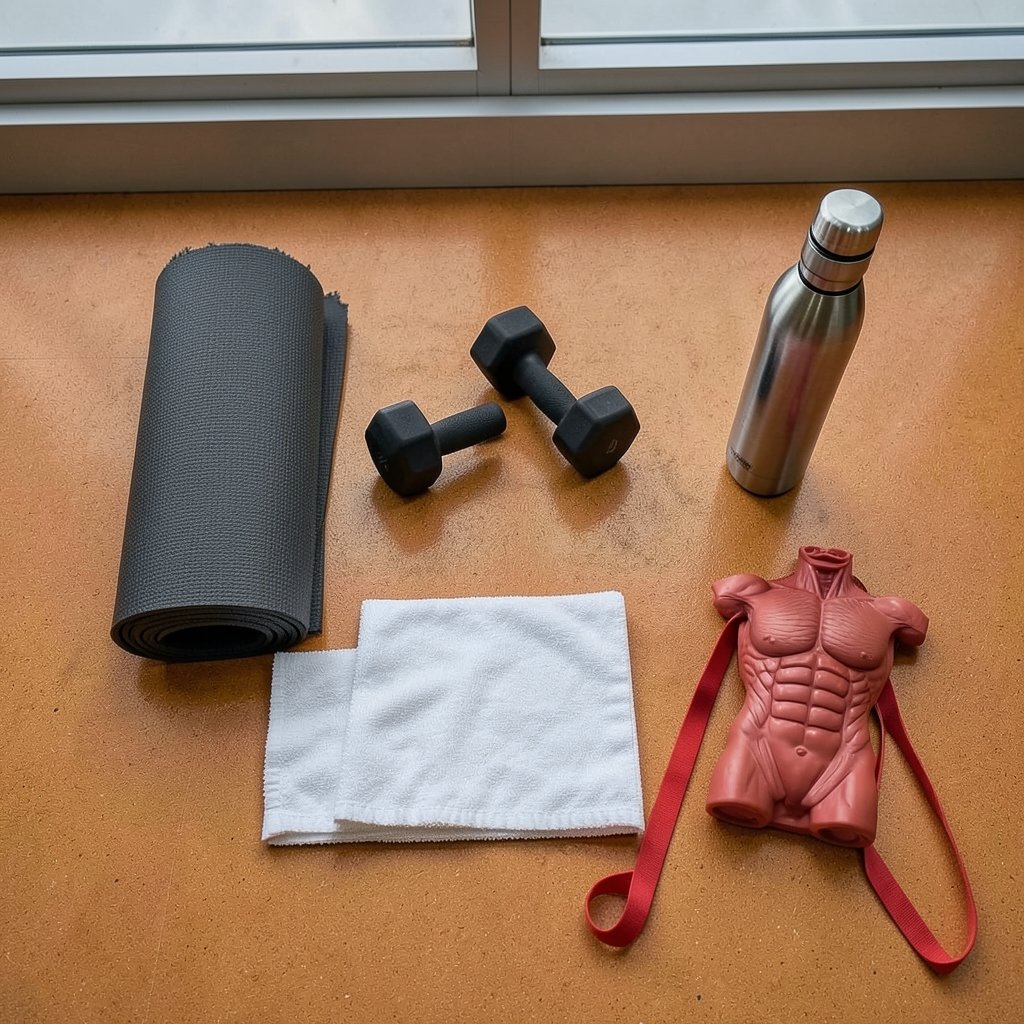
What do you picture when someone says “abs”? Probably a washboard stomach, a fitness influencer mid-crunch, or a before-and-after photo. But the rectus abdominis is far more than a beach-body accessory. It is a pair of long, flat muscles running down the front of your belly, and it does serious structural work every time you sit up, cough, laugh, or lift a bag of groceries.
Understanding this muscle matters whether you are training for visible abs, recovering from pregnancy, or simply trying to keep your lower back happy. Here is a grounded look at its anatomy, its job description, what goes wrong with it, and what training it actually involves.
Where the Rectus Abdominis Sits and What It Looks Like
The name gives away its shape. “Rectus” means straight, and “abdominis” means of the abdomen. So the rectus abdominis is the straight muscle of the belly. It is a paired muscle, meaning there is one on each side of the midline, running vertically from the pubic region up to the lower rib cage and the xiphoid process at the base of the breastbone.
Each side is wrapped in a fibrous sleeve called the rectus sheath. That sheath is formed by the flat aponeuroses of the lateral abdominal muscles: the external oblique, the internal oblique, and the transversus abdominis. The sheath’s structure changes below a landmark called the arcuate line, which is one reason surgeons care a great deal about this region.
What about the famous bumps? The muscle is crossed by tendinous intersections, bands of connective tissue that attach it to the front of the sheath. These bands divide the muscle into segments, which is what creates the “six-pack” look in people lean enough for the segments to show. The usual count is three intersections, but anatomy varies from person to person, so not everyone has the same number of visible blocks, and some people never show distinct segments no matter how lean they get.
Between the two rectus muscles runs a band of connective tissue called the linea alba, the white line down the center of the belly. It is a key player in the diastasis recti story later on.
The Job Description: What This Muscle Actually Does

The rectus abdominis is a flexor, and it has other jobs. Its roles stack up quickly.
| Function | What it means in daily life |
|---|---|
| Trunk flexion | Curling the spine forward, as in sitting up from lying down |
| Compression of abdominal contents | Bracing and squeezing the belly, as in coughing or laughing |
| Pelvic stabilization | Helping hold the pelvis steady during movement |
| Forced expiration | Pushing air out hard during exertion |
| Valsalva maneuver | Building internal pressure to stabilize the trunk under load |
That last point matters more than most people realize. When you lift something heavy and hold your breath to brace, the rectus abdominis is part of the team generating that pressure. It is also why a hard cough can make your abs sore the next day.
The muscle is innervated by the lower thoracic spinal nerves, roughly in the T6 to T12 range, though exact segmental ranges vary between sources. Its blood supply comes from the superior and inferior epigastric arteries.
Rectus Abdominis Is Not “The Core”
Here is a distinction worth making early, because it clears up a lot of confusion in fitness content. The core is a group. It includes the deeper transversus abdominis, the obliques, the diaphragm, and the pelvic floor, among other structures. The rectus abdominis is the superficial flexor of that group.
This matters practically. Someone can have a visible rectus abdominis and still have a weak, unstable core if the deeper muscles are not doing their job. Conversely, someone can have a genuinely strong, functional core with very little visible definition. Visibility is mostly about body fat levels and skin thickness, not about how well the muscle performs.
If you have ever wondered why your abs look different from someone else’s despite similar training, this is part of the answer. Genetics, fat distribution, and the shape of your tendinous intersections all play a role. Hair type works the same way: two people can follow identical routines and end up with very different results because of factors outside their control, a point that comes up often in discussions of 4c hair versus looser textures. The lesson transfers: train for function and health, and let appearance follow as it will.
Diastasis Recti: When the Midline Widens
One of the most common and most misunderstood issues involving this muscle is diastasis recti, a widening of the linea alba between the two rectus muscles. It is especially common during pregnancy and the postpartum period, but it can also appear in people who have never been pregnant.
The important clarification: diastasis recti is not a tear of the muscle itself. It is a widening of the connective tissue at the midline. The muscles move apart, and the tissue between them stretches.
Diagnostic thresholds vary. Sources disagree on the exact inter-rectus distance in centimeters that counts as a diastasis, and the measurement differs depending on whether it is taken by hand or by ultrasound. That inconsistency is worth knowing before you panic about a number you saw online.
Practical signs people notice include a visible ridge or doming down the center of the belly when sitting up or straining, a feeling of weakness in the trunk, and sometimes lower back discomfort. Exercises that create lots of forward doming, like full sit-ups or heavy crunches, are often the ones people are advised to modify while healing. Breathing work, deep core engagement, and posture-focused training are common starting points. A qualified physical therapist or clinician is the right person to assess severity and guide recovery, because the right approach depends on the individual.
How the Muscle Is Trained
The rectus abdominis responds to the same principle as any other muscle: it needs resistance and progressive challenge. Because its main job is trunk flexion, exercises that curl the spine forward under load are the most direct way to train it.
A sensible progression looks like this:
- Start with controlled trunk flexion, such as a slow crunch or a dead bug variation, focusing on exhaling as you curl.
- Add time under tension by slowing the movement down rather than cranking out fast reps.
- Progress to loaded or lever-based variations, such as hanging knee raises or cable crunches, once basic control is solid.
- Train the anti-extension pattern too, like planks and rollouts, because a muscle that can brace against movement is more useful than one that only creates it.
- Keep training the rest of the core, including the obliques and deeper stabilizers, rather than treating the rectus abdominis as the whole story.
Two common mistakes show up again and again in practice. The first is chasing soreness as proof of a good workout. Soreness is not a reliable measure of effectiveness, and the abs can be trained productively without being wrecked for three days. The second is doing hundreds of reps of the same crunch with no progression. That builds endurance in a narrow range and little else.
A third mistake is more subtle: training abs hard while ignoring breathing. The rectus abdominis works closely with the diaphragm, and many people unconsciously hold their breath or flare their ribs during ab work. Slowing down and coordinating breath with movement usually improves both control and comfort.
Electromyography studies have compared different exercises for rectus abdominis activation, but study designs vary enough that definitive rankings of “the best ab exercise” are hard to justify. The honest answer is that several exercises work well, and consistency plus progression matters more than picking the single perfect move.
Rectus Abdominis in Medicine and Surgery
This muscle shows up in clinical contexts well beyond fitness.
It is used as a surgical flap, most famously in breast reconstruction, where a portion of the muscle and its blood supply can be relocated to rebuild tissue. It is also relevant in hernia repair and abdominal wall reconstruction, where surgeons must account for the sheath, the linea alba, and the muscle’s layered anatomy.
Understanding the rectus sheath’s changing structure below the arcuate line has practical consequences for surgeons: it affects where nerves and vessels run and how incisions heal. For the rest of us, it is a reminder that the abdominal wall is a carefully engineered structure rather than a surface to be sculpted.
Common Myths Worth Retiring
A few persistent ideas about this muscle deserve a polite exit.
Myth one: you can target belly fat with ab exercises. You cannot. Spot reduction is not a thing. Training the rectus abdominis strengthens and builds the muscle, but fat loss happens systemically through overall energy balance.
Myth two: crunches are dangerous and should be avoided entirely. Crunches are not inherently harmful for most people, but they are not the only option, and they are not ideal for everyone, particularly people with midline widening or certain back issues. Context matters.
Myth three: visible abs equal a healthy core. As covered above, visibility is mostly about leanness. A strong core is about control, stability, and the ability to brace under load.
Myth four: everyone has a six-pack waiting under the fat. The number of visible segments depends on tendinous intersection anatomy, which varies. Some people have four visible blocks, some have six, some have eight, and some have a smooth surface. This is normal variation, not a training failure.
There is a parallel here to hair typing again. Just as someone with 2b hair and someone with tight coils need different care routines for the same goal of healthy hair, two people training their abs may need different approaches for the same goal of a strong trunk. Individual anatomy sets the starting point.
Practical Takeaways That Actually Hold Up
If you want to get the most out of this muscle, a few habits do most of the work.
Train it two to three times per week with progressive resistance rather than daily high-rep grinding. Include both flexion and anti-extension patterns. Breathe deliberately during the work instead of holding your breath. Pay attention to doming at the midline, especially if you are postpartum, and get it assessed if something looks off. And keep perspective: the rectus abdominis is one part of a system, and a system trained as a whole tends to serve you better than one muscle trained in isolation.
For anyone recovering from pregnancy or abdominal surgery, the practical advice is to work with a professional rather than following a random video. The row of exercises that suits one person’s recovery may not suit another’s, and a clinician can tailor the plan to your actual tissue state.
Conclusion
The rectus abdominis is a straight, paired muscle running down the front of the belly, wrapped in a fibrous sheath, divided by tendinous intersections, and responsible for far more than looking good in a mirror. It flexes the trunk, compresses the abdomen, stabilizes the pelvis, and helps you generate pressure when you cough, laugh, or lift. It can widen at the midline in diastasis recti, it plays a role in surgery, and it responds best to progressive, breathing-aware training rather than endless crunches.
Treat it as one important part of a whole core system. Train it with intention, respect the variation in how it looks from person to person, and get professional guidance when something feels wrong. Your abs do a lot for you. They deserve better than being reduced to a photo.
Frequently Asked Questions
What is the rectus abdominis muscle?
It is a paired, vertically oriented muscle on each side of the front abdominal wall, running from the pubic region to the lower rib cage and xiphoid process. It flexes the trunk, compresses abdominal contents, and helps stabilize the pelvis.
Why do some people have a six-pack and others do not?
Visible segments depend on two main factors: how lean a person is and the anatomy of their tendinous intersections, which varies between individuals. Some people have more segments than others, and some never show distinct blocks regardless of training.
Is diastasis recti a torn muscle?
No. Diastasis recti is a widening of the linea alba, the connective tissue between the two rectus muscles. The muscles move apart and the midline tissue stretches, but the muscle itself is not torn.
Can you lose belly fat by doing ab exercises?
No. Spot reduction does not work. Ab exercises strengthen and build the rectus abdominis, but fat loss happens through overall energy balance across the whole body.
How often should you train the rectus abdominis?
Two to three sessions per week with progressive resistance is a reasonable approach for most people. Daily high-rep grinding is not necessary and can crowd out recovery and other training.
Is the rectus abdominis the same as the core?
No. The core is a group that includes the transversus abdominis, obliques, diaphragm, and pelvic floor, among other structures. The rectus abdominis is the superficial flexor within that larger system.














