


Can you tell a $3,000 handbag from a $300 copy just by holding it? Most people think so. Most people are wrong. Counterfeiters have gotten frighteningly good, and the fakes now circulating look closer to the real thing than ever before. That is why authentication has become a skill, not a gut feeling. This checklist walks through exactly what experts examine, in the order they examine it, so you can work through a bag methodically instead of squinting at a logo and hoping for the best. (Best hospital bag checklist labor pack when)
What You Need Before You Start
Authentication is a comparison game. You cannot judge a bag in isolation. Before you touch the item, gather a few things:
- Reference photos of the same model from the brand’s own site or a trusted resale platform, ideally from the same production era.
- A bright light and a magnifying glass (or your phone’s macro lens). Stitch density and hardware engraving are small details.
- The seller’s story in writing. Ask where and when the bag was bought, whether the receipt and dust bag exist, and whether returns are accepted.
- A price benchmark. Not against retail, but against what that exact model actually sells for on the pre-owned market. A price far below the going pre-owned rate is a warning, not a bargain.
One more thing before you begin: know the production era. A vintage Dior Saddle bag closes with velcro, while a modern one uses a magnet. Details that look “wrong” may simply be period-correct. Authentication specialists start by identifying the brand and manufacturing period precisely because era changes everything that follows.
Step 1: Feel the Leather and Check the Grain
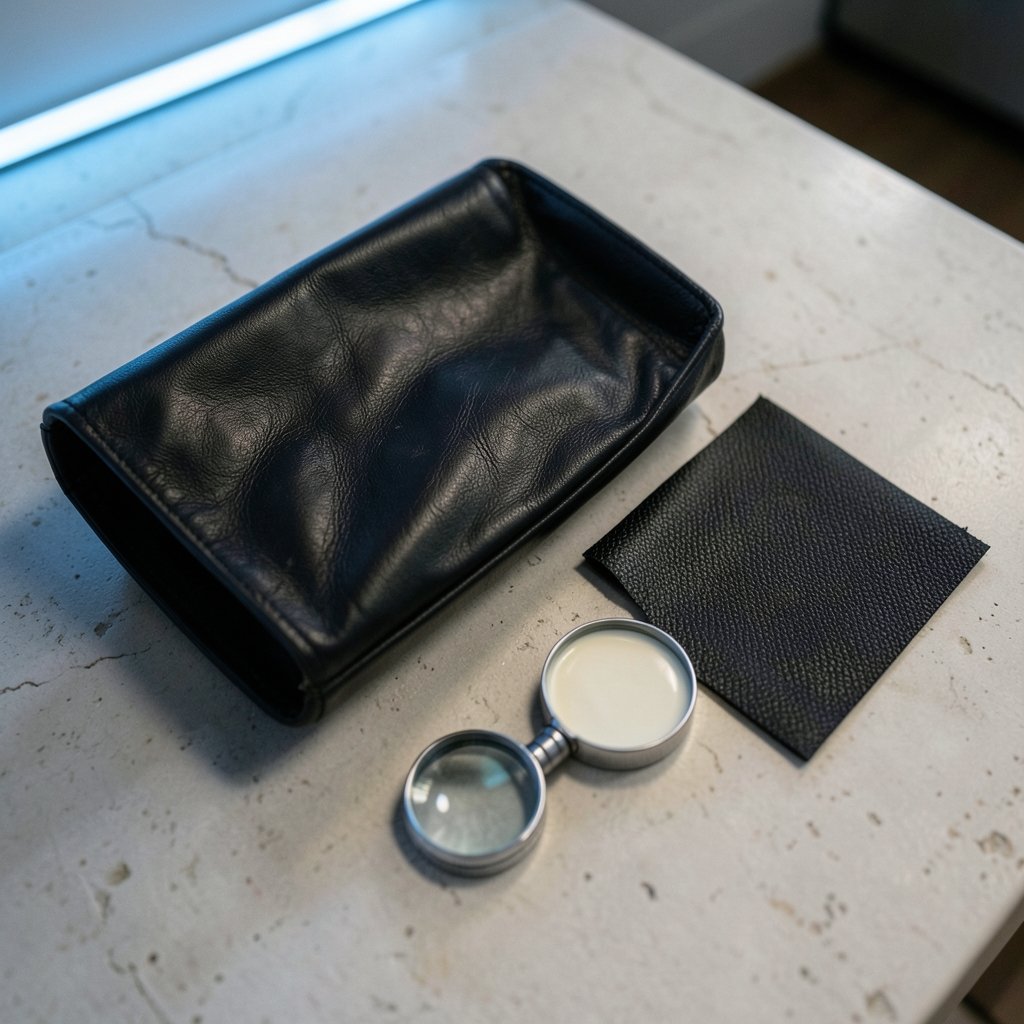
Run your hand across the surface. Genuine luxury leather should feel smooth, supple, and slightly irregular, because it came from an animal, not a mold. Fakes often feel plasticky, stiff, or unnaturally uniform. Look closely at the grain: real leather has variation in pore size and texture across panels, while stamped synthetic materials repeat the same pattern perfectly. (Fashion nova coupon code find real discounts spot fakes)
Smell matters too. Real leather has an earthy, faintly animal scent. Cheap fakes often smell of chemicals, glue, or nothing at all. Expected result: a material that feels alive and inconsistent in a good way. If every panel looks identical under magnification, be suspicious.
Step 2: Inspect the Stitching Under Magnification
Stitching tells the whole story. Luxury houses stitch with tight, even, slightly angled stitches at a consistent density, and they finish seams cleanly with no loose threads. Count stitches per inch on a genuine reference photo and compare. Fakes typically show uneven spacing, wobbly lines, thicker thread, or messy backstitching where the seam closes.
Pay special attention to stress points: handle attachments, strap anchors, and the top edge of the bag. These are where counterfeiters cut corners first. Expected result: uniform, slightly slanted stitches with clean terminations.
Step 3: Examine Hardware Weight, Finish, and Engraving
Pick the bag up by its hardware. Genuine clasps, rings, and feet have heft. Fakes often use lighter base metals with shiny plating that flakes at the edges. Check the finish under bright light: real hardware has a deep, even tone, while plating on copies can look flat or brassy.
Then read the engraving. Brand lettering on hardware should be crisp, correctly spaced, and consistent with reference photos. Common mistakes include the wrong font weight, letters that are too deep or too shallow, and logos that are slightly off in proportion. Zipper pulls deserve a look too; many brands stamp their name on the underside, and counterfeiters frequently forget.
A newer wrinkle: some brands now build chips or near-field communication tags into bags. Versace customers can hold a phone near the bag to trigger a chip detection prompt, then enter the interior serial number to pull up production details. Patou, owned by LVMH, has rolled out similar technology, and Chanel has been developing its own version. If a modern bag is advertised as chip-enabled and no chip responds, that is a serious red flag.
Step 4: Verify the Logo, Font, and Spacing
This is where most people start, and it is where most people stop too early. Compare the logo against an official reference image letter by letter. Check the thickness of each stroke, the space between letters, and the alignment of accents or symbols. Counterfeiters nail the overall shape but slip on the small stuff.
The same rule applies to date codes, serial stamps, and interior heat stamps. Authentic stamps are clean and deeply impressed; fakes are often shallow, blurry, or placed slightly off-center. Expected result: every character matches the reference exactly in shape, weight, and spacing.
Step 5: Open It Up and Read the Interior
Turn the bag inside out, metaphorically speaking. The lining should be high-quality fabric or leather, neatly seamed, with no puckering. Check the interior pockets, the seam allowances, and the label. Authentic interiors are finished with the same care as the exterior, because the brand knows buyers look inside.
This is also where you check the smell test again. A strong glue odor inside the lining often signals a rushed factory job. Expected result: clean seams, quality lining, and a label that matches the era of the bag.
Step 6: Cross-Check the Model’s Era and Construction Details
Every model has quirks that changed over time: closure types, strap hardware, interior pocket layouts, even the shape of the feet. Know which version you are looking at. A bag that combines details from two different production eras is almost certainly a composite fake built from photos.
This step is where reference photos earn their keep. Line up the bag’s features against a known example of the same year and model. Expected result: every construction detail lines up with a single, consistent production period.
Step 7: Test the Price Against Pre-Owned Reality
Retail is the wrong benchmark. The right question is not “how far below retail is this?” but “how far below what this model actually sells for pre-owned is this?” Some houses discount heavily and hold weak resale value, so a low price alone is not proof of anything. Others barely lose value, which makes a steep discount suspicious.
An above-retail asking price is not proof of authenticity either. Rare, discontinued models can legitimately sell for more than their original retail, so a high price proves nothing on its own. Use a resale value reference for the specific brand and model, then test the offer against that range.
Step 8: Vet the Seller and the Platform
A perfect bag from a shady seller is still a risk. Look for a documented history, clear return terms, and a professional authentication process. Vestiaire Collective, for example, reports more than 15 years of experience and 60,000 hours of training behind its authentication work. Its process starts with profile monitoring, using AI and machine learning to screen new accounts for fraud risk. Listings then go through digital verification by both AI and expert review, and roughly 10% are rejected at that stage for poor condition, bad image quality, or suspected counterfeiting. Of those rejected, about 65% are flagged as potential fakes.
That layered approach is the model to look for anywhere you shop. A single “authenticity guaranteed” badge means little without a described process behind it. Expected result: a seller who welcomes scrutiny and can explain exactly how items are checked.
Common Mistakes and Troubleshooting
Even careful buyers trip up. Here are the traps that catch the most people.
Trusting the logo and nothing else. The logo is the easiest detail to copy. Stitching, hardware weight, and interior finishing are far harder to fake convincingly. Always work outside in, then inside out.
Judging against retail price. A bag priced well under retail is not automatically fake, and one priced above retail is not automatically real. Compare against the pre-owned market for that exact model.
Ignoring the seller’s eagerness. If a seller pushes hard for a fast sale, refuses close-up photos, or dodges questions about provenance, walk away. Urgency is a classic pressure tactic.
Skipping the era check. Details that look off may be correct for a different production year. Authenticate the specific version, not the model in general.
Relying on a single photo. Ask for images of the interior, the hardware engraving, the date stamp, and the seams. Sellers who cannot provide them are telling you something.
Forgetting the practical test. If you already own the bag and want confirmation, take it in for cleaning or leather conditioning at the brand’s boutique. Hermès does not offer a public authentication service, but a bag brought in for servicing gets its product code quietly cross-referenced against the hardware, leather texture, and history. If something does not match, the bag does not get serviced. No dramatic announcement, just a polite refusal that tells you what you needed to know.
How Professional Authenticators Work
Professional authenticators follow a fixed sequence rather than jumping around. They identify the brand and manufacturing period first, then examine the exterior detail by detail, then repeat the whole process on the interior and every accessory: straps, dust bags, cards, boxes. Technology now supports that work. AI tools monitor listings and flag suspicious accounts before a human ever sees the item, and digital review catches problems that photos alone can reveal.
The lesson for everyday buyers is simple: be systematic. A checklist beats intuition every time, because counterfeiters count on buyers who glance, feel reassured, and pay.
Why This Skill Is Worth Learning
Designer bags hold value, and some grow in value over time. That makes the secondhand market both an opportunity and a minefield. Counterfeit goods are also tied to serious supply chain problems, including labor exploitation, so the stakes go beyond your wallet. Whether you are hunting a coveted drop or simply checking a gift, the same discipline applies. If you enjoy following how specific releases become objects of obsession, the story of how the Baggu and Sandy Liang collaboration became so coveted shows how demand fuels imitation. The same pattern plays out across fashion, from handbags to sneaker drops, and knowing how to spot a real discount helps you avoid the traps that come with hype. Practical preparation pays off in other buying situations too, whether you are packing a hospital bag for labor or learning to spot real savings during Black Friday sales events.
Conclusion
Spotting a fake designer bag is not about having a sixth sense. It is about slowing down and following an order: materials first, then stitching, hardware, logo, interior, era details, price, and seller. Each step narrows the odds, and together they form a filter that most counterfeits cannot pass. The fakes will keep improving, and the technology on both sides will keep evolving. What will not change is the value of a buyer who knows exactly what to check and in what sequence. Bring your magnifying glass, your reference photos, and your skepticism. The bag can fool your eye, but it cannot fool a checklist.
Frequently Asked Questions
What is the single biggest giveaway of a fake designer bag?
Stitching. It is the hardest detail to fake at scale. Genuine bags have tight, even, slightly angled stitches at consistent density with clean seam finishes. Fakes show uneven spacing, thicker thread, and messy closures at stress points. Always inspect stitching under magnification before anything else.
Can a fake bag pass a logo check?
Yes, easily. The logo is the most-copied element because it is the most visible. Counterfeiters reproduce the overall shape well and slip on stroke thickness, letter spacing, and alignment. A convincing logo means very little on its own. Pair it with hardware weight, interior finishing, and era-correct construction details.
Is a very low price a sign that a bag is fake?
Not by itself. Some brands discount heavily and hold weak resale value, so low prices can be normal. The useful test is how the asking price compares with what that exact model sells for pre-owned, not with retail. A price far below the pre-owned range deserves scrutiny, but the construction checks carry the real weight.
How can I check a bag’s authenticity if I already bought it?
Take it to the brand’s boutique for cleaning or leather conditioning. Some houses quietly cross-reference the product code against the hardware, leather texture, and service history during that process. If details do not match, the bag will not be serviced. You will not get a certificate, but the refusal tells you what you need to know.
Do modern designer bags have chips that prove authenticity?
Some do. Certain brands now build chips or near-field communication tags into bags, letting customers scan with a phone and pull up production details from the interior serial number. If a modern bag is advertised as chip-enabled and nothing responds when scanned, treat that as a serious warning sign.
What should I ask a seller before buying a pre-owned designer bag?
Ask for the purchase history, receipt, dust bag, and return policy in writing. Request close-up photos of the interior, hardware engraving, date stamp, and seams. Then watch how the seller responds. Willingness to provide detail and accept returns is reassuring. Pressure for a fast sale, vague answers, or refusal to send photos is not.











