A $3,000 cashmere coat comes out of storage after six months and the shoulders are dimpled, the fabric smells faintly of damp basement, and a moth has already claimed one sleeve. What went wrong? Almost certainly nothing dramatic. Just a series of small, ordinary storage decisions that luxury fabrics punish more harshly than fast fashion ever will.
Seasonal rotation is one of those chores people know they should do and quietly avoid. It takes an afternoon, it makes a mess of the bedroom, and the payoff is invisible until something goes wrong. But the payoff is real, and the process is simpler than the closet-organizing industry makes it look. Here is the full sequence, from prep to packing to pulling everything back out next season, plus the mistakes that quietly destroy the most expensive things in a wardrobe.
What You Need Before You Start
Gather supplies first so the job doesn’t stall halfway through. Nothing here is exotic:
- Breathable cotton or canvas garment bags. Not plastic. Not vacuum bags for anything precious.
- Acid-free tissue paper. Ordinary tissue and newspaper are acidic and will yellow fabric over time.
- Broad-shouldered wooden or contoured velvet hangers. Wire and thin plastic hangers concentrate a garment’s weight on two narrow points and leave shoulder dimples that survive steaming.
- Cedar blocks or lavender sachets. Moths are the single biggest threat to stored wool and cashmere.
- Labeled, lidded bins for folded knits and accessories.
- A clothing brush and a lint roller.
One more thing before starting: a clear, dry space. Basements, attics, and closets with windows or skylights are the worst possible storage locations, because temperature swings and humidity do more damage than almost anything else. If the only available space is a damp basement, a professional climate-controlled wardrobe service is worth considering instead of gambling on it.
Step 1: Empty Everything and Sort Into Three Piles

Pull every piece of the outgoing season out of the closet. Sort into keep, repair, and release.
This is the moment to spot the problems that build up invisibly: worn leather straps, faded light-colored suede, stretched knit cuffs, a lining that has started to separate. A piece that needs repair should go to the tailor now, not sit in storage for six months getting worse. A piece that no longer earns its space can be resold or donated, which frees room for the incoming season.
The practical benefit of a full rotation is easy to underestimate. Most wardrobes simply don’t have enough space to display everything at once, so rotating gives the current season real breathing room and makes the closet readable again.
Step 2: Clean Everything, Even the Things That Look Clean
This is the step people skip, and it is the one that matters most. Invisible body oils, sweat residue, and food traces attract moths and set into stains over months. A mark that would have washed out in October becomes permanent by April.
Dry-clean or wash according to the care label before anything goes into storage. Wool coats, tailored jackets, and silk should go to a cleaner that understands luxury fabrics. Knits can usually be hand-washed gently and dried flat. Leather and suede need a brush-down and, ideally, a conditioner. (How to Clean a Whiteboard: Restore It Like New in 2026)
Let everything air out completely before packing. A garment sealed away while still faintly damp is a mold colony waiting to happen.
Step 3: Decide What Hangs and What Folds
The hanging-versus-folding decision is where most damage happens.
| Item | Storage method | Why |
|---|---|---|
| Tailored jackets, coats, dresses | Hang on broad wooden hangers | Folding crushes canvas, shoulder pads, and linings |
| Cashmere, merino, alpaca knits | Fold flat with tissue | Hanging stretches weaves and creates permanent shoulder bumps |
| Silk garments | Hang on padded hangers with tissue at stress points | Prevents slippage and creasing |
| Structured handbags | Stuff with tissue, store in dust bags | Prevents sagging and shape loss |
| Leather and suede | Hang or fold loosely, away from light | Direct sun fades dye |
| Down jackets, ski wear | Vacuum bags are acceptable | Synthetic fills tolerate compression |
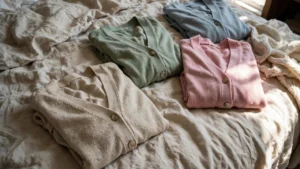
The knitwear rule is the one people break most often. A heavy cashmere sweater on a hanger will slowly lose its shape under its own weight, and by the time it comes back out, the shoulders carry two permanent peaks. Fold it, layer acid-free tissue between folds to prevent creasing, and stack it loosely in a breathable bin.
Step 4: Choose the Right Container
Containers matter more than location in many closets. The hierarchy is straightforward:
Best: breathable cotton or canvas garment bags for hanging pieces, and lidded but not airtight bins for folded ones.
Acceptable: acid-free boxes for archival pieces.
Avoid: dry-cleaner plastic sleeves, which trap moisture against the fiber and should be removed the moment a garment comes home. Also avoid dense plastic bags for anything natural, because temperature fluctuations create a greenhouse effect inside, and the lack of air circulation produces a musty odor that can be very hard to eliminate.
A useful rule of thumb: if the bag rustles like a grocery sack, it is not storage material. It is transport material.
Step 5: Control Moisture, Light, and Pests
Three enemies, three countermeasures.
Moisture is the quiet killer. Store in a space with stable temperature and humidity, away from exterior walls that sweat. Cedar blocks help; so does leaving a small gap for air movement in bins.
Light fades dye and weakens fibers. Store in the dark, or at minimum out of direct sun. A closet with a skylight is not a storage closet.
Pests want protein and quiet. Clean garments, sealed containers, and cedar or lavender are the basic defense. Check stored wool and cashmere every couple of months for the telltale little holes.
Step 6: Label, Inventory, and Photograph
Before sealing the last bin, write down what is inside each one. A simple index card taped to the lid works. So does a photo of the open bin on a phone.
The reason is practical rather than obsessive: next season, the question “where did the gray cashmere go?” should have an answer in ten seconds, not forty minutes of bin-opening. An inventory also surfaces duplicates and pieces that have gone two seasons unworn, which are exactly the candidates for resale.
Step 7: Store Accessories Separately and Deliberately
Handbags deserve their own protocol. Store structured bags in their original dust bags, with tissue paper placed carefully inside to hold the shape and prevent sagging. Keep leather goods out of direct sunlight to protect against fading, and never stack heavy bags on top of soft ones.
Fine jewelry should be stored flat and separated, with chains clasped to prevent tangling. Shoes go in individual bags or boxes with cedar inserts, stuffed with tissue to hold their shape.
Common Mistakes That Quietly Ruin Luxury Pieces
Even careful people trip on the same handful of errors.
Storing dirty. Covered in step two, and still the most common mistake. Oils attract moths and set stains.
Leaving wire hangers in. Dry-cleaner wire hangers and their thin plastic sleeves are for transport, not storage. Left on a wool coat for a season, the wire deforms the shoulder line and the plastic traps moisture against the fiber. Swap both out on arrival.
Vacuum-sealing the wrong things. Premium cashmere, fine merino, alpaca, silk, leather, and suede should never be vacuum-packed, nor should structured jackets, coats, or creased suit trousers. Synthetic down and membrane ski wear are fair game.
Using attic or basement storage. Temperature swings and humidity cause more damage than almost any other factor. A closet inside the living space, even a small one, beats a big damp basement every time.
Forgetting the pre-season check. Pulling a coat out in November and discovering moth damage in the first cold week leaves no time to repair or replace it.
Skipping the wardrobe edit. Storage is the natural moment to assess what held up and what didn’t. A piece that came out of last season unworn and unloved is a candidate to move on, and the discipline of asking the question keeps a collection from becoming a museum.
For anyone building out a closet that actually supports this routine, the same principles apply to the room itself: proper hanging space, breathable storage, and lighting that doesn’t bake the contents. The approach behind luxury home decor: designer pieces for every room applies to closets too, and if a renovation is on the table, luxury remodeling services can build in the climate and hanging infrastructure that seasonal storage really needs.
When to Call in the Professionals
White-glove wardrobe services exist for a reason: couture, archival evening wear, and high-value collections benefit from professional handling that most people can’t replicate at home. These services typically deliver in-season garments and store off-season pieces in controlled conditions, handled by staff trained in couture preservation. For a collection with genuine archival value, that is a reasonable investment. For most wardrobes, the seven steps above, done consistently, are enough.
Conclusion
Storing seasonal luxury pieces properly is not complicated, but it is sequential. Clean everything, sort it, hang what needs hanging and fold what needs folding, choose breathable containers, control moisture and light, label the bins, and treat accessories with their own protocol. Do that once in spring and once in autumn, and the reward is a wardrobe that comes back out looking the way it went in.
The mistakes to avoid are equally simple to name: dirty storage, wire hangers, plastic bags, damp basements, and vacuum-sealing things that should never be compressed. Get those five right and the rest is detail. The pieces cost what they cost because they were made to last. Storage is simply the part of ownership that decides whether they do.
Frequently Asked Questions
Can I store wool coats in plastic garment bags?
No. Plastic traps moisture against the fiber, and temperature swings create condensation inside the bag, which leads to mustiness and eventually mold. Use breathable cotton or canvas bags instead, and remove dry-cleaner plastic sleeves as soon as a garment comes home.
Should cashmere sweaters be hung or folded?
Always folded. Hanging a heavy knit stretches the weave under its own weight and creates permanent shoulder bumps that won’t steam out. Fold flat with acid-free tissue between layers and store in a breathable bin rather than hanging in the closet.
How do I stop moths from damaging stored wool and cashmere?
Start with clean garments, since body oils and food traces are what attract moths in the first place. Then store in breathable but sealed containers with cedar blocks or lavender sachets, keep the storage space dark and dry, and check stored knits every couple of months for small holes.
Is vacuum-sealing safe for luxury clothing?
Only for some items. Synthetic down jackets, membrane ski wear, fleece, and polyester tolerate compression. Premium cashmere, merino, alpaca, silk, leather, suede, and any structured tailoring should never be vacuum-packed, because compression crushes the fibers and destroys shape.
How often should I rotate my wardrobe?
Twice a year works for most climates, timed to the change of season. The exact schedule matters less than consistency: the point is to give the current season room to breathe while the outgoing season sits protected, and to catch damage before it becomes permanent.
What is the best place to store off-season luxury pieces?
A closet inside the living space with stable temperature and humidity, away from direct sun. Basements, attics, and closets with windows or skylights are the worst options because of damp and temperature swings. If the only space available is a damp basement, professional climate-controlled storage is the safer route for high-value pieces.