Muay Thai, often called Thai boxing, is a martial art from Thailand that uses fists, elbows, knees and shins, which is why it is known as the art of eight limbs. It is practised around the world as a sport and a form of fitness training. So what exactly is Muay Thai, and what should a beginner expect?
The short answer is that Muay Thai is a striking martial art with a long history in Thailand, now taught in gyms everywhere as both a competitive sport and a demanding workout. Training is structured and progressive: beginners start with stance, footwork, simple strikes and pad work. This guide explains what it is, where it comes from, the main techniques, how training works, what beginners need, and how to stay safe.
Key takeaways:
- Muay Thai is a Thai martial art using fists, elbows, knees and shins, known as the art of eight limbs.
- It developed in Thailand over centuries and took its modern form in the twentieth century.
- Training is structured: stance and footwork first, then strikes, pad work and conditioning.
- Beginners need gloves, hand wraps, shorts, a mouthguard and a qualified coach.
- Good coaching, protective gear and sensible sparring keep training safe.
What is Muay Thai?
Muay Thai is a stand-up striking martial art that comes from Thailand. Unlike boxing, which uses only the fists, Muay Thai uses the whole body: punches, elbow strikes, knee strikes and kicks delivered with the shin. That range of weapons is the reason for its nickname, the art of eight limbs.
It is practised in two main ways. As a sport, it is fought in a ring under rules, with gloves, rounds and weight divisions, and bouts are judged on effective striking, balance and control. As training, it is taught in gyms as a fitness discipline, where most students never compete. Muay Thai is sometimes confused with kickboxing. The main differences are the elbows and the clinch, the close-range grappling where fighters control each other’s head and arms to land knees, which are not part of most kickboxing rules.
A brief history of Muay Thai
Muay Thai grew out of older Thai fighting systems practised for self-defence and military training. For centuries, unarmed combat was a valued skill in Thailand, taught to soldiers and passed down through families.
The modern sport took shape during the twentieth century. Gloves replaced bare hands and rope bindings, timed rounds and weight divisions were introduced, and bouts moved into stadiums in Bangkok. These changes made the sport safer and easier to follow, and helped Muay Thai spread beyond Thailand. Tradition remains part of the sport: before a bout, fighters perform the wai kru, a short ritual dance showing respect to their teacher and gym.
The main techniques
The stance is the foundation of everything in Muay Thai. Fighters stand with feet about shoulder-width apart, weight balanced, hands up, elbows tucked in and chin down. From this position a fighter can punch, kick, knee or move in any direction, and a good stance looks relaxed rather than tense. Our guide to how to improve your posture covers the balance and alignment that carry over to the gym.
Punches in Muay Thai follow the same lines as in boxing: the jab, the cross, the hook and the uppercut. The jab is a quick straight shot from the lead hand that measures distance, and the cross is the harder straight punch from the rear hand. Power comes from the hips and legs, not the arm alone.
The roundhouse kick is the signature of Muay Thai, thrown with the shin rather than the foot, the body turning and the standing leg pivoting as it lands. The teep, or push kick, is a straight front kick used to keep an opponent at distance. Low kicks to the thigh are used to wear an opponent down, and they are practised carefully because they are powerful even at training pace.
Elbows and knees give Muay Thai its close-range game. Elbow strikes are short and sharp, used at close range. Knee strikes are delivered from the clinch or from close range, driving the knee up into the body or thigh. The clinch itself is a skill: fighters grip the head and arms and work for knee strikes while defending against them. Beginners learn clinch slowly, because it demands balance, timing and control.
How a Muay Thai class works
A typical class begins with a warm-up of skipping, shadowboxing, light jogging and stretching. The warm-up is also where new students learn the basic stance and footwork. Coaches watch closely at this stage, because good habits learned early are hard to lose and bad habits are hard to break.
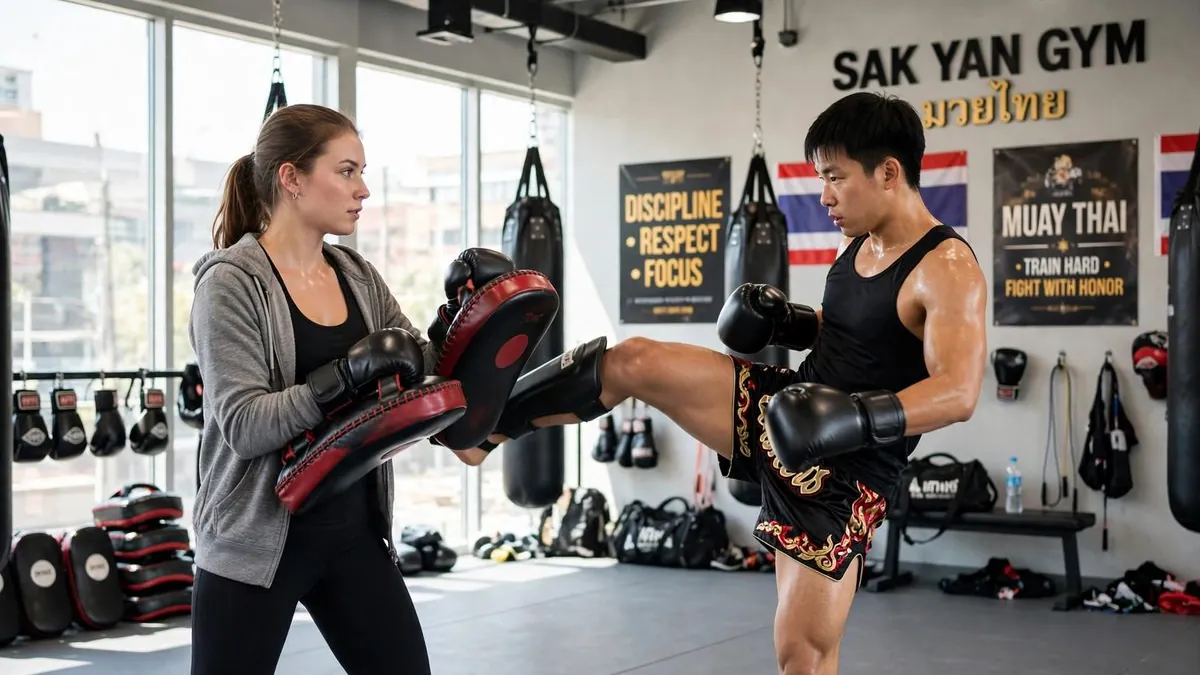
The main part of the class is technique and pad work. Students practise strikes on pads held by a partner or a coach, working through combinations in rounds. Pad work builds timing, accuracy, power and distance. Bag work follows a similar pattern, building conditioning and power. Shadowboxing, striking an imaginary opponent, is used to practise form without impact.
Conditioning is a serious part of training. Skipping, running and bodyweight exercises build the fitness that Muay Thai demands, and classes often finish with conditioning rounds. A new student should expect to be tired after the first few classes. A steady routine helps: our guide to how to build good habits explains how small, regular sessions add up faster than occasional long ones.
Sparring, where students practise against each other at controlled speed, comes later. Good gyms introduce it only when a student has the basics and the control to spar safely, and it is always supervised. Anyone who feels pressured to spar before they are ready should say so, and a good coach will respect that.
What beginners need
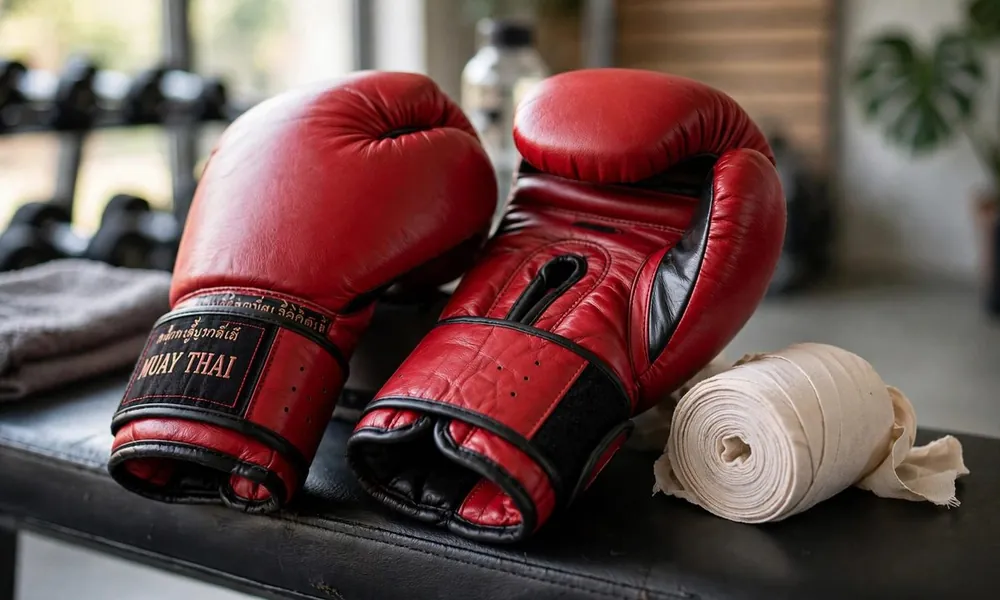
The first thing a beginner needs is a good gym and a qualified coach. Look for experienced coaches, a clear beginners’ programme and a welcoming atmosphere. Watch a class before joining, and ask how beginners are introduced to training. A gym that starts with stance, footwork and pad work is doing it right.
For equipment, gloves and hand wraps come first: gloves protect the hands and the training partner, and hand wraps support the wrists and knuckles underneath. Many gyms lend gloves to beginners, so there is no need to buy everything before the first class. Shorts, a comfortable top and a mouthguard are the other basics, and shin guards are needed once kicking and sparring begin.
Wear shorts that do not restrict the legs, a top that stays in place, and bare feet, since Muay Thai is trained without shoes. Bring water and a towel. There is no need to be fit before starting: Muay Thai builds fitness as it is learned, and coaches adjust the pace for new students.
Muay Thai for fitness
Many people train Muay Thai without ever competing, and for them it is a form of fitness. A class works the whole body: legs from footwork and kicking, arms and shoulders from punching, core from turning into strikes.
The mental side matters too. Learning a skill that demands focus leaves little room for the day’s worries, and many students find training clears the head. Classes are taught in groups, and partners work together on pads. Fitness gains come from regular training over months, and our guide to how to lower your resting heart rate explains how steady aerobic training shows up in the numbers over time.
| Technique | What it is | Used at | Key point |
|---|---|---|---|
| Jab and cross | Straight punches from the lead and rear hands | Long and mid range | Power comes from the hips, not the arm |
| Roundhouse kick | A turning kick landed with the shin | Mid and long range | The standing leg pivots as the kick lands |
| Teep | A straight push kick with the sole of the foot | Long range | Keeps distance and interrupts attacks |
| Knee strike | Driving the knee up into the body or thigh | Close range and clinch | Needs balance and control of posture |
| Elbow strike | A short, sharp strike with the elbow | Close range | Powerful but demands careful control |
| Clinch | Close-range control of head and arms | Close range | Balance and timing matter more than strength |
Training safely
Safety in Muay Thai starts with the coach and the gym. A qualified coach, a clean training space and proper equipment are the foundations. Students should feel able to say when they are tired, hurt or uncomfortable, and a good gym treats that as sensible rather than weak.
Protective gear matters. Hand wraps and gloves protect the hands, shin guards the shins, and a mouthguard the teeth. Gear should fit properly, and sparring should be light and technical, with partners matched by size and experience. It should stop the moment anyone is hurt.
Warming up and cooling down are part of safe training. Rest days matter too: the body adapts between sessions, not during them, and training through pain is a mistake. Soreness after a first class is normal, but sharp pain is not, and it should be checked by a doctor or a physiotherapist. Anyone with a health condition or an old injury should speak to a doctor before starting.
Beginner Muay Thai checklist
- Find a gym with qualified coaches and a beginners’ programme.
- Watch a class and talk to the coach before joining.
- Get gloves, hand wraps, shorts and a mouthguard; borrow first if the gym allows it.
- Learn stance and footwork before worrying about power.
- Arrive early for your first class and tell the coach you are new.
- Warm up and stretch after every session.
- Train regularly, a few times a week.
- Spar only when your coach says you are ready, and keep it light and technical.
- Rest when you are sore or tired, and speak up if something hurts.
- Be patient: steady progress beats rushing.
Frequently asked questions
What is the difference between Muay Thai and Thai boxing?
There is no difference: Thai boxing is simply the English name for Muay Thai. The two terms describe the same art.
Do I need to be fit to start Muay Thai?
No. Fitness is built through training, and coaches adjust the pace for beginners.
Is Muay Thai safe for beginners?
Muay Thai is a contact sport, so it carries some risk, but beginners train in a controlled way, with pad work and drills before any sparring. A qualified coach and proper protective gear are what keep training safe.
What equipment do I need for my first class?
Comfortable shorts, a top, water and a towel are enough for a first class, since most gyms lend gloves to beginners.
How long does it take to learn Muay Thai?
The basics can be learned in a few months of regular training, but students keep improving for years. Progress depends on how often you train.
Can children learn Muay Thai?
Yes, many gyms run classes for children, taught with an emphasis on technique, discipline and fitness rather than hard contact.
The bottom line
Muay Thai is a demanding, rewarding martial art with a long history. It teaches striking skills, builds fitness and confidence, and offers a training community that keeps people coming back.
If you are interested, the next step is simple: find a reputable gym near you, watch a class, and talk to the coach about a beginners’ session. Go with an open mind and give yourself time to learn the basics. The first class is the hardest part.
Safety note: Muay Thai is a contact sport. Train only under a qualified coach, use proper protective gear, spar only when your coach says you are ready, and stop training and seek medical advice if you are injured or feel unwell.