



Earmuffs are the one winter accessory men buy last and regret most. A good pair keeps your ears warm on a cold walk, a ski trip, or a long commute, without the bulk of a beanie or the fuss of a hood. The problem is not finding earmuffs. It is finding a pair that actually stays put, does not squeeze your head, and does not make you look like you borrowed them from a lost-property box. Most men only realise how much difference a good pair makes after the first properly cold morning of the year.
That is why this guide is organised by fit and warmth, not just by price. A plush faux-fur pair can be wonderfully warm and far too bulky under a hood. A slim folding pair can be the right daily choice for a commuter, even if it offers less coverage in a hard frost. Price is a poor guide on its own. Some of the most reliable earmuffs are mid-priced, and some of the most expensive are the hardest to wear with glasses.
Below are nine earmuffs worth considering in 2027, from a classic foldable pair to soft knit and leather-trimmed options for the coldest days. Each one is described by what it is good at, what to watch for, and who it suits best, so you can choose with your winter in mind, not just a bestseller list. Prices are approximate and vary by retailer.
Key takeaways
- Earmuffs warm the ears without flattening hair or overheating the head, which makes them ideal for commutes, walks, and outdoor work.
- Fit matters more than fill: a band that is too tight causes headaches, while a band that is too loose slips off in wind.
- Foldable and behind-the-head styles pack small and suit travel, while over-the-head bands are usually warmer and more stable.
- Check compatibility with glasses, headphones, and hoods before you buy, because not every pair plays well with all three.
- No earmuff warms the whole head or replaces a hat in a blizzard, and a pair that presses on your ears for hours will be left at home.
What earmuffs actually do for men
Earmuffs do one job well: they keep the ears warm. Ears lose heat fast because they have little fat and a lot of exposed skin, which is why they sting first on a cold morning. A warm cup over each ear blocks the wind and holds a pocket of warm air against the skin, and that is often enough to make a whole walk feel comfortable.
What they do not do is warm the top of your head. That is the trade-off, and it is also the appeal. Men who dislike beanies often dislike the heat and the flattened hair, not the warmth itself. Earmuffs solve the ear problem and leave the rest of the head alone, which suits mild winters, short walks, and days when you move between indoors and outdoors.
The band is where most earmuffs succeed or fail. An over-the-head band spreads the pressure and stays steady in wind, but it can clash with a hairstyle. A behind-the-head band disappears under a hood and suits men who wear their hair up or back, but it can ride up when you move quickly. A foldable band packs into a coat pocket, which matters more than it sounds once you start carrying a pair every day. The right band is the one you stop noticing within minutes of putting the pair on.
How we chose these earmuffs and what to look for
Look first at the fit. The cups should cover the whole ear without pressing hard on the cartilage, and the band should sit firmly without leaving a mark after twenty minutes. If you wear glasses, try the pair with them on: a cup that presses the arm of your glasses into your temple will hurt within an hour.
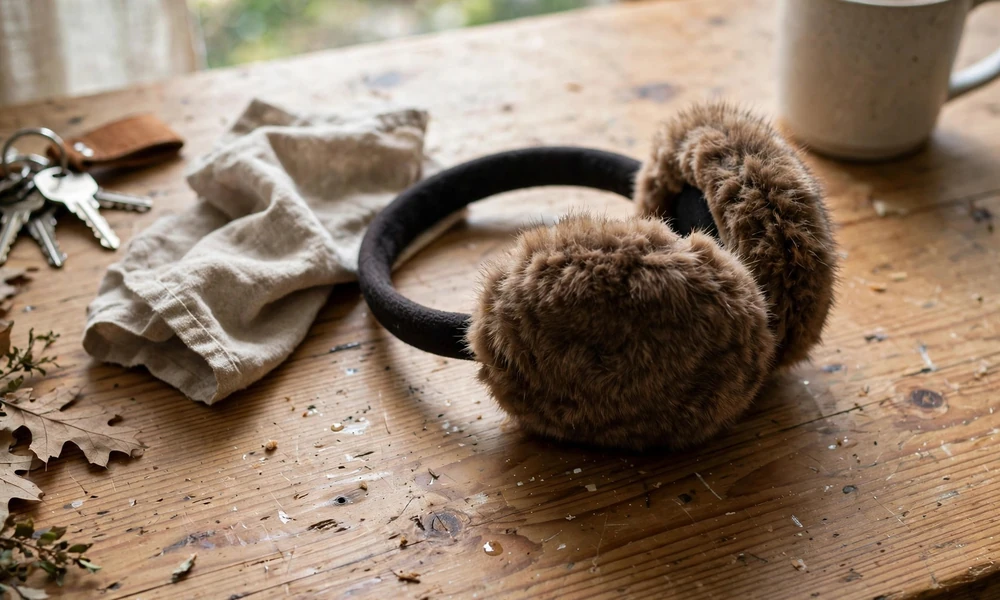
Look next at the material. Faux fur and fleece are warm and soft against the skin, and they dry quickly after light snow. Knit covers look softer and more casual, while leather trim adds a smarter finish that suits a tailored coat. The inner lining matters as much as the outside: a smooth fleece lining feels comfortable for hours, while a rough one itches by lunchtime.
Finally, look at how the pair folds and packs. A pair that folds flat will live in your coat pocket and actually get used. A pair that does not fold needs a bag, and a bag is where earmuffs go to be forgotten. Our guide to the best hats for men covers the other end of the scale, because some winter days genuinely call for a hat, and knowing which days those are saves you from buying the wrong thing twice.
The 9 best earmuffs for men in 2027
The Classic Folding Earmuffs
What we like: A simple foldable design with soft fleece cups that pack flat into a coat pocket, warm enough for most winter days, and light enough to forget you are wearing them. Best For: Daily commutes and short walks. Material: Fleece and recycled polyester. Price Range: Around £15 to £25. Standout Feature: Folds flat for a pocket.
What to consider: The band is slim, so it can feel tight on larger heads, and the cups are not the warmest in a hard frost. This is the pair to buy first if you are not sure earmuffs suit you, because it is cheap, light, and easy to carry.
The Plush Faux-Fur Earmuffs
What we like: Deep faux-fur cups that feel soft against the ears and block wind well, with a padded band that spreads the pressure evenly. Best For: Cold mornings and long outdoor walks. Material: Faux fur and fleece. Price Range: Around £25 to £40. Standout Feature: Extra-deep cups for full ear coverage.
What to consider: The cups are bulky, so they do not sit well under a tight hood, and the fur needs brushing now and then to stay neat. A good choice when warmth matters more than a slim profile.
The Knit-Back Earmuffs
What we like: A warm knit band that sits behind the head, with soft fleece-lined cups that disappear under a hood. Best For: Men who wear hoods or hats over earmuffs. Material: Knit wool blend and fleece. Price Range: Around £20 to £35. Standout Feature: Behind-the-head band that hides under a hood.
What to consider: The band can ride up during fast movement, and the knit needs gentle washing to keep its shape. Suits men who want warmth without a visible band across the hair.
The Leather-Trim Earmuffs
What we like: Smooth leather trim over fleece cups, a smart finish that pairs well with a tailored coat, and a band that feels sturdy rather than flimsy. Best For: Smart winter outfits and city days. Material: Leather trim and fleece. Price Range: Around £40 to £65. Standout Feature: Leather trim for a smarter look.
What to consider: The leather needs occasional conditioning, and the pair is heavier than a basic folding set. The right pick when earmuffs need to look like part of an outfit, not an afterthought.
The Cashmere-Blend Earmuffs
What we like: A soft cashmere-blend cover that feels gentle on the skin and keeps warmth without bulk, with a slim band that sits neatly. Best For: Sensitive skin and quiet luxury looks. Material: Cashmere blend and fleece. Price Range: Around £50 to £80. Standout Feature: Cashmere-blend softness with no itch.
What to consider: Premium price, and the cover needs careful hand washing. Worth it if you wear earmuffs every day and want the softest option available.
The Sport Earmuffs
What we like: A snug, secure fit that stays put while running or cycling, with windproof cups and a band that grips without slipping. Best For: Running, cycling, and outdoor training. Material: Windproof shell and fleece. Price Range: Around £20 to £35. Standout Feature: Secure fit for active use.
What to consider: The snug fit can feel tight indoors, and the sporty look does not suit a tailored coat. The pair to choose if your earmuffs need to survive a run, not just a walk.
The Noise-Reducing Earmuffs
What we like: Thick padded cups that soften wind roar and city noise as well as cold, useful on trains, planes, and busy streets. Best For: Travel and noisy commutes. Material: Padded foam and fleece. Price Range: Around £30 to £55. Standout Feature: Padded cups that muffle wind and noise.
What to consider: They are not hearing protection for loud work, and the bulk makes them harder to pack. A practical choice for men who want warmth and a quieter journey in one pair.
The Heated Earmuffs
What we like: Battery-powered warmth inside the cups, with a low setting that takes the edge off a freezing morning and a higher one for deep cold. Best For: Very cold climates and long time outdoors. Material: Fleece and heated elements. Price Range: Around £60 to £100. Standout Feature: Adjustable heat in each cup.
What to consider: The battery adds weight and needs charging, and the pair costs far more than a standard set. Sensible only if you spend long stretches outside in real cold.
The Slim Travel Earmuffs
What we like: A very slim, lightweight pair that folds into a small pouch, ideal for a jacket pocket or a travel bag. Best For: Travel and light winter days. Material: Lightweight fleece and nylon. Price Range: Around £15 to £25. Standout Feature: Packs into its own small pouch.
What to consider: The slim cups are less warm than deep ones, so they struggle in a hard frost. The best spare pair: one to keep in a travel bag for cold arrivals.
Which earmuff is right for you
Start with how cold your winter really is. For mild winters and short walks, a slim folding pair is enough, and it is the one you will actually carry. For hard frosts and long walks, choose deep faux-fur or fleece cups, and accept the extra bulk. For sport, choose a secure fit over softness, because a pair that slips is worse than no pair at all. Be honest about your coldest regular day, not the coldest day you can imagine, because most men overbuy warmth and underbuy convenience.
Think about what else you wear. Glasses wearers need cups that do not press the arms into the temples. Hood wearers need a behind-the-head band or a slim pair that fits underneath. Men who wear headphones on the commute should check that the cups do not fight for the same space on the ear. A winter coat for men with a good collar changes the equation too, because a high collar already blocks much of the wind around the ears.
Finally, think about where the pair will live. A pair that folds flat and fits a coat pocket will be worn ten times more than a pair that needs a bag. If you travel, a slim travel pair is worth having even if it is not your warmest, because the warmest pair in the world is useless if it is sitting at home.
The caveats that matter
Earmuffs are simple, but they are not foolproof. A band that is too tight causes headaches and leaves a mark, while a band that is too loose slips in wind and lets cold air in around the cups. The right fit is snug but forgettable: you should notice the warmth, not the pressure. If you are still aware of the band after half an hour, the fit is wrong, however good the pair looked on the shelf.
| Detail | What is known |
|---|---|
| Best fit for most men | Cups that cover the whole ear, band snug but not tight |
| Warmest materials | Faux fur, fleece, and cashmere blends for deep cold |
| Best for travel | Foldable or slim pairs that pack into a pocket |
| With glasses | Choose cups that do not press the arms into the temples |
| With a hood | Behind-the-head bands or slim cups work best |
| Care | Brush faux fur, hand wash knit and cashmere covers |
| When to replace them | When the band loosens, the lining thins, or the cups flatten |
| What they do not do | They do not warm the head or replace a hat in a blizzard |
If you have an ear condition, sensitive skin, or a hearing aid, check the fit carefully before a long day out. A cup that presses on a hearing aid will whistle, and a rough lining will irritate skin that is already dry from winter air. Try the pair at home for an hour first, with everything you normally wear, before trusting it on a long walk.
Checklist: choosing earmuffs honestly
Use these checks before you buy, and again after a week of use.
- Check the fit: cups cover the whole ear, band snug but forgettable after twenty minutes.
- Check with glasses: wear your glasses with the pair on and look for pressure on the temples.
- Check the fold: it should pack into a coat pocket or its own pouch without a struggle.
- Check the lining: smooth fleece feels comfortable for hours, rough linings itch quickly.
- Check with a hood: put your hood up and see whether the band rides up or the cups shift.
- Check the care label: know whether it needs hand washing before the first cold snap, not after.
Frequently asked questions
Are earmuffs warmer than a beanie?
For the ears alone, yes, because the cups block wind directly and hold warm air against the skin. For the whole head, no, because a beanie covers the crown as well. Earmuffs suit mild winters and short outings; a beanie suits deep cold and long exposure.
Can I wear earmuffs with glasses?
Yes, but try the pair with your glasses on first. Slim cups and a band that does not press the arms into your temples are the combination to look for. If the arms dig in within minutes, the pair is the wrong shape for you.
Do earmuffs work with headphones?
Usually not at the same time, because both want the same space on the ear. Some men wear earbuds under slim earmuffs, which works, but over-ear headphones and earmuffs rarely sit comfortably together. Choose one or the other for the commute.
How do I clean earmuffs?
Brush faux fur gently to keep it neat, and hand wash knit and cashmere covers in cool water. Avoid machine washing unless the care label allows it, because heat and agitation flatten the cups and loosen the band.
Are heated earmuffs worth it?
Only if you spend long stretches outside in real cold. For a normal commute, a good fleece or faux-fur pair is warm enough, lighter, and far cheaper. Heated pairs earn their price on ski trips, outdoor work, and very cold climates.
What should I pair earmuffs with in winter?
A warm coat with a high collar is the natural partner, because the collar blocks wind around the neck and ears. Our guide to wool coats for men explains how to choose one, and a scarf or a pair of gloves completes a winter outfit without adding bulk to the head.
The bottom line
The best earmuffs for men in 2027 are not the warmest or the most expensive. They are the pair that fits your head, suits your glasses and your hood, and folds small enough to live in your coat pocket. For most men, a classic folding pair or a plush faux-fur set covers the whole winter, and a slim travel pair is a useful spare. The pair you carry every day will always beat the pair you admire at home.
Choose one pair, wear it for a week with everything you normally wear, and judge it on comfort, not on how warm it feels in the shop. That is the honest way to find earmuffs you will reach for every cold morning, rather than a pair that sits in a drawer until spring. Comfort is the test that matters, because warmth means nothing if the pair hurts to wear.


