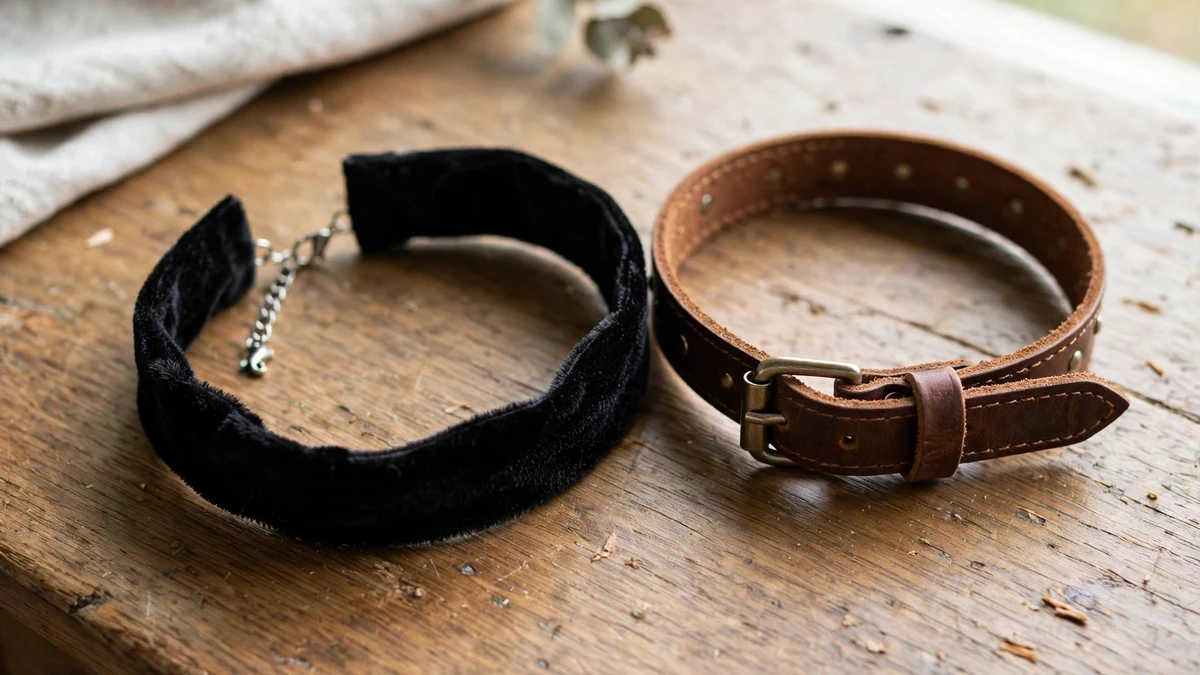
A choker does not have to be metal. Velvet and leather are the two classic soft materials for a choker, and they give a completely different feeling from a chain or a band. Velvet is soft, matte, and romantic, and it sits gently against the skin. Leather is smooth, structured, and a little bolder, and it holds its shape in a way velvet never does.
The choice matters because a choker sits against the neck all day, and the material decides how it feels, how it ages, and how it works with the rest of your outfit. A velvet choker that looks perfect in the shop can feel warm and heavy by the end of an evening. A leather choker that looks sharp on a hanger can feel stiff and unforgiving for the first few wears.
Below are nine comparisons that matter in 2027, from first impressions to how each material holds up over time. Each one looks at velvet and leather side by side, so you can decide with your skin, your wardrobe, and your comfort in mind, rather than by habit or by what happens to be in fashion this season.
Key takeaways
- Velvet is softer and more romantic, while leather is more structured and holds its shape better.
- Velvet feels warmer against the skin, which suits cooler weather, while thin leather breathes better in warm weather.
- Leather can be cleaned and conditioned, but velvet marks easily and is harder to restore once stained.
- Both materials are affordable at entry level, but fine leather costs more than good velvet.
- Neither material survives rough daily wear without care, and both need to be stored flat, away from sunlight and moisture.
What velvet and leather chokers actually are
A velvet choker is a band of velvet, usually cotton velvet or silk velvet, cut to sit close around the neck. It is often lined, sometimes backed with a stiffer fabric so it holds its shape, and it usually closes with a ribbon tie, a hook, or a small clasp.
A leather choker is a band of leather, usually calfskin, lambskin, or a good-quality vegan alternative, cut to the same close fit. Lambskin is softer and more flexible, while calfskin is firmer and holds its shape better.
Both materials come in the same widths, from a fine 1 cm band to a wide 4 cm collar, and both can be dressed up or down. The width you choose changes how the material behaves, because a wide band in either material feels heavier and warmer than a narrow one.
How we chose these comparisons and what to look for
We compared velvet and leather like with like, at the same width, the same style, and the same level of finish, so the differences you read about are about the material, not about one piece being fancier than the other. We looked at how each material feels after a full day, how it photographs, how it ages, what it costs, and what can go wrong with it.

Look first at the inside of the band. It should be smooth, with no rough seam, no stiff edge, and no lining that scratches. A choker sits against the skin all day, so the inside matters more than the outside. If the inside feels rough in the shop, it will feel worse by the end of an evening.
Look next at the fastening and the adjuster. A good choker closes securely, sits flat at the back of the neck, and lets you adjust the fit by a centimetre or two. Leather works well with a buckle or a snap, and velvet works well with a ribbon tie or a hook. Our guide to the best leather jackets for women covers the same leather checks in more detail.
The 9 comparisons that matter in 2027
First impressions and how they photograph
What we like: Velvet photographs beautifully, because its matte pile absorbs light and gives a soft, romantic look that suits portraits and evening photographs. Leather photographs with a clean, defined edge, because its smooth surface reflects light in a sharp line that reads as modern and confident.
What to consider: Velvet can look flat in harsh daylight, where its softness loses definition, and leather can look hard in soft light, where its shine reads as severe. Best For: Portraits and evening events for velvet; clean, modern looks for leather. Material: Cotton or silk velvet; calfskin or lambskin leather. Price Range: £20 to £120 for velvet; £30 to £180 for leather. Standout Feature: Velvet gives a soft, romantic finish in photographs.
Comfort and how it feels all day
What we like: Velvet is the softer of the two against the skin. It has no hard edges, it does not dig in, and it feels warm and gentle even after hours of wear. That makes it the easier choice if you are not used to wearing a choker, or if you have sensitive skin around the neck.
What to consider: Velvet feels warmer than leather, because its pile traps a little heat, and on a warm day it can feel heavy and damp against the skin. Leather feels cooler at first, but a stiff leather band can rub at the edges until it softens with wear. Best For: Sensitive skin and cooler weather for velvet; warm weather and shorter wear for thin leather. Material: Cotton velvet; lambskin leather. Price Range: £20 to £100 for velvet; £40 to £200 for lambskin. Standout Feature: Velvet is the gentlest choker material against the skin.
Durability and what can go wrong
What we like: Leather is the tougher material. It resists tearing, it holds its shape, and a well-made leather choker can last for years if it is looked after.
What to consider: Velvet is more fragile. Its pile can crush, flatten, or wear thin where the choker rubs the skin, and a mark or a stain on velvet is hard to remove. Leather can crack if it dries out, and it can stretch if it is pulled, so it needs conditioning and careful storage. Neither material survives being worn in the rain without damage. Best For: Long-term wear for leather; gentle, occasional wear for velvet. Material: Calfskin leather; silk or cotton velvet. Price Range: £40 to £250 for leather; £20 to £120 for velvet. Standout Feature: Leather lasts longer and ages with character.
Matching outfits and seasons
What we like: Velvet suits autumn and winter best, because its warmth and matte texture pair naturally with knitwear, coats, and heavier fabrics. Leather suits every season, because a thin leather band works with a summer dress as well as with a winter coat, and it pairs naturally with denim, tailoring, and evening wear.
What to consider: Velvet can look out of place in high summer, where its warmth and weight feel wrong against light fabrics. Leather can look too hard against a soft, romantic dress, where a velvet band would have been gentler. Best For: Autumn and winter for velvet; all seasons for leather. Material: Dark velvet; smooth calfskin or lambskin. Price Range: £20 to £120 for velvet; £30 to £200 for leather. Standout Feature: Leather works with more outfits across the year.
Care, cleaning, and upkeep
What we like: Leather can be cleaned and conditioned. A damp cloth removes most marks, and a leather conditioner keeps it soft and prevents cracking. That means a leather choker can be restored after a mark or a scuff, which is a real advantage for something worn so close to the skin.
What to consider: Velvet is much harder to clean. Water marks it, perfume stains it, and a crushed pile is difficult to restore. Velvet chokers should be kept away from rain, perfume, and hairspray, and they should never be washed. Best For: Easy maintenance for leather; careful, occasional wear for velvet. Material: Conditioned calfskin; cotton velvet. Price Range: £30 to £180 for leather, plus conditioner; £20 to £120 for velvet. Standout Feature: Leather can be cleaned and restored.
Cost for one choker and for a set
What we like: Both materials are affordable at entry level, and a good velvet or leather choker costs far less than a metal one. Velvet is usually the cheaper of the two, so you can buy several velvet chokers in different colours for the price of one fine leather piece, and you can experiment with width and colour without spending much.
What to consider: Fine leather costs more than good velvet, and the price rises steeply for hand-finished leather, good hardware, and a proper lining. A cheap leather choker may be bonded leather or a thin split, which cracks and peels, while a cheap velvet choker is usually still real velvet, just thinner. Best For: Building a collection on a budget for velvet; one lasting piece for leather. Material: Cotton velvet; full-grain calfskin. Price Range: £15 to £100 for velvet; £30 to £250 for leather. Standout Feature: Velvet buys more chokers for the same money.
Skin sensitivity and allergies
What we like: Velvet rarely irritates the skin, because cotton velvet is a natural fibre with a soft surface, and it has no metal touching the neck except at the clasp. That makes it a good choice if you have sensitive skin or if metal chokers have bothered you in the past.
What to consider: Leather can irritate sensitive skin, especially if it is stiff, if the dye is strong, or if the inside is unfinished. Some people react to the chemicals used in tanning, and a leather choker that has not been lined can feel rough after a few hours. Best For: Sensitive skin for velvet; most skin for lined, good-quality leather. Material: Cotton velvet; lined lambskin. Price Range: £20 to £100 for velvet; £40 to £200 for lined leather. Standout Feature: Velvet is the gentler choice for reactive skin.
Occasion and dress code
What we like: Velvet reads as soft, romantic, and traditional, which suits weddings, formal dinners, and evening events, especially in autumn and winter. Leather reads as bold, modern, and confident, which suits parties, concerts, and smart daytime outfits where the choker is meant to be noticed.
What to consider: Neither material is wrong for any occasion, but the width matters more than the material. A fine velvet band can look perfectly smart at work, and a thin leather band can look right at a wedding. Best For: Formal evenings for velvet; parties and bold looks for leather. Material: Dark velvet; smooth lambskin. Price Range: £20 to £150 for velvet; £30 to £200 for leather. Standout Feature: Velvet for romance, leather for confidence.
Keeping it afterwards as a keepsake
What we like: Leather ages well and can become a keepsake, because it develops a patina and a shape that is personal to the wearer. A leather choker that has been looked after can be kept for years and still look good, and it can be reconditioned if it starts to look dry.
What to consider: Velvet does not age as gracefully. Its pile flattens, its colour fades in sunlight, and a velvet choker that has been worn often will show its age. That does not make it a bad purchase, but it makes it a purchase to enjoy now rather than to keep for years. Best For: A lasting keepsake for leather; a beautiful piece for now for velvet. Material: Full-grain leather; cotton velvet. Price Range: £40 to £250 for leather; £20 to £120 for velvet. Standout Feature: Leather ages into a personal keepsake.
Which choker is right for you
Choose velvet if your skin is sensitive, your wardrobe leans soft and romantic, and you want a gentle piece for cooler weather and special occasions. Choose leather if you want a choker that will last, that works across the seasons, and that makes a bolder statement.
Consider your existing jewellery before you decide. A choker does not sit alone, and the necklaces, earrings, and watch you wear every day set the tone for everything else. Our guide to the best necklaces for women in 2027 makes the same point about necklaces in general: the piece that matches what you already own is the piece you will actually wear.
Consider your budget honestly. A velvet choker is a low-cost way to try the style, and a set of velvet chokers in different colours can cover more outfits than one leather piece. A leather choker costs more, but it lasts longer and ages better.
The caveats that matter
Velvet and leather are both natural materials, but neither suits everyone. Some people react to the dyes or the tanning chemicals in leather, and some find velvet too warm or too heavy against the neck. If you have sensitive skin, look for cotton velvet or lined leather, and try the piece on for a few hours before you commit to wearing it all day.
| Detail | What is known |
|---|---|
| Best for softness | Velvet, especially cotton velvet |
| Best for structure | Leather, which holds its shape |
| Water risk | Both suffer; leather stains, velvet marks |
| Cleaning | Velvet: gentle brush; leather: damp cloth and conditioner |
| Warm-weather wear | Velvet can feel warm; thin leather breathes better |
| Cost at entry level | Both start low; fine leather costs more |
| Allergy risk | Leather can irritate sensitive skin; velvet rarely does |
| What it does not do | Neither survives rough daily wear without care |
Be careful with very cheap chokers in either material. A leather choker at a very low price may be bonded leather, which cracks and peels, and a velvet choker at a very low price may be thin and unlined, which wears through quickly.
Checklist: choosing between velvet and leather chokers
Use these checks before you buy, and again when the choker arrives.
- Feel the inside: it should be smooth, with no rough seam against the neck.
- Check the width: 1 to 2 cm suits most necks and most outfits.
- Look at the clasp and the adjuster chain: it should close securely and sit flat.
- Hold it against the outfit you will wear it with.
- Ask how to clean it before you buy, and follow the advice.
- Store it flat, away from sunlight and moisture.
Frequently asked questions
Can I wear a velvet choker in summer?
Yes, if it is narrow and light, but velvet feels warmer than leather, so a thin leather band is usually more comfortable in hot weather.
Does leather stretch out of shape?
It can, if it is pulled or worn very tight, but a well-made leather choker holds its shape well.
Which is better for sensitive skin?
Velvet, usually. Cotton velvet is a soft natural fibre with no metal against the neck except at the clasp.
Can I wear a choker with a high neckline?
Yes, but the choker should sit above the neckline, not compete with it. A fine band in either material works best with a high neck, because a wide band can bunch against the fabric.
How do I clean a velvet choker?
Brush it gently with a soft clothes brush to lift the pile and remove dust. Do not wash it, and do not use water on a stain, because water marks velvet.
Is a choker a good gift?
Yes, if you know the person’s style and neck size. Velvet is the safer gift at a lower price, and leather is the better gift for someone who wears bold jewellery. Our guide to the best luxury watches of 2027 is a useful check for the metal tone to pair with a leather choker and its hardware.
The bottom line
Velvet and leather are both good choices for a choker, and the better one is the one that suits your skin, your wardrobe, and your comfort. Velvet wins on softness, romance, and price, and it is the gentler choice for sensitive skin. Leather wins on durability, versatility, and the way it ages, and it works across more seasons and more outfits.
Try both materials on before you decide, check the lining and the fastening, and choose the piece you will actually wear. A choker you reach for every day is worth its price, whether it is velvet or leather.