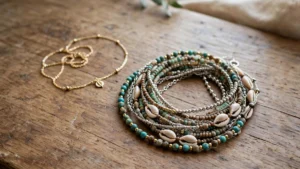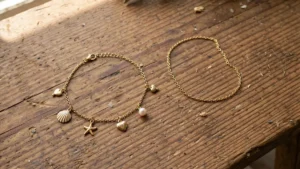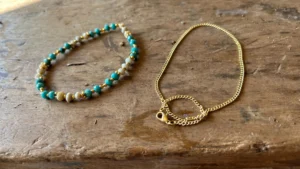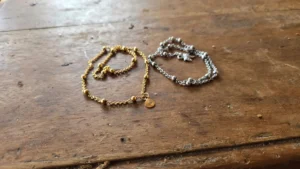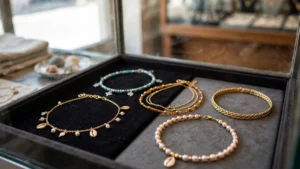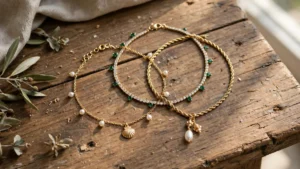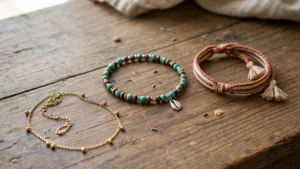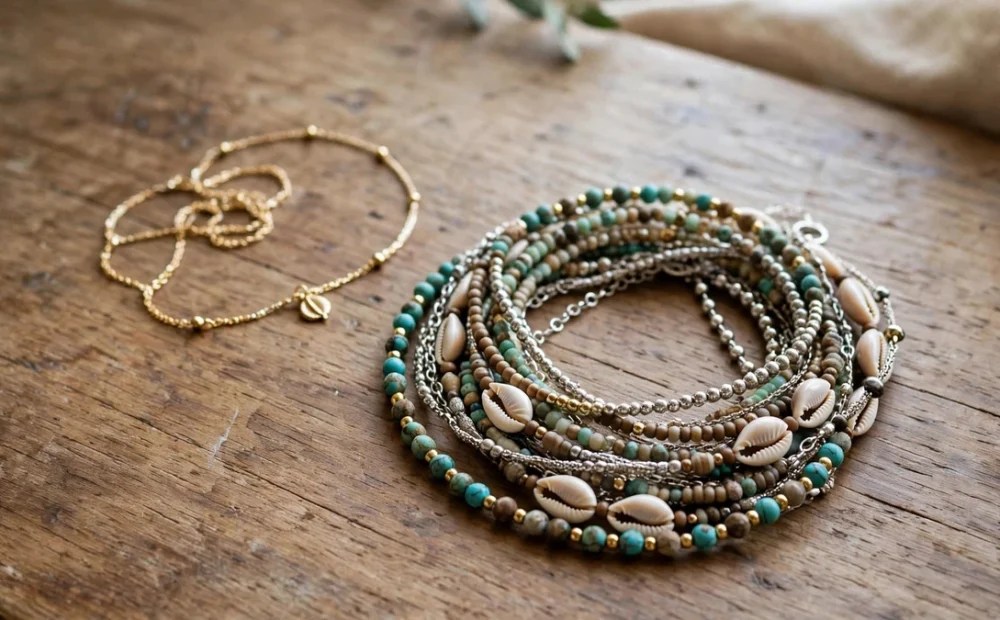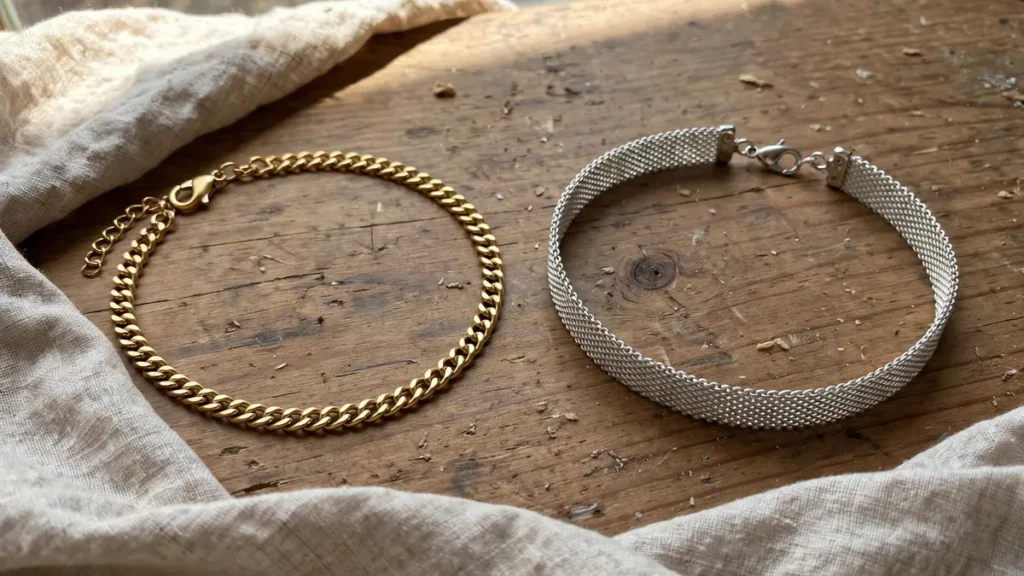
A choker sits closer to your face than any other piece of jewellery, so the metal you choose shows up in every photograph, every video call, and every mirror glance. Gold and silver are the two classic choices, and they behave very differently once they are actually worn. Gold brings warmth and a soft glow that flatters most skin tones in evening light. Silver brings a cool, clean brightness that looks sharp in daylight and against dark colours.
The decision is not only about colour. Gold and silver differ in weight, in how they age, in how much care they need, and in what they cost at the same quality. A gold-filled choker and a sterling silver choker can look similar in a shop and feel very different after a month of daily wear.
Below are nine comparisons that matter in 2027, from first impressions to long-term value. Each one looks at gold and silver side by side, so you can decide with your skin tone, your wardrobe, and your budget in mind, rather than by habit or by what happens to be in fashion this season.
Key takeaways
- Gold flatters warm and olive skin tones and glows in evening light, while silver flatters cool skin tones and looks sharp in daylight.
- Solid gold costs far more than sterling silver, but gold-filled and gold-plated chokers close the gap at the lower end.
- Sterling silver tarnishes and needs regular cleaning, while solid gold holds its colour with far less upkeep.
- Silver is usually lighter and cooler against the skin, which suits long days and warm weather.
- Neither metal suits everyone, and plated or filled pieces wear differently from solid ones, so check the construction before you pay a solid-metal price.
What gold and silver chokers actually are
A gold choker is usually solid gold, gold-filled, gold-plated, or gold vermeil, and the difference matters more than the colour. Solid gold is gold all the way through, marked 14k or 18k, and it keeps its colour for years. Gold-filled has a thick layer of gold bonded to a base metal, so it wears well and costs far less than solid gold. Gold-plated has a thin layer of gold over a base metal, which can wear through at the clasp and edges.
A silver choker is usually sterling silver, which is 92.5 percent silver mixed with other metals for strength, and it is stamped 925. Pure silver is too soft for a choker that is worn often, so the alloy is what makes it practical. Some silver chokers are rhodium-plated, which adds a bright, white finish and slows tarnish.
Both metals come in the same styles. Fine chains sit lightly on the neck and suit everyday wear. Solid bands and snake chains make a stronger statement and suit evening outfits. The style you choose changes how the metal behaves, because a fine chain shows wear faster than a solid band, whatever the metal.
How we chose these comparisons and what to look for
We compared gold and silver like with like, at the same width, the same style, and the same level of finish, so the differences you read about are about the metal, not about one piece being fancier than the other. We looked at how each metal photographs, how it feels after a full day, how it ages, what it costs, and what it is worth later.

Look first at the stamp or hallmark. Sterling silver should be marked 925, and gold should be marked 14k, 18k, 585, or 750. If there is no mark, ask the seller what the piece is made of and how it is constructed. A reputable seller will tell you plainly whether a choker is solid, filled, plated, or vermeil, and that answer should shape what you are willing to pay.
Look next at the clasp and the adjuster. A choker sits high on the neck, so a clasp that is fiddly or weak will annoy you every time you wear it. A good clasp closes with a clear click, sits flat at the back of the neck, and does not catch on hair. Our guide to the best gold jewellery for everyday wear covers the same checks in more detail.
The 9 comparisons that matter in 2027
First impressions and how they photograph
What we like: Gold photographs warm and rich, especially in candlelight, lamplight, and golden hour, where it picks up the light and reads as expensive. Silver photographs clean and bright, especially in daylight and against dark colours, where its cool tone gives a sharp, modern edge.
What to consider: Gold can look yellow against very cool skin in flash photography, and silver can look flat in warm indoor light. Best For: Evening events and warm-toned outfits for gold; daytime and dark colours for silver. Material: 14k solid gold or gold-filled chain; polished sterling silver. Price Range: £80 to £600 for gold-filled to solid gold; £40 to £250 for sterling silver. Standout Feature: A warm glow that reads expensive in photos.
Warmth against skin tone
What we like: Gold suits warm, olive, and deep skin tones beautifully, because its warmth echoes the warmth already in the skin. Silver suits cool and fair skin tones, because its cool brightness balances pink and blue undertones rather than fighting them.
What to consider: Skin tone is a guide, not a rule. Some people with cool undertones love yellow gold, and some with warm undertones prefer silver. Best For: Warm and olive skin for gold; cool and fair skin for silver. Material: Yellow or rose gold; polished or rhodium-plated sterling silver. Price Range: £60 to £500 for gold; £35 to £200 for silver. Standout Feature: A metal that echoes your skin’s undertone instead of clashing with it.
Everyday wear and durability
What we like: Solid gold is one of the most durable jewellery metals, because it does not tarnish and it resists corrosion from sweat and water. Sterling silver is also durable for daily wear, and it is harder than many people expect, so a well-made silver choker survives everyday use without bending out of shape.
What to consider: Gold is soft, so a fine gold chain can stretch or kink if it catches on clothing or hair. Silver is harder but it scratches more visibly, and a scratched silver choker looks duller faster than a scratched gold one. Best For: Daily wear for both, with solid gold ahead for longevity. Material: Solid 14k gold; sterling silver with a rhodium plate. Price Range: £100 to £800 for solid gold; £50 to £300 for sterling silver. Standout Feature: Solid gold keeps its colour for years with almost no upkeep.
Tarnish, care, and upkeep
What we like: Solid gold needs almost no care beyond a wipe with a soft cloth and an occasional wash in warm soapy water. It does not tarnish, it does not react to sweat, and it keeps its colour even if you forget it in a jewellery box for months.
What to consider: Sterling silver tarnishes. It reacts with sulphur in the air and with some skin products, and it will darken if it is left unworn in a drawer. Cleaning is easy, with a silver cloth or a gentle silver dip, but it is a regular job, and a rhodium-plated silver choker will need replating every year or two if it is worn often. Best For: Low-maintenance wearers for gold; people happy to clean jewellery for silver. Material: Solid gold; sterling silver, rhodium-plated. Price Range: £80 to £600 for gold; £40 to £250 for silver, plus cleaning costs. Standout Feature: Gold stays bright with almost no effort.
Comfort and weight around the neck
What we like: Silver is usually lighter than gold at the same size, because silver is less dense, so a silver choker feels cooler and less present on the neck. That matters on a long day, in warm weather, or if you are not used to wearing jewellery close to the throat.
What to consider: Gold is denser and heavier, and a solid gold band can feel noticeable for the first few wears, especially if it is wide. A gold-filled choker is lighter than a solid one and often more comfortable for the same reason. Best For: Long days and warm weather for silver; shorter wear and evening for heavier gold. Material: Fine sterling silver chain; gold-filled or hollow gold band. Price Range: £40 to £200 for silver; £80 to £500 for gold-filled. Standout Feature: Silver feels cooler and lighter on the neck.
Cost for one choker and for a set
What we like: Silver is far cheaper than solid gold, so you can buy a good sterling silver choker for the price of a gold-plated one, and you can build a small set of silver chokers in different widths for the price of one solid gold piece. That makes silver the easier metal to experiment with.
What to consider: Gold-filled and gold vermeil close the price gap, and they look like solid gold at a glance. But they are not the same purchase: a gold-filled choker will last for years, while a gold-plated one may need replacing within a year if it is worn often. Best For: Building a collection on a budget for silver; one lasting piece for gold. Material: Sterling silver; gold-filled or solid 14k gold. Price Range: £35 to £200 for silver; £80 to £900 for gold. Standout Feature: Silver buys more jewellery for the same money.
Matching outfits and other jewellery
What we like: Gold pairs naturally with warm colours, autumn tones, cream, brown, and olive, and it matches gold earrings, rings, and watches without any thought. Silver pairs naturally with black, navy, grey, white, and jewel tones, and it matches silver and white-gold jewellery just as easily.
What to consider: Mixed metals are widely worn now, so you do not have to match everything, but a choker sits so close to the face that a clash with earrings is more visible than a clash anywhere else. Best For: Warm wardrobes for gold; cool and monochrome wardrobes for silver. Material: Yellow gold; polished sterling silver. Price Range: £60 to £500 for gold; £35 to £250 for silver. Standout Feature: A choker that matches the rest of your jewellery without trying.
Occasion and dress code
What we like: Gold reads as warm, rich, and traditional, which suits weddings, formal dinners, and evening events, especially in warm light. Silver reads as clean, modern, and understated, which suits work, daytime events, and minimalist outfits where the jewellery should not dominate.
What to consider: Neither metal is wrong for any occasion, but the style of the choker matters more than the metal. A fine silver chain can look perfectly formal at a wedding, and a bold gold band can look right at a smart daytime event. Best For: Formal evenings for gold; work and daytime for silver. Material: Solid or gold-filled gold; sterling silver. Price Range: £80 to £700 for gold; £40 to £300 for silver. Standout Feature: Gold for warmth at formal events, silver for clean lines at work.
Keeping it afterwards: resale and heirloom value
What we like: Solid gold holds its value because gold itself holds its value. A solid gold choker can be resold for a meaningful part of what you paid, and it can be passed on as an heirloom without losing its colour or its worth. That makes it the better long-term purchase.
What to consider: Silver holds far less resale value, because silver is cheaper and because a worn silver choker is valued mostly for its weight, not its design. Gold-filled and gold-plated pieces have almost no resale value, because the gold layer is thin. Best For: A lasting purchase for solid gold; everyday enjoyment for silver. Material: Solid 14k or 18k gold; sterling silver. Price Range: £200 to £900 for solid gold; £35 to £250 for silver. Standout Feature: Solid gold keeps its value for years.
Which choker is right for you
Choose gold if your skin is warm or olive, your wardrobe leans warm, and you want one piece that will last for years with almost no care. Choose silver if your skin is cool or fair, your wardrobe leans dark or monochrome, and you want a lighter piece that you can wear all day without noticing it.
Consider your existing jewellery before you decide. A choker does not sit alone, and the earrings, rings, and watch you wear every day set the metal tone for everything else. Our guide to the best statement necklaces of 2027 makes the same point about necklaces in general: the piece that matches what you already own is the piece you will actually wear.
Consider your budget honestly. A solid gold choker is a lasting purchase, and it is worth saving for if you will wear it often. A sterling silver choker is a sensible purchase at almost any budget, and a set of silver chokers in different widths can cover more outfits than one gold piece.
The caveats that matter
Gold and silver are both safe, well-understood metals, but neither suits everyone. Some people react to the alloys in sterling silver, especially nickel, and some find gold irritating if the piece is low-karat or poorly made. If you have sensitive skin, look for nickel-free silver or higher-karat gold, and try the piece on for a few hours before you commit to wearing it all day.
| Detail | What is known |
|---|---|
| Best metal for warm skin | Gold, especially yellow and rose gold |
| Best metal for cool skin | Silver, especially polished sterling silver |
| Tarnish risk | Sterling silver tarnishes; solid gold does not |
| Daily care | Wipe after wear; store silver in an airtight pouch |
| Weight | Silver is usually lighter at the same size |
| Cost at entry level | Silver is far cheaper; gold-filled sits between |
| Resale value | Solid gold holds value; silver holds far less |
| What it does not do | Neither metal suits every skin tone or outfit |
Be careful with very cheap chokers in either metal. A gold-plated choker at a low price may wear through within weeks, and a silver choker at a very low price may be silver-plated rather than sterling silver.
Checklist: choosing between gold and silver chokers
Use these checks before you buy, and again when the choker arrives.
- Check the stamp: 925 for sterling silver, 585 or 750 for 14k or 18k gold.
- Hold it against your neck in daylight and in warm indoor light before buying.
- Ask whether it is solid, filled, plated, or vermeil, and what that means for wear.
- Try it on with the neckline you will actually wear it with.
- Check the clasp: it should close securely and sit flat at the back.
- Store silver in an airtight pouch and keep both metals away from perfume and hairspray.
Frequently asked questions
Can I wear gold and silver chokers together?
Yes. Mixed metals are widely worn now, and a gold choker layered with a fine silver chain can look deliberate rather than accidental.
Does sterling silver always tarnish?
It tarnishes over time, because silver reacts with sulphur in the air and with some skin products.
Is gold-filled the same as solid gold?
No. Gold-filled has a thick layer of gold bonded to a base metal, while solid gold is gold all the way through.
Which metal is better for sensitive skin?
Higher-karat gold and nickel-free sterling silver are both usually well tolerated.
Can I wear a choker every day?
Yes, in either metal, if the choker is well made. Take it off for swimming, exercise, and sleep, because sweat, chlorine, and friction wear any choker faster.
Is a gold or silver choker a good gift?
Yes, if you know the person’s skin tone and the metal they usually wear. Silver is the safer gift at a lower price, and gold is the better gift for a milestone. Our guide to the best luxury gifts under £1,000 covers jewellery alongside other lasting gifts.
The bottom line
Gold and silver are both good choices for a choker, and the better one is the one that suits your skin, your wardrobe, and your budget. Gold wins on warmth, longevity, and resale value, and it needs almost no care. Silver wins on price, weight, and a clean, modern look, and it suits cool skin tones and dark colours beautifully.
Try both metals on before you decide, check the stamp and the construction, and choose the piece you will actually wear. A choker you reach for every day is worth its price, whether it is gold or silver.