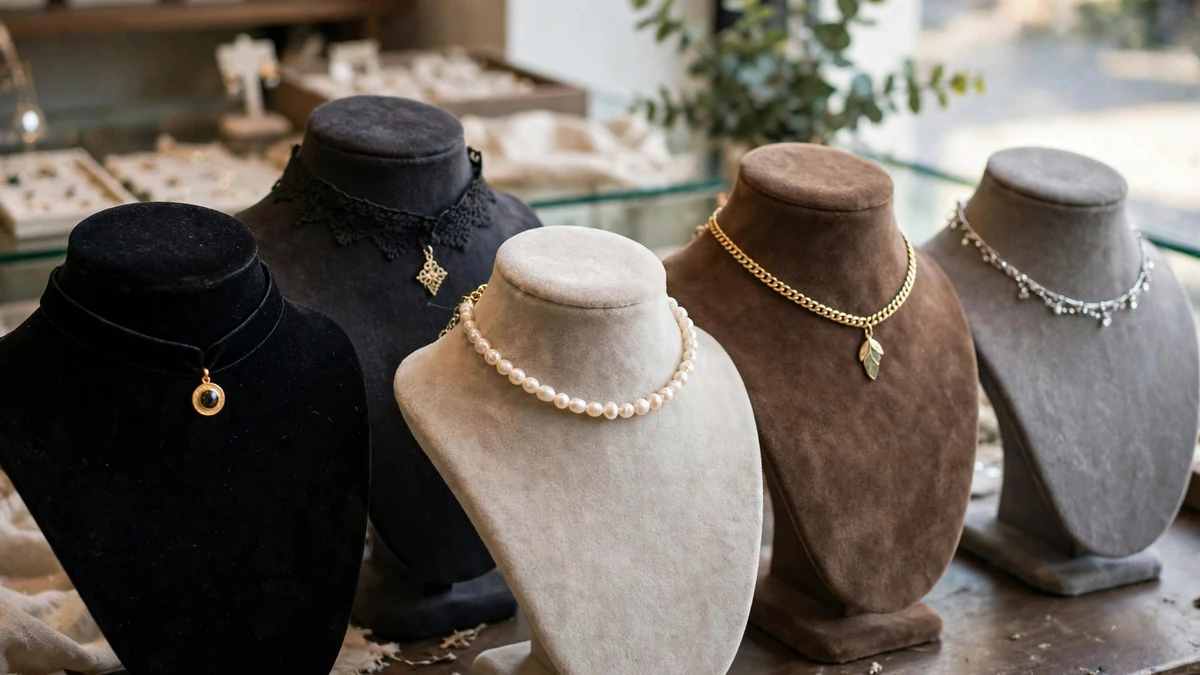

A Guide to Buying a Choker 2027
Buying a choker looks simple. It is a small piece of jewellery, it costs less than most necklaces, and there are hundreds to choose from. The trouble starts after the purchase. The band is too tight, the clasp breaks, the metal turns the skin green, or the style that looked perfect in a photo sits badly on a real neck. A choker is worn against the throat, so a small mistake in fit or material is felt all day.
A good buying process avoids those mistakes. It starts with a measurement, not a trend. It checks the material against the skin, the width against the neckline, and the clasp against real use. It also sets a budget before browsing, because chokers range from a few pounds to several hundred, and the most expensive option is rarely the best one for everyday wear.
This guide walks through nine steps, from measuring your neck to keeping the receipt. Follow them in order, and the choker you buy should fit well, feel comfortable, and still look good after months of wear.
Key takeaways
- Measure your neck with a soft tape and add one to two centimetres; never guess a size from a photo.
- Choose the material for your skin first and the look second, because an irritating choker will not be worn.
- An extender chain or adjustable tie is the single most useful feature, and it is worth paying a little more for.
- Match the width to the neckline: thin bands for high collars, wider bands for open necklines.
- No choker is right for every outfit, and a piece that leaves marks, causes a rash, or will not stay fastened should be returned.
What buying a choker actually involves
Buying a choker involves four decisions: size, material, width and fastening. Size decides whether it is comfortable. Material decides whether it irritates the skin and how long it lasts. Width decides whether it suits the neckline. Fastening decides whether it stays on and whether it can be adjusted. Get those four right and the style almost takes care of itself.
The market makes this harder than it should be. Sizes are rarely standardised, so a medium from one seller can be a small from another. Materials are described loosely, so a band called leather may be plastic, and a chain called gold may be plated alloy. Prices vary wildly for pieces that look identical in a photo. That is why the steps below rely on measurements and checks you can do yourself, rather than on brand names or product descriptions.
It also helps to know where the choker will be worn. A piece for daily wear needs to be durable, washable or easy to wipe, and comfortable for eight hours. A piece for one party can be more delicate. A gift needs a flexible fit, because you cannot measure the wearer. Thinking about the use first narrows the choice quickly and stops impulse buying.
How we chose these steps and what to look for
These steps are ordered the way a good purchase actually happens. Measurement comes first, because everything else depends on it. Material comes next, because comfort decides whether the choker is worn at all. Style comes after that, because a comfortable choker in the wrong width still looks wrong. Budget and aftercare come last, because they only matter once the right piece has been found.

Look for sellers who give real measurements. A listing that states the length, the width and the extender length is more trustworthy than one that only says one size fits all. Look for material descriptions that name the metal, such as stainless steel or sterling silver, rather than vague words such as premium alloy. Look for close-up photos of the clasp and the back of the band, because that is where cheap workmanship shows. A guide to necklaces for women is a useful companion here, because the same checks for length, metal and clasp apply to longer necklaces too.
Finally, look at the return policy before you pay. A choker is a fitted piece, and even a careful buyer can get the size wrong. A seller who accepts returns within two weeks is worth more than a slightly cheaper price from a seller who does not. Keep the receipt and the packaging until you have worn the choker for a full day.
The 9 steps to buying a choker in 2027
Measure your neck first
What we like: A soft tape gives an exact number in seconds, and it removes all guesswork from sizing. What to consider: Measuring too tightly gives a number that is too small, so keep the tape snug but not pressing. Best for: Every buyer, before any browsing. Cost: Free, with a tape you already own. Time needed: Two minutes.
Wrap a soft tape around the base of the neck where the choker will sit, keep it level, and note the number. Add one to two centimetres for comfort. That total is the choker length to look for, and it is the single most useful number in this guide.
Decide how snug you want it
What we like: Knowing the fit you want narrows the choice immediately and avoids buying a piece that feels wrong. What to consider: A very snug fit looks neat but can feel uncomfortable after a few hours. Best for: Anyone who has never worn a choker before. Cost: Free. Time needed: Five minutes of thought.
Choose the material that suits your skin
What we like: The right material means the choker can be worn all day without redness or itching. What to consider: Cheap alloy is the most common cause of irritation, and it is hard to spot in a photo. Best for: Sensitive skin and daily wear. Cost: Nickel-free pieces cost a little more, usually £5 to £15 extra. Time needed: Ten minutes of reading listings.
Lined velvet, ribbon and satin are the gentlest materials. Stainless steel and sterling silver are the safest metals. Avoid unlabelled alloy if your skin reacts easily, and check the clasp as well as the band, because the clasp touches the skin too.
Pick a width that fits your neckline
What we like: The right width makes the choker look deliberate rather than accidental. What to consider: A wide band can overwhelm a short neck, and a thin chain can disappear under a high collar. Best for: Matching the choker to outfits you already own. Cost: Free. Time needed: Five minutes with the wardrobe.
High necklines suit thin bands of five millimetres or less. Open necklines suit wider bands of one to two centimetres. Strapless dresses suit a medium band with a pendant, which fills the space without competing with the dress.
Match the metal to your other jewellery
What we like: Matching metals make the whole outfit look considered, even when the pieces are inexpensive. What to consider: Mixing metals can work, but it needs to look deliberate, not accidental. Best for: Anyone who wears rings, earrings or a watch daily. Cost: Free. Time needed: Five minutes.
Look at the jewellery you wear most. If it is gold, choose a gold choker. If it is silver, choose silver. If you wear both, pick the metal that appears most often, and keep the choker simple so it does not clash.
Check the clasp and the extender
What we like: A good clasp stays shut all day and an extender makes one choker fit more necklines. What to consider: Magnetic clasps can open if they catch on hair, and ribbon ties need retying. Best for: Daily wear and gifts, where the fit cannot be checked in advance. Cost: An extender adds little to the price, often £2 to £5. Time needed: Two minutes to inspect.
A lobster clasp is the most secure choice. An extender chain of five centimetres is the most useful feature a choker can have. Check the clasp in a close-up photo, and avoid pieces where the fastening is hidden or unclear.
Decide between one choker and a set
What we like: A set covers several looks for one price, and it is the best way to try different styles. What to consider: A set only works if every piece fits, so check the length of each band. Best for: Beginners and anyone still finding their style. Cost: About £15 to £35 for a set of three. Time needed: Ten minutes to compare.
Set a budget and compare like with like
What we like: A budget stops impulse buying and makes comparison honest. What to consider: The cheapest option is often the most expensive in the long run if it breaks or irritates the skin. Best for: Every buyer. Cost: Free. Time needed: Fifteen minutes of comparison.
Decide the maximum before browsing, then compare pieces of the same material and length. A £10 velvet choker and a £40 silver chain are not comparable purchases. Within one material, the dearer piece is usually better finished, but not always.
Keep the receipt and the care instructions
What we like: A receipt makes a return simple, and care instructions keep the choker looking good. What to consider: Some sellers only accept returns in the original packaging, so keep that too. Best for: Every purchase, especially online. Cost: Free. Time needed: Two minutes.
Wear the choker for a full day before deciding to keep it. If it leaves marks, causes a rash, or the clasp fails, return it. Note the care advice: velvet and ribbon should be kept dry, silver should be stored sealed, and pearls should be kept away from perfume.
Which choker is right for you
Start with the neckline and the occasion. A high collar suits a thin chain or ribbon worn just above it. A low neckline suits a wider band that frames the collarbone. A strapless dress suits a pearl or pendant choker. A shirt suits a slim cord or chain. If the outfit already has a strong neckline, such as a ruffle or a bold print, choose the simplest choker you own, because two strong details compete.
Then think about your skin and your day. Sensitive skin needs lined fabric or nickel-free metal. A long day needs a soft band and a secure clasp. A short evening allows a bolder metal or beaded piece. If you wear jewellery every day, invest in one durable piece rather than several cheap ones. If you wear it rarely, a less expensive piece is sensible. A pearl necklace is worth considering as an alternative when the occasion is formal, because pearls suit a wider range of necklines than a tight band.
Finally, think about your existing jewellery. A choker should work with the rings, earrings and watch you already wear, not fight them. Match the metal, keep the pendant small, and avoid wearing a choker with a busy statement necklace at the same time. One focal point is enough.
The caveats that matter
The biggest risk when buying a choker is size. Sizes are not standardised, and one size fits all usually means it fits almost no one well. A choker that is too tight leaves marks and feels uncomfortable. A choker that is too loose slides down and looks like a short necklace. Always measure, always check the listed length, and always prefer an adjustable piece over a fixed one.
| Detail | What is known |
|---|---|
| First step | Measure the neck with a soft tape and add one to two centimetres |
| Right fit | Two fingers fit flat between the band and the neck |
| Safest materials | Lined velvet, ribbon, satin, stainless steel and sterling silver |
| Most useful feature | An extender chain of about five centimetres, or an adjustable tie |
| Best clasp | A lobster clasp, secure and easy to use with one hand |
| Budget guide | About £5 to £25 for fabric bands, £15 to £60 for metal and pearl pieces |
| When to return it | If it leaves marks, causes a rash, the clasp fails, or the size is wrong |
| What to avoid | Unlabelled alloy, fixed sizes with no extender, and hidden or unclear fastenings |
Material claims are the second risk. A band described as leather may be plastic, and a chain described as gold may be plated alloy that wears off in weeks. Look for named materials, close-up photos of the clasp and the back of the band, and a seller who answers questions. If the listing is vague, treat that as a warning. For a gift, choose an adjustable ribbon or a set with an extender, because you cannot measure the wearer and a fixed size is a gamble.
Checklist: buying a choker honestly
Use these checks before you pay, and again after a full day of wearing it.
- Measure the neck with a soft tape and add one to two centimetres for comfort.
- Check the listed length and width, and look for an extender chain or adjustable tie.
- Check the material: named metal such as stainless steel or sterling silver, not vague alloy.
- Inspect the clasp in a close-up photo and confirm it is a lobster clasp or a secure fastening.
- Check the return policy and keep the receipt and packaging until you have worn it for a day.
- Do the two-finger test once it arrives: two fingers should fit flat between the band and the neck.
Frequently asked questions
What size choker should I buy?
Measure your neck with a soft tape, add one to two centimetres, and buy that length. If the listing only offers small, medium or large, check the measurements behind those labels, and prefer a piece with an extender chain, which covers a range of sizes.
How much should I spend on a choker?
About £5 to £25 buys a good fabric band, and £15 to £60 buys a good metal or pearl piece. Spending more is worth it for daily wear and for nickel-free metal, but a high price does not guarantee comfort or quality. Compare pieces of the same material before deciding.
Are chokers comfortable to wear all day?
Yes, if the fit and material are right. A soft velvet or ribbon band with an adjustable fastening is the most comfortable choice for a full day. A thin metal chain is fine for shorter wear. If a choker leaves marks or causes itching, take it off and try a different material or a looser fit.
Can I buy a choker as a gift without measuring?
Yes, if you choose an adjustable piece. A ribbon tie choker or a chain with a long extender fits most necks, and a set of three bands gives the wearer a choice. Avoid fixed-size metal chokers as gifts, because the size is a gamble.
How do I know if the metal will irritate my skin?
Look for nickel-free, stainless steel or sterling silver. Avoid unlabelled alloy, especially in the clasp. If you have reacted to cheap jewellery before, choose a fabric band or a named metal, and patch-test by wearing the piece for an hour before a full day. A luxury watch is a useful reference here, because the same nickel-free standards apply to watch cases and clasps.
What should I do if my choker does not fit?
Return it if the seller accepts returns, and keep the receipt and packaging. If the fit is only slightly off, an extender chain can be added by a jeweller for a small cost. Do not wear a choker that is too tight in the hope that it will stretch, because most bands do not stretch safely.
The bottom line
Buying a choker well comes down to four checks: measure the neck, choose a material your skin tolerates, match the width to the neckline, and insist on an adjustable fastening. Get those right and the style, the price and the occasion almost take care of themselves.
Start with a measurement, set a budget before browsing, and wear the choker for a full day before deciding to keep it. A comfortable, well-made choker that fits properly will be worn far more than a fashionable piece that pinches, and it will cost less in the long run than replacing cheap pieces that break.