A sapphire bracelet is the hardest piece of sapphire jewellery to buy well. A ring sits still and an earring hangs in one place, but a bracelet moves all day: it slides, knocks against desks and doorframes, and catches on sleeves. A stone that looks perfect in the shop can look tired on the wrist within a year.
Sapphire itself is a strong choice for a bracelet. At 9 on the Mohs hardness scale, second only to diamond, it resists the scratches and chips of daily wrist wear. Its deep blue suits almost every skin tone, at a desk or at an evening event.
This guide covers colour and matching, cut and clarity, styles, fit, clasps, metals, treatments and prices. For finished pieces, our roundup of the best sapphire bracelets of 2027 covers tennis, bangle and chain styles.
Key takeaways
- Colour matters most, and in a bracelet it must match: every stone should share the same hue, tone and saturation.
- Fit is a quality issue: too loose slides and knocks, too tight strains the clasp.
- The clasp matters more than the sparkle: a box clasp with a figure-of-eight safety is worth paying for.
- Most sapphires are heat-treated, which is standard and permanent, but it must be disclosed.
- Buy the bracelet, not the stone: judge it on your wrist in daylight, and ask for a lab report on expensive pieces.
Start with colour, and check every stone in the row
With a sapphire, colour decides almost everything, and a bracelet adds the hardest test of all: not two stones that must match, but ten, twenty or thirty of them in a row. In a tennis bracelet the eye easily spots the one stone darker, greyer or greener than its neighbours. One mismatched stone can spoil an otherwise beautiful bracelet.
Look for a rich, even blue with strong saturation and a medium to medium-dark tone, often called royal blue or cornflower blue. Avoid stones that are too dark, which look inky indoors, or too pale, which look washed out next to the metal. Compare the bracelet in daylight on your wrist, not just under shop lights, and move your arm so the stones catch the light as they will when you walk. A good bracelet reads as one line of colour.
Cut and clarity at bracelet scale
Bracelet stones are usually smaller than ring stones, and that changes what to look for. A small stone hides flaws that would be obvious in a large ring stone, so a slightly included sapphire can be a sensible buy in a tennis bracelet. Reject any stone that looks sleepy or dull.
Cut decides how lively the stones look when your wrist moves. A well-cut sapphire looks bright and balanced, with colour spread evenly across its face. Watch for windowing, a washed-out centre in a shallow stone, and dark areas in stones cut too deep. There is no official cut grade for sapphires, so trust your eyes: the bracelet should look alive when you tilt your wrist.
Tennis, bangle, chain, beaded or cuff: choose the style first
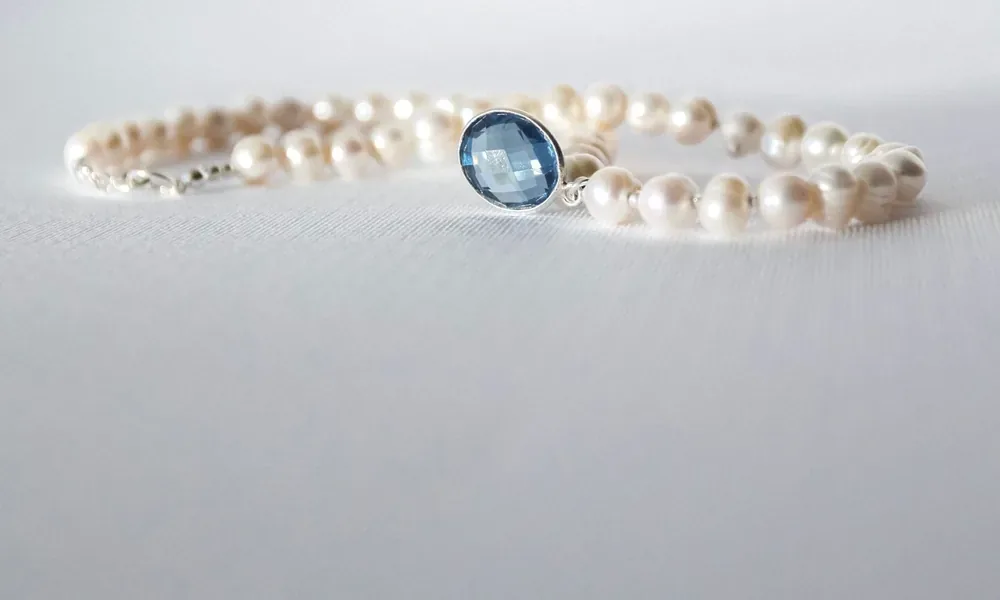
The style changes how a sapphire bracelet is worn, so decide it before you fall in love with a stone. A tennis bracelet, a continuous line of matched sapphires, is the most formal and the most expensive per carat, because every stone must match its neighbours. It is also the most fragile: many small settings mean many places a stone can loosen. A bangle is the opposite: a rigid circle with sapphires set into it is far tougher, but it must fit well, since a loose bangle slides and knocks against everything.
Chain bracelets sit between the two. A fine chain with sapphire drops or stations is light and easy to wear every day, and a broken link can usually be repaired cheaply. Beaded bracelets, faceted sapphire beads on cord or wire, are the most casual and affordable way into real sapphire, but the stringing needs restringing every year or two. Buy the bracelet you will actually wear every morning, not the one you wear twice a year.
Fit and sizing: the measurement most buyers get wrong
Fit is where most sapphire bracelets fail, and it is the part buyers check least. A loose bracelet slides to the hand, knocks the stones against tables and doorframes, and puts sudden strain on the clasp every time your arm swings. A tight one pulls at the links and strains the clasp.
The right fit leaves room for one finger, about half a centimetre, between bracelet and wrist. Measure at the narrowest point, just below the wrist bone, and add one to two centimetres: tennis sits best snug, a bangle needs room to pass over your hand, and a chain can sit looser. Ask about adjustment before you buy: a jeweller can add or remove links, often for a small fee.
The clasp is the whole bracelet
The most expensive sapphire bracelet is worthless if it falls off your wrist on a train. The clasp is the least glamorous part of a bracelet and the most important, so inspect it as carefully as the stones. A bracelet is only ever one small mechanism away from being lost.
In a tennis bracelet, the standard is a box clasp with a figure-of-eight safety catch: a tongue that slides into a box and locks, plus a small hinged loop that catches the bracelet even if the main clasp opens. Test it yourself: it should close with a firm click, open only when you press the release properly, and sit flat against the wrist without pinching. For chain bracelets, look for a lobster clasp or a sturdy spring ring sized to the weight of the bracelet. Check the settings too: prongs should be smooth and tight.
Metal, skin sensitivity and everyday wear
The metal changes both the look and the feel. Platinum is the most durable and secure for valuable stones, and its cool white tone suits blue sapphires. White gold gives a similar look for less, though it needs replating every year or two. Yellow gold warms blue sapphire and hides small scratches better than white metal, while rose gold flatters pink sapphires. Silver is affordable but soft: a lighter-wear piece, not a daily one.
If your skin is sensitive, the metal matters more than the stone. Nickel is the usual culprit, and it is often present in lower-grade white gold. Look for nickel-free white gold, platinum, or solid 14k or 18k yellow gold, and avoid plated clasps and links, which wear through and expose the base metal. Take it off for the gym, gardening and heavy work with your hands. Clean it with warm water and mild soap, and have the settings checked once a year. Our diamond buying guide for 2027 covers the same habit of checking settings regularly.
Treatments: the question that changes the price
Almost every sapphire on the market has been heated. Heat treatment is standard, permanent and accepted by every major gemmological laboratory, and roughly nine in ten natural sapphires have been heated to improve their colour and clarity. A heated stone is a real sapphire, but the treatment must be disclosed and the price should reflect it. Untreated sapphires are rare and cost far more: the premium can be several times the price.
Other treatments are a different matter. Diffusion treatment adds colour only to the surface of the stone, and it can wear or fade. Glass filling hides fractures and makes a stone look cleaner than it is, but the filling is soft and the stone is fragile. Both should be disclosed, and both should cost far less than a heated or untreated stone. Ask for a lab report from GIA, GRS or SSEF on anything expensive.
Natural versus lab-created sapphire
Lab-created sapphires are chemically the same mineral as natural sapphires, grown in a laboratory rather than mined from the earth. They are real sapphires, not imitations, and an honest way to buy a larger, cleaner bracelet for less. The difference is value, not beauty.
A natural sapphire holds its value better and is the right choice for an heirloom, while a lab-created sapphire is the right choice if you want the look and the size for the budget you have. What matters is that the seller tells you which one you are buying, in writing, before you pay. A lab-created stone sold at a natural price is the most expensive mistake in this market.
What a sapphire bracelet should cost in 2027
Prices vary widely, because a bracelet is many stones plus metal plus workmanship, and each of those can change the price several times over. Ranges below are indicative 2027 market ranges, not quotes, and assume heated natural sapphires. A beaded sapphire bracelet in silver can start at a few hundred dollars, and a simple chain bracelet with small sapphire stations runs from around $500 to $2,000. A gold tennis bracelet with matched heated sapphires typically runs from around $2,000 to $10,000.
A fine tennis bracelet with large, vivid, well-matched stones in platinum can run from $10,000 to $50,000, and a luxury bracelet with rare untreated stones can exceed that many times over. Three things move the price most: colour, total carat weight, and matching. A bracelet of small, well-matched, vivid stones costs more than a bracelet of larger, paler, uneven ones. Lab-created stones change the picture: the same look can cost a fifth of the natural price.
Sapphire bracelet styles at a glance
| Style | Best for | Clasp and fit | Price range | Watch out for |
|---|---|---|---|---|
| Tennis bracelet | Formal and evening wear | Box clasp plus safety | $2,000–$50,000+ | One mismatched stone |
| Bangle | Daily wear, tough use | No clasp; must pass hand | $500–$10,000 | Wrong size, loose fit |
| Chain bracelet | Everyday, light wear | Lobster or spring ring | $500–$5,000 | Clasp too small for weight |
| Beaded bracelet | Casual, first sapphire | Strung; needs restringing | $200–$2,000 | Worn stringing |
| Cuff | Evening statement | Open band; spring fit | $1,000–$15,000 | Uncomfortable at a desk |
| Charm bracelet | Personal, collected | Lobster clasp | $300–$3,000 | Charms that snag |
| Slider bracelet | Adjustable fit | Sliding bead adjuster | $300–$2,000 | Adjuster that slips |
| Multi-strand bracelet | Layered, soft look | Box clasp; check all strands | $800–$8,000 | Strands of uneven length |
Checklist: what to look for in a sapphire bracelet
- Colour first: vivid, even blue, checked in daylight on your wrist.
- Matching: every stone should share the same hue, tone, saturation and size.
- Fit: room for one finger, with resizing or an extender agreed before you buy.
- Clasp: a box clasp with a figure-of-eight safety, or a clasp sized to the weight of the piece.
- Treatment and identity: heated, natural or lab-created, in writing.
- Settings and skin: prongs smooth and tight, and nickel-free metal if your skin is sensitive.
Frequently asked questions
What is the most important thing to look for in a sapphire bracelet?
Colour and matching. Judge the whole row in daylight on your wrist, then check the clasp: a beautiful bracelet that falls off is a lost bracelet.
How should a sapphire bracelet fit?
Leave room for one finger, about half a centimetre, between the bracelet and your wrist when your arm hangs relaxed. Tennis sits best snug; a bangle needs room to pass over your hand.
Are sapphire bracelets good for everyday wear?
Yes, at 9 on the Mohs scale. Bangles and chains cope best with daily use; tennis bracelets need more care.
Are heated sapphires bad?
No. It is standard, permanent and accepted by every major laboratory, and roughly nine in ten natural sapphires have been heated. It must be disclosed.
How do I keep a sapphire bracelet from falling off?
Choose a box clasp with a figure-of-eight safety, test it yourself, and have it checked once a year.
How much should a sapphire bracelet cost?
Beaded silver from a few hundred dollars; gold tennis typically $2,000–$10,000; fine or untreated can exceed $50,000.
The bottom line
A good sapphire bracelet is bought as a whole piece, not as a stone. Judge the full row in daylight on your wrist, check every stone matches its neighbours, get the fit right, and mind the clasp and settings as much as the sparkle. Ask the treatment question before you ask the price, and get the answer in writing. Our best sapphire earrings of 2027 show the same colour rules at a smaller scale.
Note: Prices here are indicative 2027 market ranges, not quotes. Always confirm the treatment, identity and price of the exact bracelet in writing before you pay.