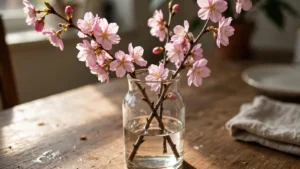
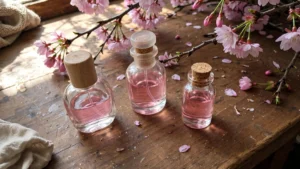
A peony perfume smells like spring in a bottle, soft, fresh and lightly sweet, with a clean green edge that keeps it from feeling heavy. It is the scent of a bouquet that has just been cut, and it is one of the most popular floral notes in modern perfumery.
There is no peony essential oil. No one distils the flower, no one presses its petals, and no bottle of peony perfume contains a single drop of real peony. Every peony perfume you have ever smelled is a recreation, an accord built from other flowers, fruits and musks, imagined by a perfumer who has decided what peony ought to smell like. That is why the same note can smell bright and fruity in one bottle, and soft and powdery in another.
This guide explains what a peony perfume actually is, how the note is made, why it behaves the way it does on skin, and how to tell a good one from a bottle that is only borrowing the name.
Key takeaways
- A peony perfume is built from a recreated accord, because there is no natural peony essential oil or extract to distil.
- The note smells soft, fresh and lightly sweet, with a watery green edge, and it sits between rose and lily in character.
- Peony usually works as a heart note, paired with rose, lychee, jasmine or soft musk, and it suits spring and daytime wear best.
- The same name can smell very different across brands, so the notes around the peony matter more than the word itself.
- Peony is a light, delicate note that fades sooner than oud or amber, so a short wear time is normal, not a sign of a poor perfume.
What a peony perfume is
A peony perfume is a fragrance in which peony is the leading floral character, usually in the heart of the composition. The peony is rarely alone. It is supported by rose, lychee, jasmine, freesia or soft musk, and those supporting notes decide whether the perfume smells bright and fruity, soft and powdery, or fresh and green. The peony gives the scent its softness and its spring feeling. The notes around it give it its personality.
The reason peony needs so much support is simple. A real peony flower has a very faint scent, and it does not survive distillation. Perfumers cannot extract it the way they extract rose or jasmine, so they build an impression of it instead, using materials that together suggest the flower.
That makes peony a perfumer’s note, not a flower’s note. It is a creative decision, and every house makes it differently. A peony perfume from a French heritage brand may lean powdery and elegant, while one from a modern niche house may lean green and crisp. Both are peony perfumes. They simply imagine the flower in different ways, and neither is more correct than the other. The best way to shop for peony is to treat the name as a hint, not a guarantee, and to let the notes around it tell you what the bottle will actually smell like.
How to recognise a real peony note
Start with the opening. A peony perfume usually opens bright and a little fruity, with a fresh, dewy quality that feels like morning air. That brightness comes from the top notes, often lychee, freesia or green leaves, and it is what makes peony feel like spring.

Then wait. Peony is a heart note, which means it appears after the bright opening fades, usually ten to thirty minutes after you spray. At that point the scent should soften into something floral and clean, with a gentle sweetness and a slightly powdery finish. If the perfume stays sharp or sweet, or if it turns soapy, the accord is probably built on lily of the valley or synthetic musk rather than a balanced peony.
Finally, check the dry-down. A good peony perfume settles into a soft, musky skin scent, close and clean, like the smell of a flower that has been pressed between pages. That is the peony doing what it does best. A peony perfume that passes this test will smell soft, clean and a little sweet at the end, with none of the sharpness of the opening and none of the heaviness of a rich base. Our guide to what a floral perfume is explains the same structure in more detail, because every floral perfume follows the same arc, from a bright opening to a soft heart to a warm base, and peony is no exception.
9 facts about peony perfume
Peony has no natural extract
What it shows: Every peony perfume is a recreation, because the flower yields no essential oil and its scent is too faint to distil. Perfumers build the note from rose, geranium, lily of the valley and soft fruit. What to consider: A bottle that claims real peony oil is misleading, and a peony perfume that smells different from another brand is normal, not a fault. Best for: Anyone curious about how perfumery works. Material: A recreated accord, not a natural extract. Price range: Affordable to luxury. Standout feature: Peony is one of the few major floral notes that exists only as an idea.
The scent is soft, fresh and slightly sweet
What it shows: Peony smells like fresh petals with a watery green edge and a hint of rose, less rich than rose, less heady than jasmine, and less sweet than gardenia. What to consider: If a peony perfume smells heavy, sugary or spicy, the supporting notes are doing most of the work, and the peony itself is a small part of the blend. Best for: Lovers of light, modern florals. Material: Peony accord with rose and green notes. Price range: Affordable to luxury. Standout feature: The watery freshness is what makes peony feel like spring rather than summer.
Peony sits between rose and lily in character
What it shows: Peony is softer than rose, fresher than lily, and greener than both, which is why it blends so easily with either one and rarely dominates a composition. What to consider: A peony and rose perfume will smell richer and more romantic, while a peony and lily perfume will smell cleaner and more watery. Best for: Anyone choosing between rose and peony. Material: Peony accord, rose and lily of the valley. Price range: Affordable to luxury. Standout feature: Peony is the bridge note that lets rose and lily sit together without clashing.
It works as a heart note, not a top or base
What it shows: Peony appears after the bright opening and before the warm base, which is why it takes ten to thirty minutes to show itself properly on skin. What to consider: Judging a peony perfume in the first minute will tell you about its top notes, not its peony, so always wait before deciding. Best for: Patient testers. Material: Peony accord in the heart of the composition. Price range: Affordable to luxury. Standout feature: The heart is where peony does its best work, softening the opening and warming the base.
Peony blends best with rose, lychee and soft musk
What it shows: Rose adds romance, lychee adds brightness, jasmine adds depth, and soft musk adds a clean, skin-like finish that lets the peony linger without turning sweet. What to consider: Heavy oud, strong spice or dark amber can bury a delicate peony accord, so those combinations are rare and usually disappointing. Best for: Anyone reading a note list before buying. Material: Peony with rose, lychee, jasmine or musk. Price range: Affordable to luxury. Standout feature: Musk is the peony’s best friend, because it extends the note without changing its character.
It is a warm-weather note
What it shows: Peony suits spring and early summer best, when the air is warm and the light is bright, and it pairs naturally with light clothing and daytime occasions. What to consider: In cold, dry air, light florals can feel thin, so a peony perfume in winter works best as a richer eau de parfum with musk or amber in the base. Best for: Spring, summer and warm daytime wear. Material: Peony accord with light, airy supporting notes. Price range: Affordable to luxury. Standout feature: Peony is one of the few floral notes that genuinely belongs to a season.
Peony perfumes are usually light to moderate in strength
What it shows: A peony perfume typically lasts three to five hours and sits close to the skin, because the accord is delicate and the materials that build it are light. What to consider: A peony perfume that fades by the afternoon is normal, and reapplying or layering with a matching lotion is the usual answer, not a reason to return the bottle. Best for: Office wear, daytime and close company. Material: Peony accord in eau de toilette or light eau de parfum. Price range: Affordable to luxury. Standout feature: Peony is a quiet note by nature, and its softness is part of its charm.
The same name can smell very different across brands
What it shows: Because there is no natural reference, each perfumer imagines peony differently, so one brand’s peony is fruity and bright while another’s is powdery and soft. What to consider: Never buy a peony perfume on the name alone, and never assume a second bottle will smell like the first, even at the same price. Best for: Careful shoppers. Material: A recreated accord, interpreted differently by each house. Price range: Affordable to luxury. Standout feature: Peony varies more between brands than almost any other floral note. Our roundup of fig perfumes makes the same point, because fig is another note that is recreated rather than extracted.
Peony works for weddings and daytime occasions
What it shows: Peony is soft, romantic and photogenic without being overpowering, which is why it is one of the most popular wedding and daytime floral notes. What to consider: For a wedding, choose an eau de parfum rather than a cologne, so the scent lasts through the ceremony and the photographs, and test it with the bouquet in mind. Best for: Weddings, spring parties and daytime celebrations. Material: Peony with rose, lychee or soft musk. Price range: Affordable to luxury. Standout feature: Peony is the wedding floral that photographs as well as it smells.
Which peony style suits you
If you like your florals fresh and clean, look for a green peony, where the accord sits with freesia, green leaves or jasmine. These smell like a garden after rain, they suit warm weather and office wear, and they are the easiest peonies to wear every day.
If you like your florals romantic and a little sweet, look for a fruity peony, where lychee or apple adds brightness. These are the peonies that get noticed, because the fruit makes the flower easier to pick out. Our guide to rose perfumes is a useful companion here, because rose and peony are the two classic romantic florals, and rose is the richer, more formal of the two.
If you like your florals quiet and grown up, look for a soft, musky peony, where violet, musk or amber lets the flower settle close to the skin. These are the peonies for people who want to smell expensive rather than floral, and they suit smart daytime events and spring weddings. They are also the best peonies to layer, because their softness leaves room for a second scent.
The caveats that matter
Peony is a gentle note, and gentle notes come with honest limits. It is not a strong projector, it does not last as long as oud or amber, and it can smell different on skin than it does on paper. That is not a fault in the bottle. It is the nature of the flower, and knowing it before you buy will save you from disappointment.
| Detail | What is known |
|---|---|
| What peony smells like | Soft, fresh and lightly sweet, with a watery green edge and a hint of rose |
| Is there a natural peony extract | No, every peony perfume uses a recreated accord built from other materials |
| Where it sits in a perfume | Usually a heart note, between a bright top and a warm musky base |
| How long it lasts | Light to moderate, often three to five hours, shorter for eau de toilette |
| Best season | Spring and early summer, and warm daytime wear year round |
| Who should test carefully | Anyone sensitive to floral or fruity notes should patch-test first |
| What to avoid pairing at first | Heavy oud or strong spice, which can bury the delicate peony accord |
| What it does not do | It does not project far or last all day on its own, and it is not a strong evening scent |
If you are sensitive to fragrance, patch-test a peony perfume on your inner arm before wearing it all day, and avoid spraying it on broken or freshly shaved skin.
Checklist: choosing a peony perfume honestly
Use these checks before you buy, and again after a week of wear.
- Check the notes around the peony: rose and lychee mean bright and romantic, musk and violet mean soft and powdery, green leaves mean fresh and crisp.
- Check the concentration: eau de toilette for light daytime wear, eau de parfum for more depth and a longer wear.
- Test on skin, not paper, and wait thirty minutes before judging, because peony accords settle much softer than they open.
- Check the size: start with a small bottle, because peony is personal and the same accord smells different on two people.
- Check the season: peony shines in spring and warm weather, and can feel thin in cold, dry air.
- Protect the result: store the bottle away from light and heat, and use it within a year or two of opening, because light florals fade faster than heavy ones.
Frequently asked questions
What does peony perfume smell like?
It smells soft, fresh and lightly sweet, like fresh petals with a watery green edge.
Is there real peony in peony perfume?
No. There is no peony essential oil, so perfumers recreate the scent with an accord built from rose, geranium, lily of the valley and soft fruity notes. That is why the same note can smell different from brand to brand, and why reading the note list matters. Perfumers have spent decades refining these accords, and the best ones are convincing enough that most wearers never guess the flower was never in the bottle.
How long does peony perfume last?
Usually three to five hours, and less for an eau de toilette. Peony is a light, delicate note, so it fades sooner than oud, amber or vanilla.
Is peony perfume good for weddings?
Yes, it is one of the best wedding notes, because it is soft, romantic and photogenic without being overpowering. A peony perfume suits a spring or summer wedding, and it layers well with a bouquet. Rose is the richer, more formal wedding floral, while peony is the lighter, more modern choice.
Can men wear peony perfume?
Yes. Peony is a floral note, not a gendered one, and several peony perfumes are marketed as unisex or sit well on any skin. The green and musky peonies are the easiest starting point, because they read as fresh and clean rather than sweet.
Does peony perfume work in winter?
It can, but it is not at its best in cold, dry air, where light florals can feel thin. If you want peony in winter, choose a richer eau de parfum with musk or amber in the base, and wear it close to the skin rather than expecting it to project.
The bottom line
A peony perfume is not a bottle of flower extract. It is a perfumer’s idea of a flower, built from rose, green notes and soft fruit, and that is exactly what makes it interesting. The note is soft, fresh and lightly sweet, it suits spring and daytime wear, and it varies enough from brand to brand that there is a version for almost every taste.
Understand the accord, read the notes around it, test on skin and wait thirty minutes. That is the honest way to find a peony perfume you will actually wear, rather than one that smells lovely for a minute in the shop and disappears by lunchtime.