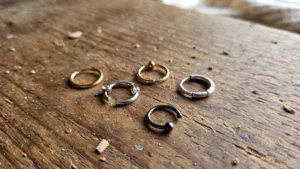
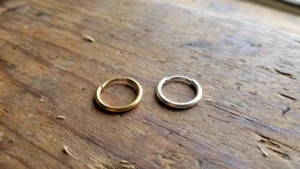
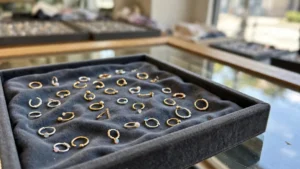
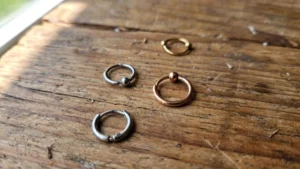
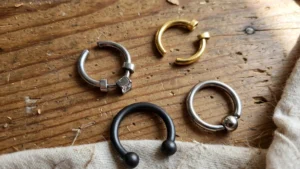
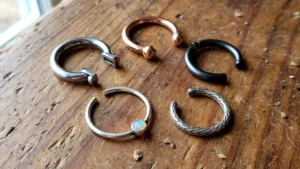
A septum ring is a small piece of jewellery that sits through the thin strip of tissue between your two nostrils, known as the septum. Unlike a nostril stud, which sits on the side of the nose, a septum ring hangs below the tip of the nose, so it is visible from the front and from the side. It can be a slim hoop, a horseshoe with two small balls, or a decorative clicker, and it comes in gold, silver, titanium, and a growing range of gem-set designs.
The style has a long history. Septum jewellery has been worn for centuries in South Asia, Africa, and the Americas, and it moved into Western fashion in the 1970s through punk and counterculture, then into the mainstream in the 2010s. Today it is worn by people of every age, from teenagers choosing a first piece to older wearers who like a bold, low-effort accent. It suits almost every face shape, because the ring sits on the centre line of the face rather than competing with other features.
Below are nine facts worth knowing before you buy or wear one in 2027, from how it is fitted to how much it costs and how long it takes to heal. Each fact is explained in plain terms, with what is good about it, what to watch for, and who it suits best, so you can decide with confidence rather than guesswork.
Key takeaways
- A septum ring sits through the thin tissue between the nostrils, not through cartilage, which is why it is usually less painful to pierce than many people expect.
- Clickers, horseshoes, and seamless hoops are the three main styles, and each one suits a different look and a different level of experience.
- Titanium and solid gold are the safest metals for a new piercing, while plated and fashion metals are best kept for healed piercings only.
- Healing takes around six to eight weeks, and cleaning is simple, but it must be done every day, without twisting or turning the ring.
- No septum ring suits every face and every occasion, and a piece that is too large, too heavy, or made from the wrong metal can irritate skin that would otherwise heal well.
What a septum ring actually is
A septum piercing passes through the “sweet spot”, the thin membrane of skin at the front of the septum, just below the cartilage. That placement matters. Because the needle passes through soft tissue rather than cartilage, the piercing is usually quick, and many people describe it as a sharp pinch that fades within seconds. It also heals faster than a cartilage piercing, typically in six to eight weeks, as long as it is cleaned properly and left alone.
The ring itself is measured in two ways: gauge, which is the thickness of the wire, and diameter, which is the width across the ring. Most septum rings are 16 gauge, which is about 1.2 millimetres thick, and diameters of 8 to 10 millimetres suit most noses. A smaller diameter sits close to the nose and looks neat. A larger diameter hangs lower and makes more of a statement. Getting the size right is the single biggest factor in whether a septum ring feels comfortable day to day.
Not every septum ring needs a piercing. Clip-on and magnetic septum rings sit on the outside of the septum and let you try the look for an evening, a photo, or a party, with no healing time at all. They are a sensible first step if you are unsure, and they are also the right choice for anyone whose workplace or school does not allow a visible piercing.
How we chose these facts and what to look for
Look first at the metal. For a new piercing, implant-grade titanium and solid 14-karat or 18-karat gold are the safest choices, because they rarely cause reactions and they do not flake or tarnish inside a healing piercing. Surgical steel is also widely used, though a small number of people react to the nickel it contains. Plated, coated, and fashion metals can look beautiful, but they belong in a fully healed piercing, not a fresh one.

Look next at the closure. A clicker has a hinged segment that snaps shut, which makes it easy to put in and take out once you know how it works. A horseshoe, also called a circular barbell, has two small balls that screw on, which is simple and secure but fiddly with wet hands. A seamless hoop has no visible break, which looks elegant, but it needs a little practice to open and close without bending it out of shape. Our guide to gold jewellery for everyday wear is a useful companion here, because the same rules about metal quality and everyday comfort apply to a septum ring as to any other piece you wear daily.
Finally, look at the size and the weight. A heavy gem-set clicker can pull on a new piercing and slow healing, so lighter is better at the start. A diameter that is too small will press against the nose and feel tight. A diameter that is too large will swing when you move and catch on scarves and towels. The right size is the one you forget you are wearing.
The 9 facts about septum rings in 2027
It sits in the sweet spot, not the cartilage
What we like: The piercing passes through soft tissue, so it is usually quick and heals faster than a cartilage piercing. What to consider: A piercer who misses the sweet spot and goes through cartilage will cause more pain and a longer heal, so choose an experienced piercer. Best for: First-time piercing wearers. Cost: Around £30 to £60 for the piercing, plus the jewellery. Time needed: A few minutes for the piercing itself.
Clickers, horseshoes, and seamless hoops are the three main styles
What we like: Each style has a clear character: clickers are decorative and easy to change, horseshoes are simple and secure, seamless hoops are the most discreet. What to consider: A clicker with a stiff hinge can be hard to close, and a seamless hoop can be bent out of shape if you force it. Best for: Anyone building a small collection. Cost: Around £10 to £80 for a good-quality piece. Time needed: A few minutes to change, once you know how.
Gold, silver, and titanium are the metals that matter most
What we like: Solid gold warms against the skin and holds its colour, silver is cool and affordable, and titanium is the lightest and least likely to cause a reaction. What to consider: Silver can tarnish and is not ideal for a fresh piercing, and gold below 14 karat can contain metals that irritate sensitive skin. Best for: Everyday wear, once healed. Cost: Around £15 to £200, depending on the metal and the maker. Time needed: No extra time, just a quick polish now and then.
Gauge and diameter decide comfort more than style does
What we like: A 16-gauge ring in an 8 to 10 millimetre diameter suits most noses and feels balanced. What to consider: A ring that is too thin can cut into a healing piercing, and a ring that is too wide will swing and snag. Best for: Anyone buying their first piece. Cost: No extra cost, it is a matter of choosing the right size. Time needed: A minute to measure, and worth doing properly.
It has a long history, from South Asia to the 1970s
What we like: Septum jewellery has been worn for centuries, from the nath in South Asia to traditional pieces in Africa and the Americas, which gives it a depth that few modern trends have. What to consider: Because it carries cultural meaning in some traditions, it is worth wearing it with respect rather than as a costume. Best for: Anyone who likes jewellery with a story. Cost: No extra cost. Time needed: A few minutes to learn the history is time well spent.
It works with almost every face shape
What we like: Because the ring sits on the centre line of the face, it frames the nose rather than competing with it, so it suits round, oval, square, and heart-shaped faces. What to consider: A very large ring can overwhelm a small nose, and a very small ring can disappear on a broader face, so proportion matters. Best for: Anyone trying the style for the first time. Cost: No extra cost. Time needed: A few minutes trying different diameters in a mirror.
Healing takes weeks, not days
What we like: Six to eight weeks is shorter than most cartilage piercings, and the septum is easy to reach for cleaning. What to consider: Changing the jewellery too early, sleeping on it, or catching it on a towel can set healing back by weeks. Best for: Anyone patient enough to leave it alone. Cost: A bottle of saline spray, around £5 to £10. Time needed: Two minutes of cleaning, twice a day.
Cleaning is simple but not optional
What we like: Warm saline spray or a salt-water rinse is all it takes, with no special products needed. What to consider: Alcohol, hydrogen peroxide, and harsh soaps dry out the piercing and slow healing, so keep them away from it. Best for: Daily routine, morning and evening. Cost: Around £5 to £10 for saline spray. Time needed: Two minutes, twice a day.
Real gold and platinum hold value best
What we like: A solid gold or platinum septum ring keeps its value, does not tarnish, and can be worn for years without losing its finish. What to consider: The upfront cost is higher, and a very expensive piece is easy to lose if the closure is not secure. Best for: A long-term piece, or a gift. Cost: Around £80 to £500 and above for solid gold and platinum. Time needed: A quick polish every few months keeps it looking new.
Which septum ring is right for you
If this is your first septum ring, start with a simple titanium horseshoe in 16 gauge and an 8-millimetre diameter. It is light, it rarely causes reactions, and it lets the piercing heal without fuss. Once it is healed, you can try a gold clicker for evenings, or a seamless hoop for a cleaner daytime look. Our roundup of the best nose rings for women covers the wider family of nose jewellery, and it is a good place to compare styles before you commit to one.
If you wear glasses, think about how the ring sits below them. A slim ring that hugs the nose rarely interferes, but a large decorative clicker can catch on frames when you take them off. If you play sport, a horseshoe with tight balls is the most secure choice, because it has no hinge to pop open. And if your workplace is conservative, a small retainer or a clip-on piece lets you keep the look for the weekend and hide it during the week.
Skin tone matters too, though less than people think. Warm gold suits warm undertones and brings out the warmth in olive and deep skin. Cool silver and white gold suit cool undertones and look crisp against fair skin. But the honest answer is that either metal looks good on almost everyone, and the ring you reach for most is the right one, whatever the colour rules say.
The caveats that matter
A septum piercing is safe when it is done well and looked after, but it is still a piercing, and it deserves the same care as any other. The most common problems are not serious, but they are annoying: a bump from irritation, a smell from a buildup of dead skin cells around the ring, or a ring that has been changed too early. All three are usually fixed by going back to simple saline cleaning, leaving the ring alone, and waiting a week or two.
| Detail | What is known |
|---|---|
| Where it sits | Through the thin tissue between the nostrils, below the cartilage |
| Usual gauge | 16 gauge, about 1.2 millimetres thick |
| Usual diameter | 8 to 10 millimetres for most noses |
| Healing time | Around six to eight weeks with daily cleaning |
| Safest metals to start | Implant-grade titanium and solid 14-karat or 18-karat gold |
| What to avoid while healing | Twisting the ring, changing jewellery early, alcohol and harsh soaps |
| When to see a piercer | If there is persistent swelling, heat, or discharge after a few days |
| What it does not do | It does not suit every face, every occasion, or every workplace dress code |
If you are pregnant, have a bleeding condition, take blood-thinning medication, or have a skin condition around the nose, speak to your clinician or an experienced piercer before getting pierced. That is not a formality. A short conversation beforehand avoids weeks of trouble afterwards, and a good piercer will always rather answer a question than fix a problem.
Checklist: buying a septum ring well
Use these checks before you buy, and again before you change a healed piercing to new jewellery.
- Check the metal: titanium or solid 14-karat or 18-karat gold for a new piercing, and plated metals only once fully healed.
- Check the size: 16 gauge and 8 to 10 millimetres diameter suits most noses, and the ring should sit close without pressing.
- Check the closure: a clicker should snap shut firmly, and a horseshoe’s balls should screw on tightly.
- Check the weight: a light ring heals better and feels better all day than a heavy gem-set piece.
- Check the piercer: an experienced piercer with a clean studio and a portfolio of healed septum work.
- Check your routine: two minutes of saline cleaning twice a day, and no twisting, turning, or early jewellery changes.
Frequently asked questions
Does a septum piercing hurt?
Most people describe it as a sharp pinch that fades within seconds, followed by watery eyes for a minute or two. Because it passes through soft tissue rather than cartilage, it is usually less painful than a cartilage piercing, though everyone feels it differently.
How long does a septum piercing take to heal?
Around six to eight weeks for most people, as long as it is cleaned twice a day and left alone. Changing the jewellery before then, or catching it often, can extend healing by several weeks.
Can I hide a septum ring for work?
Yes. A horseshoe can often be flipped up inside the nose so it is not visible, and a small retainer does the same job more discreetly. A clip-on ring can simply be taken off. Check your workplace policy first, because rules vary.
What is the best metal for a septum ring?
Implant-grade titanium is the safest starting point, because it rarely causes reactions and is very light. Solid 14-karat or 18-karat gold is also excellent for a new piercing. Silver and plated metals are best kept for healed piercings. Our guide to pearl necklaces for women makes the same point about metal quality, because a piece that sits against skin all day should be made from something your skin trusts.
Can I change my septum ring myself?
Once it is fully healed, yes, with clean hands and a little patience. A clicker is the easiest to change yourself. If a horseshoe ball will not unscrew, or a seamless hoop will not close neatly, ask your piercer to help rather than forcing it.
Will a septum ring leave a mark if I take it out?
Usually not a visible one. The hole is inside the nose, so it is not seen from the outside, and a healed piercing that is left empty will usually close slowly, over weeks or months, without a scar you can see.
The bottom line
The best septum ring in 2027 is not the most expensive or the most dramatic. It is the one made from a metal your skin likes, in a size that sits comfortably, with a closure you can manage without a struggle. Start simple, let it heal properly, and add decoration once you know what suits you. A titanium horseshoe or a slim gold clicker will cover almost every situation, from a quiet working day to a formal evening.
Choose one ring, wear it every day for two months, clean it twice a day, and judge it on how it feels, not on how it photographs. That is the honest way to find out whether a septum ring is for you, and if it is, you will know within a week of it healing, because you will have stopped noticing it is there at all.