Hoop vs Stud Nostril Rings 2027: 9 Comparisons That Matter
A hoop and a stud are the two shapes almost every nostril ring takes, and the choice between them changes how the ring looks, feels, and behaves. A hoop is a small circle that catches the light and moves a little as you do. A stud is a small dot that sits flat and quiet, and it is easy to forget you are wearing it. Both are classic, but they suit different faces, different days, and different moods.
The difference is not only style. A hoop is easier to catch on a towel or a scarf, and it can be flipped or turned. A stud stays put, but it can be fiddly to put in, and a loose backing can slip away unnoticed. A piercing that is still healing usually suits a stud better, while a healed piercing gives you the freedom to choose either.
Below are nine comparisons that matter in 2027, from first impressions and comfort to security, cost, and what each shape is worth keeping. Each one is described plainly, so you can choose between a hoop and a stud with your own nose, routine, and budget in mind, not just a photograph.
Key takeaways
- Hoops look bolder and more noticeable, while studs look quieter and more discreet, so the choice is mostly about how much attention you want.
- Studs are the safer choice for a new or healing piercing, because they move less and catch on less.
- Hoops are easier to change and clean, while studs with screw or flat backs stay put more securely.
- Both shapes come in gold and silver, so the metal choice is separate from the shape choice.
- No shape suits everyone, and a hoop or stud that looks perfect in a shop can feel wrong on your own nose, so try the size before you commit.
What hoop and stud nostril rings actually are
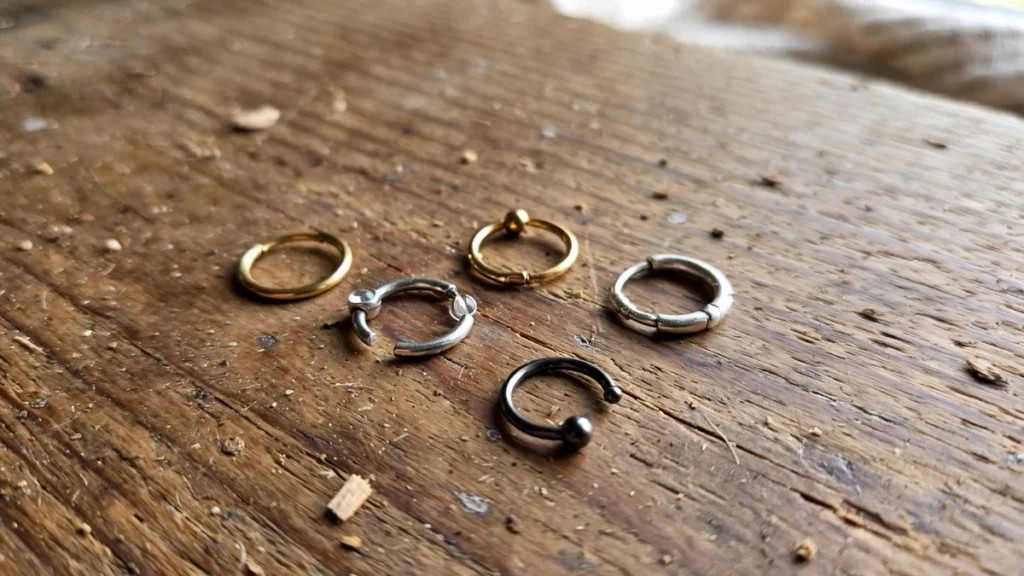
A hoop nostril ring is a small open or closed circle that passes through the piercing and curves around the edge of the nostril. The most common types are the seamless hoop, which has no visible join, the clicker, which opens and closes with a hinge, and the horseshoe, which has a ball at each end. A small diameter hugs the nostril; a larger one hangs lower and looks bolder.
A stud nostril ring is a small decorative head on a straight post. The head can be a ball, a gemstone, a pearl, or a flat disc. The post is held in place by a backing, which can be a flat disc, a screw thread, or a simple bend in the metal.
The third thing worth knowing is the gauge. Most nostril piercings use a 20-gauge or 18-gauge ring, and both hoops and studs come in those sizes. The gauge is the thickness of the metal, and it should match your piercing.
How we chose these comparisons and what to look for
Look first at the size. A hoop should sit close enough to the nostril that it does not catch on clothing, but not so tight that it presses into the skin. A stud should sit flat against the nostril without sinking in or standing proud.

Look next at the closure. A clicker hoop is the easiest to open and close, because the hinge does the work. A flat-back stud is the most secure, because the disc sits flat inside the nose and cannot fall out.
Finally, look at what the ring is paired with. A hoop looks natural alongside other hoops and rings, and our guide to the best necklaces for women shows how a single repeated shape can tie an outfit together. A stud looks natural alongside small earrings and a delicate necklace.
The 9 comparisons that matter in 2027
First impressions and how they look on the nose
What we like: A hoop draws the eye and gives the nose a clear shape, which suits people who want their piercing to be seen. A stud is a small sparkle that adds polish without drawing attention. What to consider: A large hoop can dominate a small nose, and a tiny stud can disappear on a larger nose. Size matters as much as shape. Best for: A visible, confident look with a hoop; a discreet, polished look with a stud. Material: 14ct gold or sterling silver in either shape. Price range: Hoops from around £15, studs from around £12. Standout feature: A hoop frames the nostril; a stud finishes it.
Ease of putting it in and taking it out
What we like: A clicker hoop is the easiest shape to change, because the hinge opens and closes with a click. A stud with a flat back is harder to grip, especially with short nails. What to consider: A seamless hoop needs to be twisted open gently, and forcing it can bend it out of shape. A screw stud needs a steady hand and a mirror. Best for: Quick changes with a clicker hoop; a ring you leave in for weeks with a flat-back stud. Material: 14ct gold or sterling silver, smooth finish. Price range: Clicker hoops from around £25, flat-back studs from around £20. Standout feature: A clicker hoop can be changed in seconds, even without a mirror.
Security and what stays put
What we like: A flat-back stud is the most secure shape, because the disc cannot slip through the piercing. A closed hoop is secure too, once it is properly shut. What to consider: A stud with a simple bend or a loose push-on backing can fall out in your sleep or in the shower. An open hoop can snag and pull. Best for: Sleeping and swimming with a flat-back stud; daily wear with a properly closed hoop. Material: 14ct gold or sterling silver, with a secure closure. Price range: Flat-back studs from around £20, clicker hoops from around £25. Standout feature: A flat-back stud stays put through sleep, sport, and swimming.
Comfort and how it feels all day
What we like: A stud is the most comfortable shape for most people, because it sits flat and does not move. A small hoop is comfortable too, once you are used to it. What to consider: A hoop can catch on a towel, a scarf, or a face mask, and a single snag can make the piercing sore for days. A stud with a long post can poke the inside of the nose. Best for: All-day comfort with a flat-back stud; comfortable wear with a small, close-fitting hoop. Material: 14ct gold or sterling silver, polished finish. Price range: Comfortable studs from around £15, small hoops from around £18. Standout feature: A stud is the shape you forget you are wearing.
Versatility: dressing it up or down
What we like: A hoop can be dressed up with a gemstone or dressed down in plain metal, and it works for evenings as well as daytime. A stud can be swapped in seconds for a different stone or colour, so it suits people who like to change their look. What to consider: A large hoop is hard to dress down, and a tiny stud is hard to dress up. The middle sizes are the most versatile in both shapes. Best for: Evenings and occasions with a gemstone hoop; everyday variety with a small stud collection. Material: 14ct gold or sterling silver, with or without a stone. Price range: Gemstone hoops from around £40, stud sets from around £25. Standout feature: A small collection of studs gives you a different look every day for the price of one hoop.
Durability and what can go wrong
What we like: Both shapes last well when they are well made. A solid hoop has no backing to lose, and a flat-back stud has no hinge to wear out. What to consider: A clicker hinge can loosen over time, and a seamless hoop can be bent out of shape if it is forced open. A stud backing can be lost, and a thin post can bend. Best for: Long life with a seamless hoop or a flat-back stud; easy repair with a clicker hoop. Material: 14ct solid gold or sterling silver. Price range: Seamless hoops from around £20, flat-back studs from around £20. Standout feature: A seamless hoop has no moving parts, so there is nothing to wear out.
Cost for one ring and for a set
What we like: Studs are usually cheaper, especially in sets, so you can buy several stones for the price of one good hoop. Hoops cost a little more, because they use more metal and a more complex closure. What to consider: The price gap is small for plain rings and larger for gemstone ones. A diamond hoop costs far more than a diamond stud of the same stone size. Best for: A collection on a budget with studs; one lasting piece with a hoop. Material: Sterling silver for a set, 14ct gold for a single piece. Price range: Stud sets from around £20 to £50; hoops from around £15 to £120. Standout feature: A set of studs is the cheapest way to own several looks.
Matching outfits and occasions
What we like: A hoop suits evenings, weddings, and occasions where you want to look polished and a little bold. A stud suits work, daytime, and occasions where you want to look neat without drawing attention. What to consider: The metal matters as much as the shape. A gold hoop is dressier than a silver stud, but a diamond stud is dressier than a plain silver hoop. Best for: Formal occasions with a hoop; work and everyday with a stud. Material: 14ct gold for formal wear, sterling silver for daily wear. Price range: Small discreet studs from around £12, dressy hoops from around £40. Standout feature: A small gold hoop is the most versatile single choice for both formal and everyday wear.
Keeping it afterwards as a keepsake
What we like: A well-made hoop or stud in solid gold can be kept for life, gifted, or resold, because gold holds value. A silver ring holds less, but a beautiful design is still worth keeping. What to consider: The shape does not decide value; the metal does. A plated hoop and a plated stud are both worth little, whatever their shape. Best for: A keepsake with solid gold in either shape; a fashion piece with silver. Material: Solid 14ct or 18ct gold. Price range: Solid gold from around £60 in either shape; silver rarely resells above a few pounds. Standout feature: A solid gold hoop or stud is a small piece of jewellery you can keep for life.
Which nostril ring is right for you
Start with your piercing. If it is new or still healing, a stud is the safer choice, because it moves less and catches on less. Once it is fully healed, you can wear either shape, and the choice becomes a matter of style. Ask your piercer if you are unsure whether your piercing is ready for a hoop.
Next, think about your daily life. If you swim, play sport, or wear face masks often, a flat-back stud will stay put and stay comfortable. If you change your jewellery to match your outfit, a clicker hoop is quicker to swap. A guide to the best gold anklets is a useful reminder that the jewellery you wear most is the jewellery that fits your routine.
Finally, think about how much attention you want. A hoop is a feature, and people will notice it. A stud is a detail, and people will notice you first and the ring second. Neither is better. The right shape is the one that feels like yours when you look in the mirror.
The caveats that matter
Both shapes are safe for most people, but neither is safe for a piercing that is not ready. Changing to a hoop too early can irritate a healing piercing, because the hoop moves more than a stud and can drag bacteria into the wound. The usual advice is to wait until the piercing is fully healed, which can take several months, before switching shapes.
| Detail | What is known |
|---|---|
| Best for a new piercing | A stud, because it moves less and catches on less |
| Easiest to change | A clicker hoop, which opens and closes with a hinge |
| Most secure | A flat-back stud, whose disc cannot slip through the piercing |
| Most comfortable | A stud, which sits flat and barely moves |
| Most noticeable | A hoop, which draws the eye and frames the nostril |
| Cost | Studs from around £12, hoops from around £15, gemstone pieces higher |
| Durability | Seamless hoops and flat-back studs last longest; hinges and backings wear first |
| What neither does | Neither shape suits every nose, and neither fixes a piercing that is not healed |
If your piercing becomes red, swollen, or painful after a change of ring, switch back to the shape you wore before and give it time to settle. If it does not settle, speak to your piercer or a clinician rather than trying another ring.
Checklist: choosing between a hoop and a stud
Use these checks before you buy, and again before you wear a new ring out.
- Check your piercing: if it is still healing, choose a stud and wait before switching to a hoop.
- Check the size: a hoop should sit close to the nostril, and a stud should sit flat without sinking in.
- Check the closure: a clicker should click firmly shut, and a flat-back stud should have a disc that sits flat inside the nose.
- Check the metal: solid gold or gold-filled for gold, sterling silver for silver, and avoid thin plating.
- Check your routine: if you swim or play sport, a flat-back stud stays put best; if you change jewellery often, a clicker hoop is quickest.
- Check the mirror: look at how much attention the ring draws, and choose the shape that matches how you want to be seen.
Frequently asked questions
Is a hoop or a stud better for a nostril piercing?
Neither is better in general. A stud is better for a new or healing piercing, because it moves less. A hoop is better once the piercing is healed, if you want a bolder look and an easier change. The best choice depends on your piercing and your style.
Can I wear a hoop in a new nostril piercing?
It is usually better not to. A hoop moves more than a stud and can irritate a healing piercing. Most piercers recommend starting with a stud and waiting until the piercing is fully healed, which can take several months, before switching to a hoop.
Why does my hoop keep catching on things?
The diameter is probably too large, so the hoop hangs away from the nostril and catches on towels, scarves, and masks. A smaller diameter that hugs the nostril catches far less. A piercer can measure your nostril and suggest the right size.
How do I stop a stud from falling out?
Choose a flat-back or screw stud, which cannot slip out the way a push-on backing can. Check the backing is firm after you put it in, and avoid touching the ring during the day, because fiddling loosens it.
Can I wear a hoop and a stud at the same time?
Some people have a stud in one nostril and a hoop in the other, which can look balanced if the metals match. A guide to the best luxury watches is a useful reminder that one well-chosen piece usually looks better than two competing ones.
How long does a hoop or stud last?
A well-made ring in solid gold or sterling silver can last for years. The weak points are the hinge on a clicker hoop and the backing on a stud, which wear first. A seamless hoop or a flat-back stud has fewer moving parts, so it usually lasts longest.
The bottom line
A hoop and a stud are both good choices for a nostril ring, and the right one depends on your piercing, your routine, and how much attention you want. A stud is quieter, more comfortable, and safer for a new piercing. A hoop is bolder, easier to change, and better for occasions where you want your jewellery to be seen.
Start with a stud if your piercing is new, and try a hoop once it is fully healed. Buy the best-made ring you can afford in the metal that suits your skin, and choose the shape that feels like yours in the mirror.