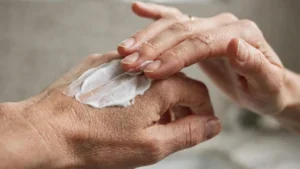
Double cleansing is the two-step face-washing method that has quietly moved from Korean skincare routines into bathroom cabinets everywhere. Instead of washing your face once, you wash it twice in a row with two different kinds of cleanser: first an oil-based cleanser that dissolves makeup, sunscreen and excess sebum, then a water-based cleanser that removes sweat, dirt and residue.
The confusion is understandable. Washing your face twice sounds like overkill, and putting oil on your skin to clean it sounds backwards, especially if your skin is already oily or prone to breakouts. But the chemistry is straightforward: oil dissolves oil, and water dissolves water. A single cleanser struggles to do both jobs at once.
This guide explains what double cleansing is, how it works, who it helps and who should skip it, and how to do it without stripping your skin. No product is named here, because the method matters more than any single bottle.
Key takeaways
- Double cleansing means two washes in a row: an oil-based cleanser first, then a water-based cleanser second.
- Step one removes oil-based residue such as makeup, sunscreen, sebum and pollution; step two removes sweat, dirt and leftover residue.
- It helps most if you wear sunscreen or makeup daily, or have oily or congested skin.
- It is usually a nighttime routine only; most people do not need it in the morning.
- Dry, sensitive, rosacea-prone or barrier-damaged skin can find two washes too much.
What Double Cleansing Actually Is

Double cleansing is a method, not a product. The first cleanse uses an oil-based formula, usually a cleansing oil or a cleansing balm, massaged onto dry skin. The second uses a water-based formula, usually a gel, cream or light foam, applied to damp skin in the ordinary way. Each cleanser does the job the other one cannot.
The method has roots in Japan, where cleansing oils were used to remove heavy stage makeup, followed by a foaming wash. It later became a standard part of the Korean multi-step routine, which brought it to a global audience in the 2010s. By 2027 it is mainstream: dermatologists discuss it, and most sunscreen routines assume some version of it.
Be precise about what it is not. It is not a treatment, and it does not shrink pores, which have no muscles to open or close. It is not an exfoliating step, and it is not a detox, because skin does not need detoxing. It is simply a more thorough way of removing the day from your face.
That distinction matters, because a single gentle wash removes ordinary sweat, dust and light moisturiser well. The second wash earns its place only when something water-resistant is on the skin, such as water-resistant sunscreen, long-wear foundation or waterproof mascara, which one wash often leaves behind as a thin film.
Why It Works: The Science in Plain Terms
The principle behind the first step is “like dissolves like.” Sunscreen, sebum and most long-wear makeup are oil-based, so water alone cannot fully break them down. An oil-based cleanser binds to those substances and loosens them, and the emulsifiers in a good cleansing oil or balm then let the mixture rinse away with water as a milky wash.
The second step handles the other half of the problem. Water-based cleansers use surfactants, molecules with one end that bonds to oil and one end that bonds to water, to lift away sweat, dirt and the last traces of the first cleanser. Because the heavy oil-based residue is already gone, the second cleanser can work gently instead of scrubbing hard.
The trade-off is equally real. Both cleansers rely on surfactants, and surfactants do not stop at the residue they are meant to remove. Research has long shown that surfactants can extract natural skin lipids during washing and can remain in the outer skin layer after rinsing, weakening the barrier over time. Washing twice doubles that contact, so whether the trade is worth it depends on your skin and your day.
Who Benefits Most, and Who Should Skip It
Double cleansing earns its place most clearly for four groups: anyone who wears sunscreen every day, especially mineral or long-wear formulas designed to resist water and sweat; anyone who wears makeup, particularly full-coverage foundation, long-wear concealer or waterproof eye makeup; people with oily or acne-prone skin and visible congestion, where a first cleanse can reduce buildup; and anyone in a hot, humid or polluted environment.
The groups who should be cautious are just as clearly defined. Dry, sensitive or eczema-prone skin can find two consecutive washes stripping, even with gentle formulas, because each wash removes a little more of the barrier lipids that keep moisture in. People with rosacea often find the extra rubbing and surfactant exposure triggers flares. Anyone with a compromised barrier, from over-exfoliation or retinoid use, should simplify rather than add a step.
How to Double Cleanse, Step by Step
Done properly, double cleansing takes under two minutes and involves no scrubbing. Start with dry hands and a dry face, because water dilutes the oil cleanser. Take a coin-sized amount of cleansing oil or a small scoop of balm, warm it between your palms, and massage it gently over your face in slow circles for thirty to sixty seconds, spending a little longer on the T-zone and eyes if you wore waterproof mascara.
Next, add a splash of lukewarm water and keep massaging. A good oil cleanser turns milky when water is added, the signal it is ready to rinse. Rinse thoroughly with lukewarm water, never hot, because hot water dries the skin. Then the second cleanse: on damp skin, apply a small amount of a gentle water-based cleanser, a gel, cream or low-foam formula suited to your skin type. Massage it in slow circles for about thirty seconds, rinse with lukewarm water and pat your face dry with a clean, soft towel.
Frequency is the part most people get wrong. Double cleansing is almost always a nighttime routine. Mornings rarely need it, because your skin has not been collecting sunscreen, makeup or pollution overnight. A single gentle wash, or even just a rinse with lukewarm water for very dry skin, is enough. Some double cleanse only on makeup or heavy-sunscreen days.
Choosing Your Two Cleansers
The two cleansers need to be different types, or the method does not work. The first must be oil-based, so it can dissolve oil-based residue; the second must be water-based, so it can remove sweat, dirt and the traces of the first. The table below matches the pair to your skin.
| Skin type | First cleanse (oil-based) | Second cleanse (water-based) |
|---|---|---|
| Oily or congested | Light cleansing oil or gel-to-oil formula | Gel cleanser, low-foam |
| Combination | Cleansing oil or balm, rinsed fully | Gel or light cream cleanser |
| Acne-prone | Non-comedogenic cleansing oil or balm | Gentle gel cleanser, fragrance-free |
| Dry | Rich cleansing balm or oil, used sparingly | Cream or milk cleanser, no foam |
| Sensitive | Fragrance-free balm, minimal rubbing | Cream cleanser, low-pH, no foam |
| Mature | Nourishing cleansing oil or balm | Cream cleanser with hydrating finish |
| Heavy makeup days | Balm first, massaged for a full minute | Gel cleanser to clear all residue |
| No-makeup days | Skip the oil step entirely | One gentle water-based wash only |
Pick an oil cleanser that emulsifies, meaning it turns milky when water is added, because a pure oil with no emulsifier is much harder to rinse off and can leave a film that clogs pores. If you are acne-prone, that residue is the single biggest risk of the method: dermatologists warn that an oil cleanser used alone, or rinsed badly, can cause breakouts. The second cleanser exists to remove that film, so never skip it.
For the second step, gentleness matters more than strength. A low-pH, low-foam gel or cream cleanser is the right choice; a harsh foaming wash strips the barrier the first step protected. Our guide to the best oil cleansers for double cleansing explains the oil-step options, the best cleansing balms cover the solid alternative for people who prefer a balm, and the best gel cleansers are a useful starting point for the water-based second step.
Common Mistakes That Undo the Benefits
Most double-cleansing problems are not caused by the method itself but by the way it is done. The checklist below covers the mistakes dermatologists mention most often.
Double-cleansing checklist
- Start on dry skin: water dilutes the oil cleanser before it can dissolve makeup and sunscreen.
- Massage for thirty to sixty seconds, no longer: more time and pressure irritate more, they do not clean better.
- Emulsify and rinse fully: add water until the oil turns milky, then rinse until no slippery film remains.
- Keep the second cleanser gentle: a mild gel or cream wash is the point; a harsh foam defeats it.
- Use lukewarm water only: hot water strips the barrier and makes both steps harsher.
- Double cleanse at night, not in the morning: match the wash to the day.
Beyond the checklist, the most common error is treating the method as a fixed nightly rule rather than a response to the day. A second is using the same harsh foaming wash twice and calling it double cleansing, which doubles the damage without adding the oil step. A third is rinsing the oil badly, which can cause breakouts.
Frequently Asked Questions
What is double cleansing in simple terms?
Double cleansing is washing your face twice in a row with two different cleansers. First, an oil-based cleanser such as a cleansing oil or balm dissolves makeup, sunscreen, sebum and pollution. Then a water-based cleanser such as a gel or cream wash removes sweat, dirt and residue left by the first step.
Should I double cleanse every day?
No. It is a nighttime routine for days you wore sunscreen or makeup, or spent time in heat, humidity or pollution. On bare-faced days, or in the morning, one gentle wash is enough. If skin feels tight or reactive, limit it to heavy-product days.
Is double cleansing good for oily or acne-prone skin?
Often, yes. The oil step clears sebum and sunscreen buildup that a water-based wash struggles with, which can reduce clogged pores. But the oil must be fully emulsified and rinsed away, and the second cleanser must remove every trace. Use a non-comedogenic oil or balm, rinse thoroughly and follow with a gentle gel.
Can double cleansing cause breakouts or dryness?
Yes, in two ways. Breakouts usually come from oil residue left by a poor rinse or a skipped second step. Dryness and irritation usually come from over-washing: two harsh cleansers, hot water, hard rubbing, or doubling up morning and night. Both are fixed by softer products and a shorter massage.
Do I need to double cleanse if I do not wear makeup?
Probably not every night. Sunscreen is the more common reason, because water-resistant formulas are designed to stay put and one wash often leaves a film. If you wear sunscreen daily, double cleansing on those evenings is worth it even without makeup. If you wore neither, one gentle wash is enough.
What is the difference between a cleansing oil and a cleansing balm?
They do the same job in different forms. A cleansing oil is a liquid that spreads easily and suits most skin types when it emulsifies well. A cleansing balm is a solid that melts into an oil on warm skin, which many people find easier to control and which suits dry skin well. Choose by texture and by how completely it rinses away.
The Bottom Line
Double cleansing is a genuinely useful technique when it matches your skin and your day: heavy sunscreen or makeup, oily or congested skin, or a hot, polluted environment. It is not a universal nightly requirement, and for dry, sensitive or barrier-compromised skin it can do more harm than good. But every extra wash is also extra surfactant contact, so the benefit has to be worth the cost.
The best way to judge it is to try it properly for two weeks: oil first on dry skin, emulsify and rinse, then a gentle water-based wash, lukewarm water throughout, nights only, and a moisturiser straight after. If skin feels clean and comfortable, keep it. If it feels stripped, reactive or newly broken out, soften the products or cut back to heavy-product days only.
Note: This article is general skincare information, not medical advice. If you have eczema, rosacea, persistent acne or a damaged skin barrier, or if a product causes lasting redness, swelling or pain, stop using it and speak to a dermatologist before continuing.