Urea sounds like the last thing you would want to smooth onto your face, yet urea is not a foreign chemical forced onto the skin. It is already there: your skin makes it, stores it in its outermost layer, and relies on it daily to stay soft.
That is the simple reason urea works, and why dermatologists have trusted it for decades. Urea does three jobs at once: it pulls water into the outer skin and holds it there, it softens the tough protein that makes dry skin feel rough, and it helps the barrier work better.
This guide explains the mechanism in plain language, so you can choose the right strength, use it correctly, and know what to expect: what urea does inside the stratum corneum, why the percentage on the jar matters, who benefits most, and how to fit it into a routine.
Key takeaways
- Urea is a natural part of your skin’s moisturising system, the natural moisturising factor, keeping the outer layer hydrated and flexible.
- At 2 to 10 percent, urea works mainly as a humectant, drawing water into the stratum corneum and reducing water loss.
- At 10 to 30 percent and above, urea also softens keratin, loosening rough, thickened skin.
- Urea supports the skin barrier, helping cells produce proteins such as filaggrin and loricrin.
- It suits most skin types, is generally well tolerated, and works best on damp skin sealed in with a richer cream.
What urea actually is
Urea, also called carbamide, is a small, water-soluble molecule made of a carbonyl group attached to two amine groups. In the body it is the end product of protein metabolism, produced mainly in the liver. In skincare, the urea in creams is made synthetically in a laboratory, and on an ingredient list you will simply see UREA.
Inside the skin, urea sits in the stratum corneum, the thin outermost layer of flattened dead cells called corneocytes, held together by lipids like bricks in mortar. Urea is one of the small water-soluble compounds grouped as the natural moisturising factor, or NMF, which lets corneocytes hold water even though the air outside is far drier than the tissue underneath. Without enough of it, the surface loses water, stiffens, and cracks.
How urea hydrates: the humectant mechanism
The first thing urea does is attract and hold water. It is a hygroscopic molecule, which means it actively draws moisture towards itself, pulling water from the deeper epidermis and, when the air is humid enough, from the environment, and holding it inside the stratum corneum. Skin feels softer within hours, because the outer layer itself is better hydrated.
Urea does something subtler than a simple sponge. Research on isolated stratum corneum shows it changes how keratin inside skin cells behaves, making the protein more mobile and flexible even when less water is present. In plain terms, urea partly stands in for water, keeping skin soft when the air is dry.
How urea exfoliates: the keratolytic mechanism
As the concentration rises, a second mechanism takes over. Urea begins to soften and loosen keratin, the tough protein that makes up the outer skin and thickened areas such as calluses. This is called a keratolytic action. Urea does not dissolve skin or strip it away; it denatures keratin, breaking some of the hydrogen bonds holding the protein together and making it softer and more pliable.
Once keratin is softened, the bonds between dead cells loosen: thickened, scaly patches become thinner, rough areas smooth out, and excess build-up sheds more easily. That is why urea helps dry, scaly skin, thickened heels and feet, corns and calluses. The exfoliation is chemical but gentle, and it happens gradually over days of regular use.
How urea strengthens the skin barrier
The third mechanism is the one most people never hear about. Urea does not just sit in the skin and hold water; it influences how skin cells behave. Research shows urea switches on proteins essential for a healthy barrier: filaggrin, which helps build the natural moisturising factor, loricrin, which seals each skin cell, and transglutaminase-1, which cross-links those proteins into a tough shell.
The evidence backs this up. In a small study, volunteers applied creams with 10 or 20 percent urea once a day for four weeks. With the 20 percent cream, water loss through the skin fell by about a third, and both groups showed increased activity in genes linked to the barrier and microbial defence. Urea’s barrier effects are real but dose-dependent, which is also why urea is a staple in eczema-prone skin care. Our skin barrier guide explains the structure urea helps to rebuild.
Urea concentrations explained
| Concentration | Main effect | Best for |
|---|---|---|
| 2 to 5% | Gentle hydration | Everyday dry skin, face creams, sensitive skin |
| 5 to 10% | Hydration, barrier support | Dry skin, winter dryness, eczema-prone skin |
| 10 to 20% | Hydration, gentle exfoliation | Rough, flaky skin, dry elbows and knees |
| 20 to 30% | Stronger exfoliation | Very rough skin, thickened patches, dry feet |
| 30 to 40% | Intensive keratolytic action | Calluses, corns, very thickened skin, nails |
| 40 to 50% | Specialist debriding use | Severe thickening, nail disorders, professional guidance |
| Face products | Usually 2 to 10% | Daily facial hydration |
| Body, foot products | Usually 10 to 25% | Tougher skin |
For most people, the sweet spot is simple: 2 to 10 percent for the face, 10 to 20 percent for the body, and 20 to 30 percent for feet, elbows and heels. Above 30 percent is a specialist product. Ingredient lists do not always show the percentage, so judge by purpose: a light daily lotion is almost certainly low strength, a thick cream for cracked heels almost certainly high.
Who urea suits best
Urea suits dry skin first and foremost. If your skin feels tight after washing, looks dull or ashy, or flakes around the nose or shins, urea is one of the most reliable ingredients you can reach for. It suits mature skin well, because the natural moisturising factor declines with age.
People with eczema-prone skin often do very well with urea as daily maintenance. Clinical reviews report significant improvement in dry, scaly conditions including atopic dermatitis, ichthyosis, xerosis and psoriasis with regular use. That is not a promise urea will clear a flare, but for the dry, itchy skin between flares, urea is one of the best-supported maintenance ingredients available.
Who should be careful with urea
High-strength urea is not a casual purchase. Creams above 20 percent can sting, particularly on raw or cracked skin, and can over-exfoliate delicate areas if used in the wrong place. Never use a strong foot or callus cream on your face, and do not apply any urea product to open wounds, weeping eczema, or infected skin unless a doctor has told you to. If stinging persists, stop and step down to a lower strength.
People with very sensitive skin should patch test first: apply a small amount to the inside of your elbow once a day for a week, watching for lasting redness, itching or bumps. If your barrier is badly damaged, even a low-strength cream can sting at first, so introduce it gradually, perhaps every other day, over a plain moisturiser.

How to use urea properly
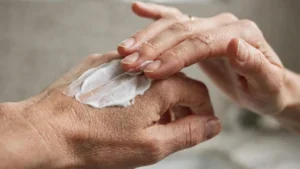
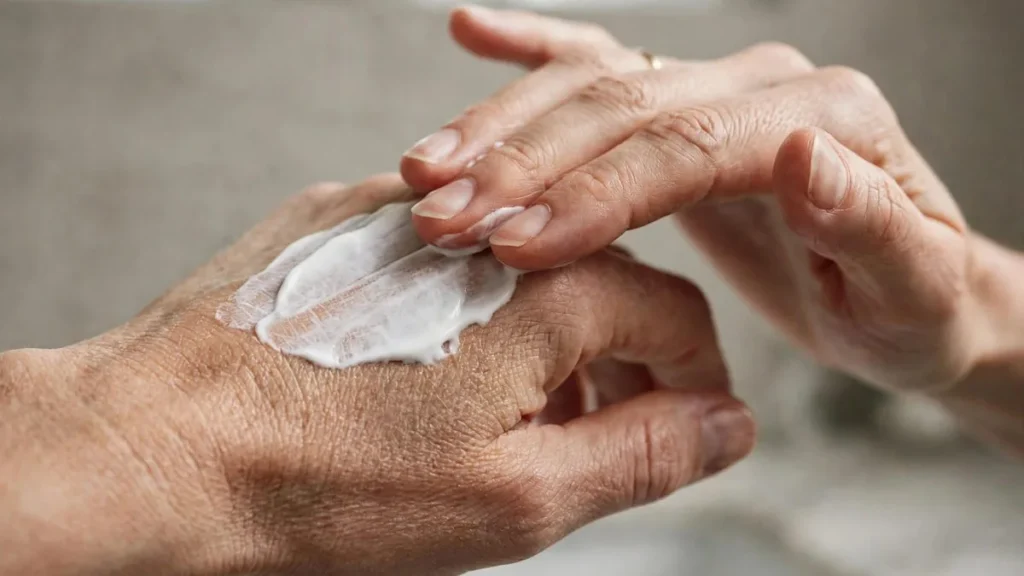
Using urea well is mostly about timing and layering. Apply it to damp skin, ideally within a few minutes of showering or washing, when the outer layer already holds extra water. Pat the skin until it is just damp, not dripping, then smooth the cream on in a thin, even layer.
For the face, a pea-sized amount of a low-strength cream is enough, once or twice a day. For the body, be generous: a palmful per limb, with an extra pass on shins, elbows and heels. On feet, apply a richer urea cream at night under cotton socks, which keep the product in contact with the skin for hours and improve the result by morning.
Urea pairs well with ingredients that seal water in. A humectant draws water into the skin, but without something to slow its escape, that water can evaporate again. Follow a urea cream with a richer moisturiser containing ceramides, squalane, shea butter or petrolatum. If you need one to layer over it, our guide to the best moisturisers for dry skin covers the richest options.
Consistency matters more than intensity. Urea works cumulatively: expect softer skin within a few days, smoother texture within two to three weeks, and the full barrier benefit over about a month of daily use. If you stop, skin gradually returns to its previous state. For the body, a dedicated urea lotion is often the simplest upgrade, and our round-up of the best body lotions includes rich formulas that layer well with a urea treatment.
Your urea checklist
- Start low on the face: 2 to 10 percent for daily use, stepping up only if your skin needs more.
- Match strength to area: low for the face, medium for the body, high only for feet and heels.
- Apply to slightly damp skin within a few minutes of washing, so the urea has water to hold on to.
- Seal it in with a richer cream, or choose a formula combining urea with ceramides or squalane.
- Patch test first if your skin is sensitive or badly damaged, and introduce stronger creams gradually.
- Be patient: judge after three to four weeks of use.
Frequently asked questions
Why does urea work so well for dry skin?
Urea replaces something dry skin is missing: it is a natural part of the skin’s moisturising factor, so it slots into the system that holds water in the outer layer. It also softens the keratin that makes dry skin feel rough, and encourages the skin to produce proteins that build a stronger barrier.
What concentration of urea should I use?
For the face, 2 to 10 percent is right for most people. For the body, 10 to 20 percent handles rough, flaky skin well. For feet, heels and calluses, 20 to 30 percent is appropriate. Anything above 30 percent is a specialist strength. Start low, and move up only if the lower strength is not enough after three or four weeks.
Can I use urea on my face every day?
Yes, at a low concentration. A face cream with 2 to 10 percent urea is designed for daily use, morning and night. Apply it to damp skin, then follow with moisturiser and sunscreen in the morning. Avoid high-strength body or foot creams on the face, and use retinoids or exfoliating acids on alternate nights.
Does urea sting or irritate the skin?
It can, but usually only mildly and briefly. The most common side effect is short stinging, especially on broken, cracked or freshly shaved skin, and it becomes more likely as the concentration rises. Low-strength creams rarely cause any problem. If stinging lasts more than a few minutes, stop and restart with a lower strength. True allergy to urea is rare.
Is urea safe for eczema-prone skin?
Urea is one of the best-supported ingredients for eczema-prone skin as daily maintenance, with clinical reviews reporting improvement in eczema, dry skin, psoriasis and ichthyosis. It hydrates, supports the barrier and reduces flaking and itching. It is not a treatment for an active flare, and should not be applied to open, weeping or infected skin without medical advice.
How long does urea take to work?
Hydration improves quickly, often within hours, as water is drawn into the outer layer. Smoothing of rough, flaky patches usually takes one to three weeks of daily use. The full barrier benefit builds over about four weeks. Because urea replaces what the skin is missing, the benefits fade if you stop, so think of it as maintenance.
The bottom line
Urea works because it is not a trick. It is a molecule your skin already uses, doing three jobs dry, rough and fragile skin needs: holding water in the outer layer, softening the tough keratin that makes skin feel rough, and helping skin cells build a stronger barrier. The science is unusually solid. Low for the face, medium for the body, high for feet and calluses, applied to damp skin and sealed in with a richer cream, used daily and judged over weeks rather than days. If your skin is dry, rough or flaky and nothing has quite fixed it, urea is the ingredient most worth trying next.
Note: This article is for general information only and is not medical advice. Urea creams are cosmetic and maintenance products, not treatments for diagnosed skin conditions. If you have broken or infected skin, or a condition that is not improving, speak to a dermatologist first.