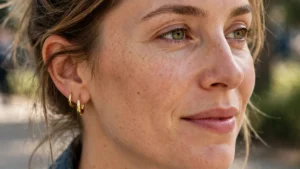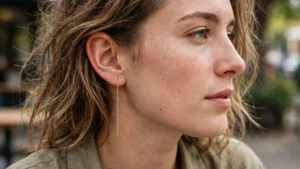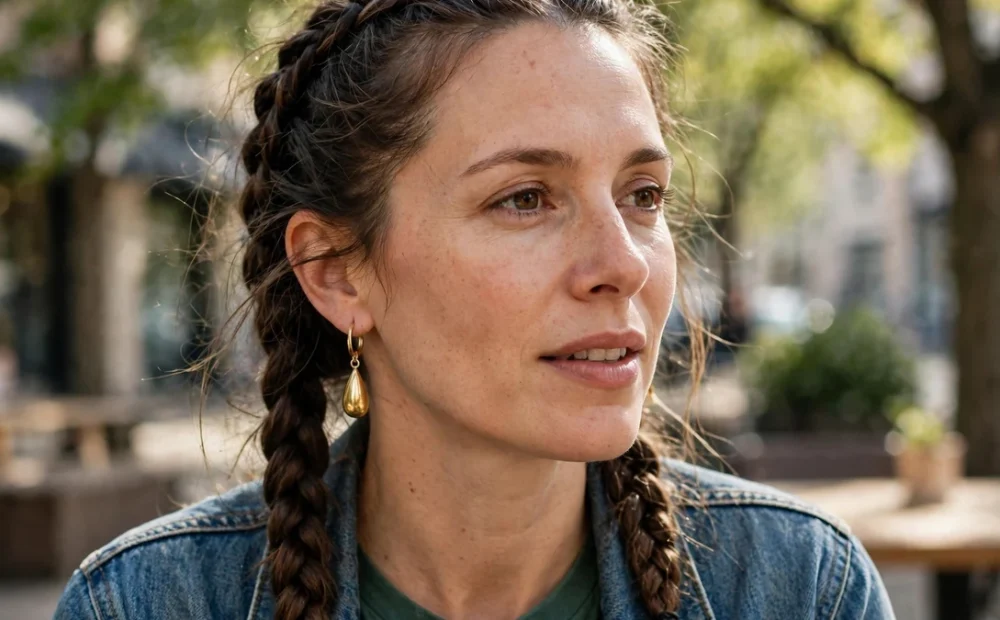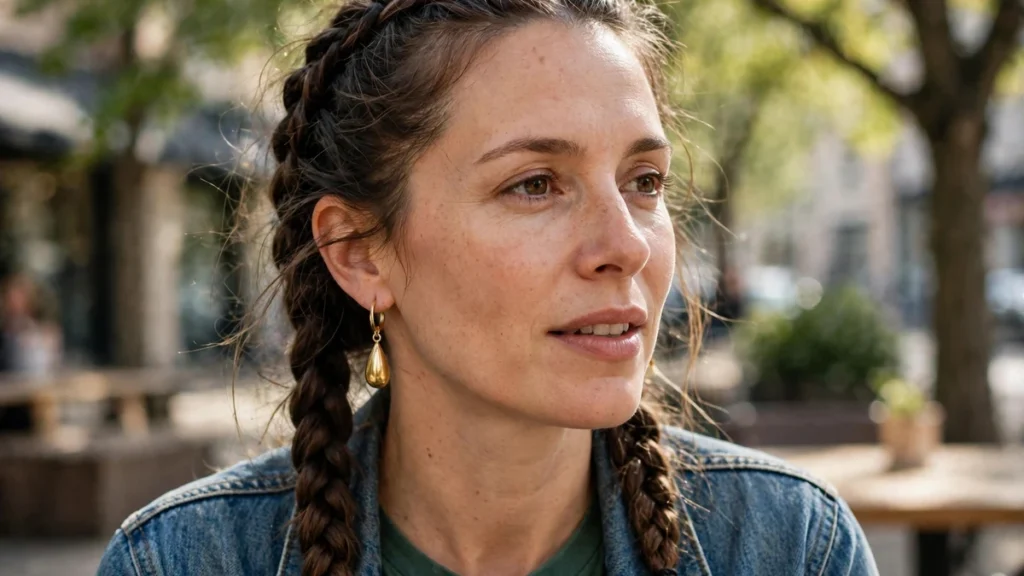
Braids change the way earrings sit, catch the light, and move through the day. With the hair pulled back and the ears fully on show, an earring stops being a small detail and becomes part of the whole look. That is good news if you choose well, because braids give earrings a clear stage. It is less forgiving if you choose badly, because a heavy drop can pull, a long chain can tangle in a plait, and a fiddly back can be hard to reach through a braided crown.
The right earring for braids is light enough to wear all day, secure enough not to slip when you move, and shaped so it does not catch on the hair. Drops and threaders work beautifully because they hang free of the braid. Small hoops and huggies sit close to the ear and never snag. Studs are the safest choice of all, and a well-chosen stud can still look deliberate rather than plain, especially with a crystal, pearl, or sculpted shape.
Below are nine earrings worth considering in 2027, from a classic gold drop to a crystal chandelier that works with a braided updo. Each one is described by what it is good at, what to watch for, and who it suits best, so you can choose with your hairstyle in mind, not just a bestseller list.
Key takeaways
- Braids leave the ears fully visible, so earrings matter more — light, secure styles look best and feel best.
- Drops, threaders, small hoops, and huggies are the most braid-friendly shapes because they hang free and rarely snag.
- Keep the weight low: a heavy earring pulls on the lobe and is harder to ignore by the end of the day.
- Choose secure backs — flat backs, screw backs, or lever backs — so an earring cannot slip out unnoticed.
- No earring suits every braid, and a style that tangles in a loose plait may be fine with a tight cornrow, so test a new pair at home first.
What braids change about earrings
A braid pulls the hair away from the face and the ears, which does two things at once. First, it removes the curtain of hair that normally softens an earring, so the earring itself carries more of the look. A simple stud reads as minimal and neat. A drop reads as a deliberate line. Second, it exposes the ear, which means comfort matters more. There is no hair to cushion a heavy earring or hide a back that digs in, so weight and fit become the first things to check, not the last.
The other change is practical. Braided hair has edges, joins, and ends that can catch on anything with a hook, a claw, or a loose chain. A long chandelier with open links can snag on a plait. A threader with a fine chain can wind itself around a braid end if you are not careful taking it out. None of this rules those styles out, but it means the shape of the earring matters as much as the look. Smooth lines, closed links, and a short drop are easier to live with than open, dangly designs.
Braid style matters too. A single loose plait down the back leaves the ears open but the braid itself hangs close to the ear, so a short drop or a hoop is safer than a very long one. Cornrows and tight braids pull the hair flat and leave the ears completely clear, which suits longer drops and statement shapes. A braided updo lifts everything away from the neck, which is the best case for a chandelier or a long drop, because there is nothing for it to catch on.
How we chose these earrings and what to look for
Look first at the weight. A comfortable earring for braids is light enough that you forget it is there after an hour. As a rough guide, a single earring under about five grams is easy for most people to wear all day, while anything much heavier needs a secure back and a reason to be worn. If you are unsure, hold the earring in your palm. If it feels heavy there, it will feel heavier on your ear by the afternoon.

Look next at the back and the closure. Flat backs and screw backs stay put and do not press into the skin behind the ear. Lever backs close with a click and are hard to lose. Butterfly backs are fine for light studs but can loosen during the day, so check them before you go out. If you wear braids often, a secure back is worth more than a pretty one. Our guide to earrings for everyday wear covers the same comfort checks, because the earrings that work daily are usually the ones that work with braids too.
Finally, look at the shape. A smooth drop, a closed hoop, or a slim threader will slide past a braid without catching. An open filigree, a claw setting, or a chain with loose links is more likely to snag. That does not mean avoiding them entirely, only that they are better saved for a braided updo, where the hair is pinned away from the earring, than for a loose plait that hangs beside it.
The 9 best earrings for braids of 2027
The Classic Gold Vermeil Drop
What we like: A slim gold vermeil drop that hangs just below the lobe, light enough for all-day wear, and warm enough to suit most skin tones. What to consider: The drop is long enough to brush a loose plait, so it suits tight braids and updos best. Best for: Cornrows and braided updos. Material: Gold vermeil over sterling silver. Price range: $40–$90. Standout feature: A clean, unbroken line that reads clearly against braided hair.
This is the earring to reach for when you want braids to look finished rather than fussy. It is simple, it moves well, and it does not fight with the braid for attention.
The Slim Pearl Drop
What we like: A single freshwater pearl on a short gold hook, soft and luminous, with a drop that ends well above the shoulder. What to consider: Pearls need gentle care and should not be stored with harder stones. Best for: Everyday braids and workdays. Material: Freshwater pearl, gold vermeil hook. Price range: $35–$80. Standout feature: The pearl catches light without competing with the braid.
A pearl drop softens a structured braid. It works with a single plait, a crown braid, or a braided bun, and it is light enough to forget you are wearing it.
The Small Gold Huggie Hoop
What we like: A small hoop that hugs the lobe, closes with a click, and cannot catch on anything. What to consider: The fit is close, so it suits smaller lobes and healed piercings best. Best for: Loose plaits and active days. Material: Gold vermeil or solid gold. Price range: $30–$120. Standout feature: A secure click closure that stays put through a long day.
If you want an earring you never have to think about, this is it. It sits flat against the ear, it does not swing, and it will not tangle in a braid no matter how you move.
The Lightweight Threader
What we like: A fine gold chain that threads through the piercing and hangs in two lengths, front and back, with no back to lose. What to consider: The chain can wind around a braid end if you pull it out carelessly, so remove it slowly. Best for: Tight braids and braided updos. Material: Gold-filled or sterling silver chain. Price range: $25–$70. Standout feature: No back or clasp, so nothing presses behind the ear.
A threader is the most braid-friendly long earring there is, because it is light and has no bulky parts. Just take it out gently, and keep the chain away from loose braid ends.
The Crystal Chandelier Drop
What we like: A crystal chandelier that catches light with every turn of the head, made for evenings when the hair is pinned up. What to consider: It is the heaviest style here, and its open links can snag a loose plait. Best for: Braided updos and evening occasions. Material: Crystal, gold-tone setting. Price range: $50–$140. Standout feature: A tiered shape that sparkles without needing a necklace.
Save this one for when the braids are pinned up and away from the ears. Then it has a clear stage, and nothing to catch on.
The Sculptural Gold Stud
What we like: A bold, sculpted gold stud with a flat back, shaped like a small knot or curve, that reads as jewellery rather than an afterthought. What to consider: The shape is fixed, so try it against your braid style before a big occasion. Best for: Cornrows and statement braids. Material: Gold vermeil, flat-back post. Price range: $35–$95. Standout feature: A sculptural shape that holds its own next to a strong braid.
A sculptural stud is the best choice when you want presence without length. It frames the ear, it cannot tangle, and it looks intentional with a tight braid.
The Two-Tone Drop
What we like: A drop that mixes gold and silver in one piece, so it works with mixed-metal jewellery and any hair colour. What to consider: Two-tone pieces can look busy next to a very detailed braid, so keep the rest of your jewellery simple. Best for: Mixed-metal outfits and everyday braids. Material: Gold vermeil and sterling silver. Price range: $40–$100. Standout feature: Two metals in one earring, so it matches everything you already own.
The Emerald-Accent Drop
What we like: A small emerald-coloured stone set in gold, with a short drop that adds colour without weight. What to consider: Coloured stones need gentle cleaning, and the colour should suit your wardrobe, not just the braid. Best for: Evenings and special occasions. Material: Green crystal or emerald, gold vermeil. Price range: $45–$110. Standout feature: A single point of colour that stands out against dark braided hair.
Colour is the easiest way to make braids look dressed up. A green stone against dark hair is striking, and the short drop keeps it comfortable.
The Everyday Cubic Zirconia Stud
What we like: A small cubic zirconia stud with a secure screw back, bright, light, and cheap enough to keep a spare pair. What to consider: The stone can cloud over time if it is not cleaned, so wipe it after wear. Best for: Daily braids, work, and travel. Material: Cubic zirconia, sterling silver post. Price range: Under $30. Standout feature: A secure screw back that will not loosen during the day.
Which earring is right for your braids
Start with the braid. A loose plait calls for a short drop, a huggie, or a stud, because the braid hangs beside the ear and anything long will brush against it. A tight cornrow leaves the ear clear, so a longer drop or a threader works well. A braided updo is the most forgiving of all, because the hair is pinned away and even a chandelier has nothing to catch on.
Then think about the day. For work or a long day out, choose the lightest, most secure option, usually a huggie or a stud with a screw back. For an evening, a drop or a chandelier is worth the extra care. And if you wear braids most days, it is worth having two or three pairs in rotation, so you are not forcing one style to do every job. Longer hair brings its own questions too, and our guide to earrings for long hair covers the same weight and length checks from the hair side.
The caveats that matter
Earrings for braids are mostly about comfort and snagging, but there are a few things worth knowing before you buy. Heavy earrings can stretch the piercing over time, especially if they are worn daily, so keep heavy styles for occasions and light styles for every day. Nickel is the most common cause of irritation, so if your ears are sensitive, choose nickel-free posts and hypoallergenic metals. And a new piercing needs time to heal before you wear anything that pulls or swings, so stick to light studs until it is fully settled.
| Detail | What is known |
|---|---|
| Best shapes for braids | Short drops, huggies, small hoops, threaders, and studs — smooth lines that do not catch |
| Weight to aim for | Under about five grams per earring for all-day comfort |
| Most secure backs | Flat backs, screw backs, and lever backs; check butterfly backs before going out |
| Styles to save for updos | Long chandeliers and open-link designs, which can snag a loose plait |
| Metal for sensitive ears | Nickel-free, hypoallergenic, implant-grade titanium, or solid gold |
| New piercings | Light studs only until fully healed; avoid heavy or swinging styles |
| How to remove a threader | Pull it out slowly and keep the chain away from braid ends |
| What to avoid | Heavy drops worn daily, open filigree next to loose plaits, and loose butterfly backs |
If your ears are newly pierced, or if you have a skin condition affecting the ears, check with a clinician before wearing heavier styles. A stretched or irritated piercing takes weeks to settle, and a simple change of earring is often enough to fix it.
Checklist: choosing earrings for braids honestly
Use these checks before you buy, and again after a full day of wear.
- Check the weight: hold the earring in your palm — if it feels heavy there, it will feel heavier by the afternoon.
- Check the back: choose a flat, screw, or lever back, and test that it clicks or holds firmly.
- Check the shape: run a finger along the earring — smooth lines and closed links are safer than open filigree.
- Check the length: the drop should end well above your shoulder and clear of a loose plait.
- Test at home first: wear a new pair for a full day with your usual braid before wearing it to an occasion.
- Store them well: keep pairs together and separate from harder stones, so they do not scratch or tangle — our guide to storing earrings shows how to keep them in good shape.
Frequently asked questions
What earrings go best with braids?
Short drops, huggies, small hoops, threaders, and studs. They are light, secure, and shaped so they do not catch on the braid. Save long chandeliers for braided updos, where the hair is pinned away from the ears.
Can I wear long earrings with braids?
Yes, if the braid is tight or pinned up. A long drop works well with cornrows and updos. With a loose plait, a long earring can brush the braid and tangle, so choose a shorter drop instead.
Do threader earrings tangle in braids?
They can, if you pull them out carelessly. The fine chain can wind around a braid end. Remove a threader slowly, hold the chain away from the hair, and it will not tangle.
Are hoops safe with braids?
Small hoops and huggies are the safest choice of all, because they sit close to the ear and have no loose ends. Large open hoops can catch on a plait, so keep the size modest for loose braids.
What metal is best for sensitive ears?
Nickel-free metals: implant-grade titanium, solid gold, or hypoallergenic gold vermeil. Avoid cheap plated posts if your ears react, and look for a flat or screw back rather than a butterfly back.
How do I stop my earrings from pulling with braids?
Choose a lighter earring and a secure back. A heavy drop pulls on the lobe all day, and a loose back lets it slip and tug. If an earring still pulls, switch to a stud or a huggie for daily wear and save the drop for occasions.
The bottom line
The best earrings for braids in 2027 are light, secure, and shaped to work with the hair rather than against it. A short gold drop, a small huggie, or a slim threader will look good with almost any braid, and a sculptural stud or a pearl drop will dress it up without adding weight. The braid does half the styling work for you, so the earring does not need to be dramatic to look finished.
Choose by braid first and occasion second, test a new pair at home for a full day, and keep the heavy styles for evenings when the hair is pinned up. That is the honest way to wear earrings with braids: comfortable all day, and never tangled by the time you get home.