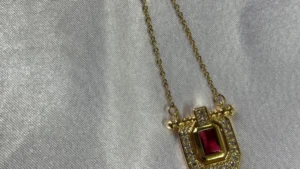
Zircon is one of the most misunderstood stones in jewellery. It has the fire of a diamond, colours from icy white to electric blue, and a price far below the fine-gemstone bracket — yet most shoppers walk past it because the name sounds like something else. Before buying in 2027, understand what you are buying: it shapes price, setting, and how long the ring lasts.
A natural zircon ring is a genuine gemstone ring. The stone formed in the earth over millions of years, and the oldest zircon crystals ever dated are more than four billion years old. That is very different from the inexpensive sparkly stone in most fashion jewellery, which is usually cubic zirconia — a laboratory-made material that only shares part of the name. Both can look lovely, but they differ in hardness, value, and care, and should never be priced the same.
This guide takes the decision in order: the zircon versus cubic zirconia question first, then colour, clarity, cut, setting, and price, with a checklist to take into any jeweller
Key takeaways
- Natural zircon is a mined gemstone, zirconium silicate; cubic zirconia is a lab-made simulant, zirconium dioxide — the two share a name and almost nothing else.
- Zircon is 6.5 to 7.5 on the Mohs scale, softer than cubic zirconia at 8 to 8.5, so it needs a protective setting.
- Blue is the most prized zircon colour, and almost all blue zircon is heat-treated from brown rough — routine treatment that must be disclosed.
- Look for an eye-clean, lively-cut stone; under a loupe, genuine zircon often shows a faint doubling CZ never shows.
- Expect $30 to $150 per carat for white, yellow, or brown zircon, and $60 to $600 for good to fine blue.
First, the name trap: zircon is not cubic zirconia
Every zircon buying guide starts here, because the confusion costs buyers money. Zircon is zirconium silicate, ZrSiO4, a natural mineral. Cubic zirconia, usually shortened to CZ, is zirconium dioxide, ZrO2, grown in a laboratory at temperatures above 2,700 °C. It has been mass-produced as a diamond simulant since the 1970s.
The differences are easy to remember. Zircon has unusually lively optics: a refractive index of about 1.92 to 1.96 and strong dispersion, so a well-cut stone throws vivid rainbow flashes. It is also doubly refractive, so light splits into two rays inside the crystal — look through the table with a loupe and the back-facet edges often appear faintly doubled, which cubic zirconia never shows. The same comparison logic applies across stones, as our diamond versus moissanite engagement ring guide shows. Hardness is where zircon loses: at 6.5 to 7.5 on the Mohs scale against 8 to 8.5 for cubic zirconia, it scratches and chips more easily, especially at the facet edges. A seller who claims a stone is zircon because it is hard has it backwards — a reading above 8 points to cubic zirconia. Value follows the same split: cubic zirconia sells for a few dollars per carat with no resale value, while fine natural zircon, especially vivid blue and red, commands real gemstone prices. Cubic zirconia is a fine, inexpensive stone — but it is not zircon, so ask the seller directly which it is, and get it in writing.
The colours worth your money
Zircon comes out of the ground in brown, yellow, orange, red, green, and occasionally colourless. The blue in shop windows is not a natural colour: it is made by heating brown rough, mostly from Cambodia and Thailand, to around a thousand degrees in an oxygen-free atmosphere. The result is a bright greenish blue, stable in normal wear; virtually all blue zircon has been heated. What matters is disclosure: heat treatment should be stated on the certificate, and an untreated fine blue is rare enough to command a premium.
Blue is the market favourite — a saturated, even blue with a lively cut is the most recognisable and wearable zircon there is. Red zircon, or hyacinth, is naturally coloured, scarce, and often priced above blue when fine. Golden yellow and honey tones are warm, affordable, and flattering against gold. Colourless zircon is the historic diamond substitute: bright, fiery, and inexpensive, though its whiteness shows every scratch. Green zircon is the outlier — often cloudy from natural radiation damage, it is mostly a collector’s curiosity. Judge colour in daylight as well as shop light — zircon’s fire looks more vivid under spotlights than in everyday light.
| Zircon colour | Typical price per carat | How the colour arises | Best for |
|---|---|---|---|
| Blue | $60–$600 | Heat-treated brown rough | Statement and engagement rings |
| Colourless / white | $30–$150 | Heated in air to bleach brown | Diamond-like everyday rings |
| Red (hyacinth) | $150–$900 | Natural, untreated | Collectors and rare-colour lovers |
| Golden yellow | $20–$250 | Natural, usually untreated | Warm gold settings |
| Brown / honey | $10–$80 | Natural, untreated | Affordable everyday wear |
| Green | $10–$150 | Natural, often cloudy | Collectors, not daily rings |
| Pink | $50–$400 | Natural, very rare | Fine and collector rings |
Prices are broad retail estimates for well-cut, eye-clean stones, rising sharply with size and saturation — a fine vivid blue over five carats can reach $500 to $1,200 per carat, while a small commercial blue may sit under $50. Use it to spot an inflated price, and compare sellers before you buy.
Clarity and cut: what the loupe should show
Zircon is generally a clean stone, and you should expect an eye-clean appearance — no inclusions visible to the naked eye — in any ring-grade piece. Under a 10x loupe you may see fine angular inclusions, tiny fingerprints, or wispy white clouds. In moderation these are reassuring, because a perfectly flawless stone at a low price is more likely to be cubic zirconia. Reject any stone that looks cloudy, milky, or hazy face-up.
Cut matters more in zircon than in most coloured stones, because its high refractive index and strong dispersion reward good proportions and punish sloppy ones. Look for a stone bright across the whole table, with no dark window in the centre and no dull edges. Ovals and cushions suit it well, showing off its fire. A new ring should have crisp, undamaged facet edges. Our diamond buying guide explains why proportions matter more than carat weight.

Settings that protect a softer stone
Because zircon is 6.5 to 7.5 on the Mohs scale and notably brittle, the setting is what stands between your stone and a chipped corner. High prongs that leave the girdle exposed look dramatic but invite knocks. A bezel setting, which wraps metal around the stone’s edge, is safest for everyday wear; a half-bezel or low prongs with a gallery rail is a good compromise.
Metal choice matters too. Platinum and 18k gold both hold a stone securely, but platinum’s density and durability suit a softer stone best, especially for a ring worn daily. White gold matches blue and colourless zircon, yellow gold flatters golden, brown, and red stones, and rose gold pairs beautifully with pink and warm-toned zircon. Ask the jeweller to check the prongs every year — zircon’s brittleness means a loose stone is a lost stone. And think about the ring’s role: an occasion ring stays new for years, while daily wear shows edge wear within a year or two.
How much should you pay in 2027
Zircon remains one of the most affordable fine gemstones. As a rough guide, commercial white, yellow, or brown zircon sells for about $30 to $150 per carat, good blue for about $60 to $300, and fine vivid blue or fine red for $300 to $600 and beyond in larger sizes. A finished ring adds metal, setting work, and margin, so a simple one-carat blue in 14k gold typically lands in the low hundreds, while a fine three-carat blue in platinum can reach the low thousands.
Three things push the price up fastest: colour saturation, size, and cleanliness. A vivid, even blue commands a premium over a pale one; a five-carat clean blue costs far more per carat than a one-carat stone of the same colour; and an eye-clean stone is worth more than a visibly included one of the same size. Origin adds a smaller premium, but colour and cut matter more than the mine on the label. Our round-up of the best engagement rings for 2027 is a useful starting point for setting shapes that suit a coloured centre stone.
The buying checklist
- Confirm the stone is natural zircon, not cubic zirconia, and get that wording on the receipt or certificate.
- Check the certificate for treatment: almost all blue zircon is heat-treated.
- Inspect the stone under a 10x loupe for the faint doubling of back-facet edges that points to genuine zircon.
- Judge colour in daylight as well as shop light, and favour saturated, even colour over size.
- Choose a protective setting — bezel or low prongs with a gallery rail — and a metal that suits daily wear.
- Ask about the return policy and the jeweller’s annual prong-check service before you pay.
Caring for a zircon ring
Clean the ring with lukewarm water, a drop of mild soap, and a soft brush, then rinse and pat dry with a lint-free cloth. Avoid ultrasonic and steam cleaners, which can loosen the stone or worsen tiny fractures, and keep the ring away from harsh chemicals, including household cleaners and chlorine. Take it off for the gym, gardening, and heavy housework — knocks that barely mark a sapphire can chip a zircon. Store it in its own pouch, away from harder stones that will scratch it, and get a yearly professional clean and prong check.
Frequently asked questions
Is zircon the same as cubic zirconia?
No. Natural zircon is a mined gemstone, zirconium silicate, while cubic zirconia is a laboratory-made material, zirconium dioxide, mass-produced as a diamond simulant since the 1970s. They share the element zirconium and a name, but differ in chemistry, hardness, optics, and value. Zircon is 6.5 to 7.5 on the Mohs scale; cubic zirconia is 8 to 8.5.
Is a zircon ring good for everyday wear?
It can be, with the right setting and habits. Zircon is softer and more brittle than sapphire or diamond, so it suits a protective bezel setting and a wearer who takes the ring off for heavy work. With those precautions it will last for years; without them, the facet edges will chip sooner than a harder stone’s would.
Why is most blue zircon heat-treated?
The blue colour buyers want does not occur naturally in zircon. It is created by heating brown rough, mostly from Cambodia and Thailand, to around a thousand degrees in an oxygen-free atmosphere. The treatment is routine and stable — the only requirement is that the seller discloses it.
How can I tell zircon from cubic zirconia at home?
Look through the table of the stone with a 10x loupe: genuine zircon often shows a faint doubling of the back-facet edges, while cubic zirconia never does. Cubic zirconia also feels heavier for its size and looks almost too perfect. For certainty, ask for a gemmological certificate from an independent laboratory.
What is the most valuable zircon colour?
Vivid blue is the most prized in the general market, especially in larger, clean stones, followed by fine natural red, known as hyacinth. Untreated fine blue is rare and commands a premium, while commercial white, yellow, and brown zircon remains very affordable.
Does zircon hold its value?
Fine natural zircon holds its value far better than cubic zirconia, which has essentially no resale value, but zircon is not an investment stone in the way fine sapphire or ruby can be. Buy it because you love the colour and the fire, not because you expect it to appreciate.
The bottom line
A good zircon ring starts with the name: natural zircon, not cubic zirconia, stated in writing. From there, prioritise a saturated, even colour, an eye-clean, well-cut stone that shows its fire in daylight, and a protective setting that respects the stone’s 6.5 to 7.5 hardness. Pay the market rate, check the treatment disclosure, and take the ring off when the day gets rough. Chosen that way, zircon is one of the best-value gemstones you can wear: ancient, fiery, and far more interesting than the imitation it is confused with.
Note: Prices in this guide are broad retail estimates for the mid-2020s market and vary with colour, size, clarity, and seller; always compare current prices from two or three reputable jewellers before buying, and ask for an independent gemmological certificate for any fine or high-value stone.