
Azelaic acid has spent years as skincare’s quiet achiever. It never had the drama of retinol or the bright fame of vitamin C, yet dermatologists have prescribed it for decades. It keeps appearing in routines built for acne, rosacea, and stubborn dark spots, and that longevity is no marketing accident.
The confusion is understandable. One bottle is often described as doing everything at once: calming redness, clearing breakouts, fading marks, and smoothing texture. With azelaic acid they are closer to a fair summary, because it works through several mechanisms at the same time.
This guide stays with the mechanism: what azelaic acid is, how it calms inflammation, why it fades pigmentation without bleaching nearby skin, how it helps breakouts, which strength makes sense.
Key takeaways
- Azelaic acid is a naturally occurring dicarboxylic acid and it works on redness, breakouts, and pigmentation at once.
- It calms skin by damping down inflammation and mopping up the free radicals that keep redness going.
- It fades dark spots by slowing tyrosinase, the enzyme behind melanin, while largely leaving normal pigment alone.
- It helps breakouts by normalising how pores shed skin cells and acting against acne-linked bacteria, without causing bacterial resistance.
- Over-the-counter formulas are usually around 10 percent; 15 and 20 percent are prescription strengths in many countries. Visible change takes eight to twelve weeks.
What azelaic acid actually is
Azelaic acid is a saturated dicarboxylic acid with nine carbon atoms, found in whole grains such as wheat, rye, and barley. It is also produced naturally on skin by Malassezia, a yeast that is part of the normal skin microbiome, and the body makes small amounts of it when breaking down fatty acids. It is not an exfoliant in the usual sense: it does not dissolve the skin’s surface like glycolic acid, and it does not speed up cell turnover as aggressively as a retinoid. Instead it nudges several processes at once — calming inflammatory signals, slowing pigment machinery in overactive melanocytes, normalising shedding inside pores, and limiting acne-linked bacteria.
How it calms redness
Redness is not one problem. It can come from inflamed breakouts, rosacea, a damaged skin barrier, or too many strong actives at once. Azelaic acid helps because it acts on the inflammatory process itself, reducing pro-inflammatory signals such as interleukin-1 beta, interleukin-6, and tumour necrosis factor alpha — the messengers that tell blood vessels to dilate and skin to flush. It is also an antioxidant: it scavenges reactive oxygen species, including the highly damaging hydroxyl radical, and reduces their production by neutrophils, the white blood cells that arrive first at inflamed skin. It is one of the best-studied topical treatments for papulopustular rosacea, the type marked by persistent central redness with bumps and pustules, and a 15 percent gel used twice daily is a standard prescription approach, without the thinning or rebound redness linked to long-term steroid creams. More background is in our guide to rosacea.
How it fades pigmentation
Melanin is made by melanocytes, and the rate-limiting enzyme in that process is tyrosinase. Azelaic acid inhibits tyrosinase, slowing new melanin production at its source — but selectively. It affects hyperactive, abnormal melanocytes more strongly than normal ones, which is why it can fade a dark spot without bleaching the healthy skin around it. That selectivity makes it useful for post-inflammatory hyperpigmentation, the brown or reddish marks left after a breakout heals. By quieting both the inflammation and the pigment production, azelaic acid addresses the mark from both directions. The same logic applies to melasma, and in clinical comparisons 20 percent azelaic acid has performed similarly to 4 percent hydroquinone for melasma, without hydroquinone’s long-term risks. Sunscreen is non-negotiable, since ultraviolet light re-stimulates the melanocytes azelaic acid is calming.
How it helps breakouts
Acne has four drivers: excess oil, clogged pores, bacteria, and inflammation. Azelaic acid touches all four, which is rare for a single ingredient. It normalises keratinisation, the process by which skin cells line and shed inside the pore. When shedding goes wrong, dead cells stick together and form the microcomedone, the tiny plug that becomes a blackhead, a whitehead, or an inflamed spot. By keeping shedding orderly, it helps prevent plugs from forming. It also acts against Cutibacterium acnes, the bacterium that thrives in clogged, oily pores, by interfering with its protein synthesis — without causing bacterial resistance, a genuine advantage over topical antibiotics. It will not clear severe or nodular acne on its own, or lift scars that have already formed, but for mild to moderate breakouts — especially those that leave marks — it is one of the most complete single options.
Concentrations: 10, 15, and 20 percent
Strength matters, because the evidence sits at different levels for different concerns. Cosmetic serums and creams sold without a prescription are usually around 10 percent, a good starting point for mild redness, early marks, and maintenance. The 15 percent gel and 20 percent cream are prescription strengths in many countries: the 15 percent gel is the standard choice for rosacea and inflammatory acne, while the 20 percent cream is most often used for stubborn pigmentation and melasma. Higher is not automatically better — a 20 percent cream on reactive skin can sting more without adding much for mild redness, while a 10 percent serum may be too gentle for deep melasma.
| Strength | Availability | Best for | How it is usually used |
|---|---|---|---|
| 10 percent | Over the counter | Mild redness and early marks | Once or twice daily |
| 10 percent | Over the counter | Sensitive skin starting out | Every second night, then daily |
| 15 percent gel | Prescription in many countries | Rosacea bumps and redness | Twice daily on the whole central face |
| 15 percent gel | Prescription in many countries | Inflammatory acne | Twice daily on the whole affected area |
| 20 percent cream | Prescription in many countries | Stubborn pigmentation | Twice daily on the whole affected area |
| 20 percent cream | Prescription in many countries | Melasma | Twice daily, always with sunscreen |
| 20 percent cream | Prescription in many countries | Mild to moderate acne | Twice daily; most improve within four weeks |
| Any strength | Depends on the formula | Maintenance after results | Once daily, long term |
Who it suits best
Azelaic acid suits a wider range of skin than most actives. Sensitive and reactive skin often tolerates it better than retinoids or strong exfoliating acids, because it does not thin the barrier or increase sun sensitivity. It also suits deeper skin tones, where post-inflammatory marks are common and harsher brighteners carry more irritation risk; its selective action makes it a safer brightening choice for skin that marks easily. Most actives force a choice between treating acne and treating pigmentation; azelaic acid treats both, which simplifies a routine. It is also one of the few acne treatments generally regarded as suitable during pregnancy and breastfeeding, because very little is absorbed through the skin — though anyone pregnant should still confirm with their doctor first. The limits are real, too: very sensitive or eczema-prone skin can still react, and severe, scarring, or nodular acne needs a broader plan than any single topical.
How to use it, step by step
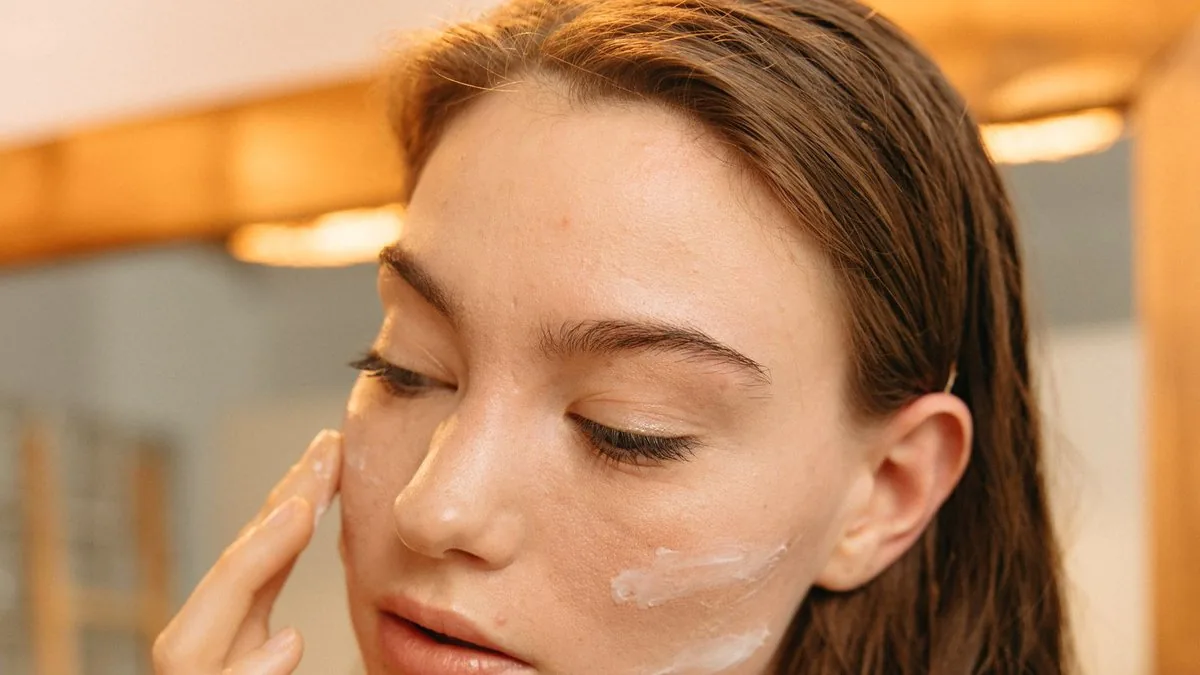
Start with a gentle cleanser and let the skin dry completely before applying azelaic acid, because applying it to damp skin can make it absorb too fast and sting sharply. Smooth a thin layer over the whole affected area, not just on individual spots or marks. Begin slowly — every second night for the first two weeks, building to once daily and then twice daily as tolerance allows. It can be used morning or night, and unlike retinoids it does not make skin more sun-sensitive. In the morning, sunscreen on top is essential, not because azelaic acid causes sensitivity but because sun exposure undoes its pigment work. Keep the rest of the routine gentle while it settles in, and read our skin barrier guide before adding any new active.
What it pairs with, and what to avoid
Niacinamide is the easiest partner: it calms, supports the barrier, and works on tone from a different angle, and the two rarely conflict. Hyaluronic acid and a plain moisturiser are safe companions at any stage, and vitamin C can be used in the same routine, ideally at a different time of day, since both work on pigmentation through different mechanisms.
Side effects and the first-weeks sting
Azelaic acid is well tolerated overall, and its side effects are usually mild and temporary, but the first weeks have a reputation for a reason. Tingling, itching, or warmth in the first one to two weeks is common and usually settles with continued use. In trials of the 15 percent gel, around three in ten people reported burning, stinging, or tingling, and about one in ten reported itching, mostly in the first few weeks. On the 20 percent cream label, these effects were less common, reported by roughly one to five percent of users, and they also tended to appear at the start and fade. Persistent redness, swelling, or itching that does not settle is different from the normal first-weeks sting and should prompt a stop and a conversation with a doctor, since contact dermatitis, though uncommon, does happen.
Your azelaic acid checklist
- Start at 10 percent or every second night, building to once or twice daily as tolerated.
- Apply a thin layer to the whole affected area, on clean, fully dry skin — never just on single spots.
- Use sunscreen every morning, because ultraviolet light re-stimulates the pigment azelaic acid is calming.
- Give it eight to twelve weeks before judging it, especially for dark spots and melasma.
- Introduce only one new active at a time.
- Stop and seek advice if irritation persists beyond the first few weeks.
Frequently asked questions
How long does azelaic acid take to work?
Breakouts often start to improve within four weeks, but pigmentation takes longer. Most people need eight to twelve weeks of consistent use before dark spots and uneven tone change visibly.
Can I use azelaic acid every day?
Yes, once the skin has adjusted. Most people start every second night and build to once or twice daily. Twice daily is the standard for the prescription 15 percent gel and 20 percent cream.
Is azelaic acid safe during pregnancy?
It is generally regarded as one of the safer topical treatments for acne and rosacea in pregnancy and breastfeeding, because very little is absorbed through the skin. Dermatologists often choose it first in that situation. Always confirm with your doctor before starting any treatment while pregnant.
Can I use azelaic acid with retinol or vitamin C?
Yes, with care. It pairs well with vitamin C, ideally at a different time of day, and with a retinoid for acne, provided each is introduced separately and slowly. Avoid stacking it with strong exfoliating acids on the same night until you know how your skin responds.
Does azelaic acid help rosacea?
It is one of the best-studied topical treatments for papulopustular rosacea, the type with persistent central redness, bumps, and pustules. A 15 percent gel used twice daily on the whole central face is the standard prescription approach.
Why does azelaic acid sting when I first use it?
Tingling, itching, or warmth in the first one to two weeks is common and usually settles with continued use. If redness, swelling, or itching persists beyond the first few weeks, stop using it and seek advice.
The bottom line
Azelaic acid works because it does several useful things at once, gently enough to be used for months. It calms the inflammatory signals behind redness, scavenges the free radicals that keep inflammation going, slows tyrosinase in overactive pigment cells, normalises shedding inside pores, and limits the bacteria linked to acne — all without causing bacterial resistance or thinning the skin.
The trade-off is patience. It will not transform skin in a week, it will not clear severe acne alone, and it will not erase scars or visible blood vessels. For anyone weighing which formula to start with, our overview of azelaic acid products sets out the main formats and strengths in one place.
Note: This article is general information about how azelaic acid works, not personal medical advice. Anyone who is pregnant, has eczema or rosacea, or is taking other skin treatments should check with a doctor or dermatologist before starting a new active.