

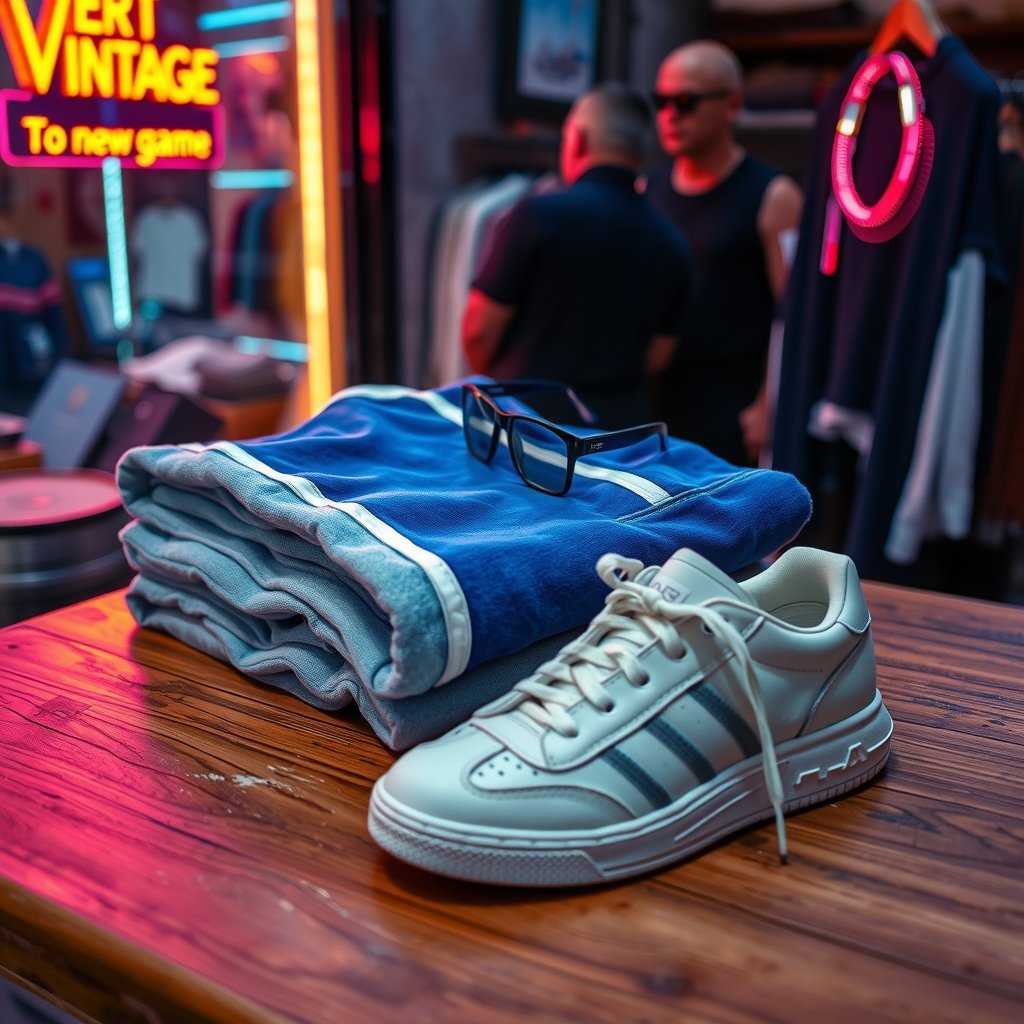
What if the clothes hanging in the back of your closet, the ones you swore you would never wear again, are suddenly the most wanted pieces in menswear? That is roughly what happened to Y2K fashion for men. Baggy jeans, velour tracksuits, shield sunglasses, and chunky sneakers crawled out of the early 2000s and onto runways, red carpets, and TikTok feeds. The tricky part is that wearing the era well takes more thought than simply buying the biggest jeans you can find.
This guide breaks down what the style actually was, why it came back, and how to wear it in a way that reads sharp rather than nostalgic.
What Counts as Men’s Y2K Fashion?
The Y2K aesthetic takes its name from the “Year 2000 problem,” the feared computer bug that dominated headlines as the millennium turned. Fashion writers later borrowed the label to describe the style of roughly 1997 to 2003, with the millennium moment itself as the peak. Those boundaries are a convention, not a rule, and different sources draw the line in different places.
The look was a rebellion against the slim, minimal 1990s. Silhouettes went wide and low: low-rise, wide-leg or bootcut trousers, boxy tops, and lots of layering. The mood was loud, shiny, and brand-forward. A typical outfit might pair baggy cargo pants with a tight graphic tee, a trucker cap, and a pair of chunky trainers.
Key garments and accessories commonly tied to the era include:
- Baggy jeans and cargo pants
- Velour tracksuits
- Trucker caps
- Rectangular and shield sunglasses
- Chunky sneakers
- Frosted-tip or spiky hair
- Metallic and shiny fabrics
One useful caution: nobody in 1999 walked around calling their outfit “Y2K fashion.” The phrase is a retrospective label, spread later through internet culture and revival coverage. That matters because it means there is no single “correct” version of the look, only a cluster of trends that people remember and reinterpret.
Why the Early 2000s Look Came Back
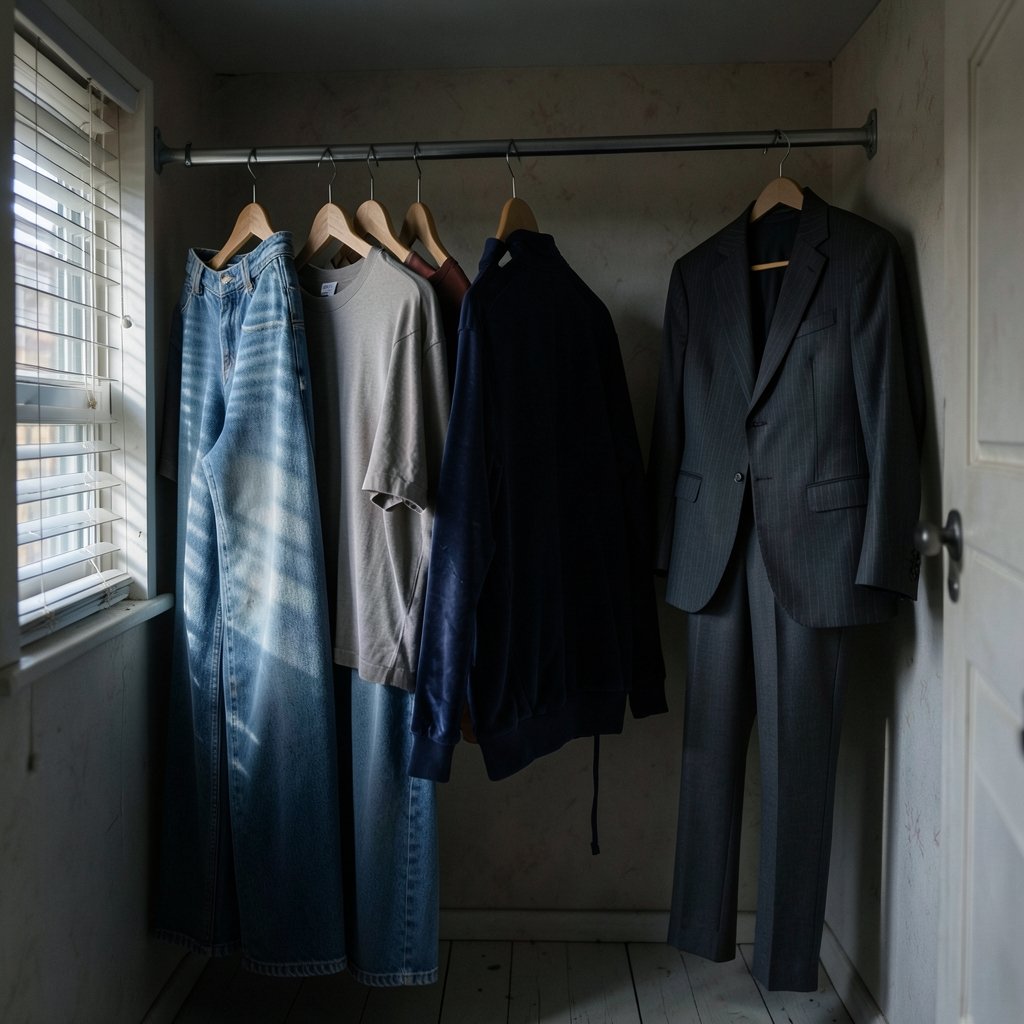
The 2020s revival is generally dated to around 2020 onward, pushed hard by social media and celebrity styling. TikTok and Instagram turned niche archive pieces into overnight trends, and young buyers who never lived through the original era adopted the aesthetic on their own terms.
There is also a practical reason the style stuck. It is comfortable. Wide legs and boxy tops forgive a lot, and sneaker culture gives the whole look a casual backbone. Compare it with the sharp, fitted menswear that dominated the 2010s and the appeal becomes obvious.
| Era | Dominant Men’s Silhouette | Mood |
|---|---|---|
| 1990s | Slim, minimal, understated | Restrained |
| Y2K (late 1990s to early 2000s) | Low-rise, wide-leg, boxy, layered | Loud, playful |
| 2010s | Skinny and tailored | Polished |
| 2020s revival | Baggy with modern proportions | Referential but updated |
If you want to see how strongly silhouettes swing between decades, the shift from mid-century tailoring to later casual wear is a useful comparison point. The 1950s fashion trends for men show how structured and deliberate menswear once was, which makes the loose Y2K years look even more like a deliberate break.
The Metrosexual Factor: Grooming Was Part of the Look
Y2K menswear was not only about clothes. The early 2000s mainstreamed the metrosexual label, popularized by journalist Mark Simpson in a 1994 Independent article, which described a straight man who embraced grooming, fashion, and appearance with visible enthusiasm. By the early 2000s, that idea was everywhere: hair product, skincare, and accessories became normal parts of a young man’s routine.
That context explains why Y2K style leans on details beyond the outfit. Frosted tips, chunky jewelry, tinted sunglasses, and a general willingness to look styled all belong to the same moment. The clothes and the grooming worked together.
How to Build a Y2K Outfit That Actually Works
The biggest mistake people make is treating Y2K as a costume. Buying every loud piece at once produces an outfit that looks like a themed party, not personal style. The fix is to treat the era as a toolkit and pull two or three elements into an otherwise normal wardrobe.
Start With One Statement Piece
Pick a single anchor: a pair of wide-leg jeans, a velour track jacket, or a pair of shield sunglasses. Build the rest of the outfit around it in neutral, well-fitting basics. A plain white tee and clean sneakers let baggy jeans do the talking.
Get the Proportions Right
This is where most attempts fail. Y2K was baggy, but baggy does not mean shapeless. A few practical rules:
- Choose one loose element and keep the rest closer to the body.
- Check the hem: wide trousers should break cleanly over the shoe, not pool on the floor.
- Watch the shoulder seam on boxy tops. If it drops far past your shoulder, size down.
- Balance volume top and bottom. Oversized top plus oversized bottom usually reads sloppy.
Use Color and Shine Carefully
Metallic fabrics, shiny nylon, and bright color blocking were hallmarks of the era. In practice, one shiny or saturated piece per outfit is plenty. A silver jacket over a black tee works. A silver jacket over silver trousers rarely does.
Nail the Accessories
Accessories do heavy lifting in this look. Rectangular or shield sunglasses, a trucker cap, a chunky chain, and a small shoulder bag all push an outfit toward the 2000s without overwhelming it. Keep the rest of the outfit simple so the accessories register.
What to Buy and What to Skip
Not every Y2K trend has aged equally well. Some pieces are genuinely versatile; others only work in very specific contexts.
| Item | Verdict | Why |
|---|---|---|
| Baggy jeans | Buy | Versatile and still central to menswear |
| Cargo pants | Buy | Practical and easy to style |
| Chunky sneakers | Buy | Comfortable and widely available |
| Velour tracksuit | Buy with care | Strong statement; best worn as a set |
| Trucker cap | Buy | Cheap, fun, easy to remove |
| Shield sunglasses | Buy with care | Great for photos, tricky in daily wear |
| Frosted tips | Skip | Hard to maintain and dates fast |
| Head-to-toe logos | Skip | Reads dated rather than deliberate |
The general principle mirrors what makes minimalist fashion for men work: a few strong pieces in a controlled palette beat a pile of loud ones. Y2K is essentially minimalism’s loud cousin, and the same discipline applies.
Logomania and Sportswear: The Branding Boom
Visible branding was a defining men’s trend of the era. Sportswear and luxury labels alike plastered logos across tracksuits, caps, and bags, and the line between athletic wear and high fashion blurred. That crossover is one of the reasons the look still feels relevant, because modern streetwear inherited the same instinct.
If you want to lean into the branded side without looking like a walking billboard, pick one logo piece and keep the rest unbranded. A single branded track jacket over plain trousers reads intentional. A fully branded outfit from cap to shoe reads like a costume.
The Revival’s Modern Update
The 2020s version of Y2K is not a copy. Designers and shoppers have adjusted the proportions, softened the extremes, and mixed the era’s signifiers with contemporary pieces. That mixing is what makes the revival wearable.
A few practical adjustments that make the look feel current:
- Higher rises. The original low-rise was unforgiving. A mid-rise wide-leg jean captures the silhouette without the discomfort.
- Better fabrics. Modern denim and knits drape more cleanly than the stiff synthetics of the early 2000s.
- Quieter branding. Smaller logos and tonal branding keep the sportswear feel without the shout.
- Cleaner footwear. Chunky sneakers still work, but a simpler silhouette balances the volume better than an ultra-maximal pair.
This is the same pattern seen across menswear generally, where eras get remixed rather than reproduced. The wider 2026 fashion trends guide shows how revivals keep folding older references into new silhouettes, and the fashion trends 2026 tag tracks which of those references are still moving.
Common Mistakes to Avoid
Most Y2K outfits fail for predictable reasons. Watching for these saves money and embarrassment.
Buying the whole look at once. A full outfit from one era-specific store looks like a uniform. Build gradually and mix with what you already own.
Ignoring fit in the name of baggy. Baggy is a proportion choice, not an excuse to skip sizing. Try things on, check the hem and shoulder, and adjust.
Overdoing shine. One metallic or glossy piece is a statement. Three is a costume.
Forgetting the shoes. Footwear anchors the silhouette. A wide-leg trouser over a slim, flat shoe looks unfinished; a chunkier sneaker or boot gives the hem something to sit on.
Chasing trends with no personal angle. The best-dressed people in any revival pick the parts that suit them. If shield sunglasses feel wrong, skip them and lean on the denim instead.
How the Look Fits Into a Modern Wardrobe
The most useful way to think about Y2K is as a seasoning, not a base. A wardrobe built on solid basics can absorb a few era-specific pieces without collapsing into nostalgia. That approach also keeps costs down, because you are adding accents rather than replacing everything.
For readers who enjoy seeing how stylists translate runway moments into wearable ideas, the work of Angelica Hicks turning runway moments into illustrations is a good reminder that the strongest looks are edited, not piled on. The same editing instinct applies here.
There is also a broader cultural thread. Revivals rarely stay in one lane, and the crossover between film, marketing, and fashion is visible in projects like the Barbie world tour book that delivers the fashion the movie only hinted at. Y2K menswear sits in that same space between pop culture and personal style.
Conclusion
Y2K fashion for men is less about recreating 2000 exactly and more about borrowing its confidence. The era gave menswear wide legs, bold accessories, shiny fabrics, and permission to care about how you look. Worn with restraint, those elements still work.
The formula is simple: choose one or two era-specific pieces, keep the proportions deliberate, and let the rest of the outfit stay calm. Skip the head-to-toe costumes, watch the fit, and treat the trend as an accent rather than an identity. Done that way, the early 2000s look stops being a nostalgia trip and becomes a genuinely useful part of a modern wardrobe.
Frequently Asked Questions
What is Y2K fashion for men?
It is the men’s style associated with roughly 1997 to 2003, named after the “Year 2000 problem.” It centered on low-rise wide-leg trousers, boxy tops, layering, visible branding, and accessories like trucker caps and shield sunglasses. The label itself is retrospective, applied later by fashion writers and internet culture rather than by people living through the era.
When did the Y2K revival start?
The 2020s revival is generally dated to around 2020 onward, driven by social media and celebrity styling. Exact start dates vary by source because revival dating is journalistic rather than documented. The safest way to think about it is as a gradual return that accelerated once TikTok and Instagram made archive pieces easy to find and copy.
Do I have to wear baggy clothes to get the look?
No. Baggy proportions are central to the era, but the modern version works best when one loose element is balanced by closer-fitting pieces. A wide-leg jean with a fitted tee, or a boxy jacket with straighter trousers, captures the spirit without the shapeless effect that sinks most attempts.
What accessories define men’s Y2K style?
The most recognizable are trucker caps, rectangular and shield sunglasses, chunky sneakers, and metallic or shiny fabrics. Chunky jewelry and small shoulder bags also fit. The practical rule is to pick one or two accessories and keep the clothing simple, so the details register instead of competing.
Is logomania still wearable?
Yes, in smaller doses. Visible branding was a defining trend of the era, but head-to-toe logos now read dated rather than deliberate. One branded piece, such as a track jacket or cap, paired with unbranded clothing keeps the sportswear feel while looking current.
What should I avoid when trying the trend?
Avoid buying a complete era-specific outfit at once, ignoring fit in the name of baggy, and stacking multiple shiny or branded pieces. Frosted-tip hair and heavy all-over logos tend to date fastest. Build gradually, check hems and shoulder seams, and mix the pieces into clothes you already wear.














