


Ever nodded along when someone called a jacket “deconstructed with a camp sensibility” and quietly hoped nobody would ask you to elaborate? If so, you have company. Luxury fashion has its own vocabulary, and that vocabulary changes each season as new ideas, materials and shopping habits bring new words into use.
This glossary unpacks 40 terms that matter right now, from the atelier to the resale listing. Some are decades old. Some are barely a season old. All of them will help you read a runway review, decode a product page, or hold your own in a boutique without bluffing. And because fashion language is only useful when it connects to real decisions, each entry comes with a practical note on how the term plays out in the real world.
The Craft and Atelier Terms
Start with the words that describe how clothes are actually made. These are the foundation of everything else.
1. Atelier
A working studio where garments are designed, cut and finished by hand. The word implies skilled labor rather than mass production, and it is why a piece can cost ten times a factory-made equivalent.
2. Haute couture
A protected French label, governed by the Chambre Syndicale in Paris, reserved for houses that meet strict rules on handwork, fittings and production. It is not a marketing adjective. A brand cannot simply decide to call itself couture.
3. Bespoke
Made to an individual client’s measurements from a unique pattern. In practice, many brands misuse the word. If a piece is an altered version of a standard block, it is made-to-measure, not bespoke.
4. Made-to-measure
A standard pattern adjusted to your body. Faster and cheaper than bespoke, and perfectly respectable, as long as the label is honest about which one it is.
5. Hand-finished
A vague but common phrase meaning part of the construction was done by hand. Ask which part. Hemming counts. So does the entire shoulder of a jacket, and those are very different claims.
6. Savile Row
The London street synonymous with traditional men’s tailoring. Its name functions as shorthand for structured, precise construction.
7. Heritage
A brand’s documented history, used to justify price and authority. The word is legitimate when it refers to real archives and continuous production, and hollow when it means a logo from the 1970s reprinted on a t-shirt.
8. Archive
Original pieces from a house’s past, now used as design reference or resold as collectibles. An “archive” piece is an actual historical garment, not a reissue.
The Aesthetic Vocabulary
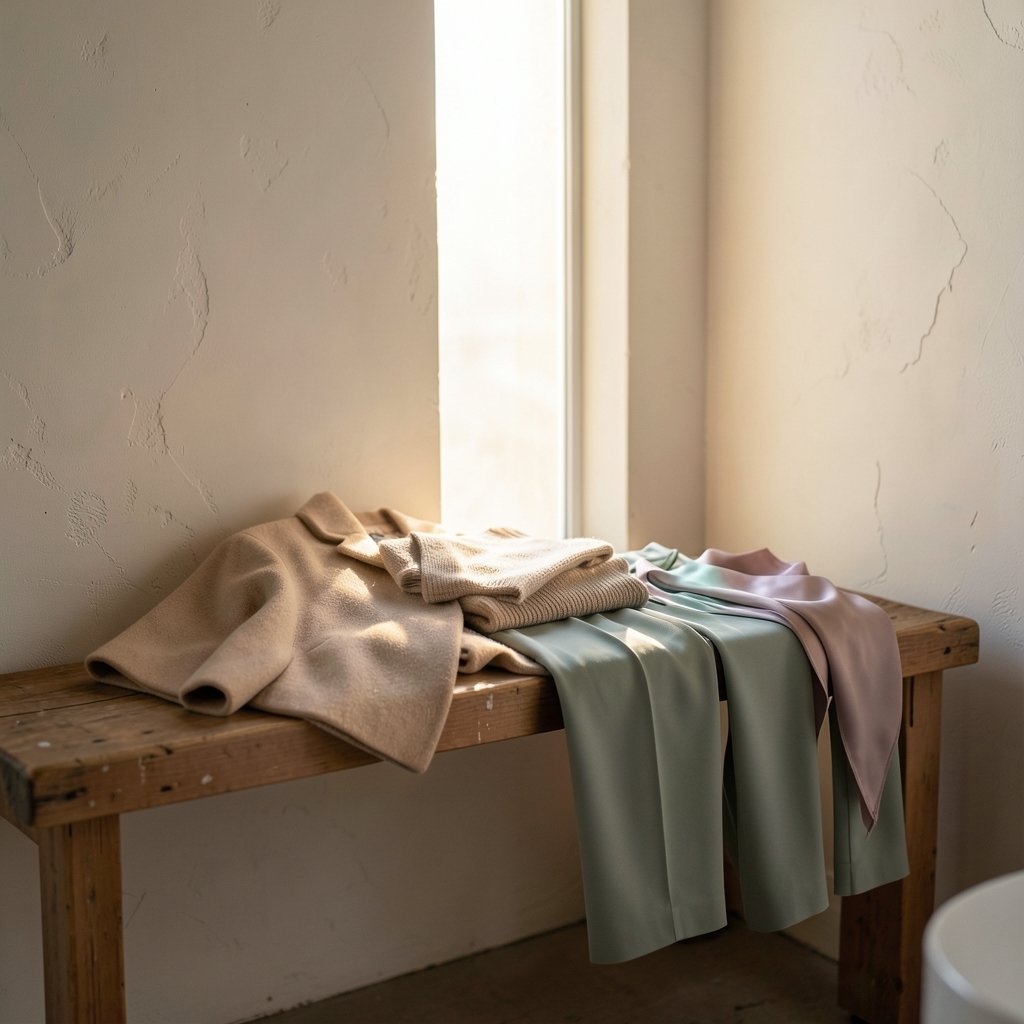
Now the words that describe how luxury looks and feels. This is where most confusion happens, because aesthetics are subjective and brands exploit that.
9. Quiet luxury
Understated, high-quality dressing without visible logos, loud prints or obvious trend markers. The look signals wealth through fabric, fit and restraint rather than branding. It is a useful term and also a marketing trap: plenty of expensive, logo-free clothes are simply expensive and plain.
10. Effortless luxury
A close cousin of quiet luxury, focused on softness and ease. Recent menswear collections have leaned hard into this idea, softening formal structures so clothes move naturally with the body. The result reads as relaxed rather than sloppy, and the balance is harder to achieve than it looks.
11. Camp
Exaggeration, theatricality and deliberate bad taste deployed with wit. Camp is knowing, not accidental. A feather boa worn sincerely is not camp; a feather boa worn as a joke about feather boas is. The aesthetic keeps returning to runways because it rewards confidence. If you want the fuller picture, this breakdown of camp fashion and why exaggeration still rules the runway is worth your time.
12. Maxxing
A newer coinage, derived from “maximizing,” describing the habit of pushing one element of style to its limit rather than balancing it. Print-maxxing layers pattern on pattern. Denim-maxxing decorates jeans until they stop being casual. Where older “-core” labels named a whole aesthetic, maxxing names an intensity.
13. IYKYK
Short for “if you know, you know.” A signal of insider taste, usually attached to small-run pieces or subtle brand markers that only enthusiasts recognize.
14. Core
The suffix that dominated the early 2020s: balletcore, gorpcore, cottagecore. Each named a complete aesthetic universe. The suffix is fading, but you will still see it in product descriptions.
15. Gorpcore
Outdoor technical clothing worn as everyday fashion. Function becomes the aesthetic, and the price tag reflects both.
16. Deconstruction
Taking a garment apart and reassembling it so the construction is visible: raw seams, exposed lining, asymmetric closures. It is a design technique, not a defect.
17. Drape
How fabric falls and hangs on the body. Good drape is one of the clearest signals of quality, because it depends on fiber, weight and weave rather than branding.
18. Silhouette
The overall outline of a garment or outfit. Reviewers use it constantly because silhouette is what you notice from across a room, before you can see a single detail.
19. Proportion
The relationship between lengths and volumes: cropped jacket over long trousers, oversized coat over slim knit. Most styling advice is really proportion advice.
The Material and Construction Terms
Fabric words separate informed buyers from hopeful ones. These are the ones that come up most.
20. Full-grain leather
Leather that retains the outermost layer of the hide, making it the most durable grade. It develops a patina over time rather than wearing through.
21. Coated canvas
A woven base fabric finished with a protective coating, used for patterned bags. It is not leather, even when it is priced like it. Knowing this saves real money.
22. Caviar leather
A durable grained calfskin strongly associated with one French house. Grain, finish and firmness vary by era, so two bags with the same description can feel quite different.
23. Lambskin
Soft, smooth and luxurious to the touch, but more prone to scratching than grained leathers. Beautiful for evening pieces, demanding for daily use.
24. Hardware
The metal components: buckles, turn locks, chains, feet, zips. “Gold hardware” describes color and finish, not solid gold. This single fact resolves a lot of resale disputes.
25. Structure loss
Softening, slouching or collapse from use, storage or pressure compared with the item’s intended shape. It is one of the most important condition factors in pre-owned bags and rarely mentioned in glamorous photos.
26. Patina
The surface change that develops with age and handling. On quality leather it is desirable; on cheap finishes it is just wear.
The Business and Buying Terms
Luxury is an industry as much as an aesthetic. These terms explain how it operates.
27. Maison
French for “house,” used to describe a fashion brand with its own design identity and history. It carries more weight than “label.”
28. Diffusion line
A secondary line offering a brand’s aesthetic at lower prices. Some are genuinely well made; others trade purely on the parent name.
29. Bridge brand
A category sitting between luxury and mid-market, offering designer style at more accessible prices. Coach, Michael Kors and Tory Burch are commonly cited examples.
30. Drop
A limited release, often announced with little warning and sold fast. Drops create scarcity, and scarcity is the oldest luxury strategy there is.
31. VIC
Very important client. The tier above VIP in many houses, with access to pre-collections, private appointments and pieces that never reach the shop floor.
32. Full set
A pre-owned item sold with all its original accessories: box, dust bag, cards, receipts. In resale, a full set commands a meaningfully higher price than the same item sold loose.
33. Guarantee card
The brand’s card or certificate, often dated and stamped by the boutique. It supports authenticity but is not the same as proof of authenticity.
34. Authenticity check
The process of verifying that an item is genuine, using experts, AI tools or third-party services. Reputable resellers build this into their workflow rather than treating it as an optional extra.
35. Condition grade
A lettered or numbered rating of wear. Japanese resale shops use a scale running roughly from N (new or unused) through S, SA, A and AB down to B and C for heavy wear. The exact wording varies by shop, so always read the definitions rather than assuming.
36. Commission rate
The percentage a consignment shop or platform keeps from each sale. It quietly determines whether reselling is worth your effort.
37. Circular wardrobe
A curated closet of timeless, versatile pieces meant to be restyled, repaired and eventually resold. It is the practical version of sustainable fashion talk.
38. Resale value
What an item fetches on the secondary market. It is influenced by brand, condition, completeness of accessories and current demand, and it is never guaranteed.
The 2027 Direction Terms
A handful of phrases capture where luxury fashion is heading next.
39. Summer leather
Lightweight leathers cut for warm weather: unlined jackets, soft trousers, perforated finishes. It moves leather out of winter and into the main season.
40. Utility safari
The deconstructed safari jacket, offered in long and short versions and in fabrics far beyond traditional cotton twill. It is formalwear softened into something you can actually live in.
How to Actually Use This Vocabulary
Knowing definitions is step one. Using them well is step two, and most people stumble in the same three places.
First, they treat marketing words as technical ones. “Luxury,” “premium” and “artisanal” have no fixed legal meaning in most markets. Terms like haute couture, full-grain and bespoke do. When a product page leans on the vague words and avoids the specific ones, that is information.
Second, they skip the condition definitions on resale listings. A grade of A means something different on every platform. Read the shop’s own scale before you bid, and check whether accessories are included, because a missing dust bag and card can knock a noticeable chunk off value.
Third, they buy for the label rather than the construction. A simple test: turn the garment inside out. Clean seams, matched patterns at the joins and a lining that lies flat tell you more about quality than any logo. For a broader grounding in how the industry frames these ideas, this luxury fashion guide collects the recurring themes, while anyone curious about the wider world of high-end design will find the same vocabulary at work in adjacent categories, from Italian luxury fashion to the new superyacht concepts redefining luxury.
It also helps to notice how fast language moves. A term can go from insider shorthand to product-page filler in a single season. “Quiet luxury” did exactly that. When you see a word everywhere, check whether it still describes anything specific or has become decoration.
Conclusion
Forty terms is a lot to hold at once, so do not try. Pick the ten that match how you actually shop. If you buy pre-owned, learn the condition grades, the accessory terms and the hardware caveats. If you buy new, learn the construction and material words, because that is where the money goes. If you simply love following the shows, the aesthetic vocabulary will make the reviews read like English instead of code.
The real point of a glossary is not to sound clever. It is to ask better questions: Which part is hand-finished? Is this bespoke or made-to-measure? Does the price include the full set? Language is the cheapest tool in luxury, and the one most people forget to use.
What does quiet luxury actually mean?
Quiet luxury describes understated, high-quality dressing without visible logos, bold prints or obvious trend markers. The look signals wealth through fabric, fit and restraint rather than branding. It is a genuine aesthetic, but also a marketing label applied loosely, so judge the garment’s construction rather than the phrase on the tag.
Is haute couture the same as high-end fashion?
No. Haute couture is a protected French designation governed by the Chambre Syndicale in Paris, reserved for houses that meet strict rules on handwork, fittings and production. Most expensive clothing, however well made, is not couture. The word cannot legally be adopted at will.
What is the difference between bespoke and made-to-measure?
Bespoke means a unique pattern drafted to an individual client’s measurements. Made-to-measure means a standard pattern adjusted to the body. Both can produce excellent results, but bespoke involves far more fittings and labor, which is why the price gap is so wide.
What do the condition grades on pre-owned luxury items mean?
Japanese resale shops grade condition on a lettered scale. N or NS means new or unused, S is close to new, SA indicates very light use, A means light wear, AB shows visible but moderate wear, B shows clear signs of use, and BC or C means heavy wear, staining or damage. Wording varies by shop, so always read that shop’s own definitions.
Why does a full set matter when reselling a bag?
A full set means the item comes with all its original accessories, such as the box, dust bag, guarantee card and receipt. Buyers pay more for completeness because it supports authenticity and suggests careful ownership. Selling without those extras typically lowers the price you can ask.
What does maxxing mean in fashion?
Maxxing comes from “maximizing” and describes pushing one element of style to its limit instead of balancing it. Print-maxxing layers patterns on patterns, and denim-maxxing decorates jeans heavily. It replaced the “-core” suffix as the go-to way to name a trend, shifting focus from a whole aesthetic to one exaggerated detail.











