


What makes a feathered cape, a six-inch platform boot, or a dress printed with optical illusions feel less like a costume and more like a statement? The answer is camp, one of fashion’s most misunderstood and most entertaining sensibilities. Camp fashion is not simply “weird clothes.” It is a way of seeing that prizes artifice over nature, style over substance, and irony over sincerity. Once you learn its grammar, you start spotting it everywhere, from red-carpet stunts to high-street knockoffs.
What Camp Fashion Actually Means
The word camp entered serious cultural criticism through Susan Sontag’s 1964 essay “Notes on ‘Camp.'” Rather than handing readers a tidy definition, Sontag wrote 58 numbered notes, a structure that itself admits camp is slippery. She credits novelist Christopher Isherwood, whose 1954 novel The World in the Evening used the term for a particular brand of theatricality, with helping popularise it.
Sontag’s central idea is that camp is “a love of the unnatural: of artifice and exaggeration.” It treats the world as an aesthetic experience, a victory of style over content. She also ties camp to failed seriousness: things that try hard to be important and miss, landing instead as delightful. She separates naïve camp (unintentional, earnest, accidentally funny) from deliberate camp (knowing, self-aware, winking).
In fashion terms, deliberate camp is a designer saying: yes, this is too much, and that is precisely the point.
Camp, Kitsch and the Difference That Matters
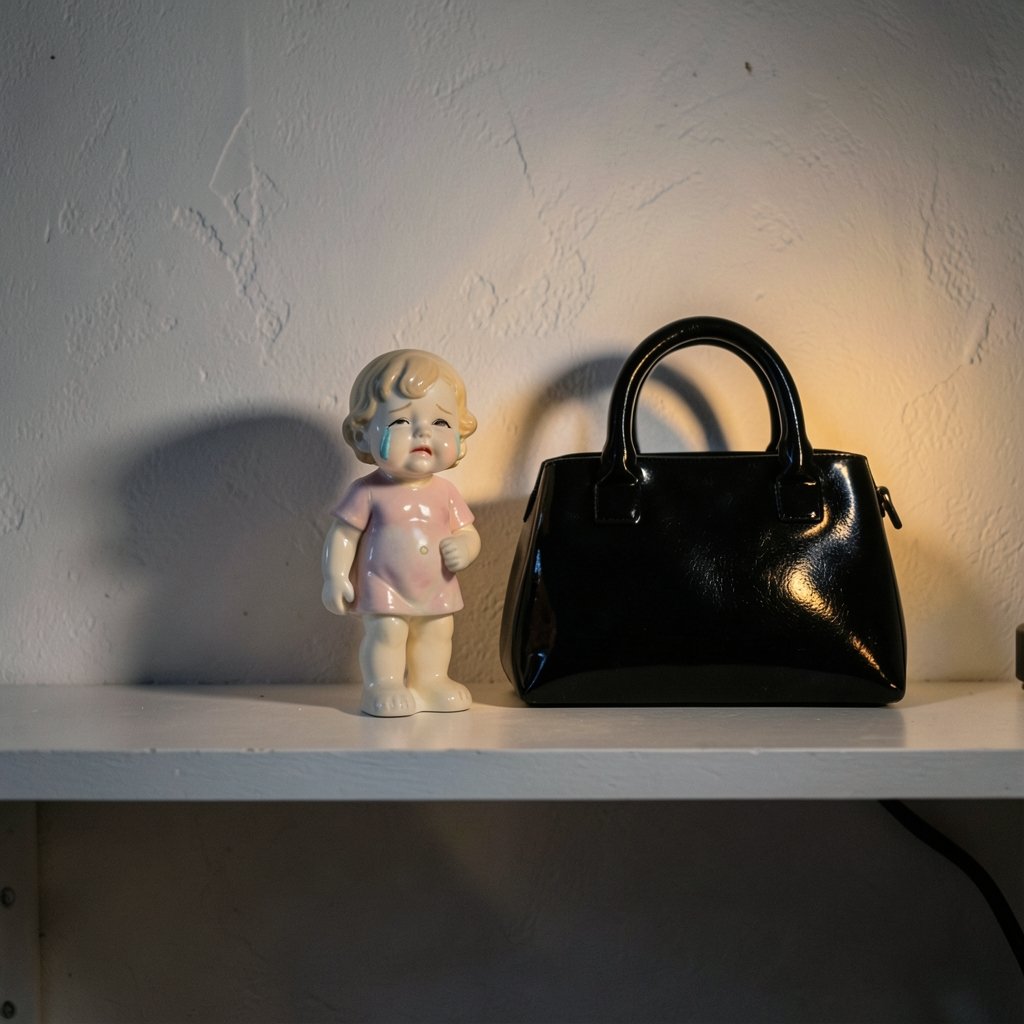
People often use camp and kitsch as synonyms. They are not. Kitsch is mass-produced bad taste taken seriously; it does not know it is in poor taste. Camp involves a knowing, ironic appreciation. A porcelain figurine of a crying child is kitsch. A designer reproducing that figurine as a handbag, with full awareness of its absurdity, is camp.
| Quality | Camp | Kitsch |
|---|---|---|
| Self-awareness | High; the joke is intentional | Low; sincerity is genuine |
| Tone | Ironic, theatrical, playful | Sentimental, earnest |
| Source | Often subcultural, handmade or couture | Often mass-produced |
| Effect on viewer | Amused recognition | Comfort or nostalgia |
This distinction matters when you shop. A camp piece announces its own exaggeration. A kitsch piece asks you to take it at face value. Mixing them up is one of the most common mistakes people make when trying to dress with camp flair, and it usually reads as confusion rather than wit.
A Short History of Camp on the Runway
Camp’s roots run deep in LGBTQ+ subculture, especially gay male communities and drag, where exaggeration and parody work as both humour and critique. For decades, that sensibility lived at the edges of fashion, in ballroom culture, cabaret costumes and underground clubs, before crossing into the mainstream.
The mainstream moment arrived in 2019, when The Metropolitan Museum of Art’s Costume Institute staged “Camp: Notes on Fashion,” borrowing Sontag’s title directly. Curator Andrew Bolton framed the exhibition around her essay, treating camp as the love of artifice and exaggeration. The show ran from May 9 to September 8, 2019, and the accompanying Met Gala that May turned the theme into a global spectacle. The exhibition catalogue, published in 2019, remains a standard reference for anyone who wants to study camp as a fashion language rather than a meme.
That exhibition did something useful: it gave a name to instincts designers had been following for years. The oversized bows, the surreal accessories, the deliberate clash of high and low, all of it suddenly had a critical framework. If you want to trace how that energy evolved into today’s runway, the broader picture of 2026 fashion trends female shows how much of camp’s theatricality has been absorbed into mainstream collections.
How Camp Shows Up in Real Clothes
Camp is easier to recognise than to define, so here is what it looks like in practice.
- Scale distortion. Sleeves that swallow the hands, shoulders wider than a doorway, tiny bags that hold nothing. Camp loves proportion pushed past usefulness.
- Surreal motifs. Prints of eyes, lips, lobsters, or household objects. The reference should feel slightly wrong, which is the fun.
- Faux materials used proudly. Vinyl pretending to be leather, plastic pretending to be pearl. Camp does not hide the fake; it celebrates it.
- Historical pastiche. A corset worn over a tracksuit, Victorian ruffles on a hoodie. Camp quotes history without reverence.
- Visible effort. Camp is performed. Hair, makeup and accessories are part of the sentence, not the punctuation.
Notice that none of these rules require money. Camp is one of the few fashion languages where a charity-shop find and a couture gown can say the same thing, provided the wearer commits.
Camp Versus Other “Loud” Aesthetics
Camp gets confused with maximalism, avant-garde dressing and costume. They overlap, but they are not the same. A useful comparison:
| Aesthetic | Core impulse | Reader’s reaction |
|---|---|---|
| Camp | Ironic exaggeration, artifice embraced | “They know exactly what they’re doing” |
| Maximalism | More colour, more pattern, more layers | “That’s a lot, and I like it” |
| Avant-garde | Formal experimentation, new shapes | “I don’t fully understand this yet” |
| Costume | Narrative role-playing for an event | “That’s a character, not a person” |
The dividing line is intent and self-awareness. Camp always contains a wink. Strip out the wink and you are left with either sincerity or chaos.
Why Camp Keeps Coming Back
Camp resurfaces whenever fashion takes itself too seriously. It is a pressure valve. In the 2010s, social media accelerated that cycle, as the history of 2010s fashion athleisure streetwear instagram rewrote rules shows: platforms rewarded outfits that photographed as a joke and a flex at the same time. Camp thrives in that environment because it is inherently shareable. It rewards a second look.
There is also an economic logic. In a crowded market, exaggeration is a form of visibility. A quiet beige coat is beautiful; a coat with three-foot shoulders gets photographed. Designers understood this long before algorithms did.
And there is a cultural logic. Camp has always been a tool for communities excluded from mainstream respectability, allowing them to turn mockery into mastery. That political edge is why later critics have argued Sontag’s apolitical framing misses part of the story. Camp is fun, but it has never been only fun.
Practical Tips for Wearing Camp Without Looking Confused
First-hand observation from styling and shopping suggests a few rules that consistently work.
Commit to one exaggerated element. Camp reads as intentional when there is a clear focal point. A giant bow, a surreal bag, a printed suit. Two or three competing gags and the outfit collapses into noise. Pick the loudest piece and let everything else support it.
Anchor with something plain. The classic error is going full theatrical from head to toe. A simple trouser, a plain shoe or a clean neckline gives the exaggeration something to push against. Contrast is what makes camp legible.
Choose deliberate references. If you wear a print of a Renaissance painting, know it is a Renaissance painting. Camp rewards the wearer who is in on the joke. Borrowed irony rarely lands.
Check the fit first, then the gag. Novelty pieces often fit badly because the design energy went into the concept. A camp garment that pulls at the shoulder or gaps at the waist stops being funny fast. Alter it or leave it.
Test it in daylight. Camp looks different under club lighting than under office fluorescents. Photograph the outfit in flat light before you commit. If it still reads as witty rather than messy, you are ready.
Do not explain it. The fastest way to kill camp is to tell people it is camp. Wear it, enjoy it, move on.
Common Mistakes That Undermine Camp
The most frequent mistake is mistaking expense for camp. A designer logo does not make an outfit camp; the attitude does. Another is confusing camp with rudeness or shock for its own sake. Camp is playful, not cruel. It punches up at seriousness, not down at people.
A third error is over-accessorising. Camp needs air around it. If every surface is decorated, the eye has nowhere to rest and the joke gets lost. Finally, many people wear camp once, feel self-conscious, and retreat. Camp is a performance, and performance improves with repetition. Start with one piece, wear it somewhere low-stakes, and build from there.
Where Camp Sits in the Wider Trend Cycle
Camp is not a trend with a start and end date; it is a recurring mood. Still, its visibility rises and falls. The current appetite for theatrical dressing connects to wider shifts documented in the 2026 fashion trends guide, where playful, high-personality pieces sit alongside quieter tailoring rather than replacing it. The two coexist because camp works best as a contrast, not a uniform.
That is also why camp keeps showing up in illustration and editorial work, where exaggeration is the native language. Projects like the story of how Angelica Hicks fashion illustrator turns runway moments into drawings show how the most extreme runway ideas get distilled into a single, funny, instantly readable image. Camp is, in many ways, illustration made wearable.
For anyone tracking the seasonal churn, the tag for fashion trends 2026 is a useful place to watch which camp gestures are being absorbed into the mainstream and which remain firmly in the avant-garde. And for context on how fashion media itself shapes taste, the discussion of how to find best fashion substacks without wasting your inbox is a reminder that camp’s meaning is partly negotiated by the people writing about it.
There is also a longer lineage worth knowing. The crossover between film marketing and fashion spectacle, explored in coverage of how the Barbie world tour book delivers fashion movie only hinted at, shows camp operating at industrial scale: pink, plastic, pastiche and a very deliberate wink. Similarly, the traditions of Italian luxury fashion demonstrate that camp and craftsmanship are not opposites. A perfectly tailored garment can be just as absurd as a deliberately trashy one, and often more so.
Conclusion
Camp fashion is less a wardrobe category than a point of view. It asks wearers to treat style as a game worth playing seriously and then, at exactly the right moment, not seriously at all. Sontag’s 58 notes never resolved into a single definition, and that is the most useful lesson: camp resists tidy rules, rewards commitment, and punishes self-consciousness. Start with one exaggerated piece, anchor it with something plain, and let the wink do the rest. Camp is not about being the loudest person in the room. It is about being the one who clearly knows why the room is looking.
Frequently Asked Questions
What is camp fashion in simple terms?
Camp fashion is clothing and styling that deliberately uses exaggeration, artifice and irony. It celebrates the unnatural and the theatrical rather than trying to look effortless or “natural.” The key ingredient is self-awareness: the wearer knows the outfit is over the top, and that knowledge is the point.
Where does the term camp come from?
The term became widely discussed through Susan Sontag’s 1964 essay “Notes on ‘Camp,'” which presented 58 numbered observations rather than one definition. Sontag credited novelist Christopher Isherwood with helping popularise the usage. Camp also has deep roots in LGBTQ+ subculture and drag, where exaggeration works as both humour and critique.
What was the 2019 Met Gala camp theme about?
The 2019 Met Gala theme, “Camp: Notes on Fashion,” borrowed Sontag’s essay title directly. The accompanying Costume Institute exhibition at The Metropolitan Museum of Art ran from May 9 to September 8, 2019, and curator Andrew Bolton framed it around Sontag’s idea of camp as a love of artifice and exaggeration.
What is the difference between camp and kitsch?
Kitsch is mass-produced bad taste taken seriously, with no ironic distance. Camp is a knowing appreciation of exaggeration. A sentimental figurine is kitsch; the same figurine reproduced as a designer accessory, with full awareness of its absurdity, is camp. Intent and self-awareness separate the two.
Can you wear camp fashion to normal places?
Yes, with one rule: commit to a single exaggerated element and keep the rest simple. A surreal bag with plain trousers, or an oversized bow with a clean neckline, reads as intentional. Wearing several loud ideas at once usually reads as confusion rather than wit.
Is camp fashion the same as maximalism?
No. Maximalism is about more colour, pattern and layering. Camp is about ironic exaggeration and theatricality. A maximalist outfit can be entirely sincere, while a camp outfit can be minimal in volume but enormous in attitude. The wink is what makes it camp.














