

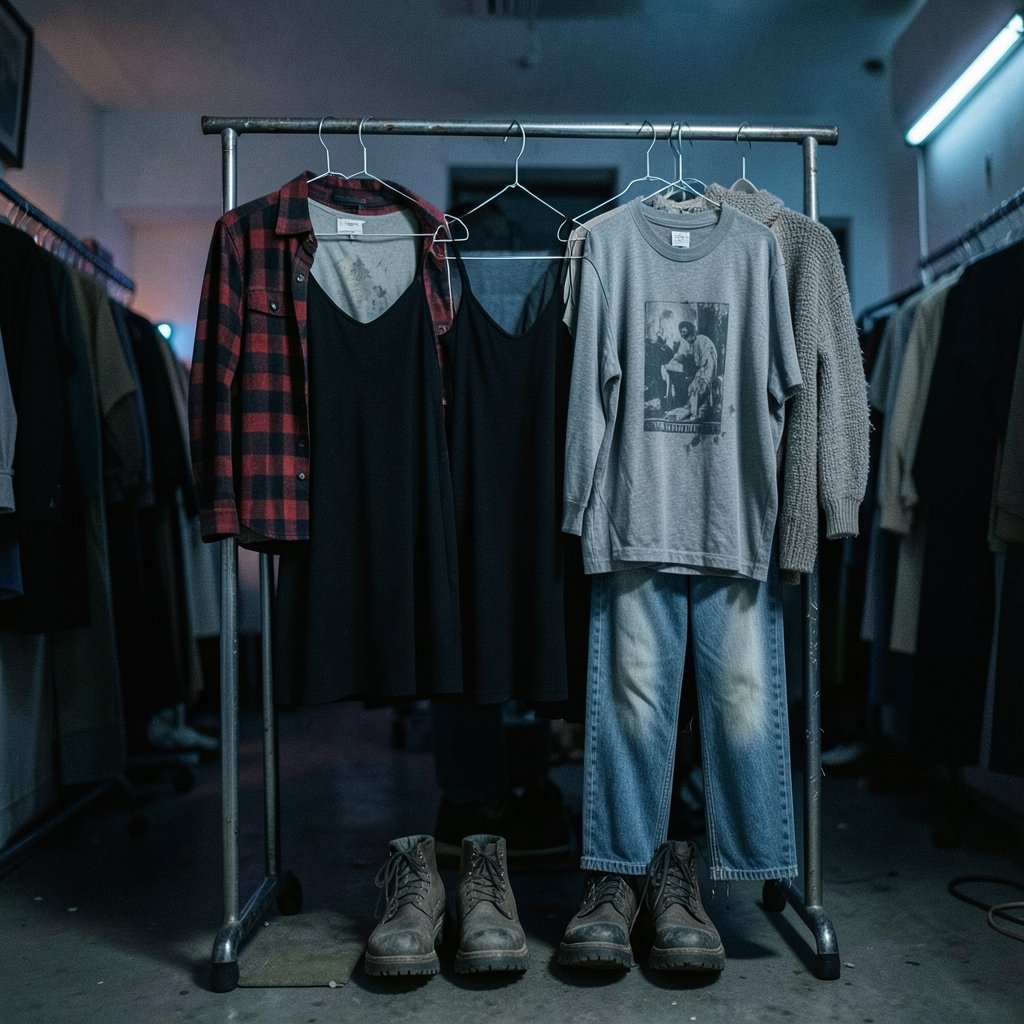
What do a flannel shirt, a slip dress, and a pair of baggy jeans have in common? On paper, nothing. But put them in the same decade and you have the 1990s, a ten-year stretch when fashion stopped taking orders from a single authority and started taking cues from the street, the runway, and the mall at the same time.
The 1990s is one of the few decades in modern dress history that genuinely resists a tidy summary. There was no single silhouette, no dominant hemline, no one designer calling the shots. Instead, several style tribes ran in parallel, sometimes borrowing from each other and sometimes openly at war. Grunge wanted mess. Minimalism wanted calm. Hip-hop wanted volume. Teen retail wanted fun. Somehow, all of it landed in the same era, and all of it is still shaping what people wear today.
This guide walks through the forces that defined 90s fashion, the pieces that became shorthand for the decade, the mistakes people make when recreating the look, and why the revival keeps coming back.
Why 90s Fashion Split Into So Many Directions
The simplest way to understand the decade is to see it as a reaction against the 1980s. The previous decade had been loud: power shoulders, neon, gold hardware, visible logos, and a general sense that more was more. By the early 1990s, that excess felt tired. What replaced it was not one new look but a handful of competing answers to the same question: what should clothes do now?
Three answers dominated.
The first was grunge, which came out of Seattle’s music scene and treated thrift-store clothing as a genuine aesthetic. Flannel shirts, ripped denim, layered knits, and worn-in boots were not styled to look careless; they were careless, and that was the point.
The second was minimalism, a pared-back, neutral, body-skimming approach pushed by designers who wanted clothes to feel quiet and precise rather than decorative. Think clean lines, muted palettes, and fabrics that did the talking.
The third was hip-hop fashion, which moved baggy jeans, oversized sportswear, tracksuits, and branded athletic wear from a subculture into the mainstream across the decade. This is often described as the moment streetwear became a real commercial force rather than a niche.
Add rave culture, teen mall retail, and the rise of fast fashion into the mix, and you get a decade that looks chaotic from a distance but makes sense once you see the subcultures underneath it.
Grunge Hits the Runway
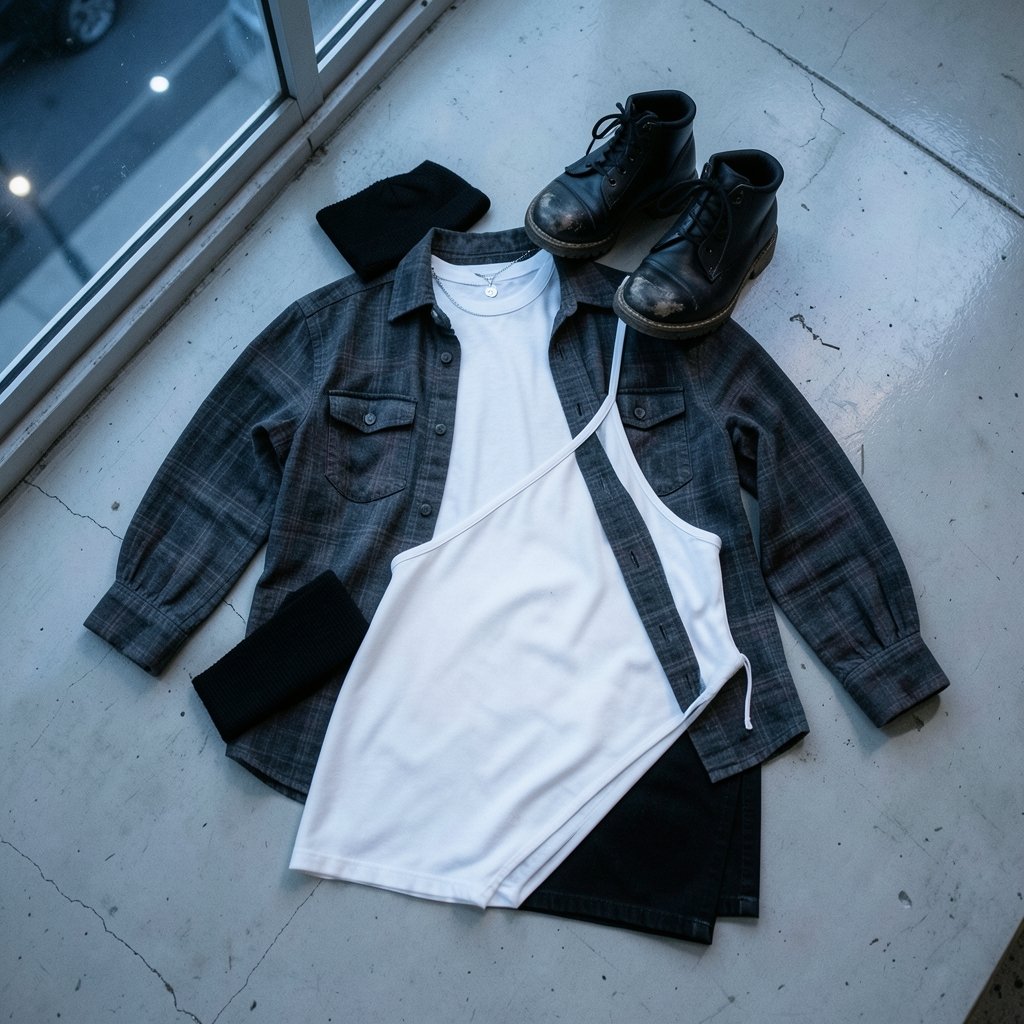
The most famous collision between street style and high fashion happened in 1992, when Marc Jacobs presented a grunge-inspired collection for Perry Ellis. Drawing directly on Seattle thrift-store dressing, the collection put flannel, layering, and slip dresses on a designer runway. It is widely cited as the moment grunge entered high fashion, and Jacobs reportedly left the house soon after. The exact show date and the circumstances of his departure are reported inconsistently across sources, so treat the finer details with caution.
What matters more than the backstage drama is what the collection proved: that a look born in secondhand shops could hold its own in a luxury context. That idea, that authenticity could be sold, became one of the defining tensions of 1990s style. It also set up a pattern that has never really gone away. Subculture gets absorbed, repackaged, and resold, often within a couple of seasons.
For anyone building a 90s look today, the practical lesson from grunge is layering. A flannel over a band tee, a slip dress over a plain white tee, a cardigan that looks like it came from a relative’s closet. The mistake people make is buying distressed pieces that were manufactured to look worn. Real thrift finds almost always read better, because the wear is genuine and the fit is slightly off in a way that new clothing rarely is.
Minimalism as the Quiet Counter-Current
While grunge got the headlines, minimalism got the wardrobes. Through the early and mid-1990s, designers pushed neutral, pared-back clothing that skimmed the body rather than exaggerating it. The appeal was obvious: after a decade of conspicuous dressing, simplicity felt like a relief.
The practical markers of 90s minimalism are easy to spot. A fitted tank. A straight-cut trouser. A plain slip dress with no embellishment. A single long necklace instead of a stack. Colors pulled from stone, cream, grey, and black. Nothing shiny unless it was meant to be.
This is also where the decade’s most misunderstood garment lives: the slip dress. Worn alone it reads as evening wear. Worn over a T-shirt it reads as 1995. That layering trick is one of the most reliable ways to get the 90s look without looking like a costume, and it works on almost every body type because the T-shirt controls the neckline and the slip dress adds the drape.
If you want to see how the decade’s mood shifted between excess and restraint, the broader 2026 fashion trends guide is a useful comparison point, since many of today’s cycles are still working through ideas the 90s introduced.
Hip-Hop, Sportswear and the Rise of Streetwear
The third pillar of 90s fashion is the one with the longest shadow. Baggy jeans, oversized jerseys, tracksuits, and branded athletic wear moved from hip-hop culture into mass fashion over the course of the decade. What started as a subcultural uniform became a mainstream commercial category, and the ripple effects are still visible in every streetwear drop today.
The styling logic was specific. Volume was deliberate, not accidental. Pants sat low and pooled at the shoe. Tops ran long. Logos were loud and worn with pride. Accessories were functional and heavy: chains, caps, sneakers with visible branding.
This is also the area where the most common historical error creeps in. Low-rise jeans are frequently filed under 1990s fashion, but they are more accurately dated to the early 2000s. The 90s did have low-slung, relaxed denim, but the extreme whale-tail era belongs to the following decade. If you are putting together a period-accurate outfit, keep the waistline moderate and the leg wide.
For a closer look at how the decade’s looser proportions are being reinterpreted now, the 2026 fashion trends female roundup shows how much of today’s silhouette language still traces back to 90s volume.
The Pieces That Became Shorthand for the Decade
Some garments did so much work in the 1990s that they now function as instant signifiers. Here is how the key pieces break down, including what they actually were and how to wear them without tipping into parody.
| Piece | What it was in the 90s | How to wear it now |
|---|---|---|
| Flannel shirt | Grunge staple, worn open over a tee | Oversized, sleeves rolled, tied at the waist |
| Slip dress | Minimalist evening piece, layered over tees | Plain bias cut, midi length, flat shoes |
| Baggy jeans | Hip-hop and skate uniform | Wide leg, mid-rise, cropped or pooling |
| Combat boots | Subcultural footwear turned mainstream | Worn-in leather, laced loose |
| Choker | Late-90s accessory, often plastic or velvet | Thin, single, not stacked |
| Butterfly clips | Teen hair accessory, late 90s | A few, not a full head |
| Platform shoes | Late-90s and early-2000s crossover | Chunky but walkable |
Dr. Martens boots deserve a note of their own. The brand had been associated with punk and skinhead subcultures since the 1960s and 70s, but the 1990s made them a broad fashion staple, especially alongside grunge. The boots worked because they carried history. Wearing them with a floral dress was the whole joke.
The Rachel haircut, the layered cut worn by Jennifer Aniston on Friends, became one of the most copied hairstyles of the decade. The show premiered in 1994, and the cut is commonly dated to its early seasons, though the exact episode is debated. Hair, in the 90s, was as much a fashion statement as clothing: thin brows, glossy lips, and deliberately undone texture.
Teen Mall Culture and the Catalog Era
Not all 90s fashion happened on runways or in music videos. A huge amount of it happened in shopping malls and, crucially, in catalogs. Delia’s, founded in 1993, is often cited as a touchstone of American teen fashion retail, selling a very specific mix of baby tees, wide-leg jeans, and novelty accessories to a generation that shopped by mail and later by web.
The catalog era matters because it democratized trend adoption. A teenager in a small town could access the same look as someone in a city, which accelerated how fast trends moved. It also flattened regional differences, which is part of why 90s style now reads as so coherent in hindsight even though it was fractured at the time.
This is also where fast fashion began its long climb. The globalization of cheap, rapid production changed how quickly a look could travel from a subculture to a mall rack. The 1990s is often framed as the decade when that pipeline became fully operational.
Why the 90s Keep Coming Back
Fashion historians commonly describe 1990s styles returning in cycles through the 2010s and 2020s, with slip dresses, baggy jeans, and chokers all reappearing in updated forms. The revival is not nostalgia for its own sake. It happens because the decade produced unusually flexible garments.
A slip dress can be dressed up or down. Baggy jeans suit almost everyone. A flannel shirt is functional. Combat boots are comfortable. These pieces survived because they work, rather than because they are recognizable.
The revival also fits the way trends now circulate. Instead of one dominant look per season, fashion runs several aesthetics at once, which is exactly how the 1990s operated. That parallel structure makes the decade easy to sample from. You can take the minimalism without the grunge, or the streetwear without the teen gloss.
The cyclical nature of all this is well documented in trend analysis, including the fashion trends 2026 coverage, which keeps returning to 90s reference points. The same instinct shows up in Italian luxury fashion, where pared-back 90s minimalism has become a permanent reference rather than a passing phase.
Common Mistakes When Recreating the Look
The biggest error is treating the 90s as a costume. Buying a pre-distressed flannel, a plastic choker, and a pair of novelty platforms at once produces an outfit that reads as fancy dress rather than personal style.
The second mistake is ignoring proportion. The 90s was not simply “baggy.” It was a careful balance: volume on top with a slimmer bottom, or the reverse. Wearing everything oversized at once just looks like the clothes do not fit.
The third is getting the timeline wrong. Low-rise jeans, whale tails, and velour tracksuits belong to the early 2000s. Butterfly clips and platform shoes are late 90s. Grunge and minimalism are early to mid. Mixing all of it without care produces a blur rather than a look.
The fix is simple: pick one 90s lane and commit to it. If you want grunge, build around worn denim, flannel, and boots. If you want minimalism, build around neutral knits, slip dresses, and clean lines. If you want streetwear, build around volume and sneakers. One clear reference point always beats five half-references.
Practical styling also helps. Tucking a tee into wide-leg jeans instantly reads more 90s than leaving it loose. Layering a slip dress over a fitted tee does more work than any accessory. Rolling flannel sleeves to the elbow changes the whole silhouette.
For more on getting period looks right without tipping into costume territory, the breakdown of 90s summer outfits that get the look without looking costumed is a solid practical reference. And if you are interested in how runway moments get translated into visual culture, Angelica Hicks’ fashion illustrations show how a single show can become an enduring image.
Conclusion
The 1990s did not hand down one look. It handed down a set of attitudes: clothes can be worn-in, clothes can be quiet, clothes can be loud and baggy, and clothes can be cheap and still matter. That range is exactly why the decade keeps resurfacing. There is a 90s answer for almost any mood, and most of those answers are comfortable, practical, and easy to find secondhand.
The trick is to treat the era as a set of principles rather than a shopping list. Layer instead of buying distressed. Balance volume instead of chasing it. Get the timeline right. Do those three things and the look holds up, whether you are wearing it in 1995 or thirty years later.
Frequently Asked Questions
What defined 90s fashion?
90s fashion was defined by competing subcultures rather than a single silhouette. Grunge brought flannel, layering, and thrift-store dressing. Minimalism pushed neutral, pared-back clothing. Hip-hop moved baggy jeans, sportswear, and branded athletic wear into the mainstream. Teen mall retail and catalogs spread all of it quickly.
When did grunge enter high fashion?
Grunge entered high fashion in 1992, when Marc Jacobs presented a grunge-inspired collection for Perry Ellis drawing on Seattle thrift-store style. It is widely cited as the moment grunge hit the runway. The exact show date and the circumstances of Jacobs’ departure are reported inconsistently, so the finer details should be checked.
Are low-rise jeans really 90s fashion?
Not exactly. Low-rise jeans are more accurately dated to the early 2000s, even though the 1990s did have relaxed, low-slung denim. The extreme low-rise era with visible waistbands belongs to the following decade. Mixing the two is one of the most common timeline errors in 90s styling.
Why is the slip dress so associated with the 90s?
The slip dress became a defining mid-1990s look, often worn over a T-shirt. It worked because it suited both the minimalist mood of the era and the layered, casual approach that grunge popularized. That versatility is why it keeps returning in later revivals.
What shoes were popular in 90s fashion?
Combat boots, especially Dr. Martens, were a major 90s staple, particularly within grunge. The brand had been linked to punk subcultures since the 1960s and 70s before becoming a broad fashion item in the 1990s. Sneakers, chunky platform shoes, and simple flat sandals also featured heavily.
How do you wear 90s fashion without looking like a costume?
Pick one 90s lane and commit to it rather than mixing grunge, minimalism, and teen trends all at once. Balance volume instead of wearing everything oversized. Choose genuinely worn secondhand pieces over pre-distressed new ones, and keep accessories to one or two rather than a full set.














