

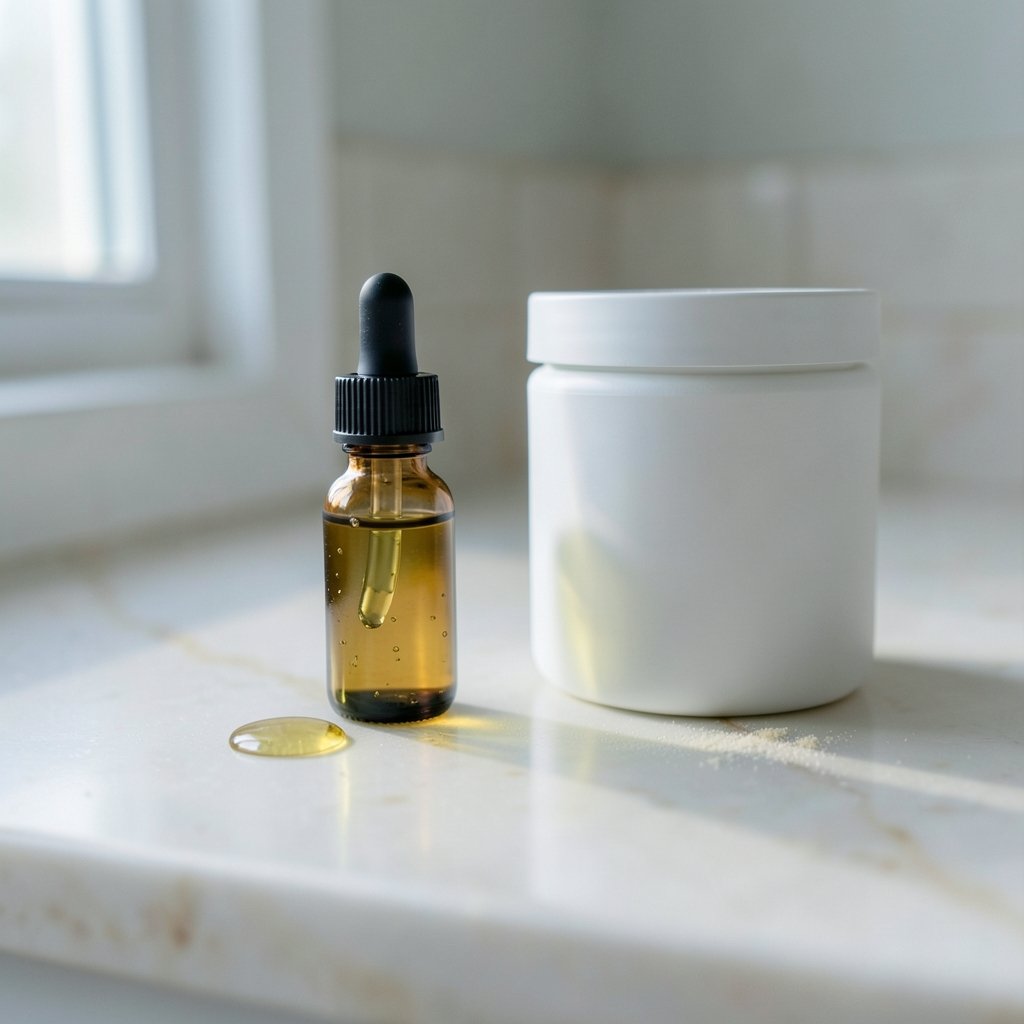
What if the first milk a mother produces could be bottled, powdered, and sold as a supplement or a skincare ingredient? That is, in essence, the pitch behind colostrum serum — a product category that has moved from farm supply shelves to beauty aisles and wellness storefronts. The name sounds clinical and futuristic at once. But the term itself is not a standard scientific one, and that ambiguity is exactly where confusion starts.
This article unpacks what colostrum serum actually refers to, how the two very different products that share the name are regulated, what the research does and does not support, and how to shop sensibly if you decide to try one.
What “Colostrum Serum” Actually Means
The phrase gets used in two distinct ways, and mixing them up leads to bad decisions.
The first meaning is bovine colostrum — the first milk a cow produces after calving — sold as a powder, capsule, or liquid supplement. Some brands call the liquid form a “serum” for marketing reasons. It is a food or dietary supplement, not a medicine.
The second meaning is a cosmetic ingredient derived from colostrum, formulated into a lightweight skincare product. Here, “serum” means what it means in cosmetics generally: a thin, fast-absorbing formulation, not a blood-derived or pharmaceutical product.
That distinction matters because the two categories are regulated differently, studied differently, and used for completely different reasons. A skincare serum and a drinkable supplement should never be evaluated as if they were the same thing.
What Is Actually Inside Colostrum

Bovine colostrum is compositionally rich. It contains immunoglobulins — mainly IgG, along with IgA and IgM — plus lactoferrin, lysozyme, and various growth factors including IGF-1 and TGF-β. These compounds are concentrated in the first days after calving and drop off sharply afterward, which is why collection is time-limited and why raw colostrum is a perishable, seasonal material.
Human colostrum is a separate matter entirely. It is the first milk produced for a newborn, and early initiation of breastfeeding is recommended by major public health bodies worldwide. Bovine colostrum supplements are not a substitute for human colostrum, breast milk, or infant formula, and no supplement should be positioned that way.
If you have seen the recent wave of enthusiasm around colostrum as a wellness ingredient, it follows a similar pattern to other farm-to-supplement trends. The cowboy colostrum trend and what it actually delivers for your body is a useful companion read, because the hype cycle around the powder and the hype around the serum version share the same roots.
How Colostrum Serum Is Regulated
Regulation is where the two product types diverge most sharply.
| Product type | Typical classification | Pre-market efficacy review? | Key caution |
|---|---|---|---|
| Bovine colostrum powder or liquid supplement | Dietary supplement (US) or food supplement (EU) | No | Not standardized for IgG content; dairy allergen |
| Colostrum-derived skincare serum | Cosmetic ingredient or cosmetic product | No | Claims are marketing-led; limited evidence |
| Human colostrum | Natural infant food | Not applicable | Not a commercial supplement product |
In the United States, bovine colostrum is sold as a dietary supplement, which means it is not reviewed by the FDA for safety and efficacy before it reaches shelves. In the European Union, it is generally handled as a food or food supplement under general food law. Neither framework requires a manufacturer to prove that a product does what the label implies.
That is not a scandal — it is simply how supplement and cosmetic categories work. But it does mean the burden of skepticism falls on the buyer.
What the Research Indicates — and What It Doesn’t
Small trials have examined bovine colostrum for exercise recovery, gut permeability, and prevention of diarrhea, including studies in athletes and in children. Results have been mixed, and sample sizes are frequently small. Colostrum is not established as a treatment for any disease.
That sentence deserves to be read twice. “Mixed results in small trials” is a long way from “proven benefit,” and it is even further from the confident claims that appear on some product pages.
For skincare, the picture is thinner still. Colostrum-derived ingredients appear in some cosmetic formulations, but the evidence base is limited and largely marketing-led. Cosmetic claims are not held to the same standard as drug claims, so a label can suggest a great deal without demonstrating much.
This is a familiar problem in the beauty world. Products with genuinely interesting chemistry often get buried under inflated promises. The Good Molecules discoloration correcting serum breakdown of what it can and cannot do is a good example of how to separate a real ingredient story from the marketing layered on top of it.
Common Mistakes People Make With Colostrum Products
First-hand experience from the supplement and skincare aisles points to a handful of recurring errors.
Assuming “serum” means something medical. In cosmetics, serum describes texture and absorption, not potency or clinical status. A product labeled serum is not automatically stronger or more rigorously tested than a cream.
Ignoring the IgG number — or trusting it blindly. Bovine colostrum products are not standardized for immunoglobulin content, so doses vary widely between brands. A label that lists IgG per serving is more informative than one that does not. But a big number on the front of the tub is not proof of quality, and there is no universal benchmark that makes cross-brand comparison simple.
Overlooking the dairy allergy issue. Colostrum is a dairy product. Anyone with a milk allergy should treat it as a contraindication, not a gamble.
Expecting supplement results from a cosmetic, or vice versa. A skincare serum will not affect gut permeability, and a powder will not smooth the appearance of skin. Conflating the two categories is the single most common source of disappointment.
Skipping the medication check. Supplements can interact with medications and are not appropriate for everyone, including people who are pregnant or managing a health condition. A clinician or pharmacist is the right person to ask, not a product review.
How to Read a Colostrum Serum Label
Labels reward careful reading. A few practical checks do most of the work.
- Identify the category first. Is this a food supplement, a cosmetic, or something else? The answer tells you which rules apply and which claims are even permissible.
- Look for sourcing and collection details. Colostrum is collected in a narrow window after calving. Brands that explain their sourcing are generally more transparent overall.
- Check for allergen statements. Dairy should be declared clearly. If it is not, that is a red flag.
- Find the serving size and immunoglobulin content. Without these, you cannot compare one product to another in any meaningful way.
- Read the claims critically. Language like “supports” and “helps maintain” is deliberately softer than “treats” or “cures.” Notice which one a brand uses.
- Check third-party testing. Independent testing is not a guarantee of efficacy, but it does speak to quality control.
If you are building a broader routine around serums, the same discipline applies across categories. A practical guide to hair growth serums and how to choose one shows how ingredient transparency and realistic expectations separate useful products from expensive hope. Browsing a collection of hair growth serum resources can also help you calibrate what a credible claim looks like.
Colostrum Serum vs. Other Serums: A Reality Check
Consumers often arrive at colostrum products after trying other serums, so it helps to place the category side by side with more established ones.
| Feature | Colostrum supplement | Colostrum skincare serum | Typical vitamin C serum |
|---|---|---|---|
| Primary use | Ingestion | Topical | Topical |
| Regulatory category | Dietary supplement | Cosmetic | Cosmetic |
| Evidence strength | Mixed, small trials | Limited | Moderate for some claims |
| Standardization | Not standardized for IgG | Varies by brand | Varies by formulation |
| Main risk | Dairy allergy, interactions | Irritation, overstated claims | Irritation, oxidation |
The honest summary is that colostrum sits in an interesting but unsettled position. It is not a novelty, and it is not a proven powerhouse. It is a biologically rich material with a modest and uneven research base, sold in two categories that are regulated loosely and marketed enthusiastically.
Why the Name Itself Causes Trouble
Words carry expectations. “Serum” sounds clinical, precise, and potent. In a supplement context, it suggests a purified concentrate. In a cosmetic context, it suggests a targeted treatment. Neither implication is regulated, and neither is guaranteed.
The same naming problem shows up elsewhere in consumer health, where a familiar ritual word gets attached to a product and quietly reshapes how people think about it. The way the tooth fairy turned a lost tooth into a childhood ritual is a gentle reminder that naming and meaning are often constructed rather than scientific.
None of this means colostrum products are worthless. It means the label is doing more persuasive work than the evidence is.
Who Might Consider It — and Who Should Skip It
Someone curious about gut health or exercise recovery might reasonably look at bovine colostrum as an experiment, ideally discussed with a clinician first. Someone with a dairy allergy should not. Anyone hoping a colostrum skincare serum will transform their skin should temper expectations considerably, because the evidence is thin and the claims are largely unverified.
Pregnant people, children, and anyone taking regular medication should get individual advice rather than relying on general guidance. Supplements are not risk-free simply because they are sold without a prescription.
Conclusion
Colostrum serum is two products wearing one name. As a supplement, bovine colostrum is a genuinely interesting material — rich in immunoglobulins, lactoferrin, and growth factors — supported by small, mixed trials and sold without pre-market efficacy review. As a cosmetic, it is a lightly evidenced ingredient wrapped in the familiar language of skincare marketing.
The practical takeaway is not to avoid the category or to embrace it, but to read it accurately. Check which product you are actually buying. Look for allergen information and immunoglobulin content. Treat “supports” as a claim rather than a finding. And remember that the most reliable signal in this market is not the word serum on the front of the package — it is the transparency of the label on the back.
Frequently Asked Questions
What is colostrum serum?
The term usually refers to one of two things: bovine colostrum — the first milk a cow produces after calving — sold as a powder, capsule, or liquid supplement, or a cosmetic ingredient derived from colostrum and formulated into a skincare serum. The two are regulated differently and used for different purposes.
Is colostrum serum the same as human colostrum?
No. Human colostrum is the first milk produced for a newborn and is not a commercial supplement product. Bovine colostrum supplements are a separate category and are not a substitute for human colostrum, breast milk, or infant formula.
Does colostrum serum have proven benefits?
Not in the sense most people mean. Small trials have looked at bovine colostrum for exercise recovery, gut permeability, and diarrhea prevention, with mixed results and often small sample sizes. It is not established as a treatment for any disease, and evidence for topical cosmetic use is limited.
Is colostrum serum regulated?
Loosely. In the US, bovine colostrum is sold as a dietary supplement and is not reviewed by the FDA for efficacy before sale. In the EU, it is generally treated as a food or food supplement. Cosmetic serums face no pre-market efficacy review either.
Who should avoid colostrum products?
Anyone with a dairy allergy should avoid them, since colostrum is a dairy product. People who are pregnant, breastfeeding, managing a health condition, or taking regular medication should get individual advice from a clinician or pharmacist before starting a supplement.
Are colostrum supplements standardized?
Generally not. Products vary widely in immunoglobulin content, particularly IgG, and there is no universal benchmark that makes cross-brand comparison straightforward. A label that states IgG per serving is more informative than one that does not.









