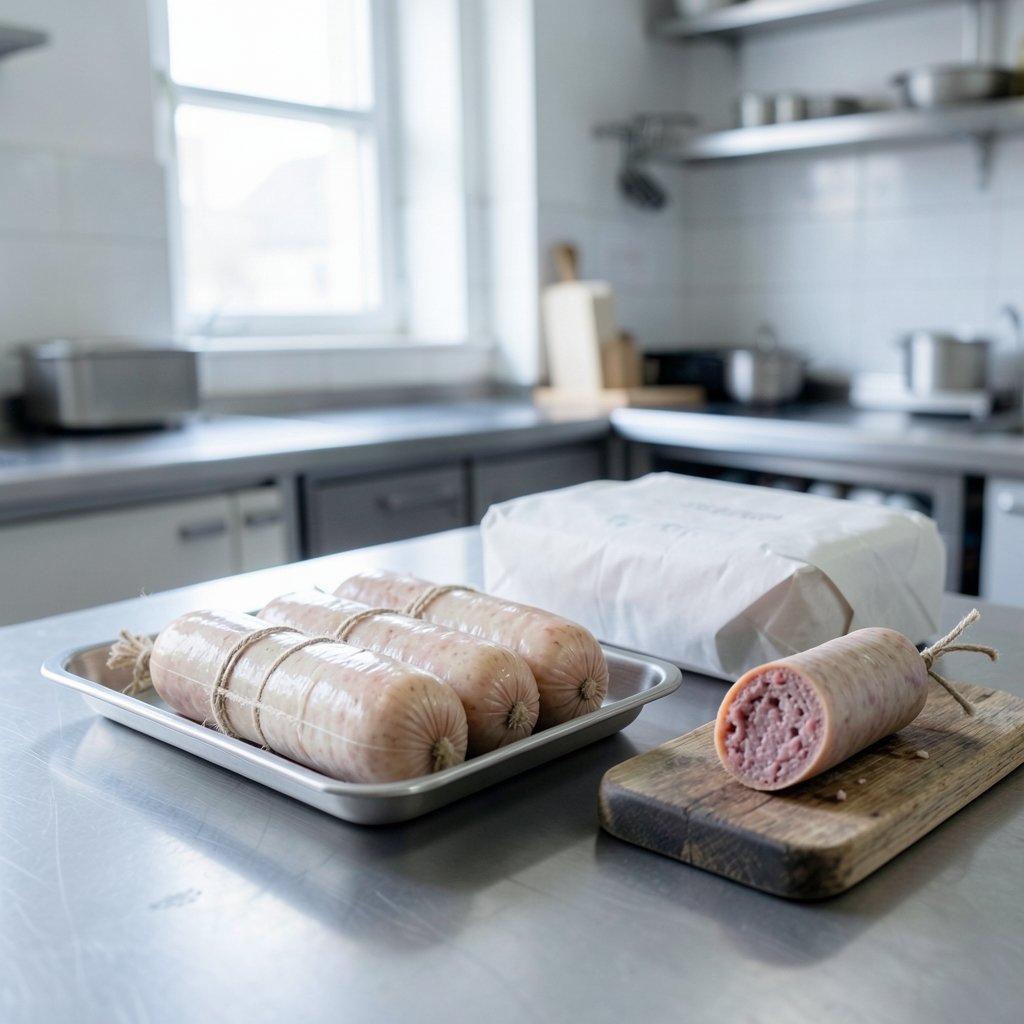
What makes a knockwurst worth the trip? Is it the audible snap of the casing, the heavy hit of garlic, or the fact that the stand selling it has been run by the same family since before anyone reading this was born? If you have ever typed “best knockwurst near me” into a phone while standing in a parking lot, you already know the search results are a mess. You get a map full of pins, half of them chain hot dog counters, a few paid ads, and no real way to tell which sausage is actually good. This guide fixes that. It is not a list of restaurants, because a list like that goes stale the moment a cook retires or a lease runs out. Instead, it gives you a repeatable method for judging knockwurst, whether you are standing at a butcher counter, scanning a menu, or staring at a search engine that keeps guessing at your location.
What Knockwurst Actually Is, and Why That Matters When You Search
Knockwurst, also spelled knackwurst, is a German-style sausage. It is usually short and thick rather than long and thin, made from finely ground pork and sometimes beef, seasoned heavily with garlic and often with cumin or coriander, and frequently smoked. The name comes from the German knackwurst, which refers to the “knack,” the snap the casing makes when you bite through it. That snap is not a marketing gimmick. It is a direct signal of how the sausage was made and how fresh it is.
Why does this matter for a “near me” search? Because the word knockwurst covers a wide range of products. A smoked, par-cooked sausage from a German butcher and a pale, bland sausage from a supermarket freezer case can both carry the name. When you search locally, you are looking for more than a vendor. You are looking for a vendor that understands the difference. Knowing the basics lets you filter fast. If a menu describes its knockwurst as “a traditional garlic pork sausage with natural casing,” that is a good sign. If it describes it as “our signature sausage, ask your server,” you have learned almost nothing.
Why “Near Me” Results Rarely Show You the Best Knockwurst

Search engines do not rank sausage by quality. They rank by proximity, relevance signals, and paid placement. A shop two blocks away with a well-optimized listing will beat an excellent butcher twelve minutes away almost every time. That is not a flaw in the search engine so much as a mismatch between what you asked and what the tool can measure.
The same logic applies to almost any local food search. If you have ever tried to find a genuinely good Chinese restaurant using only a map app, you know the pattern: the results are dominated by whoever markets best, not whoever cooks best. The same trap awaits anyone searching for a great Chinese restaurant near me and trusting the first three pins. The fix is the same in both cases. Use the search engine to build a candidate list, then apply your own criteria before you commit to a drive.
A practical habit: search, then read the one-star and three-star reviews rather than the five-star ones. Reviews that complain about a dry sausage or a bland bun tell you more about consistency than a hundred enthusiastic ones. Consistency is what separates a place worth returning to from a place that got lucky once.
The Criteria That Actually Predict Good Knockwurst
Judging knockwurst is not mysterious. A handful of concrete signals will tell you most of what you need to know before the first bite.
The casing snap
Natural casing gives the characteristic snap. If the sausage arrives with a casing that peels away like plastic or offers no resistance at all, the texture is compromised. Ask, or look for the phrase “natural casing” on the menu or label. This single detail is the most reliable quality marker available to a customer.
The grind and the fat
Knockwurst is finely ground, and it needs enough fat to stay juicy. A sausage that crumbles or tastes dry was either over-lean or overcooked. Good versions hold together and release fat and juice on the first bite. You cannot inspect this before ordering, but you can read reviews for the words “dry” and “juicy” and weight them accordingly.
The seasoning balance
Garlic should be present and confident, not shy. Cumin or coriander may appear as background notes. What you do not want is a sausage that tastes like a generic hot dog with extra salt. If a vendor’s menu mentions specific spices, that is usually a vendor that has thought about the recipe.
Freshness and turnover
A busy stand sells through its stock. A quiet one may be reheating yesterday’s links. If you can visit at a peak hour, do. Volume is an imperfect but useful proxy for freshness.
The accompaniments
Traditional service means mustard, sauerkraut, and rye bread or potato salad. A vendor that gets the sides right usually gets the sausage right, because both come from the same understanding of the food. A place that serves knockwurst with ketchup packets and a white bread bun is telling you something.
| Signal | Strong sign | Weak sign |
|---|---|---|
| Casing | Natural casing, audible snap | Peels off, no resistance |
| Texture | Juicy, fine grind, holds together | Dry, crumbly, or mushy |
| Seasoning | Confident garlic, layered spices | Bland, salty, generic hot dog flavor |
| Sides | Mustard, sauerkraut, rye, potato salad | Ketchup packets, plain bun |
| Turnover | Busy at peak hours | Empty at lunch, reheated links |
How to Vet a Vendor Before You Drive
Once you have a shortlist, a ten-minute check will save you a wasted trip. Work through these steps in order.
- Search for the vendor by name plus the word “knockwurst” rather than relying on the map alone. You want to see whether the sausage is a specialty or an afterthought.
- Look for a menu or product description that names the casing, the meat, and the seasoning. Specificity is a good sign.
- Read recent reviews, sorted by newest, and scan for texture words: snap, juicy, dry, mushy.
- Check whether the vendor sells the sausage raw to cook at home. A place that sells it raw is confident in the product.
- Call ahead if the trip is long. Ask whether the knockwurst is made in house or bought in, and whether it is available that day.
- Confirm hours and whether the item is seasonal. Specialty sausages often are.
That last point matters more than people expect. Many butcher shops rotate their sausage lineup, and a knockwurst that was on the menu in October may be gone by June. A phone call takes two minutes and prevents the most common disappointment in this entire process.
Buying Knockwurst to Cook at Home
For many people, the best knockwurst near me turns out to be the one sold raw at a butcher counter a few miles away. Cooking it yourself gives you control over the final texture, and it usually costs less than a restaurant plate.
Look for sausages that are firm and evenly colored, with no gray patches or pooled liquid in the package. Ask the butcher whether the product is fresh or smoked and fully cooked, because that changes your cooking method. Handle it like any perishable meat: keep it refrigerated, and cook or freeze it promptly. Reheat or cook to a safe internal temperature rather than guessing, and follow any package directions for smoked products. If you want a broader framework for evaluating local food businesses before you commit, the same research habits that help you choose a clinic for a procedure apply here: check credentials, read recent reviews, and ask direct questions rather than trusting a listing. A guide to choosing a laser hair removal clinic near me covers that vetting process in detail, and the underlying logic transfers neatly to butchers and sausage stands.
One more note worth taking seriously: cured and processed meats, including sausages like knockwurst, are commonly made with nitrite curing salts, and public health bodies have classified processed meat as a carcinogen based on evidence for colorectal cancer. Processed meats are also a major source of sodium. None of this means you cannot enjoy knockwurst. It means it belongs in rotation rather than in daily habit, and portion size is worth a thought.
Common Mistakes People Make
The most frequent error is treating a map result as a recommendation. Proximity is not quality, and paid placement is not quality either. The second most common mistake is ordering knockwurst at a place that clearly specializes in something else. A pub that does twelve things adequately will rarely do a niche German sausage well.
Another mistake is skipping the casing question. People assume all sausage has a snap and then feel vaguely disappointed without knowing why. Ask. Vendors respect the question, and the answer tells you a lot.
Finally, many people never try the raw product. If a local butcher makes good knockwurst, buying it uncooked and preparing it at home is often the best value in the entire category. It also lets you experiment with simmering in beer or broth before a quick finish on the grill, which is a classic preparation for a reason.
Conclusion
Finding the best knockwurst near you is less about luck and more about knowing what to look for. Start with a search to build a list, then filter hard: natural casing, confident garlic, a juicy fine grind, traditional sides, and a vendor busy enough to turn stock quickly. Read the critical reviews, call ahead, and do not be afraid to ask whether the sausage is made in house. If you find a butcher who sells it raw, buy some and cook it yourself. The snap of a good casing is one of the small, honest pleasures of eating well, and it is entirely within your reach once you know how to look for it. The search engine can point you in a direction, but the judgment is yours, and it gets sharper every time you use it.
Frequently Asked Questions
What is the difference between knockwurst and a hot dog?
Knockwurst is typically thicker, shorter, more heavily seasoned with garlic, and made with a coarser, fattier grind than a standard hot dog. It also usually has a natural casing that snaps when bitten, while many hot dogs use skinless casings. The two are related but not interchangeable.
Why does knockwurst need to snap?
The snap comes from a natural casing that tightens during cooking and resists the bite. It signals that the sausage was made with a traditional casing and has not been overcooked or sitting too long. A sausage with no snap is not necessarily bad, but it is a meaningful quality signal.
Is knockwurst already cooked when I buy it?
It varies. Many knockwurst are smoked and fully cooked, while others are sold raw or par-cooked. Ask the vendor directly, and follow the package directions. If you are unsure, cook it to a safe internal temperature rather than assuming it is ready to eat.
What should I serve with knockwurst?
Traditional accompaniments are mustard, sauerkraut, and rye bread or potato salad. A sharp German mustard balances the richness of the sausage, and the acidity of sauerkraut cuts through the fat. Simple sides let the seasoning of the sausage lead.
How do I judge a knockwurst vendor I have never tried?
Look for a menu that names the casing, the meat, and the spices. Read recent reviews for texture words like dry, juicy, and snap. Visit at a busy hour, and call ahead to confirm the item is available. A vendor that sells the sausage raw is usually confident in it.
Is eating knockwurst every day a good idea?
No. Knockwurst is a processed meat, often cured with nitrites and high in sodium, and processed meat has been classified as a carcinogen based on evidence for colorectal cancer. It is best treated as an occasional pleasure within a varied diet rather than a daily staple.