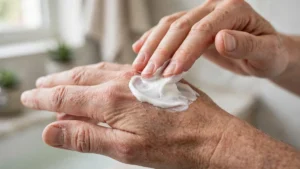
What if the best eye cream on the shelf isn’t the one with the fanciest jar or the longest ingredient list, but the one that actually matches what’s happening under your eyes? That question matters more than it sounds. The skin around the eyes is the thinnest on the body, it gets thousands of blinks a day, and it shows fatigue, sun damage, and genetics earlier than almost anywhere else. Yet most people buy eye cream based on a label promise rather than a mechanism.
This guide breaks down what the evidence actually supports, which ingredients earn their place, how to layer products without wrecking the delicate area, and the mistakes that quietly make under-eye problems worse. No miracle claims. Just a practical map for choosing a formula that fits your specific concern.
Why the Eye Area Needs Its Own Product
The periocular skin is roughly 0.5 millimeters thick in places, compared with around 2 millimeters on the cheek. It has fewer oil glands, weaker barrier function, and constant mechanical stress from blinking and facial expression. That combination explains why the same active ingredient that feels fine on your forehead can sting, flake, or cause redness under the eye.
It also explains why eye creams are formulated differently from face creams. They tend to be more emollient, lower in concentration of harsh actives, and often fragrance-free. That said, a well-tolerated face cream can sometimes do double duty. The real issue is not the category label but whether the formula suits thin, reactive skin.
One more thing worth knowing: in the United States, an eye cream is legally a cosmetic unless it makes drug-like claims such as “treats wrinkles” or “removes dark circles.” That distinction shapes how much proof a brand actually has to show. It is a useful filter when a label sounds too good.
The Ingredients That Have Real Evidence Behind Them

Not every ingredient in eye cream has solid research. Some do. Here is a balanced look at the main players.
Retinoids
Topical tretinoin is approved for photoaging, and the eye area is a common target for fine wrinkling. The landmark trial on tretinoin and photoaging dates to 1988, and a small randomized study of low-strength tretinoin cream applied around the eyes reported reduced fine wrinkling. The catch is irritation. The eye area is sensitive, so dermatologists typically start with a low concentration, apply it sparingly, and buffer with moisturizer.
If you use a retinoid, the order of application matters. A common question is whether to put eye cream before or after serum — the short answer is that thinner, water-based products go first, and the eye cream seals things in. Getting this sequence right reduces stinging and improves tolerance.
Niacinamide
A 2005 study found that 5% niacinamide improved fine lines and hyperpigmentation over 12 weeks. It is generally well tolerated, supports the skin barrier, and helps with uneven tone. For people who cannot handle retinoids, niacinamide is a sensible alternative or companion.
Caffeine
Caffeine shows up in eye products aimed at puffiness and dark circles. The evidence is limited and often small or industry-funded, so treat it as a modest helper rather than a fix. It may temporarily constrict vessels and reduce the look of puffiness, which is why it appears in so many morning formulas.
Hyaluronic Acid and Other Humectants
Hyaluronic acid draws in water and can temporarily plump fine lines. The effect is short-lived but real, and it makes the area look smoother within minutes. Glycerin does similar work at a lower cost. These ingredients are the backbone of most hydrating eye creams.
Peptides
Some peptides, including matrixyl-type compounds, have small industry studies suggesting modest wrinkle improvement. The evidence quality is low, so peptides are best viewed as supportive rather than transformative. They are usually gentle, which makes them a reasonable option for sensitive skin.
Vitamin C
Topical L-ascorbic acid has evidence for photoaging and pigmentation on facial skin, but eye-specific trials are scarce. It can also sting thin skin. If you want antioxidant support, a stabilized derivative in a low-irritation formula is a safer bet than a high-strength serum applied directly under the eye.
Sunscreen
Daily sunscreen slows skin aging, and that includes the eye area. A landmark Australian randomized trial published in 2013 supported this. Most people skip the eye area because sunscreen stings, so look for a mineral formula or a stick designed for the face. Prevention is the least glamorous and most effective anti-aging step available.
Matching the Ingredient to the Problem
“Best” is meaningless without a target. Dark circles from pigment need a different approach than dark circles from visible vessels or a hollow tear trough. Here is a practical breakdown.
| Concern | Likely cause | Ingredients worth trying | Realistic expectation |
|---|---|---|---|
| Fine lines | Collagen loss, sun damage, dehydration | Retinoids, niacinamide, peptides, humectants | Gradual smoothing over 8–12 weeks |
| Puffiness | Fluid retention, poor sleep, salt | Caffeine, cooling applicators, massage | Temporary, best in the morning |
| Pigmented dark circles | Melanin, sun exposure, rubbing | Niacinamide, vitamin C derivatives, sunscreen | Slow fading, months not days |
| Vascular dark circles | Visible veins under thin skin | Caffeine, gentle massage | Modest, often limited |
| Dryness and crepey texture | Barrier weakness, dehydration | Hyaluronic acid, glycerin, ceramides | Fast, visible improvement |
For pigment-driven shadows, the mechanism matters. A formula built to fade dark circles caused by hyperpigmentation works differently from one aimed at puffiness, and buying the wrong one is a common and expensive mistake. If your shadow looks brown and worsens in summer, pigment is the likely driver. If it looks blue and appears worse when you are tired, the cause is vascular or structural, and no cream will fully erase it.
How to Apply Eye Cream So It Actually Works
Technique matters as much as formula. The area is fragile, and rough handling causes more harm than a mediocre cream ever could.
- Start with clean, dry skin. Apply after any lightweight serum has absorbed.
- Use a rice-grain amount per eye. More product does not mean more results, and excess can migrate and irritate.
- Tap, do not rub. Use your ring finger, which applies the least pressure, and pat along the orbital bone rather than directly on the lid margin.
- Go gently at the outer corner. This is where crow’s feet form and where product tends to collect.
- Wait before makeup. Give the formula a minute to set so concealer does not slide.
- Apply sunscreen last in the morning. Use a formula that will not sting if it migrates.
If you like tools, a chilled applicator can help with morning puffiness, but be honest about what it does. A jade roller under the eye mainly offers temporary de-puffing and a pleasant ritual, not permanent wrinkle removal.
Common Mistakes That Undo Progress
A few habits quietly sabotage even good products.
Applying retinoids to damp skin and then sealing them in. This increases penetration and irritation. Let skin dry fully, use a pea-sized amount for the whole face, and keep it away from the lash line.
Rubbing the eyes. Rubbing breaks capillaries and worsens pigmentation over time. If allergies make you rub, treat the allergies.
Expecting overnight results. Most actives need 8 to 12 weeks. Judging a cream after five days leads to constant switching and wasted money.
Skipping sunscreen because it stings. Try a mineral stick or a baby formula. Sun damage is the single biggest driver of visible aging around the eyes.
Using too many actives at once. Retinoid plus vitamin C plus exfoliating acid under the eye is a recipe for contact dermatitis. Introduce one new product at a time and patch test first.
Ignoring sleep, salt, and alcohol. Puffiness responds to lifestyle more than to any cream. Late nights and high-sodium dinners show up under the eyes by morning.
Do Expensive Creams Beat Drugstore Options?
Price and performance are loosely correlated at best. The cost of an eye cream often reflects packaging, fragrance, marketing, and brand positioning rather than superior actives. A few general rules hold up in practice.
- Look for a short, clear ingredient list with the active near the top.
- Favor fragrance-free formulas for the eye area.
- Check the packaging. Jars expose antioxidants to air and light. Tubes and pumps protect formulas better.
- Ignore claims about “reducing puffiness by 50%.” Small studies and subjective ratings rarely translate to your face.
- Consider a face cream you already tolerate. If it is fragrance-free and gentle, it can often serve as an eye cream.
There is nothing wrong with a luxurious texture if you enjoy it, but do not assume a high price tag means better evidence. Some well-known premium formulas rely on emollients and humectants that a basic pharmacy product also delivers. If you are curious how a premium option compares in practice, a look at what the Augustinus Bader cream actually does for your skin is a fair reality check on the gap between price and proof.
When to See a Dermatologist
Some under-eye concerns are not cream problems. See a professional if you notice:
- Persistent swelling that does not improve with sleep or cooling
- A new or changing mole, growth, or sore near the eye
- Severe itching, scaling, or redness that spreads
- Dark circles that are clearly structural, such as deep hollows
- Sudden changes in vision or eye comfort
In these cases, in-office options such as prescription retinoids, fillers, lasers, or allergy treatment may help far more than any cream. A dermatologist can also confirm whether you have contact dermatitis, which is common in the eye area and often mistaken for a product “not working.”
Conclusion
The best eye cream is not a single product. It is the formula that matches your main concern, contains an ingredient with real evidence behind it, and is gentle enough that you will keep using it. For fine lines, retinoids and niacinamide lead the pack. For puffiness, caffeine and cooling help modestly. For pigmentation, niacinamide plus daily sunscreen is the sensible combination. And for everyone, technique, patience, and sun protection matter more than the label on the jar.
Start with one concern, one product, and twelve weeks of consistency. That approach beats a shelf full of half-used jars every time.
Frequently Asked Questions
What is the best eye cream for wrinkles?
Formulas with retinoids or niacinamide have the strongest support. Tretinoin is approved for photoaging, and 5% niacinamide improved fine lines over 12 weeks in a 2005 study. Start with a low-strength retinoid and buffer with moisturizer to reduce irritation.
Can eye cream really remove dark circles?
It depends on the cause. Pigment-driven shadows may fade slowly with niacinamide, vitamin C derivatives, and sunscreen. Vascular or structural shadows respond poorly to creams. If hollows or visible veins are the cause, a dermatologist can discuss options beyond skincare.
How long does eye cream take to work?
Hydration looks better within minutes. Fine lines and pigmentation typically need 8 to 12 weeks of consistent use. Puffiness relief from caffeine is temporary and often lasts only hours. Judge a product after two to three months, not two weeks.
Is expensive eye cream better than drugstore eye cream?
Not necessarily. Price often reflects packaging and marketing rather than better actives. Look for fragrance-free formulas, protective packaging such as tubes or pumps, and a clear ingredient list. A gentle face cream you already tolerate can often substitute.
Can I use my regular face cream around my eyes?
Often yes, if it is fragrance-free and does not contain strong acids or high-strength retinoids. The eye area is thinner and more reactive, so patch test first. If it stings or causes redness, switch to a formula made for the eye area.
What order should eye cream go in?
Apply it after lightweight serums and before heavier moisturizers or sunscreen. Thinner products go first, and the eye cream seals in hydration. In the morning, sunscreen should be the final step, including around the eyes.