What if the moisturizer sitting on your bathroom shelf is the reason your skin still feels tight by noon? That sounds backwards, but it happens all the time. People buy the thickest jar they can find, slather it on, and wonder why their face still flakes. Others layer five products and end up with clogged pores and a shiny forehead. The truth is that dry skin isn’t fixed by one magic cream. It’s fixed by understanding what your skin is missing and choosing a formula that addresses that gap.
This guide breaks down the ingredients that matter, the textures that suit different situations, and the mistakes that quietly sabotage even good products. No hype, no miracle claims, just the stuff that holds up when you look at how moisturizers actually work.
What Dry Skin Is Actually Asking For
Dry skin usually means the outer layer, the stratum corneum, has lost water and its barrier is a little leaky. That barrier is often described as bricks and mortar: skin cells are the bricks, and lipids like ceramides and fatty acids are the mortar. When the mortar thins out, water escapes and irritants get in. That’s why dry skin often feels tight, rough, or itchy, and why it can sting when you apply something as simple as water.
Good moisturizers tackle this from three directions. Humectants like glycerin and hyaluronic acid pull water into the outer layer. Emollients like ceramides and fatty acids soften and smooth the surface while helping rebuild that mortar. Occlusives like petrolatum and dimethicone sit on top and slow water loss. A product that only does one job tends to disappoint. The best formulas combine all three, which is why a cheap jar of plain petrolatum can outperform a fancy serum in a very dry climate, and why a lightweight humectant gel feels lovely in humid weather but useless in winter.
It also helps to eat for your barrier, not just shop for it. Foods rich in healthy fats, zinc, and vitamin C support skin repair from the inside, and the link between diet and a softer, stronger barrier is real. If your skin is chronically dry, it’s worth reading up on how food can reduce dry skin and help you eat your way to a softer, stronger barrier alongside your product routine.
The Ingredients That Earn Their Place

Not every ingredient deserves the spotlight. These do.
Petrolatum is the heavyweight champion of water loss prevention. Classic measurements put its reduction in transepidermal water loss at roughly 98%, higher than most other occlusives. It’s not glamorous, but for cracked heels, windburned cheeks, and angry patches, it works.
Glycerin is a humectant that shows up in almost everything for good reason. It’s effective, well tolerated, and cheap. Hyaluronic acid draws water too, but in very low humidity it can pull moisture from deeper layers rather than the air, so it works best with an occlusive layered on top.
Ceramides are lipids that mirror what skin naturally contains. Eczema-prone skin tends to have lower ceramide levels, and ceramide-rich moisturizers are a standard adjunct in managing it. Squalane, shea butter, and fatty alcohols (cetyl and stearyl alcohol, which are not the drying kind) round out the emollient team.
Urea and lactic acid deserve a mention for thick, scaly dryness on heels and elbows. At concentrations around 10% and up, they help break down dead surface cells. On broken or cracked skin they can sting, so use them where skin is intact.
What about fragrance? Fragrance mix is among the most frequently positive allergens in patch testing, and for dry or sensitive skin, fragrance-free formulas are the safer default. Here’s a detail most shoppers miss: “unscented” doesn’t mean fragrance-free. It can mean a masking fragrance was added to cover a product’s natural smell. “Fragrance-free” is the label you want.
Ointments, Creams, and Lotions: Pick by Texture, Not Marketing
The form of a moisturizer changes how occlusive it is. Ointments are the most sealing, lotions the least. Matching the format to the situation matters more than the brand name on the jar.
| Format | Occlusivity | Best for | Watch out for |
|---|---|---|---|
| Ointment | Highest | Cracked heels, windburn, overnight repair, very dry patches | Greasy feel, not ideal under makeup |
| Cream | Medium to high | Most dry skin, day or night, face and body | Some contain fragrance or drying alcohol |
| Lotion | Lowest | Mild dryness, humid weather, hairy areas | May need frequent reapplication |
| Gel | Low | Oily-but-dehydrated skin, layering under sunscreen | Weak seal, needs an occlusive on top |
A practical rule: go thicker as the weather gets colder and drier, and lighter as humidity climbs. If your face is dry but your T-zone is oily, you don’t need one product for everything. A richer cream on cheeks and a lighter gel elsewhere is a perfectly sensible routine.
How to Build a Routine That Holds Up
Products only work if the order and timing are right. Here’s a sequence that works for most people with dry skin.
- Cleanse gently. Use lukewarm water and a creamy, low-foaming cleanser. Hot water and foaming gels strip lipids fast. If your skin feels tight after washing, your cleanser is the problem, not your moisturizer. A guide to cleansers for dry skin that actually stop the tight, flaky feeling can help you pick one.
- Apply moisturizer to damp skin. Within about a minute of patting dry, while skin is still slightly damp. This traps water you’ve just added instead of sealing a dry surface.
- Layer humectant first, occlusive last. A hydrating serum or essence goes under the cream. In Korean skincare, essences are a lightweight hydrating step between toner and moisturizer, and they fit neatly into this slot. It’s worth learning what an essence really does and where it fits in a routine before adding one.
- Seal at night. A slightly heavier cream or a thin layer of ointment on rough patches does repair work while you sleep.
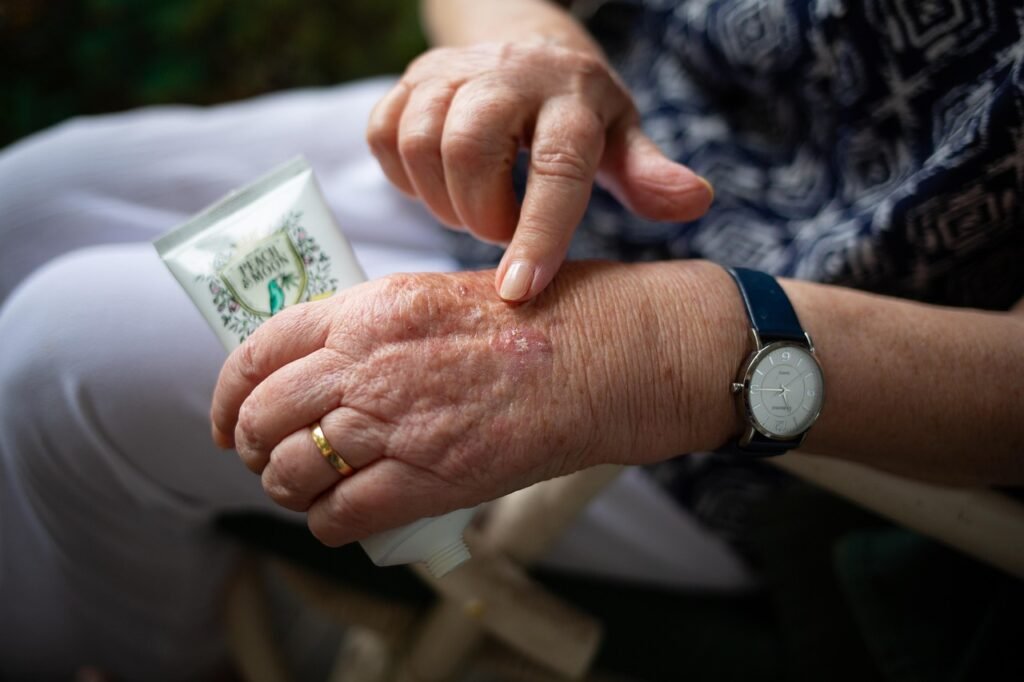
- Reapply during the day. Hands, lips, and cheeks in winter need topping up. A pocket hand cream earns its keep; these hand creams for dry skin that actually work are worth a look.
One more layer people forget: sunscreen. Dry skin and sun damage compound each other, and many daytime moisturizers now include SPF. If you prefer tinted options, it’s worth knowing how to choose the best tinted moisturizer for your skin type so you get coverage without sacrificing hydration.
Common Mistakes That Undo Good Products
Even a great moisturizer fails when these habits creep in.
Applying to completely dry skin. The product has nothing to trap. Damp application makes a noticeable difference within a week.
Over-exfoliating. Acids, scrubs, and retinoids all thin the barrier. If skin is stinging, pause the actives before blaming the moisturizer.
Confusing dry with dehydrated. Dry skin lacks oil; dehydrated skin lacks water. Oily skin can be dehydrated. If your face is shiny but feels tight, you need humectants and water, not a heavier cream.
Skipping patch tests. Sensitive skin reacts to new products more often than people expect. Test a small area on the inner arm or jaw for a couple of days before committing to full-face use.
Expecting overnight miracles. Barrier repair takes weeks, not days. Most people see real change after two to four weeks of consistent use.
Ignoring the environment. Central heating, hot showers, and dry airplane cabins all pull water from skin. A humidifier in winter is often more effective than upgrading your cream.
Matching the Product to the Person
There’s no single best moisturizer, only the best fit. A few common profiles:
Very dry, flaky, tight skin. Look for ceramides, shea butter, glycerin, and petrolatum, in cream or ointment form. Fragrance-free.
Dry but acne-prone. Gel-creams with glycerin, hyaluronic acid, and dimethicone. Non-comedogenic labels matter here.
Sensitive and reactive. Short ingredient lists, no fragrance, no essential oils. Patch test everything.
Mature skin. Richer emollients plus humectants, and consider a retinoid at night with a barrier cream on top.
Body and hands. Urea creams for heels and elbows, thicker body creams after showers.
Skin type labels can also be misleading. Terms like “Brazilian skin” get thrown around loosely in beauty marketing, and it’s worth knowing what the term really means for real people before you buy based on a label. Similarly, a concealer that works on dry skin needs a hydrating formula, not just good coverage; these concealer brands that actually work on real skin are a useful starting point if dryness is your main complaint.
And if you’ve had a big night out and your skin looks dull and dehydrated the next morning, a hangover facial can genuinely help skin recover after a night out, mostly by rehydrating and calming inflammation. It’s not a substitute for a daily routine, though.
What the Evidence Really Says
Here’s an honest caveat. Reviews of moisturizer trials for dry skin and eczema consistently note that studies are small and varied, which means claims that one product is “the best” are weakly supported. The categories (humectant, emollient, occlusive) are well established, and ingredients like petrolatum and ceramides have solid mechanistic support. But specific rankings are mostly marketing.
That’s actually good news. It means you don’t need the most expensive jar. You need the right combination of ingredients, the right texture for your climate and skin, and consistency. A plain, fragrance-free cream with glycerin and ceramides will outperform a luxury product you use twice a week.
Conclusion
The best moisturizer for dry skin isn’t a single product. It’s a formula that combines humectants, emollients, and occlusives, matches your climate and skin type, and gets applied to damp skin twice a day. Start simple: a gentle cleanser, a fragrance-free cream with ceramides and glycerin, and a thicker occlusive for rough patches. Give it a month. If your skin still feels tight, look at your cleanser, your exfoliants, and your environment before buying anything new. Dry skin responds to consistency far more than to price tags.
Frequently Asked Questions
How often should I apply moisturizer for dry skin?
Twice a day is the standard: once in the morning and once at night, always on slightly damp skin. If skin is very dry, add a midday application on hands and face, and reapply after washing your hands or showering.
Is petrolatum safe for facial skin?
Yes. Petrolatum is one of the most effective occlusives and is generally well tolerated, including on the face. It’s heavy and shiny, so many people use it at night or only on rough patches rather than all over during the day.
What’s the difference between dry and dehydrated skin?
Dry skin lacks oil (lipids), while dehydrated skin lacks water. Dry skin feels rough and flaky; dehydrated skin feels tight and can look dull even when oily. Dry skin needs emollients and occlusives, while dehydrated skin benefits most from humectants plus a seal.
Can a moisturizer make dry skin worse?
It can if it contains an ingredient your skin reacts to, such as fragrance or essential oils, or if you apply it over broken, irritated skin. Over-exfoliating and washing with hot water also make dryness worse regardless of what you moisturize with.
Do expensive moisturizers work better than drugstore ones?
Not necessarily. The ingredients that matter, like glycerin, petrolatum, and ceramides, are inexpensive to produce. Price often reflects packaging, fragrance, and marketing. A simple fragrance-free cream can work as well as a premium one.
How long until I see results?
Barrier repair takes time. Most people notice softer, less tight skin within one to two weeks and see real improvement in flaking and roughness after about four weeks of consistent use. If nothing changes after a month, reassess your cleanser and exfoliants.