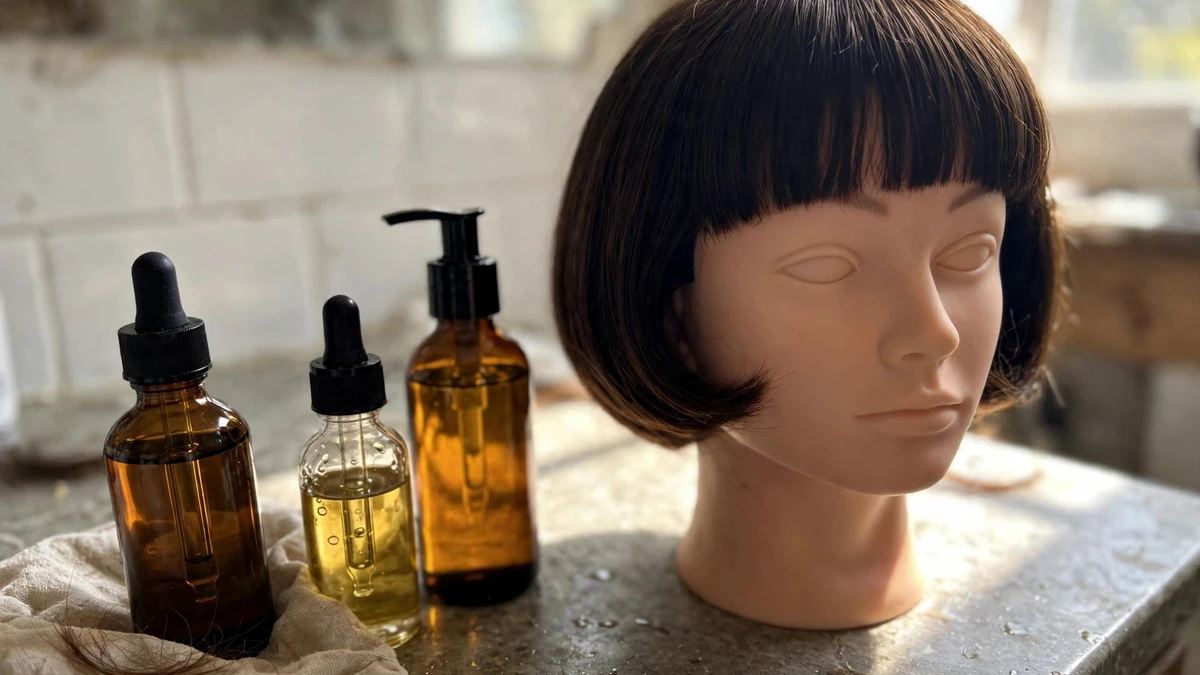
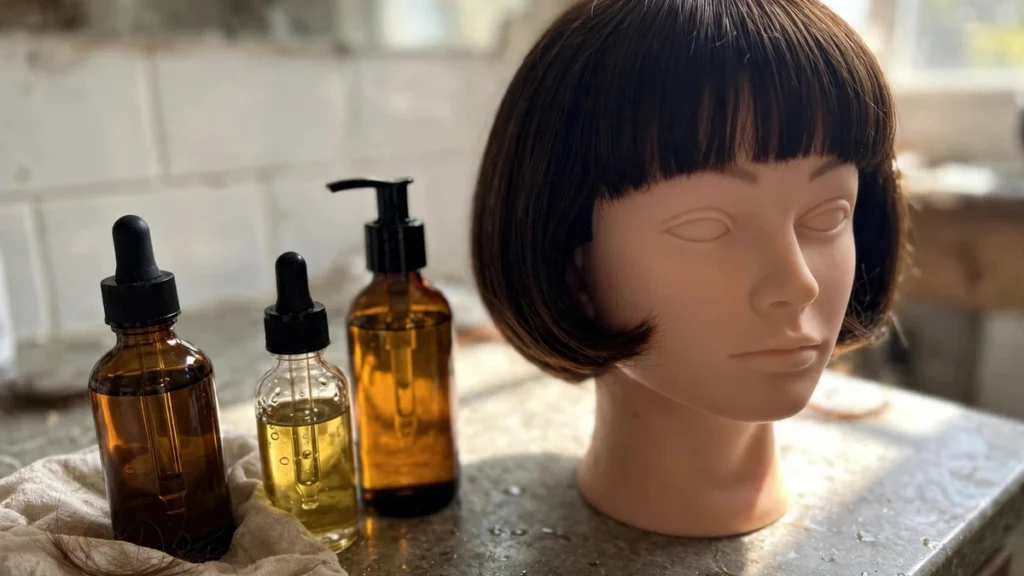
A pageboy is a cut that lives or dies on its surface. The hair is cut to one even length, usually somewhere between the chin and the shoulder, and the ends are turned under so the whole shape reads as one smooth, glossy curve. When it works, it looks deliberate and polished. When it does not, it looks flat, frizzy at the ends, or dull in the middle.
Oil is the quickest way to get that surface right, and the easiest way to ruin it. A pageboy has no layers to hide behind and no height to distract from a greasy crown. Too much oil, or oil in the wrong place, turns the whole cut into a limp sheet. The right oil, in the right amount, gives the ends their curve, the crown its shine, and the fringe its swing.
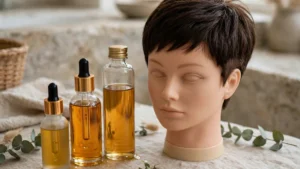
Below are nine oils worth trying on a pageboy in 2027, from a coconut oil that costs less than a coffee to a London stylist’s finishing oil that costs more than a dinner out. Each one was chosen for how it behaves on a smooth, curved-under cut, and each one is described with what it does well, what to watch for, and who it suits best.
Key takeaways
- A pageboy needs oil on the lengths and ends, never piled onto the crown, or the shape goes flat.
- Light, fast-absorbing oils suit a pageboy best; thick oils belong on the very ends, in tiny amounts.
- Warm one or two drops between the palms first, then smooth over the hair, never pour oil straight from the bottle.
- Fine hair suits the lightest oils, while thick or coarse hair can take a richer one and still look clean.
- No oil will fix a pageboy that was cut without the under-curve, and an oil used at the roots will weigh the fringe down.
What a pageboy needs from a hair oil
A pageboy is a single-length cut with the ends curved under. That curve is the whole point of the style, and it is also the part that suffers first when hair is dry. Dry ends flick outward instead of turning in, and the silhouette falls apart. Oil on the ends adds weight and slip, which helps the curve hold its shape through the day.
The crown is the opposite problem. A pageboy crown is a smooth, unbroken sheet of hair, and any oil that sits on it shows immediately as a dark, flat patch. So the oil has to do two different jobs: enough weight on the ends to keep the curl under, and almost nothing on the crown except a faint sheen.
The fringe matters too. Many pageboys are worn with a full or side-swept fringe, and the fringe sits on the forehead, where skin oil and product meet. A heavy oil on the fringe makes it separate into strands and stick to the skin. A light oil, used sparingly, keeps the fringe moving as one piece.
How we chose these oils and what to look for
Start with the weight of the oil, because that decides how it will behave on a smooth cut. A pageboy wants an oil that disappears into the hair and leaves shine behind, not an oil that sits on the surface as a visible film. Thin, dry oils such as argan, sweet almond, and light jojoba suit this job. A heavy oil like castor still has a place, but only on the very tips, and only a trace of it.
Look next at the scent and the finish. A pageboy sits close to the face, so a strong fragrance stays with you all day, and a heavy oil can transfer onto a collar or a scarf. A mild scent is safer, and an oil that absorbs within a few minutes is safer than one that stays wet. Our guide to hair oils for victory rolls makes the same point about vintage rolls, because a rolled style and a pageboy share the same problem: the shape is the star, and the oil must stay invisible.
Next, look at the bottle, and whether it releases one drop at a time. A pageboy finishing step uses one or two drops, so a dropper, a pump, or a narrow spout matters more than it does for a weekly treatment. A wide-mouth jar invites you to pour too much, and too much is the one error that undoes a pageboy fastest. A bottle that gives you control is worth the money, even when the oil inside costs very little.
Also check how the oil behaves on your hair type. Fine, straight hair shows oil fastest, so it needs the driest, lightest formulas. Thick or wavy hair can take a richer oil, and a curly pageboy needs an oil that smooths without straightening the natural bend. Price is a poor guide on its own here. Some of the lightest, most reliable oils in this list cost very little, and some of the most expensive are the ones that demand the lightest hand.
The 9 best hair oils for pageboy 2027
Lee Stafford Coco Loco Coconut Oil
What we like: A coconut-based oil that costs very little, smells like a holiday, and sinks into the lengths quickly without leaving a wet look. The texture is thin enough to spread over a whole pageboy with a single drop.
What to consider: It is lighter than a pure coconut oil, so very dry ends may want a second drop, and the coconut scent is strong enough to notice all day. Best For: Budget everyday shine for fine, straight hair. Price Range: $7–$10. Standout Feature: The cheapest way to get a glossy under-curl.
This is the oil to reach for when the pageboy is already cut well and you only want the surface to catch the light.
Hair Chemist Macadamia Oil
What we like: A macadamia-based oil that adds real weight to dry, coarse ends, with a plain, nutty scent and a price that sits comfortably in the drugstore range.
What to consider: It is heavier than an argan oil, so fine hair should skip it or use the smallest amount possible, and the bottle is plain, with no dropper, so you have to pour carefully. Best For: Dry, coarse ends that need weight to stay turned under. Price Range: $11–$14. Standout Feature: A macadamia oil that adds weight without a salon price.
The pick for a pageboy that is thick and dry enough to swallow a light oil without showing any shine.
Aussie SOS Save My Lengths! 3-in-1 Hair Oil
What we like: A light, Australian-made oil that can be used before washing, during styling, or as a final smoothing step, and it smells faintly of fruit rather than coconut.
What to consider: The multi-use promise means it is not the best at any single job, and the pump can dispense more than a pageboy needs if you press it fully. Best For: Split ends and heat-styled lengths on a budget. Price Range: $15–$18. Standout Feature: A three-way oil that works as a pre-wash, a styling aid, and a finisher.
A practical bottle to keep by the mirror when the ends start to look dry between washes.
Kate Blanc Cosmetics Argan Oil
What we like: A cold-pressed argan oil with nothing added, so what you smell is the nut itself, and the dropper lets you measure a single drop at a time.
What to consider: Pure argan is thinner than a blended oil, so it absorbs fast and may need reapplying on very dry ends, and the bottle is small for the price. Best For: Pure argan at a low price for dry, brittle ends. Price Range: $19–$23. Standout Feature: A single-ingredient argan oil with no added fragrance.
Good for people who want to know exactly what is in the bottle, and nothing else.
Majestic Pure Cosmeceuticals Argan Oil
What we like: A Moroccan argan oil that feels a touch richer than the lightest argans, which suits thick pageboys that swallow a thin oil without showing any shine.
What to consider: The richer feel can be too much for fine hair, and the amber bottle needs to be kept upright or it can leak in a bag. Best For: Everyday argan moisture for thick, coarse hair. Price Range: $24–$28. Standout Feature: A slightly richer argan that suits hair too heavy for the lightest oils.
The argan to choose when a pageboy is thick enough to hide a light oil completely.
Coco & Eve Like a Virgin Miracle Hair Elixir
What we like: A light elixir built on coconut and fig that smooths frizz and adds gloss, with a scent that reads as holiday rather than salon.
What to consider: The fragrance is strong, and the elixir is designed for wavy and curly hair, so very straight pageboys may find it heavier than they need. Best For: Frizz control and gloss for wavy, humidity-prone hair. Price Range: $29–$35. Standout Feature: A tropical-scented elixir that tames frizz without flattening the curve.
The pick for a wavy pageboy in humid weather, when the ends want to flick out instead of turning under.
L’Occitane Aromachologie Intensive Repair Enriching Hair Oil
What we like: A French pharmacy blend with five essential oils that smells herbal and clean, and it is designed for hair that has been coloured, bleached, or heat-styled too often.
What to consider: The herbal scent is not for everyone, and the oil is richer than a dry oil, so it needs a light hand on fine hair. Best For: Intensive repair for damaged, over-processed hair. Price Range: $36–$42. Standout Feature: A Provençal blend that repairs as it smooths.
Worth it when the pageboy has been through a lot and the ends need more than shine.
Goldwell Kerasilk Control Rich Protective Oil
What we like: A professional oil that combines smoothing with heat protection, so it works as both a styling step and a finishing step for a blow-dried pageboy.
What to consider: It is a salon product with a salon price, and the bottle is larger than a pageboy needs, so it lasts a long time but costs more up front. Best For: Salon-smooth blow-dries and colour-treated hair. Price Range: $44–$50. Standout Feature: A salon oil that protects against heat while it smooths.
The oil to buy when the pageboy is blow-dried every morning and the ends need protection as well as shine.
Larry King Spoilt For Choice Hair Oil
What we like: A London stylist’s finishing oil that is deliberately light, so it adds gloss to the surface without changing the shape underneath, and the scent is subtle enough to sit near the face.
What to consider: The price is high for the size, and it is a finishing oil, not a treatment, so it will not repair damage on its own. Best For: A light finishing oil for a polished, editorial pageboy. Price Range: $52–$58. Standout Feature: A stylist’s oil made for the final pass, not the treatment step.
The finishing touch for a pageboy that is already in good condition and just needs to look expensive.
Which hair oil suits your pageboy best
Fine, straight hair should start with the lightest oils: Lee Stafford, Aussie, or Kate Blanc. These disappear into the hair and leave shine without weight, which is exactly what a fine pageboy needs. Anything richer will show at the crown within an hour.
Thick or coarse hair can carry the richer end of the list: Majestic Pure, L’Occitane, or Goldwell Kerasilk. These oils have enough body to register on hair that swallows a thin oil without a trace. Our roundup of hair oils for halo braids covers the same weight question for a thicker style.
Wavy pageboys need frizz control more than shine, so Coco & Eve is the natural pick, with Hair Chemist as the backup when the wave is thick and dry. Both smooth the surface without straightening the wave, which keeps the under-curl looking soft rather than stiff.
The caveats that matter
Oil cannot rescue a pageboy that was cut badly. If the ends were cut blunt and straight, no oil will make them turn under on their own. That curve comes from the cut and from a round brush, and the oil only holds what the styling already made. A pageboy that flicks out no matter what you do needs a trim, not a richer oil.
| Detail | What is known |
|---|---|
| Best place to apply | Lengths and ends only, never the crown |
| How much to use | One or two drops, warmed between the palms |
| When to apply | After styling, on dry hair, as a finishing step |
| Who should start gently | Fine hair, and anyone with an oily scalp |
| What to avoid pairing at first | Heavy leave-in creams under the oil |
| Storage | Cool place, away from light; use within a year of opening |
| When to replace it | If it smells rancid, feels sticky, or turns cloudy |
| What it does not do | It does not hold a curl, replace a trim, or repair split ends |
If your scalp is irritated, broken, or sunburned, skip oil until it has healed, because oil can trap irritation against the skin. If you have a nut allergy, check the ingredient list first, since argan, almond, and coconut oils are all derived from nuts or seeds, and a patch test on the inner arm is worth doing. Our beehive roundup shows the same placement rule on a taller style, and the lesson is the same: the oil belongs on the surface, not inside the shape.
Checklist: choosing a hair oil for a pageboy honestly
Use these checks before you buy, and again after two weeks of use.
- Check the weight: it should disappear into the hair in a minute, not sit on the surface.
- Check the bottle: a dropper or pump that gives one drop at a time.
- Check the scent: mild enough to sit near the face all day.
- Patch-test first: apply to the inner arm for two days before using it on the fringe.
- Start with one drop: add a second only if the ends still look dry.
- Protect the result: a trim every six weeks keeps the under-curl working.
Frequently asked questions
How often should I use hair oil on a pageboy?
Daily is fine if you use one drop on the ends, but skip the crown. A weekly treatment is better for very dry hair, and a single drop after styling is enough for most people.
Can I use hair oil on a pageboy with a fringe?
Yes, but keep the oil off the fringe itself, or use a single drop smoothed over the surface only. Oil on the fringe makes it separate into strands and stick to the forehead.
Will hair oil make my pageboy look greasy?
Only if you use too much or put it on the crown. One drop on the ends, warmed between the palms, should leave shine without grease.
Can I use hair oil before blow-drying a pageboy?
Yes, if the oil offers heat protection. Apply a drop to damp ends before drying, then finish with a dry oil on the styled hair.
Is coconut oil good for a pageboy?
It can be, if it is light. Pure coconut oil is heavy and can look greasy on fine hair, so a light coconut blend, like the Lee Stafford oil here, is safer.
Do I still need hairspray if I use hair oil?
Oil is not a holding product. It adds shine and smoothness, but the under-curl still needs a round brush and, if you want it to last, a light mist of spray.
The bottom line
The best hair oil for a pageboy in 2027 is not the most expensive or the most famous. It is the lightest oil that still makes the ends turn under and the surface shine, used in the smallest amount that works. For fine hair, that means a light coconut or argan oil. For thick hair, it means a richer argan or a salon oil with heat protection.
Choose one oil, use a single drop on the ends for two weeks, and judge it on how the pageboy looks at the end of the day, not how it feels in the first minute. That is the honest way to get the shine a pageboy is known for, without the grease that ruins it.