


What if most of the money you spend on skincare is chasing ingredients that have never been tested on real human skin? That is not a scare tactic. It is the conclusion dermatologists keep reaching when they sort the popular shelf talk from the actual clinical data. A team led by Northwestern University reviewed 318 skincare ingredients mentioned in medical literature between 1990 and 2020 and asked 62 cosmetic dermatologists from 43 institutions to score them. Only 23 ingredients cleared the bar of at least 70% expert agreement, and just 44% of those had high-quality randomized controlled trial evidence behind them. So the real shortlist is shorter than the aisle at your local beauty store. Here is what earned its place, ranked by the strength of the science rather than the loudness of the marketing.
The Shortlist at a Glance
| Ingredient | Best for | Evidence tier | Main limitation |
|---|---|---|---|
| Sunscreen | Preventing photoaging, the main cause of visible aging | Foundation | Needs daily reapplication |
| Tretinoin (prescription retinoid) | Wrinkles, texture, tone, acne, pores | Strongest | Irritation, needs a prescription |
| Retinol and retinal (over the counter) | Same benefits, gentler entry point | Strong | Slow results, 12 to 24 weeks |
| Vitamin C | Brightening, antioxidant defense, collagen support | Strong | Unstable in some formulas |
| Niacinamide | Barrier support, tone, pores | Strong | Rare flushing at high doses |
| AHAs (glycolic, lactic) | Surface texture, dullness | Strong | Sun sensitivity, over-exfoliation |
| Peptides | Firmness support | Developing | Delivery and formulation decide results |
| Bakuchiol | Retinol-like effects for sensitive skin | Developing, promising | Weaker data than retinoids |
| PDRN | Barrier repair, density after acid use | Emerging | Newer, thinner human evidence |
1. Sunscreen: The Step That Prevents Aging Instead of Repairing It
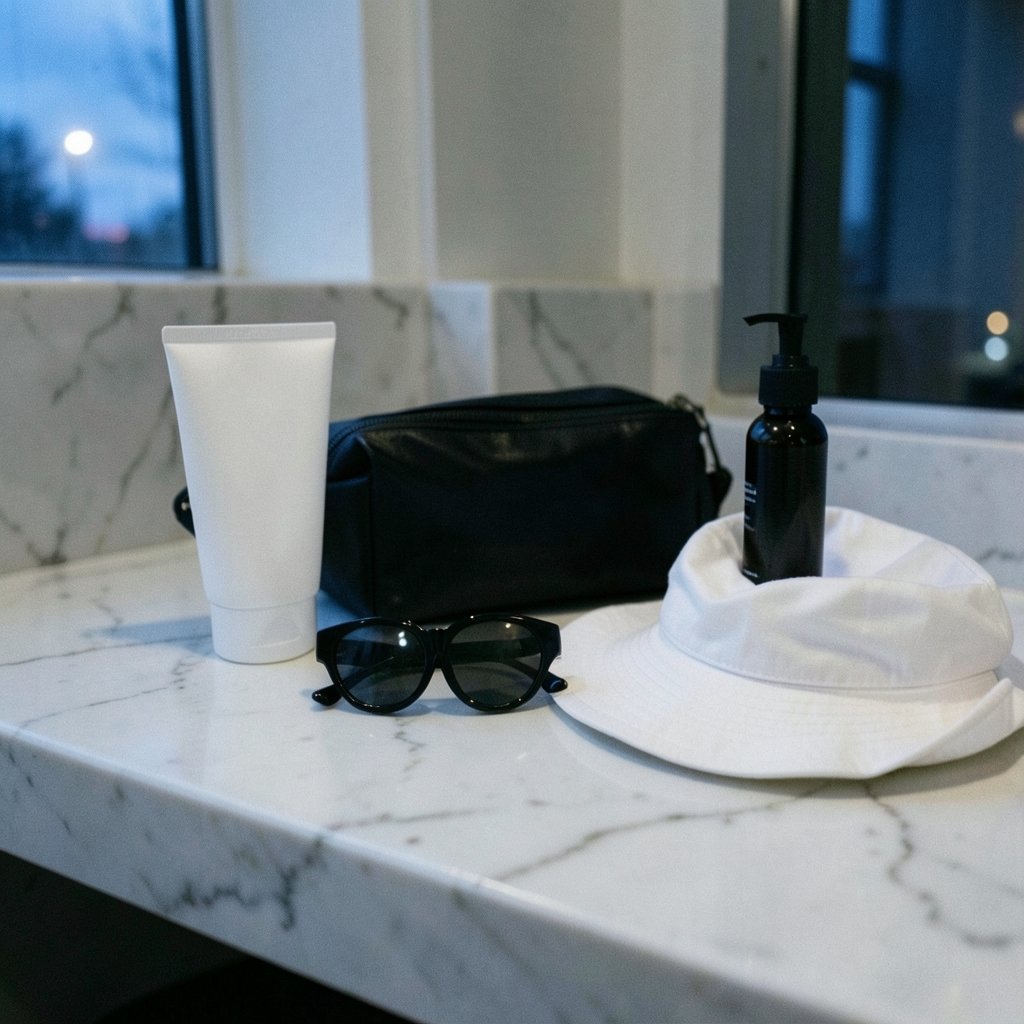
Who it suits: everyone, every morning, no exceptions. What it does well: blocks the ultraviolet exposure that drives most visible photoaging, which is why dermatologists treat it as the foundation of any routine rather than an optional extra. In the expert consensus work, mineral and chemical sunscreens both drew recommendations from roughly 80% to 90% of the dermatologists surveyed. The limitation is behavioral, not scientific: most people apply far less than the tested amount and skip reapplication, so real-world protection lags behind the label. Practical tip: make sunscreen the last step every morning and the first thing you pack for any trip, the same way you would plan around a long transatlantic yacht crossing where sun exposure is constant.
2. Tretinoin: The Undisputed King of Anti-Aging Actives
Who it suits: anyone with persistent fine lines, coarse wrinkles, uneven tone, acne, or enlarged pores who can tolerate a prescription. What it does well: tretinoin is the acid form of vitamin A, so it works directly on skin. It speeds cell turnover, stimulates collagen, and fades pigmentation. A landmark 24-week study published in the Archives of Dermatology found significant improvement in fine wrinkles, coarse wrinkles, and hyperpigmentation with 0.1% tretinoin applied three times weekly on naturally aged skin. One facial plastic surgeon ranked retinol a perfect 10 out of 10 among twelve popular ingredients. The limitation is tolerability: redness, flaking, and dryness are common at the start. Practical tip: most people fail with retinoids because they use too much, too often. A pea-sized amount one to two nights a week, buffered with moisturizer, beats a nightly flood that leaves your barrier angry.
3. Retinol and Retinal: The Over-the-Counter Route to the Same Pathway
Who it suits: people who want retinoid benefits without a prescription, or who are building tolerance before stepping up. What it does well: retinol must be converted to retinaldehyde and then to retinoic acid by enzymes in the skin before it becomes active. That conversion makes it less potent than tretinoin, but also less irritating. Retinol at 0.25% to 1% produces measurable anti-aging benefits, though it usually takes 12 to 24 weeks to approach the results of lower-dose tretinoin. Retinaldehyde sits one conversion step closer and tends to work faster. The limitation is patience: this is a marathon ingredient, not a weekend fix. Practical tip: apply it to dry skin at night, follow with a ceramide moisturizer, and never stack it with strong acids in the same session.
4. Vitamin C: The Morning Antioxidant That Multitasks
Who it suits: anyone dealing with dullness, dark spots, or early signs of photoaging. What it does well: it neutralizes free radicals from UV and pollution, supports collagen production, and helps fade pigmentation. It pairs naturally with sunscreen, which is why dermatologists place it in the morning under SPF. The limitation is formulation: vitamin C degrades with light and air, so a badly packaged serum can turn brown and useless before you finish the bottle. Practical tip: look for opaque or airless packaging, store the bottle away from a sunny windowsill, and toss anything that has turned deep orange. If your routine also includes a separate anti-aging serum, read what the evidence actually supports for wrinkle-focused serums before you layer three of them.
5. Niacinamide: The Universal Team Player
Who it suits: nearly everyone, including sensitive skin and anyone combining multiple actives. What it does well: it strengthens the barrier, evens tone, refines the look of pores, and calms redness, which is why it slots into routines alongside retinoids and vitamin C without much friction. The limitation is minor: very high concentrations can cause flushing or stinging in reactive skin, and more is not better. Practical tip: a 4% to 5% formula is plenty. If your skin stings when you apply anything, niacinamide is often the ingredient that gets the barrier back to calm before you restart stronger actives.
6. AHAs: Glycolic and Lactic Acid for Surface Texture
Who it suits: people with dullness, rough texture, or fine surface lines who are not already using a retinoid every night. What it does well: alpha-hydroxy acids exfoliate dead cells and improve penetration of everything layered on top, which translates to smoother texture and a brighter look. The limitation is real: AHAs increase sun sensitivity and can wreck the barrier if overused, especially alongside retinoids. Practical tip: start with one night a week, use a gentle lactic acid if your skin is dry, and never exfoliate and apply a strong retinoid on the same evening. If you are recovering from a breakout or a bad reaction, gentle botanical support matters too; the science behind avocado oil for eczema-prone skin is a useful reminder that barrier repair comes before actives.
7. Peptides: Promising, But Formulation Decides Everything
Who it suits: people with established routines who want to add firmness support without irritation. What it does well: peptides act as signaling molecules that tell skin to build more collagen and elastin, and copper peptides in particular have a following for firmness. The limitation is the evidence tier: peptides sit in the developing category, and whether a specific product works depends heavily on the peptide, its concentration, and how well the formula delivers it into skin. Practical tip: treat peptide serums as experiments layered on top of a solid base, not as replacements for sunscreen or a retinoid.
8. Bakuchiol: The Gentler Retinol Alternative
Who it suits: sensitive skin, pregnancy-friendly routines, and anyone who simply cannot tolerate retinoids. What it does well: it produces retinol-like improvements in fine lines and texture through a different pathway, and studies have used concentrations around 0.5%. The limitation is depth of evidence: the data is promising but far thinner than the retinoid literature. Practical tip: if you have tried retinol three times and quit three times because of peeling, bakuchiol is a reasonable off-ramp, but expect slower, subtler change.
9. PDRN: The Newcomer Drawing Attention
Who it suits: people recovering from environmental stress, dryness, or a compromised barrier after acid peels. What it does well: PDRN, a group of polynucleotides, is being positioned as a regeneration-focused ingredient that reorganizes skin structure and restores density, and trend analysis has flagged it as one of the most promising directions in skincare. The limitation is maturity: it is newer, and the human evidence base is still building compared with retinoids. Practical tip: use it as a recovery layer between stronger treatments rather than as your only anti-aging step.
How to Choose Without Wasting Money
Start with the foundation, then add one active at a time. A workable order looks like this:
- Lock in daily sunscreen and a basic moisturizer for four weeks.
- Add a retinoid at the lowest frequency you can tolerate, then build up slowly.
- Add vitamin C in the morning once your skin is calm.
- Add niacinamide if barrier support or tone is your main concern.
- Introduce AHAs only after your retinoid routine is stable.
- Treat peptides, bakuchiol, and PDRN as optional experiments, not essentials.
The most common mistakes are stacking three new actives in one week, using a retinoid nightly from day one, and judging results after ten days. Skin remodeling takes months. If you want a low-effort way to stay consistent, some people anchor their routine to a playlist; the research on music that helps focus suggests steady background sound can make repetitive habits easier to keep.
Conclusion
The science-backed shortlist for 2027 is not glamorous, and that is the point. Sunscreen prevents the damage, retinoids repair it, and vitamin C, niacinamide, and AHAs handle tone, barrier, and texture. Everything else is a supporting player until better human trials arrive. Build the foundation first, add one active at a time, and give each one twelve weeks before you judge it. Your skin rewards consistency far more than it rewards novelty.
Frequently Asked Questions
What is the single most effective anti-aging ingredient?
Sunscreen, because it prevents photoaging, which is the main driver of visible aging. Among actives that repair existing damage, tretinoin has the strongest clinical evidence, with significant improvements in fine wrinkles, coarse wrinkles, and pigmentation in a 24-week study.
How long does retinol take to show results?
Typically 12 to 24 weeks for over-the-counter retinol at 0.25% to 1%, because skin must convert it to retinoic acid before it works. Prescription tretinoin acts faster since it is already the active acid form.
Can I use vitamin C and retinol together?
Yes, but timing helps. Use vitamin C in the morning under sunscreen and the retinoid at night. If your skin is reactive, alternate nights rather than layering both in the same session.
Is bakuchiol as effective as retinol?
Not according to the current evidence. Bakuchiol shows promising retinol-like results through a different pathway and is gentler, but its clinical data is much thinner than the retinoid literature.
How much retinol should a beginner use?
A pea-sized amount one to two nights a week. Most irritation comes from using too much too often, not from the ingredient itself, so build frequency slowly over several weeks.
Do peptides and PDRN really work?
Both sit in the developing or emerging tier. Peptides show collagen-signaling activity but results depend heavily on formulation and delivery, and PDRN is newer with a smaller human evidence base. They are reasonable additions to a routine that already has sunscreen and a retinoid in place.
The ranking is a guide, not a prescription. Your dermatologist can adjust the order based on your skin type, history, and goals, and a patch test on the inner forearm before adding anything new is always time well spent.











