


What happens when your phone hits 5% and the nearest outlet is a two-hour walk away? That moment of quiet panic is exactly why a good power bank earns its place in your bag. But walk into any electronics store and you’ll find shelves of them, all shouting numbers that don’t mean much until you’re the one watching a battery icon drain.
This roundup cuts through the noise. Below are specific, named options that reviewers and testing labs keep coming back to, matched to the people who’ll actually get value from them. No vague advice about “choosing wisely” first. Just the shortlist, then the context.
The Shortlist at a Glance
| Charger | Best for | Capacity | Standout feature | Listed price |
|---|---|---|---|---|
| Anker Prime Power Bank | Power users and laptop owners | 27,650 mAh | High output, fast recharge | Not stated in sources |
| Anker Nano Power Bank | Everyday pocket carry | Small | Built-in USB-C cable | $50 |
| Anker Zolo | Multi-device travelers | Not stated | Built-in cable, LED screen | Described as affordable |
| Anker Laptop Power Bank | Laptops and heavy workloads | Not stated | Laptop-grade output | Not stated |
| INIU Pocket Rocket P50 | Minimalists with tight pockets | 10,000 mAh | Smaller than a credit card | £36.99 |
| INIU P41-E2 | Budget buyers | 10,000 mAh | Low price, reliable output | £24.99 |
| INIU magnetic power bank | MagSafe iPhone users | Not stated | Snaps on wirelessly | £54.99 |
| Anker A1383 | Best all-rounder | 20,000 mAh | Balance of size and capacity | £49.99 |
Prices above come from the reviews listed in this article and reflect what those reviewers reported. They move around with sales, so treat them as a starting point rather than a fixed number.
Anker Prime Power Bank: The Heavy Hitter
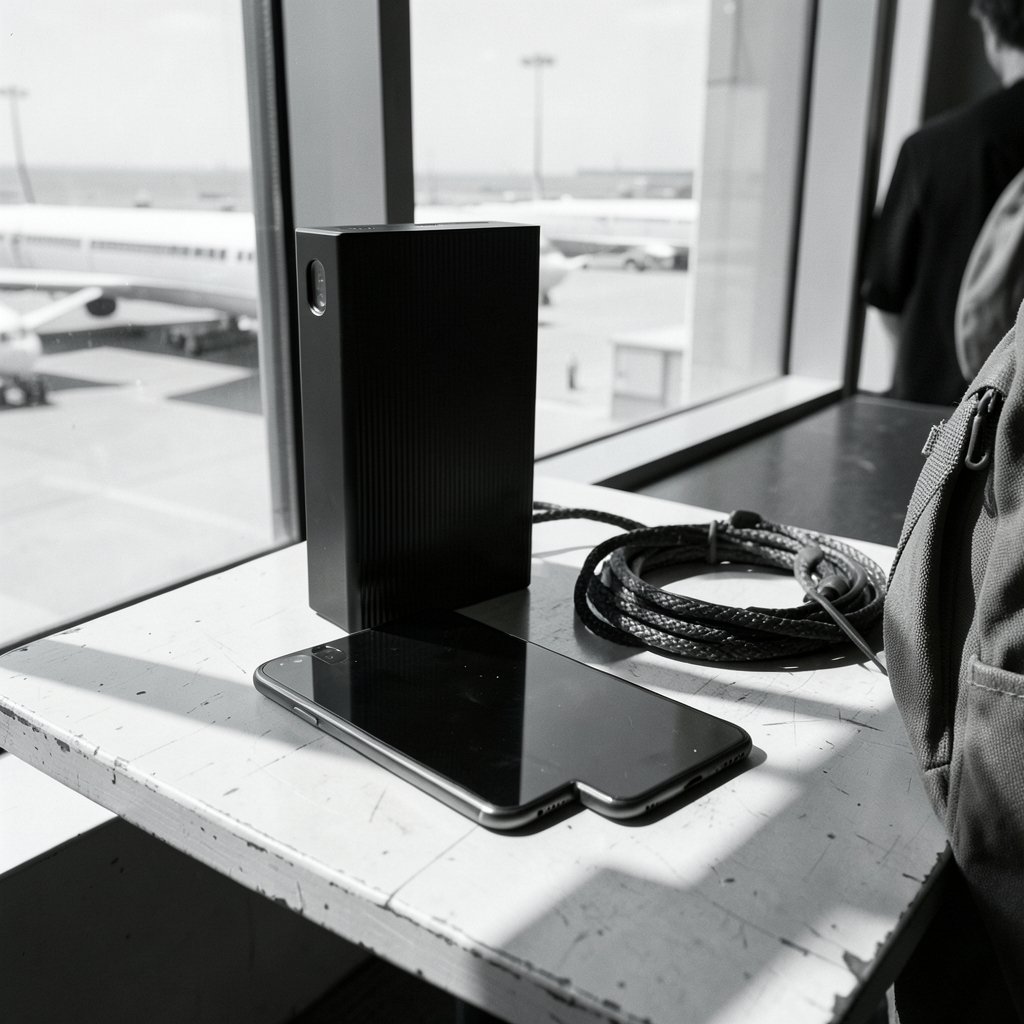
If one charger has to cover a phone, a tablet, and a laptop on the same trip, this is the one most reviewers point to. Consumer Reports testing highlighted the Anker Prime 27,650 mAh model for scoring above average on portability, recharge time, and charging speed, which is a rare triple.
Who it suits: people who work from cafes, airports, and trains, and who can’t afford to babysit a battery percentage.
What it does well: it moves serious power without taking all night to refill itself. Fast recharge matters more than most buyers realize, because a huge bank that takes eight hours to top up is useless on a two-day trip.
The real limitation: it’s heavy. This is a bag charger, not a pocket charger. Buyers who picture themselves slipping it into a jacket pocket end up leaving it at home, which defeats the purpose.
Anker Nano Power Bank: The One You’ll Actually Carry
The best power bank is the one that’s with you. The Nano’s built-in USB-C cable is the feature that makes it work, because it removes the single most common failure point: forgetting the cable.
Who it suits: commuters, concert-goers, and anyone who wants a top-up rather than a full recharge.
What it does well: it’s small, it plugs straight into a modern phone, and it costs $50 according to reviewer listings. No cable to lose, no adapter to hunt for.
The real limitation: capacity is modest. It’ll rescue a dying phone, but it won’t refill a tablet or keep a laptop running through a long flight. Buyers expecting more get disappointed. If your devices run bigger, look at the laptop-focused options instead, and if you’re already planning a bigger power setup at home, the numbers in this guide to home EV charger installation costs show how much power planning really costs.
Anker Zolo: Built for Juggling Devices
The Zolo shows up in stress testing for conventions and travel days, where people carry a phone, earbuds, and sometimes a tablet. Its built-in cable and LED battery display make it easy to use without guessing.
Who it suits: travelers who charge several small devices and want to see exactly how much juice is left.
What it does well: it handles multiple devices at once and the screen removes the anxiety of not knowing your remaining charge. Reviewers describe it as affordable for what it offers.
The real limitation: it won’t give larger devices many repeat charges. A tablet will drain it quickly, and a laptop is out of the question. Know that going in and it’s a solid buy.
Anker Laptop Power Bank: For People Who Work Anywhere
Laptops are power-hungry, and most pocket chargers simply can’t feed them. This model is built for exactly that job, and it appears in roundups specifically aimed at laptop users and heavy workloads.
Who it suits: remote workers, students pulling all-nighters away from a desk, and anyone whose laptop is their main tool.
What it does well: it delivers enough output to keep a laptop alive, which is a category most power banks can’t touch.
The real limitation: it’s bulkier and pricier than phone-focused banks, and if you only ever charge a phone, you’re paying for capability you’ll never use. Match the tool to the job.
INIU Pocket Rocket P50: Tiny but Genuinely Useful
The Pocket Rocket earns its name. Its footprint is smaller than a credit card, though it’s roughly as thick as a deck of cards, and it carries 10,000 mAh with 45W charging and passthrough support. It weighs about 0.35 pounds.
Who it suits: minimalists, light packers, and anyone who hates bulk in a pocket.
What it does well: three ports (two USB-C, one USB-A) in a body that vanishes into a small pocket. The Independent named it the best 10,000 mAh option in its testing at £36.99.
The real limitation: that thickness is real. It’s small in two dimensions, not three, and it won’t fill a laptop. It’s a phone-and-earbuds charger, full stop.
INIU P41-E2: The Budget Pick That Doesn’t Feel Cheap
Not everyone needs to spend fifty pounds on a battery. The P41-E2 delivers 10,000 mAh for £24.99, and The Independent called it the best budget buy in its roundup. Reviewers note that newer brands like INIU have shown you don’t need to spend a fortune for something reliable.
Who it suits: first-time buyers, secondary chargers for a glovebox or desk drawer, and anyone buying for a teenager.
What it does well: it does the core job at half the price of premium options.
The real limitation: it lacks the premium extras like built-in cables or displays, and it won’t fast-charge demanding devices. It’s a workhorse, not a show pony.
INIU Magnetic Power Bank: The MagSafe Companion
For iPhone owners, magnetic charging removes the cable entirely. This model snaps onto the back of a compatible phone and charges wirelessly, and The Independent rated it the best MagSafe option at £54.99.
Who it suits: iPhone users who want zero-friction charging while walking, filming, or navigating.
What it does well: no cable, no port, no fuss. It just sticks and charges.
The real limitation: magnetic charging is slower and less efficient than a cable, and the magnet only helps if your phone supports it. Android owners should skip straight past this one.
Anker A1383: The Safe All-Rounder
When someone asks for one recommendation without specifics, the A1383 is the answer. The Independent named it best overall at £49.99, pairing 20,000 mAh with a price that undercuts most premium rivals.
Who it suits: most people, most of the time.
What it does well: a big capacity in a package that isn’t absurdly heavy, at a price that’s hard to argue with.
The real limitation: it’s a jack-of-all-trades. It doesn’t have the built-in cable convenience of the Nano or the laptop muscle of the Prime. If you know your specific need, a specialist pick will serve you better.
How to Choose Without Overthinking It
Once you’ve seen the options, the decision gets simpler. A few practical rules from real-world use:
- Match capacity to devices, not to numbers. A 10,000 mAh bank gives a phone roughly two charges. A 20,000 mAh bank covers a phone and a tablet. Laptops need dedicated high-output models.
- Check the output wattage in addition to capacity. A huge bank with low output charges slowly. For phones, 20W or more is comfortable. Laptops need considerably higher.
- Prioritize built-in cables if you’re forgetful. It’s the most common real-world failure: the bank is charged, the cable is at home.
- Weigh recharge time. A bank that takes all night to refill is a problem on multi-day trips.
- Buy from known brands. Consumer Reports testing exists precisely because cheap no-name banks vary wildly in real output versus claimed capacity.
That last point matters more than any spec sheet. If you’re building out a kit for travel or emergencies, the same logic applies to other gear, and a tested shortlist like these portable tire inflators shows how much difference real testing makes over marketing claims.
Common Mistakes Worth Avoiding
The most frequent error is buying for the trip you imagine rather than the life you live. A 27,650 mAh brick sounds great until it lives permanently in a drawer because it’s too heavy to carry. Buy the charger you’ll actually take with you.
The second mistake is trusting capacity claims blindly. Testing organizations routinely find that budget banks deliver less than advertised. Stick to models that independent reviewers have measured.
The third is forgetting the cable. It sounds trivial until it happens. Built-in cables solve this completely, which is why they keep appearing on recommended lists.
And if your power needs extend beyond your pocket, it’s worth understanding how bigger systems work too. Guides on choosing a portable power station for real-world backup cover the home-and-camping side of the same problem, and the same principle holds: measured performance beats big numbers on a box.
Conclusion
The best portable charger isn’t a single product. It’s the one that matches how you actually move through the day. For most people, the Anker A1383 or the Nano covers the basics at a fair price. Power users should look at the Prime. Budget buyers get real value from the INIU P41-E2, and iPhone owners who hate cables will love the magnetic INIU.
Pick for your real habits, check the output wattage, and favor brands that independent testers have measured. Do that, and the 5% panic moment becomes a minor inconvenience instead of a disaster.
Frequently Asked Questions
How many phone charges does a 10,000 mAh power bank give?
Roughly two full charges for a typical phone, though real results depend on your phone’s battery size and charging efficiency. Expect less if you’re charging while using the phone heavily.
Is a bigger capacity always better?
No. Higher capacity means more weight and bulk. A 27,650 mAh bank is excellent for laptops and long trips but too heavy for pocket carry. Match capacity to how you’ll actually use it.
Do cheap power banks damage your phone?
Reputable budget brands are generally fine. The risk comes from no-name products with unverified output. Consumer Reports testing exists because claimed and actual performance vary widely between brands.
What’s the difference between MagSafe and regular power banks?
MagSafe banks attach magnetically and charge wirelessly, which is convenient but slower and less efficient. Regular banks use cables, which charge faster and work with any device.
Can a portable charger charge a laptop?
Only specific high-output models can, such as the Anker Laptop Power Bank or the Anker Prime. Standard phone-focused banks don’t deliver enough wattage. Check the output rating before buying.
How long do portable chargers last?
Most lithium-ion power banks hold up for several years of regular use before capacity noticeably fades. Built-in cables and ports tend to wear out first, so treat connectors gently and store the bank away from extreme heat.











