Emerald is the one green stone that never goes out of fashion. A good emerald necklace can make a simple black dress look considered, a white shirt look deliberate, and an evening outfit look finished. The problem is that emerald is also one of the most treated and most faked stones in jewellery. Almost every emerald on the market has been oiled, many have been filled with resin, and synthetic emeralds are now good enough to fool a casual buyer.
That is why this guide is organised by what actually matters when you buy: the stone, the treatment, and the setting. Emerald is hard enough for everyday wear, but it is brittle, and its inclusions, the fine garden of tiny fractures jewellers call the jardin, are part of what makes it an emerald. A stone with no inclusions at all is either synthetic or suspiciously perfect, and neither is what you want to pay a natural price for.
Below are nine emerald necklaces worth considering in 2027, from a classic single-stone pendant to a statement piece for a special occasion. Each one is described by what it is good at, what to watch for, and who it suits best, so you can choose with your eyes open, not just your hopes.
Key takeaways
- Emerald is green beryl, hard at 7.5 to 8 on the Mohs scale, but brittle, so a protective setting and gentle handling matter.
- Almost all emeralds are oiled to improve their clarity, which is standard practice, but the treatment should always be disclosed.
- Inclusions, known as the jardin, are expected in a natural emerald, and a stone with none is usually synthetic.
- Never put an emerald in an ultrasonic or steam cleaner, and keep it away from harsh chemicals and hard knocks.
- Emerald has no proven healing properties and jewellery is rarely an investment, so buy it for how it looks and how it wears.
What emerald actually is
Emerald is the green variety of beryl, coloured by chromium and sometimes vanadium. The same mineral family gives us aquamarine, morganite, and heliodor, but emerald is the most valuable of them, and the most demanding to buy well. The best colour is a vivid, slightly bluish green, rich and saturated without being dark or muddy. A stone that is too pale looks washed out, and a stone that is too dark looks black in low light.
The inclusions in an emerald are not a flaw to be hidden. They are the jardin, a fine network of tiny fractures and mineral inclusions that forms as the crystal grows, and they are part of how gemmologists tell a natural emerald from a synthetic one. A natural emerald with a lively jardin is normal and desirable. A stone that is completely clean, with no inclusions at all, is almost certainly synthetic, or it is a very rare and very expensive stone that would come with a laboratory certificate and a price to match.
Almost every emerald sold today has been oiled. The stone is soaked in a clear oil, usually cedarwood oil, which fills the tiny surface-reaching fractures and improves the clarity. This is standard, accepted practice in the trade, and it has been done for centuries. What matters is that the seller discloses it, because oiled emeralds need gentler cleaning, and a stone that has been filled with resin rather than oil is a different, cheaper product that should be priced accordingly.
How we chose these necklaces and what to look for
Look first at the colour and the clarity together. Hold the stone in daylight, not under shop lights, and look for a vivid green that stays green when you move it. A good emerald should look alive, with the colour coming from inside the stone, not sitting on the surface. If the stone looks flat, dark, or greyish, it is probably a lower grade, whatever the price. Our guide to the best diamond necklaces of 2027 explains how to judge a pendant by its setting and its wear, and the same habit applies here: the setting tells you how seriously the maker took the stone.
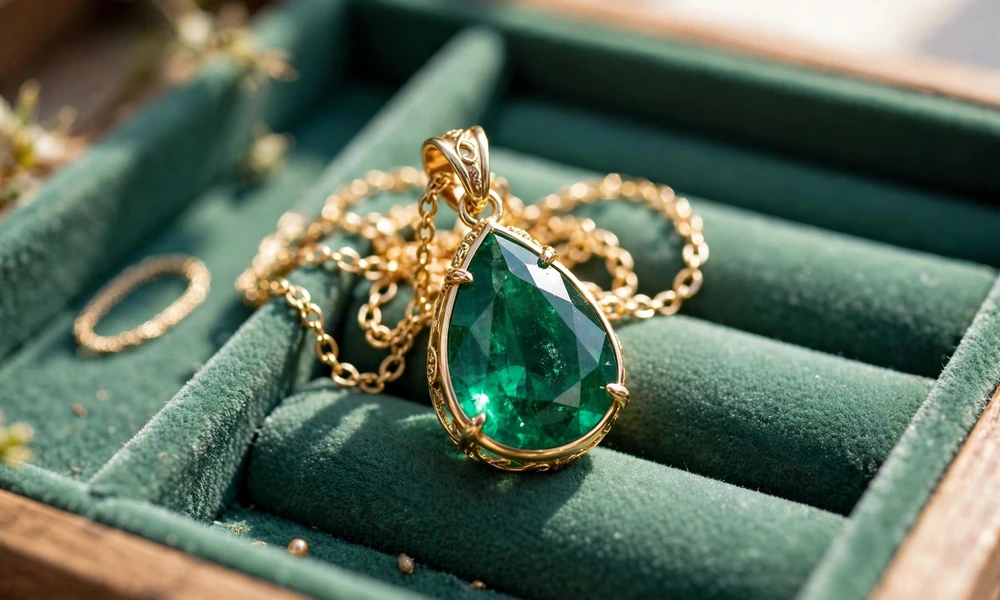
Look next at the treatment and the certificate. Ask the seller whether the emerald is oiled, and whether that is disclosed in writing. For a significant purchase, ask for a laboratory certificate from a recognised gemmological laboratory, which will state whether the stone is natural or synthetic, and what treatments it has had. A seller who cannot or will not provide this information is a seller to walk away from, however attractive the price.
Finally, look at the setting and the chain. A bezel setting protects the stone better than prongs, which matters for a brittle stone that will be worn near the chest, where it can be knocked against a table or a bag. A prong setting shows more of the stone, but it leaves the corners exposed. The chain should be strong enough for the pendant, with a secure clasp, and the length should suit the neckline you will wear it with. A pendant that sits too high will fight with a collar, and one that sits too low will disappear under a neckline.
The 9 best emerald necklaces of 2027
Tiffany & Co. Pendant
What we like: A classic single-stone pendant in a polished bezel setting, with a vivid green stone and a fine, secure chain that sits beautifully at the collarbone. What to consider: Premium price, and the stone is modest in size, so it suits people who want a quiet, everyday piece rather than a statement. Stone: Natural emerald, vivid green, oiled. Setting: Bezel, platinum or 18k gold. Best for: Everyday elegance. Price range: Premium.
This is the safe, polished choice. It does not try to be dramatic, and that is exactly why it works with everything from a white shirt to a black dress.
Cartier Pendant
What we like: A refined pendant with a finely cut stone and a beautifully finished setting, made to a standard that shows in the polish and the clasp. What to consider: A luxury price, and the design is deliberately understated. Stone: Natural emerald, vivid green, oiled. Setting: Bezel or prong, 18k gold. Best for: A quiet luxury look. Price range: Luxury.
Cartier does not shout, and neither does this pendant. It is for people who want the stone to speak for itself, without a large setting getting in the way.
David Yurman Pendant
What we like: A sculptural pendant with a cable detail around the stone, giving a familiar, handcrafted feel that suits emerald well. What to consider: The cable detail adds presence, so it feels more substantial than a plain pendant. Stone: Natural emerald, rich green, oiled. Setting: Bezel with cable detail, sterling silver or 18k gold. Best for: A signature everyday piece. Price range: Premium.
Mejuri Pendant Necklace
What we like: A simple, well-made pendant at a fair price, with a clean bezel and a stone that is a good, honest green. What to consider: The stone is smaller than in the luxury options, and the finish is simple rather than elaborate. Stone: Natural emerald, medium green, oiled. Setting: Bezel, 14k solid gold. Best for: A first emerald necklace. Price range: Mid-range.
Monica Vinader Pendant
What we like: A neat, modern pendant with a smooth stone and a comfortable chain, designed to be worn every day and layered with other necklaces. What to consider: The design is minimal, so it will not stand out on its own at an evening event. Stone: Natural emerald, vivid green, oiled. Setting: Bezel, 18k gold vermeil on sterling silver. Best for: Daily wear and layering. Price range: Mid-range.
Missoma Pendant
What we like: A bright, cheerful pendant with a good green colour and a light, comfortable chain that suits long days. What to consider: The gold vermeil finish needs more care than solid gold, especially with sweat and perfume. Stone: Natural emerald, bright green, oiled. Setting: Bezel, 18k gold vermeil on recycled sterling silver. Best for: Everyday wear and holidays. Price range: Mid-range.
Maria Black Pendant
What we like: A slightly edgier pendant with a clean, architectural setting that gives emerald a modern, unfussy look. What to consider: The design is more contemporary than classic, so it suits some wardrobes better than others. Stone: Natural emerald, rich green, oiled. Setting: Bezel, sterling silver or 14k gold. Best for: A modern, minimal look. Price range: Mid-range.
Astrid & Miyu Pendant
What we like: A delicate pendant with a small, bright stone and a fine chain, designed for layering and for people who prefer jewellery that whispers rather than shouts. What to consider: The stone is small, so it is a subtle piece rather than a statement. Stone: Natural emerald, bright green, oiled. Setting: Bezel, 18k gold plated sterling silver. Best for: Layering and everyday wear. Price range: Mid-range.
Thomas Sabo Pendant
What we like: A bolder pendant with a good-sized stone and a secure chain, offering a noticeable emerald presence at a fair price. What to consider: The stone is larger and the pendant more noticeable than a delicate piece, so it suits occasions better than everyday wear. Stone: Natural emerald, vivid green, oiled. Setting: Bezel, sterling silver. Best for: A statement look. Price range: Mid-range.
Which emerald necklace is right for you
Start with how you will actually wear it. If you want a necklace for every day, choose a small pendant in a bezel setting, on a fine chain, with a vivid but not enormous stone. It will survive more wear, it will not catch on clothes, and it will go with almost everything you own. If you want a piece for evenings and occasions, choose a larger stone, and keep it for dinners and events, where it can be seen and where it will not be knocked about.
Colour matters more than size. A small stone with a vivid, slightly bluish green will look better than a large stone that is pale, dark, or greyish. Hold the pendant in daylight and look for a colour that stays green when you move it, and that looks alive rather than flat. A guide to buying diamonds is useful here, because the same discipline applies: ask about the stone, ask about the treatment, and ask for it in writing before you pay.
Budget is a real guide, but it is not the whole story. A well-made mid-range pendant with a good, honest stone will give you more pleasure than a poorly made luxury piece with a dull stone, because the colour, not the price, is what you actually see. Spend on the stone and the setting, not on the name, and ask for a laboratory certificate on any significant purchase. A seller who answers clearly is a seller you can trust.
The caveats that matter
Emerald is a stone that rewards care and punishes neglect. It is hard, but it is brittle, and its inclusions make it more vulnerable to knocks than a diamond or a sapphire. The caveats are not small print. They are the difference between a necklace that lasts for years and one that chips in a single season. The most common mistake is cleaning an emerald in an ultrasonic bath or a steam cleaner, which can force the oil out of the stone and leave it cloudy and dull.
| Detail | What is known |
|---|---|
| What it is | Green beryl, coloured by chromium and sometimes vanadium |
| Hardness | 7.5 to 8 on the Mohs scale, hard but brittle, with a fine jardin of inclusions |
| Best setting | Bezel, which protects the stone from knocks better than prongs |
| Most common treatment | Oiling with cedarwood oil, standard practice, should always be disclosed |
| Most common imitation | Synthetic emerald, often flawless, and green glass passed off as emerald |
| What to avoid | Ultrasonic and steam cleaners, harsh chemicals, hard knocks, hot water |
| Storage | Keep in a soft pouch on its own, away from harder stones that can scratch it |
| What it does not do | It has no proven healing properties and jewellery is rarely an investment |
If your emerald looks cloudy or dull, it may simply need re-oiling, which a jeweller can do. Do not try to clean it yourself with chemicals or a steam cleaner. Wash it gently in lukewarm water with a drop of mild soap, rinse it, and dry it with a soft cloth. If you wear perfume, apply it first, let it dry, and only then put your necklace on.
Checklist: choosing an emerald necklace honestly
Use these checks before you buy, and again after a month of wear.
- Check the colour: vivid, slightly bluish green, rich and saturated, not pale, dark, or greyish.
- Check the inclusions: a lively jardin is normal in a natural emerald, and a flawless stone is usually synthetic.
- Check the treatment: ask whether the emerald is oiled, and whether that is disclosed in writing.
- Check the certificate: for a significant purchase, ask for a laboratory certificate from a recognised laboratory.
- Check the setting: a bezel protects a brittle stone better than prongs, especially for daily wear.
- Check the care: never use an ultrasonic or steam cleaner, and keep the stone away from harsh chemicals.
Frequently asked questions
Is it normal for an emerald to have inclusions?
Yes. The fine network of tiny fractures and mineral inclusions, called the jardin, is expected in a natural emerald and is part of how gemmologists tell it from a synthetic stone. A completely clean emerald is almost certainly synthetic, or it is an exceptionally rare and expensive stone with a laboratory certificate to prove it.
What does it mean when an emerald is oiled?
Oiling means the stone has been soaked in a clear oil, usually cedarwood oil, which fills tiny surface-reaching fractures and improves the clarity. It is standard practice and has been done for centuries, but it should be disclosed, because oiled emeralds need gentler cleaning and the oil can dry out over time.
Can I wear an emerald necklace every day?
Yes, if it is a pendant in a bezel setting and you look after it. Put it on after perfume, take it off before swimming or exercise, and wipe it with a soft cloth at the end of the day. Avoid hard knocks, and never clean it in an ultrasonic or steam cleaner.
How do I tell a synthetic emerald from a natural one?
Synthetic emeralds often look too perfect, with no jardin and a very even colour. Natural emeralds have inclusions and slight variations in colour. The only reliable way to be sure is a laboratory certificate from a recognised gemmological laboratory, so ask for one on any significant purchase.
Is emerald a good investment?
Not usually. Fine emeralds can hold their value, but most emerald jewellery is bought for how it looks and how it wears, not for resale. A guide to gold jewellery for everyday wear makes the same point about jewellery in general: buy the piece you love and will wear, not the piece you hope will appreciate.
Which metal suits emerald best?
Yellow gold warms emerald and suits most skin tones, and it is the classic pairing. White gold and platinum give a cooler, more modern look and make the green appear brighter. Rose gold is softer and suits a more romantic style. There is no wrong choice, but yellow gold is the safest if you are unsure.
The bottom line
The best emerald necklace in 2027 is not the biggest or the most expensive. It is the piece with a vivid, honest green stone, a bezel setting that protects it, and a chain you will actually wear every day. For most people, that means a single-stone pendant in gold or platinum, with a clear, lively colour, bought from a seller who discloses the treatment and offers a certificate on a significant purchase.
Choose one necklace, wear it with black, white, and navy, keep it away from ultrasonic cleaners and harsh chemicals, and it will look as good in ten years as it does today. That is the honest way to enjoy emerald, without the clouding, chipping, or disappointment that comes from treating a brittle stone like a hard one.