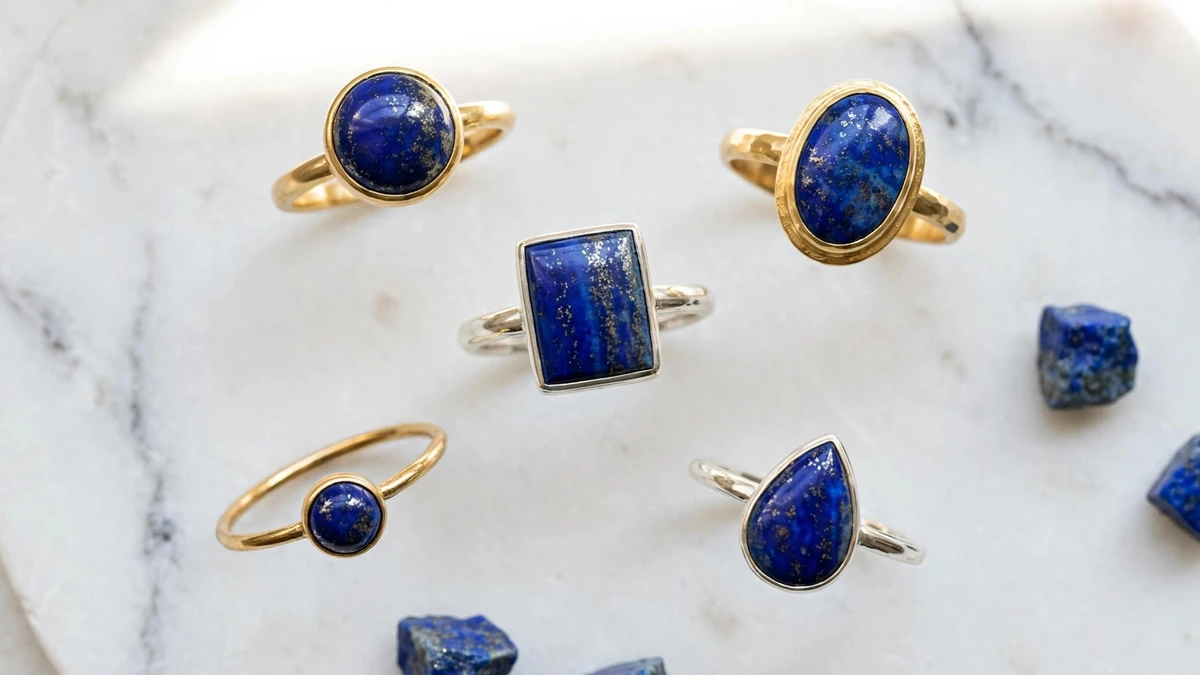
Lapis lazuli is one of the oldest stones in jewellery, and it still stops people in their tracks. That deep, inky blue, flecked with gold-coloured pyrite, looks nothing like any other gemstone, which is exactly why it works so well in a ring. It is bold without being loud, and it suits gold, silver, and platinum equally well. The problem is not finding a lapis lazuli ring. It is finding one that is honestly described, well set, and priced fairly, because the market is full of dyed imitations, thin stones, and settings that do not protect a relatively soft gem.
That is why this guide is organised by stone quality and setting, not just by brand name. A natural lapis lazuli cabochon in a protective bezel will look better in five years than a larger, cheaper stone in open prongs that chips at the first knock. Colour matters more than size, and the metal around the stone matters more than the logo on the box. Price is a poor guide on its own. Some of the most wearable rings are mid-priced, and some of the most expensive are the hardest to wear every day.
Below are nine lapis lazuli rings worth considering in 2027, from a classic solitaire to sculptural and stacking styles. Each one is described by what it is good at, what to watch for, and who it suits best, so you can choose with your eyes open, not just a bestseller list.
Key takeaways
- Lapis lazuli is a rock, not a single mineral, made mostly of lazurite with calcite and pyrite. The best stones are a deep, even royal blue with fine gold pyrite flecks and little white calcite.
- It is soft for a ring stone at Mohs 5 to 6, so a bezel or halo setting protects it far better than open prongs, and it should never go in an ultrasonic or steam cleaner.
- Dyed howlite, dyed magnesite, and blue glass are the commonest imitations. A stone that is perfectly uniform, very dark, or suspiciously cheap is worth questioning.
- Gold suits lapis lazuli best for everyday wear, and a well-made ring should have the stone set low and snug, with no wobble and no gaps where dirt can collect.
- Lapis lazuli has no proven healing properties, and it is not an investment stone. Buy it because you love the colour, not because someone promises it will hold its value.
What lapis lazuli actually is
Lapis lazuli is a metamorphic rock, not a single mineral. It is made mostly of lazurite, which gives it that famous deep blue, mixed with white calcite and golden pyrite. The finest material has come from the Sar-e-Sang mines in Afghanistan for more than six thousand years, and it is still the benchmark today. Chilean and Siberian material exists too, and it can be very good, but it is often paler or greener in tone.
Colour is the first thing to judge. The best lapis lazuli is a rich, even royal blue, neither violet nor green, with fine pyrite flecks scattered like stars. Large white calcite patches are a flaw, because they dilute the blue and make the stone look cloudy. Pyrite is different. A little fine pyrite is desirable and is part of the stone’s character, but large brassy clumps are a fault. The surface should look smooth and slightly waxy after polishing, never glassy or plastic.
Hardness is the practical limit. Lapis lazuli sits at Mohs 5 to 6, which is soft for a ring. It will scratch if it rubs against harder stones or metal edges, and it can chip if it takes a sharp knock. That does not mean it cannot be worn every day. It means the setting has to do the protecting, and the wearer has to treat it with a little more care than a sapphire or a diamond.
How we chose these rings and what to look for
Look first at the stone. A good lapis lazuli cabochon should be a deep, even blue with fine pyrite and almost no white calcite. Hold it in daylight, not under shop lights, because artificial light flatters poor colour. The dome should be smooth and symmetrical, with no flat spots or pits. If the stone looks perfectly uniform and very dark, almost black-blue, ask whether it has been dyed. Natural lapis lazuli has variation. A stone with no variation at all is often howlite or magnesite that has been dyed blue.
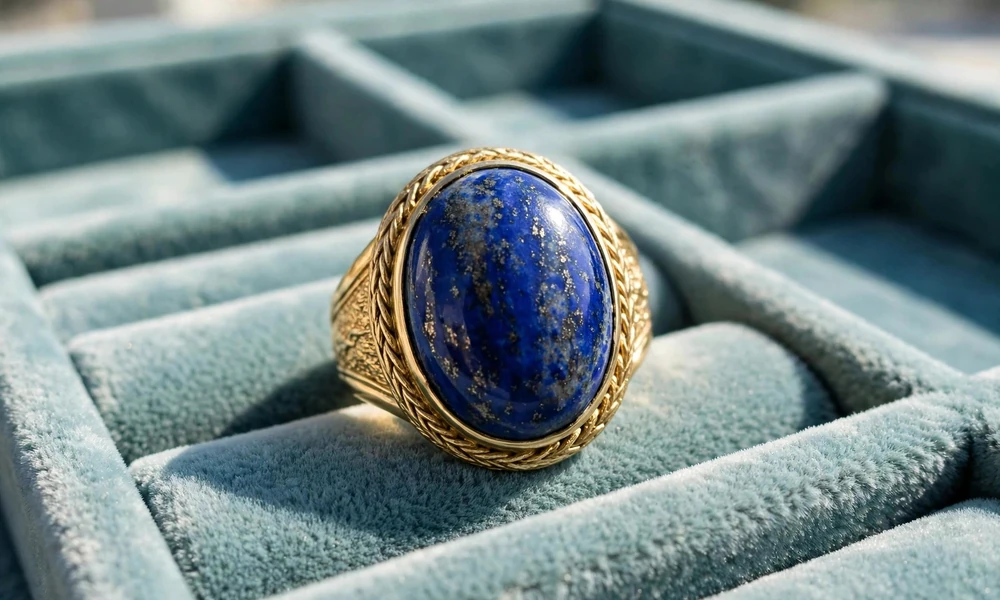
Look next at the setting. A bezel or a halo is the safest choice for lapis lazuli, because the metal wraps around the stone and takes the knocks instead. Open prongs look lighter and more delicate, but they leave the edges exposed, and a soft stone in open prongs is a chip waiting to happen. Check that the stone sits low and snug, with no wobble and no gap underneath where dirt and moisture can collect. A ring that rattles when you shake it gently is a ring that needs a jeweller.
Finally, look at the metal and the making. Gold suits lapis lazuli best, because the warm metal flatters the cool blue, and 14-karat gold is harder and more practical for daily wear than 18-karat. Silver is a good budget choice, but it scratches more easily and needs regular cleaning. Our guide to lapis lazuli necklaces explains how the same colour rules apply when the stone is worn close to the skin, and why a deep, even blue is worth paying for in any piece.
The 9 best lapis lazuli rings of 2027
Tiffany & Co. Solitaire
What we like: A clean, classic solitaire with a well-cut lapis lazuli cabochon in a polished gold setting, made to a standard that shows in the finishing. What to consider: Premium price, and the stone is modest in size for the money. Stone: Natural lapis lazuli cabochon. Setting: Gold solitaire. Best for: A first fine lapis lazuli ring. Price range: High.
Cartier Cocktail
What we like: A bold cocktail ring with a large lapis lazuli stone and a sculpted gold band, with the kind of presence that suits evening wear. What to consider: Too large and too high for comfortable daily wear, and the price reflects the name as much as the stone. Stone: Large lapis lazuli cabochon. Setting: Gold cocktail. Best for: Evenings and occasions. Price range: High.
David Yurman Cable
What we like: A lapis lazuli stone set in the brand’s signature twisted cable band, which gives a classic stone a modern, wearable feel. What to consider: The cable texture can trap dirt and needs a soft brush to clean properly. Stone: Lapis lazuli cabochon. Setting: Cable band. Best for: Everyday wear with character. Price range: High.
Mejuri Bezel
What we like: A neat bezel-set lapis lazuli ring at a fair price, with a low profile and a clean, modern look that works with almost anything. What to consider: The stone is small, so the colour needs to be good to make an impact, and sizes can sell out. Stone: Lapis lazuli cabochon. Setting: Gold bezel. Best for: A first lapis lazuli ring on a budget. Price range: Mid-range.
Monica Vinader Signet
What we like: A signet-style ring with a flat lapis lazuli top, which is practical, modern, and easy to wear with other rings. What to consider: The flat top shows scratches more readily than a domed cabochon. Stone: Flat lapis lazuli. Setting: Gold vermeil signet. Best for: Stacking and everyday wear. Price range: Mid-range.
Missoma Stacking
What we like: A slim stacking ring with a small lapis lazuli stone, designed to layer with plain bands and other gemstones. What to consider: The stone is small, so it works best as part of a stack rather than on its own. Stone: Small lapis lazuli. Setting: Gold stacking band. Best for: Layering with other rings. Price range: Mid-range.
Maria Black Sculptural
What we like: A sculptural, architectural ring where the lapis lazuli is set into an unusual, modern form that feels like a piece of design, not just jewellery. What to consider: The shape is not for everyone, and it can be less comfortable than a plain band. Stone: Lapis lazuli cabochon. Setting: Sculptural silver. Best for: Making a quiet statement. Price range: Mid-range.
Astrid & Miyu Halo
What we like: A halo setting that surrounds the lapis lazuli with small pale stones, which makes the blue look deeper and the ring look larger than it is. What to consider: The halo adds height, and the small surrounding stones need occasional checking. Stone: Lapis lazuli cabochon. Setting: Gold halo. Best for: A dressier everyday ring. Price range: Mid-range.
The halo is a clever trick. It protects the edges of the lapis lazuli while making the whole ring look more substantial. It is a good compromise between a plain bezel and a full cocktail ring.
Thomas Sabo Charm
What we like: An affordable, playful lapis lazuli ring with a charm-style design that suits younger wearers and casual outfits. What to consider: The stone is small and the metal is silver, so it needs more care than a gold ring. Stone: Small lapis lazuli. Setting: Silver charm. Best for: Casual wear and gifting. Price range: Affordable.
A good entry point. The colour is genuine lapis lazuli blue, the design is fun without being childish, and the price makes it an easy gift. Just remember that silver and a soft stone need gentle handling.
Which lapis lazuli ring is right for you
For everyday wear, choose a bezel or a low halo in 14-karat gold. The setting protects the stone, the metal is hard enough to take daily knocks, and the ring sits low enough not to catch on clothing. A solitaire or a signet in this style will look right with everything from a suit to a T-shirt, and it will still look good in five years if you clean it properly.
For evenings and occasions, a cocktail ring is the right call. A larger stone, a higher setting, and a more sculpted band all work when the ring does not have to survive a working day. Just remember to take it off before anything rough, and to store it separately so the stone does not rub against harder gems. Our guide to lapis lazuli bracelets covers the same care rules for the matching pieces, because a soft stone needs the same protection wherever it is worn.
For stacking, go slim and small. A thin band with a small cabochon layers well with plain gold bands, and the blue adds colour without dominating the stack. Avoid stacking a lapis lazuli ring directly against a diamond or a sapphire, because the harder stone will scratch it. Put a plain gold band between them, and the lapis lazuli will stay smooth for far longer.
Whatever style you choose, try the ring on in person if you can. A stone that looks perfect in a photograph can feel too large, too high, or too heavy on your hand, and comfort is what decides whether a ring gets worn or stays in a drawer.
The caveats that matter
Lapis lazuli is a soft stone, and that is the caveat that matters most. It will scratch, it can chip, and it does not like water, chemicals, or heat. Perfume, hairspray, and cleaning products should all go on before the ring, and the ring should come off before swimming, gardening, or the gym. A little care goes a long way, and a ring that is treated well will look good for decades.
| Detail | What is known |
|---|---|
| What it is | A metamorphic rock, mostly lazurite with calcite and pyrite |
| Hardness | Mohs 5 to 6, soft for a ring stone |
| Best colour | Deep, even royal blue with fine pyrite and little white calcite |
| Best setting | Bezel or halo, low and snug, in 14-karat gold |
| Common imitations | Dyed howlite, dyed magnesite, blue glass, synthetic spinel |
| Cleaning | Lukewarm water, mild soap, soft cloth, never ultrasonic or steam |
| What to avoid | Knocks, acids, solvents, perfume, and hard stones rubbing against it |
| What it does not do | It has no proven healing properties and is not an investment stone |
Dyeing is the other thing to watch. Much of the lapis lazuli on the market has been dyed to deepen a pale stone, and dyed material is worth far less than natural stone. A reputable seller should disclose any treatment. If a ring is very cheap for its size, or the blue looks unnaturally uniform and very dark, ask directly whether the stone is natural and untreated.
Checklist: choosing a lapis lazuli ring honestly
Use these checks before you buy, and again after a month of wear.
- Check the colour in daylight: deep, even royal blue with fine pyrite and almost no white calcite.
- Check the setting: bezel or halo, low and snug, with no wobble and no gap under the stone.
- Check the metal: 14-karat gold for daily wear, silver only if you accept more care and cleaning.
- Check the treatment: ask whether the stone is natural and untreated, and expect a straight answer.
- Check the fit: the ring should slide on easily and resist coming off over the knuckle, without pinching.
- Check the care: lukewarm water and mild soap only, and store it separately from harder stones.
Frequently asked questions
Can I wear a lapis lazuli ring every day?
Yes, if the setting protects it. A bezel or halo in 14-karat gold is the safest choice for daily wear. Take it off for rough work, the gym, and swimming, and it will last well. An open-prong setting is a poorer choice for a ring you never take off.
How do I clean a lapis lazuli ring?
Use lukewarm water, a drop of mild soap, and a soft cloth. Rinse, pat dry, and let it air dry fully before storing. Never use an ultrasonic cleaner, a steam cleaner, or harsh chemicals, and never soak it for a long time, because lapis lazuli is porous.
How can I tell if lapis lazuli is real?
Real lapis lazuli has natural variation in colour, fine pyrite flecks, and usually a little calcite. Dyed howlite and magnesite look unnaturally uniform and very dark, and glass imitations often have tiny bubbles and feel too smooth. If in doubt, ask a jeweller to test it, and buy from a seller who discloses treatments.
Does lapis lazuli fade?
It can fade slightly with long exposure to strong sunlight and heat, and dyed stones fade faster than natural ones. Store it away from direct sun and heat, and do not leave it on a sunny windowsill. A natural stone kept out of harsh light holds its colour well.
What metal suits lapis lazuli best?
Gold, especially yellow gold, flatters the deep blue best, and 14-karat gold is the most practical for daily wear. White gold and platinum also work, but they give a cooler, more formal look. Silver is a good budget choice, but it scratches more easily and needs regular polishing. A guide to gold jewellery for everyday wear can help you match the metal to how often you plan to wear the ring.
Is lapis lazuli a good gift?
Yes, it is a thoughtful gift, especially for a September birthday, since lapis lazuli is a traditional September birthstone. Choose a bezel or signet style in the recipient’s usual metal, and include a note about gentle cleaning, so the ring is enjoyed rather than damaged in the first month.
The bottom line
The best lapis lazuli ring in 2027 is not the biggest or the most expensive. It is the one with a deep, even blue stone, a protective setting, and a metal that suits how you actually live. For most people, that means a bezel or a low halo in 14-karat gold, with a natural, untreated stone and a price that reflects the stone rather than the name on the box.
Choose one ring, check the colour in daylight, ask about treatment, and wear it with the small amount of care a soft stone deserves. That is the honest way to enjoy a stone that has been loved for six thousand years, without the chips, scratches, and disappointments that come from buying blind.