A vintage engagement ring is not simply an old ring. It is a ring with a past, whether it is a genuine piece from the Edwardian, Art Deco or mid-century period, or a new ring made in a vintage style. The appeal is easy to understand: hand engraving, milgrain edges, filigree work and old-cut diamonds give these rings a character that a brand-new solitaire rarely has. In 2027, vintage rings are also the most sustainable choice in fine jewellery, because no new mining is involved when the ring already exists.
The problem is that vintage is a word sellers use loosely. A ring described as vintage may be genuinely old, or it may be a new ring with a vintage look, or it may be an old ring that has been heavily altered. An old-cut diamond is not the same as a modern brilliant, and a ring that has been worn for eighty years may have thin prongs, a worn shank or a stone that was replaced long ago. The difference between a treasure and a repair bill is usually in the details the seller does not volunteer.
Below are nine vintage engagement rings worth considering in 2027, from a true Art Deco diamond ring to a Victorian sapphire and a modern vintage-style design. Each one is described by what it is good at, what to watch for, and who it suits best, so you can choose with the ring’s history in mind, not just its look.
Key takeaways
- Vintage means genuinely old or vintage-style, and the two are very different purchases with different prices and different risks.
- Old-cut diamonds, such as old European and old mine cuts, sparkle more softly than modern brilliants and are part of the charm.
- Art Deco rings favour geometric shapes and platinum, while Victorian rings favour yellow gold, coloured stones and romantic detail.
- A genuine antique ring should be checked for worn prongs, a thin shank and replaced stones before you buy it.
- No vintage ring is a guaranteed investment, and a ring bought for its look and its story is a better purchase than one bought for resale value.
What a vintage engagement ring actually is
A genuine vintage ring was made in a past era, most often Edwardian (1901 to 1910), Art Deco (1920s to 1930s) or Retro (1940s). Each period has a recognisable look. Edwardian rings are delicate, with platinum filigree and small diamonds. Art Deco rings are bold and geometric, with baguettes, calibre-cut stones and strong symmetry. Retro rings are chunky and sculptural, often in yellow or rose gold with large coloured stones.
A vintage-style ring, by contrast, is made today to look old. It may use milgrain, engraving and old-cut stones, but it is new metal, new prongs and a new guarantee. That is not a bad thing. A new ring made in a vintage style gives you the look without the wear, and it can be resized and repaired without worrying about damaging a piece of history. The honest question is which one you are buying, because the price should reflect it.
The stones matter as much as the setting. Old European cut diamonds, with their smaller tables and chunkier facets, were cut by hand and sparkle with a softer, warmer light than a modern brilliant. Old mine cuts are even chunkier, with a squarish outline. These stones are not worse than modern cuts, they are different, and they are part of what makes a vintage ring look vintage. A ring with a modern brilliant in a vintage-style setting is a hybrid, and it should be priced as one.
How we chose these rings and what to look for
Look first at the period and the condition. A genuine antique ring should come with a clear statement of its period, and ideally a report or an appraisal. Check the prongs with a fingernail: if they move, they are worn. Check the shank at the back, where it is thinnest, and look for signs of resizing, which usually show as a slightly different colour or a visible join. A ring that has been resized several times may have a shank too thin to resize again.

Look next at the stones. Ask whether the centre stone is original to the ring, because stones are often replaced, and a replaced stone changes both the value and the story. Old-cut diamonds should be checked for chips at the girdle, which is where they are most vulnerable. Coloured stones in vintage rings are often softer than modern synthetic ones, and emerald and opal in particular need gentle handling.
Finally, look at where you buy. A reputable vintage dealer will tell you what has been repaired, what has been replaced and what cannot be changed. A general antique shop may not know. Our guide to engagement rings explains how to compare designs, and the same discipline applies here: buy the ring you can see and inspect, not the story attached to it.
The 9 best vintage engagement rings of 2027
Tiffany & Co. Art Deco Diamond Ring
What we like: A genuine 1920s Art Deco ring with a round old European cut centre stone, calibre-cut sapphire accents and milgrain edges in platinum. What to consider: Antique price, and the shank is original and thin, so it cannot be resized more than once. Stone: Old European cut diamond, 1.2 carats centre. Setting: Platinum, milgrain and calibre sapphires. Best for: A true Art Deco piece. Price range: From around £9,500.
Cartier Edwardian Filigree Ring
What we like: A delicate Edwardian filigree ring with a small old mine cut diamond and a lace-like platinum gallery. What to consider: Very delicate, so it is not a ring for hands-on work, and the centre stone is modest. Stone: Old mine cut diamond, 0.8 carats centre. Setting: Platinum filigree. Best for: A light, romantic antique. Price range: From around £6,800.
A beautiful ring for someone who values craftsmanship over size. The filigree work is the point here, and it is finer than anything made by machine today.
David Yurman Vintage-Style Cushion Ring
What we like: A new ring made in a vintage style, with a cushion-cut centre stone, milgrain edges and a hand-engraved band in 18k gold. What to consider: It is new, not antique, so it should not be priced as one, and the engraving will soften with wear. Stone: Cushion-cut diamond, 1.5 carats centre. Setting: 18k yellow gold, milgrain. Best for: The vintage look with a new guarantee. Price range: From around £5,200.
The sensible compromise. You get the vintage character and a modern warranty, and the ring can be resized and repaired without worrying about history.
Mejuri Vintage-Style Oval Ring
What we like: A lab-grown oval centre stone in a vintage-style setting with a beaded halo and a slim engraved band in 14k gold. What to consider: Lab-grown stones have little resale value, and the halo makes the ring look larger than its centre stone. Stone: Lab-grown oval diamond, 1.8 carats centre. Setting: 14k rose gold, beaded halo. Best for: A vintage look on a sensible budget. Price range: From around £1,900.
This is the most affordable way into the vintage style with a large centre stone. The beaded halo is a genuine period detail, and the lab-grown stone keeps the price realistic.
Monica Vinader Victorian Sapphire Ring
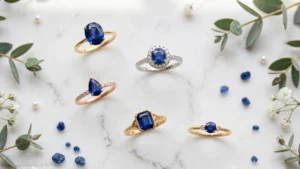
What we like: A Victorian-style ring with a blue sapphire centre stone, diamond shoulders and a yellow gold band with hand engraving. What to consider: Sapphires vary in tone, and a dark stone can look almost black in low light, so check it in daylight. Stone: Blue sapphire, 1.3 carats centre. Setting: 18k yellow gold, diamond shoulders. Best for: A coloured vintage centre stone. Price range: From around £1,650.
A romantic ring that suits someone who wants colour rather than a white stone. The yellow gold and sapphire combination is a classic Victorian pairing, and it still works.
Missoma Retro Ruby Ring
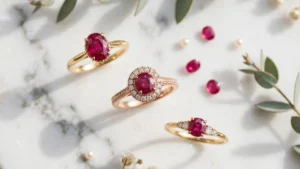
What we like: A 1940s Retro-style ring with a ruby centre stone, sculptural gold shoulders and a bold, architectural band. What to consider: Retro rings are chunky, so the ring feels heavier than a modern solitaire, and rubies are often heat-treated. Stone: Ruby, 1.1 carats centre. Setting: 14k yellow gold, sculptural shoulders. Best for: A bold, mid-century look. Price range: From around £1,200.
This is the ring for someone who wants presence rather than delicacy. The sculptural shoulders are the point, and the ruby gives it a warmth that a diamond cannot.
Maria Black Vintage-Style Pearl Ring
What we like: A freshwater pearl centre stone in a vintage-style gold setting with small diamond accents, soft and unusual. What to consider: Pearls are soft and scratch easily, so this is not an everyday ring, and the pearl will need restringing or resetting over time. Stone: Freshwater pearl, 8 mm centre. Setting: 14k gold, diamond accents. Best for: A soft, non-diamond vintage ring. Price range: From around £580.
A gentle, romantic choice that breaks the diamond habit. It is honest about its limits, and it suits someone who wants a ring that looks like nothing else in the room.
Astrid & Miyu Art Deco Baguette Ring
What we like: A vintage-style ring with a round centre stone flanked by two baguette side stones, a clean geometric line in 14k white gold. What to consider: Baguettes show inclusions clearly, so the side stones need to be clean, and the design is less forgiving of a small centre stone. Stone: Round diamond, 1 carat centre. Setting: 14k white gold, baguette sides. Best for: A geometric Art Deco line. Price range: From around £890.
The baguette sides give this ring its Deco character. It is a restrained design that suits someone who likes clean lines rather than ornament.
Thomas Sabo Vintage-Style Zirconia Ring
What we like: A cubic zirconia centre stone in a vintage-style sterling silver setting with milgrain and engraving, at a fashion price. What to consider: Cubic zirconia clouds and scratches over time, so treat this as a fashion piece, not a forever ring. Stone: Cubic zirconia, 1.5 carats centre. Setting: Sterling silver, milgrain. Best for: Trying the vintage style before committing. Price range: From around £110.
This is the ring to buy if you love the vintage look but are not ready to spend thousands. It shows the proportions and the details clearly, and it is honest about what it is.
Which vintage ring is right for you
Start by deciding whether you want a genuine antique or a vintage-style ring. A genuine antique has history, hand work and a story, but it also has wear, and it may not be resizable. A vintage-style ring is new, guaranteed and repairable, but it has no history. Neither is better in the abstract, and the right choice depends on whether the story or the practicality matters more to you.
Then choose a period. Edwardian rings are delicate and lacy, Art Deco rings are geometric and bold, and Retro rings are chunky and sculptural. The period should suit the wearer’s taste and lifestyle, because a delicate filigree ring will not survive hands-on work, while a chunky Retro ring may feel too heavy for someone who prefers fine jewellery. A trip to a shop that specialises in old jewellery, such as the vintage stores in Paris, is a good way to see the periods side by side before deciding.
Finally, check the stones. Old-cut diamonds sparkle differently from modern brilliants, and that is part of their charm, but they should be checked for chips. Coloured stones in vintage rings are often softer than modern ones, and a ring with a non-diamond centre, such as those in our guide to non-diamond engagement rings, needs a different kind of care. Ask what has been repaired and what has been replaced, and get it in writing.
The caveats that matter
Vintage rings are beautiful, but they are not the lowest-risk purchase in jewellery. A genuine antique may have worn prongs, a thin shank, a replaced stone or a repair that is not obvious. An old-cut diamond may have a chip at the girdle that is hidden by the setting. A ring that has been resized several times may have a shank too thin to resize again. None of this makes a vintage ring a bad buy, but all of it should be checked before money changes hands.
| Detail | What is known |
|---|---|
| What it is | A genuine antique ring, or a new ring made in a vintage style |
| Key periods | Edwardian, Art Deco and Retro, each with a distinct look |
| Old-cut diamonds | Old European and old mine cuts sparkle more softly than modern brilliants |
| What to check | Worn prongs, thin shank, resizing marks, replaced stones, girdle chips |
| Resizing | Antique rings may only be resizable once, or not at all |
| Care | Yearly inspection; no ultrasonic cleaner for soft or porous stones |
| What it costs | Genuine antiques cost more; vintage-style rings cost less and carry a warranty |
| What it does not do | It does not guarantee resale value, and it needs more care than a new solitaire |
If you are choosing between a vintage ring and a modern one, the honest difference is character against convenience. A modern ring is easier to buy, easier to resize and easier to insure. A vintage ring has a story, hand work and a smaller environmental footprint, but it asks more of its owner. Buy the ring, not the romance of the story, and check the condition as carefully as the design.
Checklist: choosing a vintage engagement ring honestly
Use these checks before you buy, and again when the ring arrives.
- Check the period: confirm whether the ring is genuinely old or vintage-style, and get it in writing.
- Check the prongs: press gently with a fingernail; worn prongs move, and that means a repair.
- Check the shank: look at the back for thinness, resizing marks and colour changes.
- Check the stones: ask whether the centre stone is original, and look for chips at the girdle.
- Check the size: confirm the ring can be resized if needed, because antique shanks often cannot.
- Check the seller: buy from a vintage specialist who will list repairs and replacements honestly.
Frequently asked questions
What is the difference between vintage and antique?
Antique usually means over 100 years old, while vintage generally means 20 to 100 years old. In jewellery shops the words are often used loosely, so ask for the period and the date rather than relying on the label.
Are old-cut diamonds worth less than modern brilliants?
They are usually priced lower per carat, because modern cutting is more efficient and brighter. Old-cut diamonds are valued for their character and history, not for maximum sparkle, and a well-cut old European stone can still be beautiful.
Can a vintage ring be resized?
Sometimes, but not always. A ring with a thin shank, a full eternity of stones or a delicate filigree gallery may not survive resizing. Ask the seller before you buy, and have a jeweller who works with antiques do the work.
Are vintage rings a good investment?
Not reliably. A rare, signed piece in excellent condition may hold its value, but most vintage rings are bought for their look and their story, not for resale. Buy a vintage ring because you love it, not because you expect it to appreciate.
How do I clean a vintage ring?
Warm water, mild soap and a soft brush, gently. Avoid ultrasonic cleaners for soft stones such as emerald, opal and pearl, and for any ring with a worn setting. Have the prongs checked once a year.
Is a vintage ring more sustainable than a new one?
Yes, in the sense that no new mining is involved when the ring already exists. A vintage-style ring made new does not have that advantage, but a lab-grown centre stone in a vintage-style setting is a lower-impact way to get the look.
The bottom line
The best vintage engagement ring in 2027 is not the oldest or the most expensive. It is the one where the period suits the wearer, the condition is honest, and the stones are original or clearly disclosed. A true Art Deco diamond is a treasure, a Victorian sapphire is romantic, and a new vintage-style ring is the practical way to get the look with a warranty.
Decide first whether you want a genuine antique or a vintage-style ring, check the prongs, the shank and the stones before you buy, and buy from a seller who will put repairs and replacements in writing. That is the honest way to get a ring with a past that still has a future.