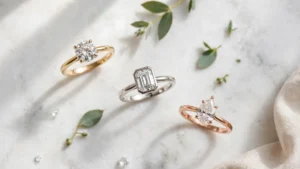
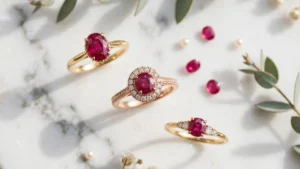
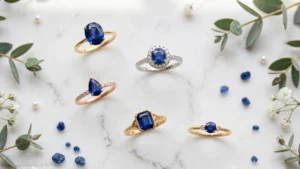
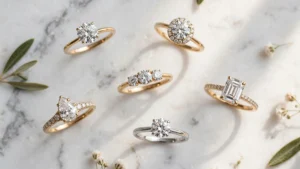
A cluster engagement ring does something a single-stone ring cannot: it turns a group of smaller stones into one big, bright statement. Instead of one large centre diamond, a cluster gathers several stones close together, so the ring reads larger, sparkles from more angles, and often costs far less than a solitaire of the same visual size. It is an old idea with a very current feel, and in 2027 it is one of the most searched engagement ring styles for couples who want presence without a five-figure centre stone.
The appeal is practical as well as pretty. Smaller stones are cheaper per carat than one large stone, so a cluster can deliver serious finger coverage on a modest budget. The style also suits coloured stones beautifully, because a tight group of sapphires, rubies or morganites looks deliberate and rich rather than scattered. And because the stones share the load, a cluster can hide a slightly lower colour or clarity grade in a way a lone solitaire never could.
Below are nine cluster engagement rings worth considering in 2027, from a classic diamond cluster to bold coloured-stone designs. Each one is described by what it is good at, what to watch for, and who it suits best, so you can choose with your budget and your lifestyle in mind, not just a photo.
Key takeaways
- A cluster ring groups several smaller stones together, so it looks larger than a solitaire with the same total carat weight.
- Smaller stones cost less per carat, which makes clusters one of the best ways to get big finger coverage on a smaller budget.
- Cluster settings suit coloured stones especially well, because a tight group of sapphires, rubies or morganites reads as one rich design.
- The stones in a cluster are usually held by shared prongs or a halo-style frame, so regular checks for loose stones matter more than with a solitaire.
- A cluster is not a shortcut to a large single diamond, and it will not hold its value the way a high-quality centre stone can.
What a cluster engagement ring actually is
A cluster ring is any ring in which the centrepiece is made of several stones set close together, rather than one dominant stone. The stones may be identical in size, arranged in a flower or square, or they may graduate from a larger centre stone to smaller satellites. The effect is a single, generous-looking top that catches the light from many facets at once, which is why clusters often look brighter in a shop window than a solitaire of the same price.
The style is not new. Cluster rings were popular in the Victorian and Edwardian eras, when jewellers grouped small diamonds around a coloured centre stone, and they returned in the mid-twentieth century as an affordable way to make a ring look grand. What has changed is the quality of the settings. Modern clusters use tighter, lower-profile mounts and better-cut small stones, so they look intentional and refined instead of busy or dated.
There are two main families. In a true cluster, several stones of similar size share the centre, with no single stone dominating. In a halo-cluster hybrid, a centre stone, which may be modest, is ringed by smaller stones that make it read much larger. Both count as clusters, and both appear in this guide, because the buying questions are the same: how well are the stones matched, how secure is the setting, and does the design suit daily wear?
How we chose these cluster rings and what to look for
Look first at how well the stones match. In a good cluster, the stones share the same colour, clarity and cut quality, so the group reads as one stone from a normal viewing distance. If one stone is noticeably whiter, yellower or duller than its neighbours, the ring will always look slightly off, and no amount of setting work can hide it. Ask to see the ring in daylight, not only under shop lights, because mismatched stones show up fastest in natural light.

Look next at the setting. Shared prongs are the classic cluster mount, and they are beautiful, but each prong holds two stones, so one bent prong can loosen two stones at once. Bezel-set clusters and halo-style frames are more protective, because the metal surrounds the stones rather than gripping them at points. If you work with your hands, a lower, bezel-set cluster is the safer choice, even if it looks slightly less airy.
Finally, look at the metal and the maintenance. Clusters have more crevices than solitaires, so they collect lotion, soap and dust faster, and they need cleaning more often to keep their sparkle. A sturdy band in 14 karat gold or platinum will hold its shape better than a thin, delicate shank, and it is worth having the ring checked by a jeweller every six months. Our guide to the best engagement rings of 2027 is a useful starting point if you are still deciding between a cluster and a solitaire, because the trade-offs between size, price and durability are clearer side by side.
The 9 best cluster engagement rings of 2027
Tiffany & Co. Diamond Cluster
What we like: A classic diamond cluster in platinum with tightly matched stones, a low profile that sits comfortably, and the kind of finishing that makes the group read as one bright stone.
What to consider: Premium price for the total carat weight, and the brand name carries a large part of the cost. Stone: Round brilliant diamonds, total around 1.20 carats. Setting: Shared prongs in platinum. Best for: A timeless, understated cluster. Price range: $6,000 to $9,000.
Cartier Diamond Cluster
What we like: A neat, geometric cluster with excellent stone matching, a slim band that keeps the focus on the stones, and a setting that is easy to wear every day.
What to consider: The slim band can feel delicate if you are used to a heavier ring, and resizing is more involved than with a plain band. Stone: Round brilliant diamonds, total around 1.00 carat. Setting: Shared prongs in 18 karat white gold. Best for: A refined, jewellery-house cluster. Price range: $5,500 to $8,000.
David Yurman Cable Cluster
What we like: A cluster set on the brand’s signature cable band, which gives a familiar, sculptural frame to the stones, with a warm, hand-finished feel.
What to consider: The cable band is a distinctive look that not everyone wants for an engagement ring, and the stones are modest in size. Stone: Pavé and cluster diamonds, total around 0.90 carats. Setting: Shared prongs on a cable band in 18 karat gold. Best for: A cluster with a recognisable designer frame. Price range: $4,500 to $6,500.
Mejuri Diamond Cluster
What we like: A modern, affordable cluster with well-cut small diamonds, a clean setting, and a price that leaves room in the budget for a wedding band.
What to consider: The stones are small, so the ring relies on the group effect rather than any single stone, and the band is slim. Stone: Round brilliant diamonds, total around 0.75 carats. Setting: Shared prongs in 14 karat gold. Best for: A first cluster on a sensible budget. Price range: $1,200 to $2,000.
Monica Vinader Sapphire Cluster
What we like: A blue sapphire cluster with a warm gold setting, rich colour, and a design that feels romantic without being old-fashioned.
What to consider: Sapphires vary in colour, so check the exact shade before buying, and the stones need gentle cleaning to keep their colour bright. Stone: Blue sapphires, total around 1.10 carats. Setting: Shared prongs in 18 karat gold vermeil over sterling silver. Best for: A coloured-stone cluster with vintage charm. Price range: $600 to $1,000.
Missoma Ruby Cluster
What we like: A small, bold ruby cluster in gold, with a warm red that stands out on the hand and a price that suits a first engagement ring.
What to consider: Rubies are softer than diamonds, so the ring needs more care, and the stones are small, so the effect depends on the group. Stone: Rubies, total around 0.80 carats. Setting: Shared prongs in 18 karat gold vermeil over sterling silver. Best for: A bold, romantic coloured cluster. Price range: $500 to $900.
Maria Black Sculptural Cluster
What we like: An asymmetric, sculptural cluster that feels modern and artistic, with mixed stone sizes that give the ring movement and personality.
What to consider: The asymmetric design is a strong style statement, so it suits a confident wearer, and the raised stones need care around clothing. Stone: Mixed white diamonds and sapphires, total around 0.85 carats. Setting: Shared prongs in sterling silver with gold plating. Best for: A modern, artistic cluster. Price range: $400 to $800.
Astrid & Miyu Morganite Cluster
What we like: A soft pink morganite cluster with a gentle, romantic colour, a clean setting, and a price that makes it easy to pair with a matching band.
What to consider: Morganite is pale and soft compared with diamond, so it needs gentle wear and regular cleaning to stay bright. Stone: Morganite, total around 1.00 carat. Setting: Shared prongs in 18 karat gold vermeil over sterling silver. Best for: A soft, romantic pink cluster. Price range: $350 to $700.
A gentle, pretty ring for someone who loves blush tones. The pink is subtle rather than loud, and it suits fair and warm skin tones alike.
Thomas Sabo Emerald Cluster
What we like: A green emerald cluster with a vintage feel, strong colour, and a setting that keeps the stones secure for daily wear.
What to consider: Emeralds are brittle and often treated with oil, so the ring needs gentle handling and should never go in an ultrasonic cleaner. Stone: Emeralds, total around 0.90 carats. Setting: Shared prongs in sterling silver. Best for: A vintage-style green cluster. Price range: $300 to $600.
A charming, old-fashioned ring with real colour. It is the most affordable way into a genuine emerald cluster, and the green is deep enough to read as luxury.
Which cluster ring is right for you
Start with your budget, because the cluster’s biggest advantage is value. If you want the look of a two-carat ring for the price of a one-carat solitaire, a diamond cluster is the honest way to get there. The stones are real, the sparkle is real, and the only trade-off is that the value sits in the group rather than in a single stone.
Next, think about colour. A cluster is the best setting for a coloured stone, because a group of small sapphires or rubies looks richer than a single small coloured stone, which can look lonely on a band. If you love blue, green or pink, a cluster will give you more colour for your money than any other setting. A guide to diamond versus moissanite for engagement rings is worth reading alongside this one, because moissanite clusters are also common, and the stone choice changes the price and the care the ring needs.
Finally, think about your hands. If you type all day, lift weights, or work with children, a low, bezel-set or halo-style cluster will serve you better than a tall, open cluster with exposed prongs.
The caveats that matter
Clusters are beautiful, but they are not the same as a solitaire, and the differences matter. The stones are small, so each one is individually worth very little, and the ring’s value comes from the design and the craftsmanship rather than the stones. That is fine if you buy the ring to wear, but it means a cluster is a poor store of value compared with a single high-quality diamond.
| Detail | What is known |
|---|---|
| What a cluster is | Several smaller stones set close together to form one centrepiece, instead of a single large stone |
| Best reason to choose one | Big finger coverage and strong sparkle for less money than a solitaire of the same visual size |
| Best stone for a cluster | Diamonds for sparkle, sapphires or rubies for colour, moissanite for the lowest price |
| Most secure setting | Bezel or halo-style frames protect stones better than tall shared prongs |
| Cleaning | More crevices than a solitaire, so clean gently and often with warm soapy water and a soft brush |
| Who should avoid tall clusters | People who work with their hands, lift weights, or handle children daily |
| Maintenance | Have prongs and stones checked by a jeweller every six months |
| What it does not do | It does not hold value like a single high-quality diamond, and it is not a substitute for one |
Clusters also need more maintenance. With more stones come more prongs, more gaps, and more places for dirt to hide. A cluster that is not cleaned regularly will look dull, and a loose stone can fall out unnoticed because the neighbours hide the gap.
Checklist: choosing a cluster engagement ring honestly
Use these checks before you buy, and again after a month of wear.
- Check the stone match: all stones should share the same colour, clarity and brightness in daylight.
- Check the setting: prongs should be even and smooth, with no sharp edges or visible gaps between stones.
- Check the profile: a low, close-fitting cluster is safer for daily wear than a tall, open one.
- Check the metal: 14 karat gold or platinum holds its shape better than a thin, delicate shank.
- Check the certificate: ask what the stones are, whether they are treated, and what the total carat weight covers.
- Check the care plan: confirm cleaning, prong checks and resizing are available from the seller.
Frequently asked questions
Are cluster engagement rings cheaper than solitaires?
Usually, yes, for the same visual size. Smaller stones cost less per carat than one large stone, so a cluster can look like a two-carat ring for the price of a one-carat solitaire. The saving is real, but the ring will not hold its value the way a single high-quality diamond can.
Do cluster rings look as good as solitaires?
They look different, not worse. A cluster reads larger and often sparkles more, because it has more facets catching the light. A solitaire looks cleaner and more classic. Which is better depends on whether you prefer presence or simplicity, and our guide to diamond necklaces by budget shows the same trade-off in a different piece of jewellery, where grouped stones also deliver more presence for less money.
Are cluster rings secure for daily wear?
They can be, if the setting is well made and checked regularly. Bezel-set and halo-style clusters are the most secure. Tall shared-prong clusters are more vulnerable, because one bent prong can loosen two stones. Have the ring checked every six months.
Can you resize a cluster engagement ring?
Often, but not always easily. A plain band can be resized by one or two sizes without trouble. A cluster with stones set all the way around the band, or a very intricate setting, may be harder or impossible to resize, so confirm this before buying.
Do cluster rings suit coloured stones?
Yes, they suit them better than any other setting. A group of small sapphires, rubies or emeralds looks richer and more deliberate than a single small coloured stone, and the colour reads clearly even in a small cluster.
How do I clean a cluster engagement ring?
Soak it in warm water with a drop of mild dish soap, then brush gently with a soft toothbrush, rinse, and pat dry. Avoid ultrasonic cleaners for emeralds and soft stones, and avoid harsh chemicals. Clean it every week or two to keep the sparkle.
The bottom line
The best cluster engagement ring in 2027 is the one that gives you the look you want at a price you can live with, in a setting secure enough for your daily life. For a classic, well-matched diamond cluster, the Tiffany & Co. and Cartier designs set the standard. For colour, the sapphire and ruby clusters offer far more personality for far less money. For a first ring on a careful budget, Mejuri and Astrid & Miyu prove that a cluster does not need a luxury price to look generous.
Choose the cluster for what it is, not for what it imitates. It is not a cheap copy of a large solitaire, it is a different kind of ring, with its own history, its own sparkle, and its own honest value. Buy the one whose stones match, whose setting sits low and secure, and whose design you would still love in twenty years, and it will serve you well.