Pavé engagement rings are the quiet overachievers of the ring world. At first glance they look like a simple band with a beautiful centre stone, but lean in closer and the whole band is paved with tiny diamonds that catch the light from every angle. That is the whole point of pavé, a French word meaning paved: the shank is set with a field of small stones so closely together that the metal almost disappears and the ring reads as one continuous line of sparkle.
The effect is hard to overstate. A pavé band makes a modest centre stone look larger, adds brilliance without adding bulk, and gives a ring presence on the hand that a plain band simply cannot match. It is also one of the most popular engagement ring styles in 2027, because it works with almost any centre stone shape, from a classic round brilliant to an oval, cushion or emerald cut, and it suits every metal from platinum to yellow gold.
Below are nine pavé engagement rings worth considering in 2027, from heritage houses to modern fine-jewellery brands. Each one is described by what it does well, what to watch for, and who it suits best, so you can choose a ring that sparkles every day, not just in the shop window.
Key takeaways
- Pavé means the band is set with small diamonds held by tiny beads of metal, creating a continuous line of sparkle around the centre stone.
- A pavé band makes a centre stone look larger and brighter, so it is a smart way to get more presence from a smaller diamond.
- Choose a sturdy setting and a reputable maker, because the small pavé stones rely on the quality of the metalwork holding them.
- Have the prongs and beads checked once a year, and clean the ring regularly, because pavé traps more dirt than a plain band.
- No pavé ring is indestructible, and a ring worn daily will need occasional maintenance, no matter how well it is made.
What a pavé engagement ring actually is
A pavé setting holds a row of small diamonds, usually between 0.01 and 0.05 carats each, in tiny holes drilled into the band, with small beads of metal pulled over their edges to hold them in place. The stones sit close together, edge to edge, so the surface of the band reads as a sheet of diamonds rather than a series of separate stones. The technique is old, used in fine jewellery for more than a century, but modern casting and setting tools have made it far more precise and far more affordable than it once was.
The most common pavé styles are the full pavé band, where diamonds run all the way around the shank, the half pavé band, where they run halfway, and the French pavé, where the stones are set in a V-shaped groove that leaves even less metal visible. A pavé halo is a related idea, a ring of small diamonds around the centre stone itself, and many rings combine both, a halo around the centre stone and pavé along the band, for maximum sparkle.
What pavé does best is light. Every small stone adds facets, and every facet returns light, so a pavé ring flashes as the hand moves in a way a plain band never will. The trade-off is that there are more stones to look after. A single small diamond can loosen over years of wear, and a pavé band is harder to resize than a plain one, because the setter has to work around the stones. None of that is a reason to avoid pavé. It is a reason to buy well and maintain the ring properly.
How we chose these pavé rings and what to look for
Look first at the centre stone, because it carries the ring. A pavé band flatters any shape, but it suits round brilliants and ovals best, since their curved outlines sit naturally against a line of small stones. Check the 4 Cs, cut, colour, clarity and carat, and remember that cut matters most for sparkle. A well-cut stone in a pavé setting will outshine a larger, poorly cut one every time.
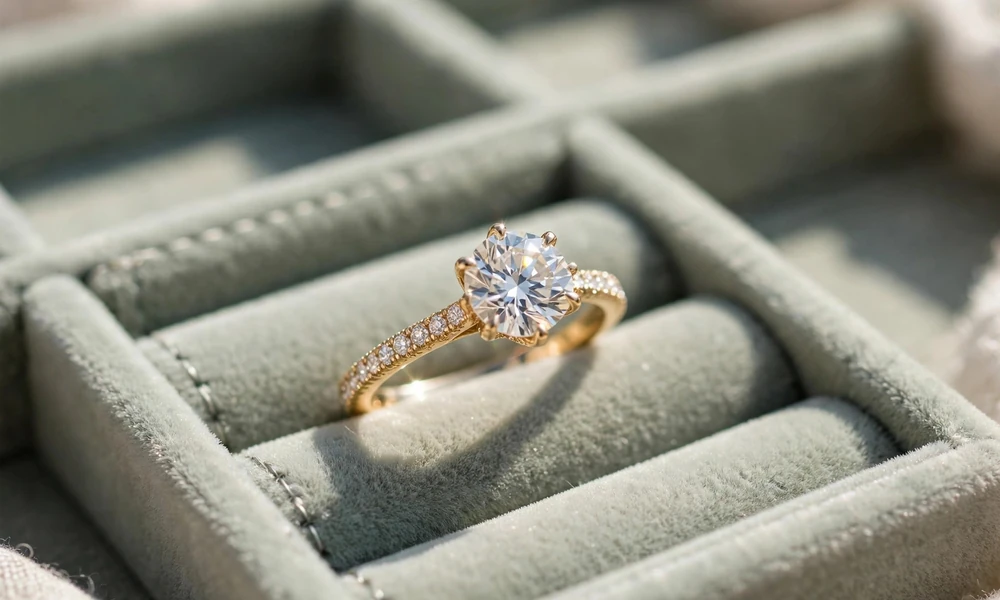
Look next at the pavé work itself. The small stones should sit level, with even spacing and no visible gaps, and the beads holding them should be neat and uniform. Run a fingertip gently along the band: it should feel smooth, with no sharp edges or stones that catch on fabric. Uneven stones and rough edges are signs of rushed setting, and they are the rings most likely to lose a stone later.
Finally, consider the metal and the maker. Platinum and 18-karat gold hold pavé stones most securely, because they are dense and durable. Our guide to buying a diamond explains the 4 Cs in plain terms, and it is worth reading before you spend, because a little knowledge goes a long way when you are comparing rings that look similar at first glance.
The 9 best pavé engagement rings of 2027
Tiffany & Co. Pavé Diamond Ring
What we like: A classic Tiffany pavé band with a round brilliant centre stone, precise setting work, and the house’s famously strict diamond standards. What to consider: Premium price, and the Tiffany name carries a significant premium over the stone itself. Stone: Round brilliant diamond, F colour, VS1 clarity. Setting: Platinum pavé band with a six-prong centre. Best for: A timeless, high-end pavé ring. Price range: From around £8,500.
This is the pavé ring other pavé rings are measured against. The setting is immaculate, the stones sit perfectly level, and the ring feels substantial without being heavy. It is expensive, but it is also the safest choice in this list if budget allows.
Cartier Pavé Solitaire Ring
What we like: Cartier’s clean, architectural take on pavé, with a beautifully finished band and a centre stone that sits low and secure. What to consider: The design is deliberately understated, so it may feel too quiet if you want maximum drama. Stone: Round brilliant diamond, G colour, VS2 clarity. Setting: 18-karat white gold pavé band. Best for: Understated luxury with a designer name. Price range: From around £6,800.
David Yurman Pavé Cable Ring
What we like: Yurman’s signature cable motif running through the band, with pavé diamonds set into the twisted metal for a distinctive, sculptural look. What to consider: The cable detail makes the ring harder to clean than a smooth band. Stone: Oval diamond, E colour, VS1 clarity. Setting: 18-karat yellow gold pavé cable band. Best for: A pavé ring with a recognisable designer signature. Price range: From around £5,400.
If you want a pavé ring that no one will mistake for anyone else’s, this is the one. The cable work is genuinely distinctive, and the oval centre stone suits the elongated shape of the band beautifully.
Mejuri Pavé Diamond Ring
What we like: A delicate pavé band at a fair price, with responsibly sourced diamonds and a modern, minimal design that stacks well with a wedding band. What to consider: The band is slim, so it is less suited to very large centre stones. Stone: Round brilliant diamond, G colour, VS2 clarity. Setting: 14-karat yellow gold half pavé band. Best for: A first pavé ring at a sensible price. Price range: From around £1,450.
Mejuri has made fine jewellery feel accessible without cutting corners on quality, and this ring is a good example. It is light, comfortable and easy to wear every day, and the half pavé keeps the price in reach.
Monica Vinader Pavé Signet Ring
What we like: A modern signet shape with a pavé-set top, giving the sparkle of pavé in a bold, contemporary silhouette. What to consider: The signet shape is a fashion choice, so it may date faster than a classic solitaire. Stone: Pavé white diamonds, F to G colour, VS clarity. Setting: 18-karat gold vermeil pavé signet. Best for: A fashion-forward pavé ring. Price range: From around £450.
Missoma Pavé Stacking Ring
What we like: A fine pavé band designed to stack, so it works as an engagement ring on its own or layered with other rings. What to consider: The stones are small and the band is fine, so it needs gentle handling. Stone: Pavé white topaz and lab-grown diamonds. Setting: 18-karat gold vermeil pavé band. Best for: Stacking and everyday wear. Price range: From around £320.
Missoma’s pavé band is the lightest, most wearable ring here. It is not a traditional engagement ring, but for couples who want something delicate and modern, it is a charming choice, and it stacks beautifully with a plain wedding band.
Maria Black Pavé Sculptural Ring
What we like: A sculptural, architectural band with pavé diamonds set into an asymmetric, hand-finished form. What to consider: The shape is unusual, so try it on before committing. Stone: Pavé white diamonds, G colour, VS clarity. Setting: Sterling silver with 18-karat gold plating, pavé band. Best for: A pavé ring with an artistic edge. Price range: From around £380.
Maria Black makes jewellery for people who want something different, and this ring delivers. The pavé is set into a sculptural band that looks like a piece of modern art, and it is a genuine conversation piece.
Astrid & Miyu Pavé Halo Ring
What we like: A pavé halo around the centre stone plus pavé along the band, giving double the sparkle at a very fair price. What to consider: The halo makes the ring look larger, which is a plus for some and a minus for others. Stone: Round brilliant lab-grown diamond, F colour, VS1 clarity. Setting: 18-karat gold vermeil pavé halo and band. Best for: Maximum sparkle on a budget. Price range: From around £520.
Thomas Sabo Pavé Charm Ring
What we like: A playful pavé ring with a charm-style centre, offering the pavé look in a relaxed, everyday design. What to consider: It reads more as fashion jewellery than a traditional engagement ring. Stone: Pavé white zirconia, brilliant cut. Setting: Sterling silver pavé band. Best for: A fun, affordable pavé ring. Price range: From around £180.
Thomas Sabo is the entry point to pavé in this list, and it is a good one. The ring is cheerful, well made for its price, and a sensible choice if you want to try the pavé style before investing in a diamond version.
Which pavé engagement ring is right for you
Start with lifestyle. If the wearer works with their hands, gardens, or plays sport, a half pavé band in platinum is the practical choice: the stones sit on the top half of the band only, so the underside stays smooth, and platinum holds small stones more securely than any other metal. A full pavé band is more dramatic, but it is also more exposed to knocks.
Next, think about the centre stone. A pavé band flatters smaller centre stones beautifully, because the extra sparkle around it makes the whole ring look bigger. If the budget is tight, put the money into cut quality rather than carat weight. A well-cut 0.7-carat diamond on a pavé band will look more impressive than a poorly cut 1-carat stone on a plain band. Our guide to the best engagement rings compares the main styles side by side, and it is a useful next read if you are still deciding between pavé and a plainer setting.
Finally, be honest about maintenance. Pavé rings need a check once a year and a clean every few weeks, and they are harder and more expensive to resize than plain bands. If that sounds like a chore, a half pavé or a pavé halo with a plain band gives you most of the sparkle with less upkeep.
The caveats that matter
Pavé is beautiful, but it is not the lowest-maintenance setting. The small stones are held by tiny beads of metal, and those beads wear slowly over years of daily use. That is normal, and a jeweller can tighten them in minutes, but it is why the annual check matters. A stone that is caught early costs nothing to fix; a stone that falls out unnoticed is gone.
| Detail | What is known |
|---|---|
| What pavé means | Small diamonds set closely together with tiny metal beads, so the band reads as a sheet of sparkle |
| Best centre stone shapes | Round brilliant and oval, which sit naturally against a line of small stones |
| Best metals | Platinum and 18-karat gold hold pavé stones most securely |
| Full vs half pavé | Full pavé runs all the way round; half pavé is easier to wear, resize and maintain |
| Maintenance | Check prongs and beads once a year; clean every few weeks with warm soapy water |
| Resizing | Harder and more expensive than a plain band, because the setter must work around the stones |
| Who should be careful | Very active hands, manual work, and anyone who rarely removes a ring |
| What it does not do | It does not make a poor-quality centre stone look good, and it does not remove the need for insurance |
One more honest note: pavé does not suit every stone. Very soft stones such as opal and emerald are better in a bezel setting, where the metal protects their edges. Pavé is at its best with diamonds and other hard stones that can take daily wear without chipping.
Checklist: choosing a pavé engagement ring honestly
Use these checks before you buy, and again before the proposal.
- Check the pavé work: stones level, evenly spaced, no gaps, no sharp edges that catch on fabric.
- Check the centre stone: cut first, then colour and clarity, and ask to see the grading report.
- Check the metal: platinum or 18-karat gold for the most secure setting; ask about the alloy.
- Check the fit: a pavé band is harder to resize, so get the size right before you buy.
- Check the warranty: ask what the maker covers, especially lost pavé stones and annual checks.
- Check the insurance: insure the ring before it is worn daily, and keep the valuation up to date.
Frequently asked questions
Do pavé diamonds fall out easily?
Not if the ring is well made and checked regularly. Small stones are held by beads of metal that wear slowly over years, so an annual check catches looseness before a stone is lost. Rings from reputable makers rarely lose stones in normal wear.
Can a pavé ring be resized?
Yes, but it is harder and more expensive than resizing a plain band. The jeweller has to work around the pavé stones, and a full pavé band can only be adjusted by a small amount. Half pavé bands are easier to resize.
Is pavé more expensive than a plain band?
Usually, yes. You are paying for more stones and more setting work, but the extra cost is often modest compared with the centre stone. A pavé band can also let you choose a smaller centre stone, which may save more than the pavé costs.
How do I clean a pavé engagement ring?
Soak it in warm water with a drop of mild washing-up liquid, brush gently with a soft toothbrush, rinse and pat dry. Avoid harsh chemicals and ultrasonic cleaners unless your jeweller says the setting is suitable.
Does pavé make a diamond look bigger?
Yes. The extra sparkle around the centre stone draws the eye and makes the whole ring look larger and brighter. A pavé halo has the strongest effect, but even a half pavé band adds visible presence. If you are weighing diamond against moissanite, our diamond versus moissanite guide explains how the two stones compare in a pavé setting.
Is pavé suitable for everyday wear?
Yes, with sensible care. Choose platinum or 18-karat gold, a half pavé band if the wearer is very active, and take the ring off for heavy manual work, gardening and the gym. With an annual check, a good pavé ring will last for decades.
The bottom line
The best pavé engagement ring in 2027 is the one that matches the wearer’s life, not just the one that sparkles brightest in the shop. A well-made pavé band in platinum or 18-karat gold, with a well-cut centre stone and neat, even setting work, will look extraordinary every day and will hold up to years of wear with only an annual check.
Choose the centre stone for cut quality first, the metal for durability second, and the pavé style for how much sparkle the wearer actually wants. Get the size right, insure the ring, and book the first check a year after the proposal. That is the honest way to buy a pavé ring that stays beautiful.