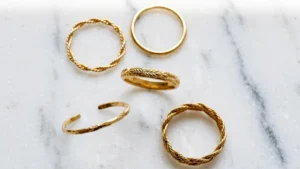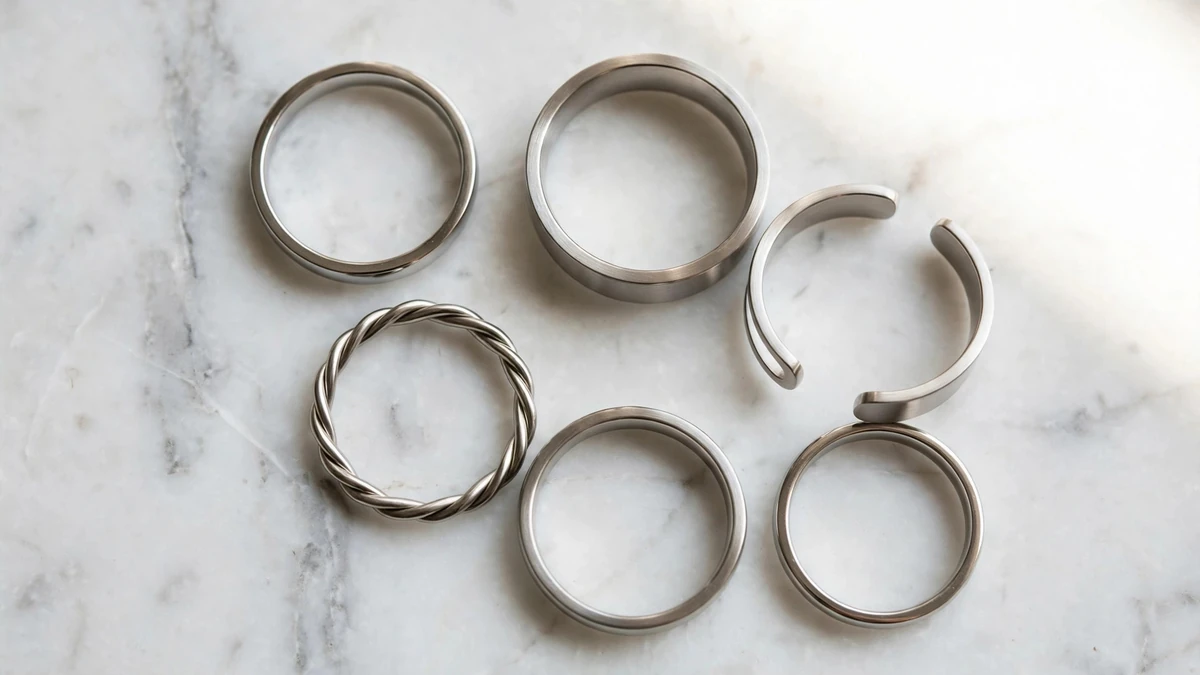

Stainless steel is the quiet workhorse of modern jewellery. It does not tarnish in the shower, it shrugs off scratches that would mark silver, and it costs a fraction of gold or platinum. The problem is not the metal itself. It is the flood of cheap steel rings sold online, some made from low-grade alloys that irritate skin, some coated so thinly that the gold colour rubs off in weeks, and some finished so roughly that the band catches on clothes.
That is why this guide is organised by grade and finish, not just by price. A ring in 316L surgical-grade steel with a polished or brushed finish behaves very differently from a mystery-alloy ring with a flash of gold plating. A PVD coating lasts far longer than a thin electroplate. A well-made steel band can be worn every day for years, while a poor one looks tired within a month.
Below are nine stainless steel rings worth considering in 2027, from a classic polished band to gold-toned PVD styles and slim stacking rings. Each one is described by what it is good at, what to watch for, and who it suits best, so you can choose with your hand in mind, not just the price tag.
Key takeaways
- 316L surgical-grade stainless steel is the standard to look for: it resists tarnish, water and everyday scratches far better than lower-grade alloys.
- A polished or brushed finish shows wear differently; brushed hides fine scratches, polished looks sharper but marks more easily.
- PVD gold coatings last much longer than thin electroplating, but any gold colour on steel will eventually wear at the edges with daily use.
- Steel is very hard, which makes it durable but also difficult or impossible to resize, so getting the size right matters more than with gold.
- Stainless steel rings hold almost no resale value, and the metal is not an investment; buy for wear and looks, and check the grade and coating before you pay.
What stainless steel actually is for rings
Stainless steel is iron mixed with at least 10.5 percent chromium, which forms a thin, invisible oxide layer on the surface. That layer is what keeps the metal from rusting and tarnishing, and it repairs itself when scratched, as long as oxygen can reach the surface. For jewellery, the grade that matters most is 316L, sometimes called surgical-grade steel. It adds molybdenum for extra resistance to corrosion, including from salt water and sweat, which is why it is the grade used in medical implants and in better jewellery.
Steel also contains nickel, which is worth knowing if your skin is sensitive. In 316L the nickel is tightly bound in the alloy and the rate at which it is released is very low, so most people with mild nickel sensitivity wear it without trouble. It is not, however, nickel-free, and a small number of people with strong nickel allergy still react. If you know you react to cheap earrings and watch backs, test a steel ring on one finger for a few days before committing to daily wear.
The other defining feature of steel is its hardness. It is far harder than gold or silver, which is why it resists scratches and keeps a crisp edge for years. The trade-off is that it is difficult to resize. Most jewellers cannot stretch or cut a steel band the way they can a gold one, and many will not attempt it at all. That makes accurate sizing essential, and it is one reason steel bands are best bought from sellers with a clear exchange policy.
How we chose these rings and what to look for
Look first at the grade. A trustworthy listing states 316L stainless steel plainly. Vague wording such as “stainless steel” with no grade, or “steel alloy”, is a warning sign, because lower grades corrode faster and are more likely to irritate skin. Hypoallergenic claims are only meaningful alongside a stated grade, so treat the grade as the fact and the marketing as decoration.

Look next at the coating, if the ring has one. Gold-toned steel is steel with a surface layer, not gold, and the method matters. PVD, or physical vapour deposition, bonds a thin but very hard layer to the steel and lasts far longer than ordinary electroplating. A thick electroplate is the next best option. A thin flash plate, often found on the cheapest rings, can wear through at the edges within weeks of daily wear.
Finally, look at the comfort and the edges. A good steel band has a comfort-fit interior, smoothly rounded so it slides over the knuckle and sits flat against the finger. Sharp inner edges, rough joins and uneven plating are the signs of a ring made to a price rather than a standard. If you are choosing a ring to wear every day, our guide to the best engagement rings of 2027 is a useful comparison, because the same questions about fit, finish and daily wear apply.
The 9 best stainless steel rings of 2027
Tiffany & Co. Polished Band
What we like: A clean, mirror-polished band in 316L steel with the comfort-fit interior Tiffany is known for, and a finish that stays bright with almost no maintenance. What to consider: Premium price for steel, and the mirror polish shows fine scratches more readily than a brushed finish. Metal: 316L stainless steel, polished. Setting: Plain band, comfort fit. Best for: Everyday wear and minimalist styling. Price range: Around $300 to $600.
The simplest steel band done properly: well finished, comfortable, and unchanged after years of wear.
Cartier Steel Signet
What we like: A weighty signet profile in brushed 316L steel with a flat top that takes engraving well, and a solid, jewellery-grade feel on the hand. What to consider: The signet shape suits larger hands better than very slim fingers, and resizing is not practical. Metal: 316L stainless steel, brushed. Setting: Signet, flat top. Best for: Statement wear and engraved gifts. Price range: Around $700 to $1,200.
Steel holds a signet’s crisp face better than softer metals, so buy your exact size and engrave it once.
David Yurman Cable Band
What we like: The signature twisted cable design in polished 316L steel, with a slim profile that stacks well and a finish that resists dulling. What to consider: The cable grooves can trap lotion and soap, so it needs a regular rinse, and it is priced well above plain steel bands. Metal: 316L stainless steel, polished cable. Setting: Cable band, slim profile. Best for: Stacking and signature styling. Price range: Around $400 to $800.
The cable detail stays sharp in steel, so keep the grooves clean and the finish stays bright.
Mejuri Dome Band
What we like: A smooth dome profile in 316L steel at a fair price, with a comfortable rounded interior and a clean, modern look that works alone or stacked. What to consider: The high polish marks with fine scratches over time, and the dome shape can feel bulky on very slim fingers. Metal: 316L stainless steel, polished dome. Setting: Dome band, comfort fit. Best for: Everyday minimalism and first steel rings. Price range: Around $70 to $150.
A fair-priced first steel ring, with a forgiving dome shape that matters when resizing is not possible.
Monica Vinader Brushed Band
What we like: A soft brushed finish that hides fine scratches far better than polished steel, with a slim profile and a comfortable, even weight. What to consider: The brushed texture can look duller than polished steel in low light, and it is not the best choice if you want a high-shine ring. Metal: 316L stainless steel, brushed satin. Setting: Plain band, slim profile. Best for: Daily wear and hands that work hard. Price range: Around $100 to $200.
The practical finish for hard-working hands, because scratches blend into the brushed texture.
Missoma Gold PVD Band
What we like: A warm gold tone applied by PVD over 316L steel, giving the look of gold with the toughness of steel, at a price far below solid gold. What to consider: The gold layer will wear at the edges with years of daily use, and it cannot be re-plated as easily as a gold ring can be re-polished. Metal: 316L stainless steel, gold PVD coating. Setting: Plain band, gold tone. Best for: Gold looks on a steel budget. Price range: Around $60 to $130.
PVD is the best way to put gold colour on steel, and it survives daily wear far better than thin plating.
Maria Black Sculptural Band
What we like: An off-centre, sculptural profile in polished 316L steel that reads as a design piece rather than a plain band, with a solid weight and clean casting. What to consider: The sculptural shape suits some hands and not others, so try the silhouette before committing, and sizing is fixed. Metal: 316L stainless steel, polished. Setting: Sculptural band, asymmetric profile. Best for: Design-led styling and evening wear. Price range: Around $150 to $300.
Steel holds sharp, architectural lines that softer metals lose, so this band makes the statement itself.
Astrid & Miyu Stacking Band
What we like: A slim, lightweight stacking band in 316L steel with a bright polish, sold at a price that makes buying two or three genuinely easy. What to consider: Slim bands bend more easily than wide ones if caught, and the polish shows scratches sooner than a brushed finish. Metal: 316L stainless steel, polished. Setting: Slim stacking band. Best for: Stacking and mixing metals. Price range: Around $50 to $120.
Steel mixes safely with gold and silver without tarnishing its neighbours, so buy your true size.
Thomas Sabo Blackened Band
What we like: A blackened PVD finish over 316L steel with a matte, modern look, and a sturdy band that holds its colour well with normal wear. What to consider: Black coatings show wear at the edges sooner than plain steel, and the matte finish can look flat against very pale skin. Metal: 316L stainless steel, black PVD coating. Setting: Plain band, matte black. Best for: Modern styling and darker palettes. Price range: Around $80 to $180.
Black PVD keeps its colour through daily wear far better than paint or dye, and suits dark looks well.
Which stainless steel ring is right for you
Start with how you will wear it. A plain polished or brushed band is the best choice for a ring that never comes off, because there is no coating to wear away and no stone to loosen. A gold-toned PVD band is better if you want the look of gold without the price, provided you accept that the colour will soften at the edges over years of daily wear. A sculptural or signet band is the choice for a ring worn as a statement rather than a background piece.
Think about your hands, too. Slim fingers suit slim bands and dome profiles, while wider fingers carry signet and sculptural shapes better. If your work is hard on your hands, a brushed finish will look tidier for longer than a mirror polish. If your skin is sensitive, look for a stated 316L grade and test the ring for a few days before wearing it permanently.
Finally, match the ring to the rest of your jewellery. Steel sits comfortably beside silver, white gold and platinum, and a gold PVD band bridges to yellow gold pieces. Our guide to gold jewellery for everyday wear is useful here, because mixing steel with gold is one of the easiest ways to build a jewellery wardrobe that works every day.
The caveats that matter
Stainless steel is honest, durable jewellery, but it is not a precious metal, and it should not be sold as one. It will not appreciate in value, it cannot usually be resized, and a gold colour on steel is a coating, not solid gold. None of that makes it a bad choice. It makes it a practical one, as long as you buy it with those limits in mind and choose the grade and finish deliberately.
| Detail | What is known |
|---|---|
| Best grade to buy | 316L surgical-grade steel, stated plainly by the seller |
| Water and sweat | Resists tarnish and corrosion; safe for showers and swimming |
| Resizing | Usually not possible; buy your exact size and check the exchange policy |
| Nickel sensitivity | 316L has low nickel release but is not nickel-free; test first if you react to cheap metals |
| Gold-toned steel | PVD coating lasts far longer than thin electroplate; all coatings wear at the edges eventually |
| Scratches | Hard metal resists scratching; brushed finishes hide fine marks better than polished |
| Cleaning | Warm soapy water and a soft cloth; avoid abrasive polish on coated rings |
| What it is not | Not a precious metal, not an investment, and not a substitute for solid gold |
If a steel ring causes itching, redness or a rash, stop wearing it and let the skin settle. A reaction is more likely to be the alloy grade or a coating than the steel itself, and a verified 316L ring from a reputable seller is the safest next step. If reactions persist, a different metal, such as titanium or platinum, is worth considering instead.
Checklist: choosing a stainless steel ring honestly
Use these checks before you buy, and again after two weeks of wear.
- Check the grade: 316L stainless steel, stated plainly, not just “stainless steel” or “steel alloy”.
- Check the finish: brushed hides scratches, polished looks sharper; choose for your hands, not the photograph.
- Check the coating: PVD over electroplate for gold or black tones, and ask how thick the layer is.
- Check the size: measure twice, because steel bands usually cannot be resized.
- Check the edges: comfort-fit interior, smooth joins, no rough spots that catch on clothes.
- Check the seller: a clear exchange policy matters more with steel than with gold, because sizing mistakes are harder to fix.
Frequently asked questions
Does stainless steel tarnish?
Good 316L steel does not tarnish in normal wear, including showers and sweat, because the chromium oxide layer protects the surface. Lower-grade steel can discolour, especially with salt water and chemicals, which is why the grade matters more than the price.
Can I wear a stainless steel ring in the shower and while swimming?
Yes. Steel is one of the few jewellery metals that handles water well. Rinse it after swimming in chlorinated or salt water, and dry it before storing, to keep coated finishes in good condition.
Can a stainless steel ring be resized?
Usually not. Steel is too hard and springy for most jewellers to resize safely, and many will refuse. Always buy your exact size, and choose a seller with a free exchange policy in case the fit is wrong.
Is stainless steel hypoallergenic?
316L steel is generally well tolerated and has low nickel release, so most people with mild sensitivity wear it without trouble. It is not nickel-free, so if you have a strong nickel allergy, test the ring for a few days or consider titanium instead.
Does gold-plated stainless steel fade?
Yes, eventually. Any gold colour on steel is a surface layer, and it wears at the edges with daily use. PVD coatings last far longer than thin electroplate, often years rather than weeks, but they are not permanent. If you want a softer, warmer look without a coating, our guide to the best rose quartz rings of 2027 shows how a pale stone can give the same gentle effect.
How do I clean a stainless steel ring?
Warm water, mild soap and a soft cloth are enough for most rings. For cable or textured designs, use a soft brush to clear the grooves. Avoid abrasive cleaners and polishing cloths on coated rings, because they can strip the gold or black layer.
The bottom line
The best stainless steel ring in 2027 is not the cheapest or the flashiest. It is a 316L band in a finish that suits your hands, bought in your exact size from a seller who states the grade plainly. For daily wear, a plain polished or brushed band is the most honest choice. For the look of gold on a steel budget, a PVD-coated band is the one worth paying for.
Choose one ring, wear it for a fortnight, and judge it on comfort, fit and how it looks after real wear, not on how it photographs on day one. That is the honest way to find out whether steel suits you, and a good steel band will still be doing its job long after a cheap one has been forgotten.