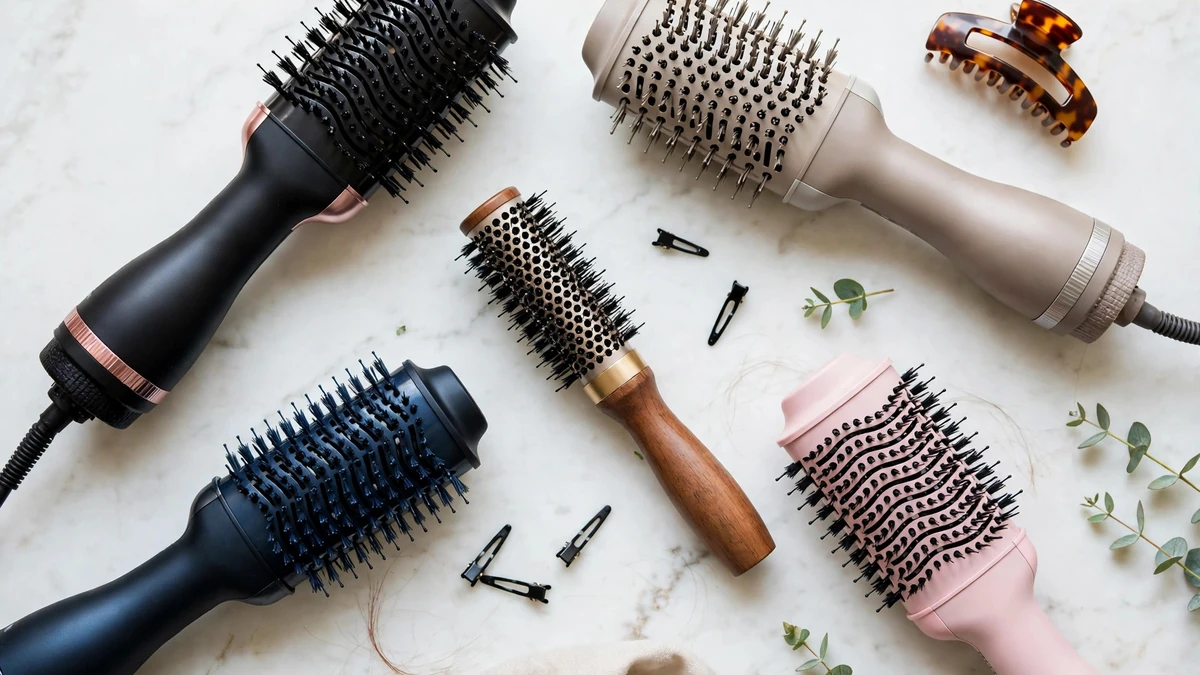

A hair dryer brush turns the awkward two-handed blow-dry into something you can actually do at home, on a weekday morning, without a second mirror and a sore shoulder. It dries and styles in a single pass, so you finish with volume and polish instead of a frizzy compromise. The problem is finding one that suits your hair type, your length, and the finish you want, because the wrong barrel size, heat setting, or bristle type can leave fine hair flat, thick hair half-dried, or curls pulled into a puff.
That is why this guide is organised by hair type and finish, not just by popularity. A large oval brush can be wonderful for long, thick hair and far too much for a short bob, while a slim round brush adds lift at the roots of fine hair but takes forever on waist-length waves. Price is a poor guide on its own: some of the most reliable hot air brushes are mid-priced, and some of the most expensive are the hardest to control if you are new to the tool.
Below are nine hair dryer brushes worth considering in 2027, from a classic one-step volumiser to ceramic and ionic options for thick, curly, and damaged hair, each described by what it is good at, what to watch for, and who it suits best.
Key takeaways
- A hair dryer brush dries and styles in one pass, but the barrel size must match your hair length: large for long hair, slim for short hair and root lift.
- Ionic and ceramic technology reduce frizz and protect shine, while tourmaline coatings distribute heat more evenly.
- Start on damp, towel-dried hair, not dripping wet hair, and use a heat protectant every time.
- Multiple heat and speed settings matter more than a high top temperature, because fine and damaged hair need a gentler pass.
- No hot air brush repairs damaged hair or replaces a proper cut, and the highest heat used daily on fine or colour-treated hair will dry it out.
What a hair dryer brush actually does for hair
A hair dryer brush, sometimes called a hot air brush or one-step dryer, combines a heated barrel with bristles, so it dries your hair while it brushes and shapes it, doing the job of a round brush and a hair dryer at the same time. The warm air flows through vents in the barrel, the bristles grip and tension the hair, and the shape of the barrel decides the finish: a large oval barrel creates soft volume and a smooth bend at the ends, while a slim round barrel gives tighter curl and lift at the roots.
What it does not do is work instantly. Most people get the best results by starting with hair that is about 70 to 80 percent dry, towel-dried and gently detangled, then working in sections from the roots to the ends. Rushing through soaking wet hair on full heat takes longer, not shorter, and is the fastest way to end up with frizz. A slow, steady pass, letting the hair cool for a few seconds on the barrel before you release it, is what sets the shape.
The other quiet benefit is control. With one hand on the brush and the other free, you can see what you are doing at the back of your head, and work in smaller, neater sections than with a separate dryer and brush. That matters most for people who have always struggled with a traditional blow-dry, or who want a smooth, bouncy finish without a weekly salon appointment.
How we chose these brushes and what to look for
Look first at the barrel size and shape. A large oval barrel, around 50 to 60 millimetres, suits medium to long hair and creates soft volume with a gentle bend. A medium barrel, around 40 millimetres, is the most versatile size for shoulder-length hair. A slim barrel, around 30 millimetres or less, is best for short hair, bangs, and root lift, and it is the only size that makes sense for a pixie cut or a short bob.
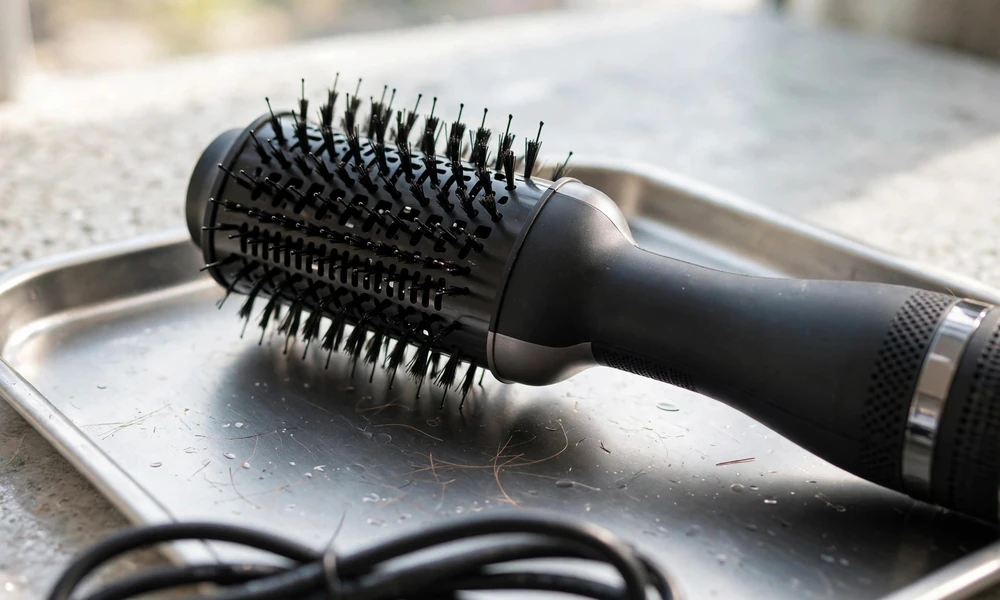
Look next at the heat and speed settings. A good brush offers at least two heat settings plus a cool shot, because fine, thin, and colour-treated hair needs a gentler pass, while thick, coarse hair needs more heat to dry fully. Ionic technology reduces static and frizz, and a ceramic or tourmaline coating spreads the heat evenly so there are no hot spots that scorch one section while another stays damp.
Finally, look at the bristles and the weight. Nylon pin bristles with tufted ends grip without snagging, and mixed lengths hold the section firmly while the barrel shapes it. A heavy brush will tire your arm before you finish the back of your head, so a lightweight handle matters more than it sounds. Our guide to the best heat protectants is worth reading before you start, because a heat protectant is what lets you use a hot tool regularly without the dryness that makes people give up on blow-drying at home.
The 9 best hair dryer brushes of 2027
Revlon One-Step Volumizer Plus
What we like: A large oval barrel, slimmer than the original, with four heat and speed settings, a cool shot, and a ceramic titanium coating that smooths frizz. What to consider: The barrel is still large, so it is less useful on very short hair. Key features: 60 mm oval barrel, ceramic titanium coating, 4 settings. Hair type: Medium to long, thick or wavy. Best for: Big, bouncy volume with a smooth finish. Price range: Budget to mid-range.
The benchmark for one-step dryers, and a strong first choice for long hair that wants volume and polish in one pass.
Dyson Airwrap Multi-Styler
What we like: Uses airflow rather than extreme heat to shape hair, with interchangeable brush attachments, three airflow speeds, and precise heat control. What to consider: Premium price, and the technique takes practice. Key features: Coanda airflow, interchangeable brushes, intelligent heat control. Hair type: All, including fine and damaged. Best for: Gentle styling with multiple finishes from one tool. Price range: Premium.
One tool that dries, smooths, and curls without the heat damage of a traditional dryer, though the technique takes practice.
Shark FlexStyle
What we like: A flexible tool that twists from dryer to multi-styler, with paddle and oval brush attachments and four heat and three airflow settings. What to consider: Bulkier than a simple one-step brush, and the attachments need storing. Key features: Twist-to-transform design, oval and paddle brush attachments, 4 heat settings. Hair type: Medium to long, all textures. Best for: Switching between a smooth blow-dry and a bouncy finish. Price range: Mid-range to premium.
More than one finish from a single tool: dry with the paddle brush, then switch to the oval brush for volume at the ends.
Drybar Double Shot Blow-Dryer Brush
What we like: A lightweight oval barrel with ionic technology, three heat and speed settings, and nylon and tufted bristles. What to consider: A fixed large barrel, so it is not the best pick for short hair. Key features: Oval barrel, ionic technology, 3 settings. Hair type: Medium to long, straight or wavy. Best for: A salon-smooth blow-dry at home. Price range: Mid-range.
One of the easiest brushes to use well for a smooth, glossy blow-dry, even on your first try.
T3 AireBrush Duo
What we like: Interchangeable 38 mm and 50 mm barrels, digital heat control with five settings, a cool shot, and a ceramic coating. What to consider: Two barrels add cost, and the larger one is still too big for very short hair. Key features: Two interchangeable barrels, digital heat control, ceramic coating. Hair type: Short to long, fine to thick. Best for: Versatility across lengths and finishes. Price range: Mid-range to premium.
Genuinely useful barrels: slim for root lift and short layers, large for smooth volume on longer sections.
Hot Tools 24K Gold One-Step Volumizer
What we like: A gold-plated barrel that heats evenly, an oval shape for volume, and a lightweight handle. What to consider: Fewer heat settings than some rivals, and the gold finish can feel very hot on high. Key features: 24K gold barrel, oval shape, lightweight design. Hair type: Medium to long, thick or coarse. Best for: Fast drying with a smooth, shiny finish. Price range: Budget to mid-range.
A straightforward, affordable option for thick hair that needs real heat to dry fully.
Conair Infiniti Pro Hot Air Brush
What we like: A slim 38 mm ceramic barrel, two heat settings plus a cool shot, and a compact, lightweight body. What to consider: Less powerful, so thick hair takes longer, and the barrel is too small for big, loose volume. Key features: 38 mm ceramic barrel, 2 heat settings, cool shot. Hair type: Short to medium, fine or thin. Best for: Root lift, short layers, and travel. Price range: Budget.
An easy, low-cost start for short and fine hair, giving root lift and a tidy bob finish, though not big salon volume on long hair.
Amika Blowout Babe Thermal Brush
What we like: A heated thermal brush with a tourmaline barrel, adjustable temperature up to 230 degrees, and a long, slim shape for layers and bangs. What to consider: A thermal brush, not a dryer, so hair must be dry first, and the high top temperature needs care on fine hair. Key features: Tourmaline barrel, adjustable heat, long slim shape. Hair type: Medium to long, straight or wavy. Best for: Smoothing and shaping already-dry hair. Price range: Mid-range.
The right tool for the second day, when dry hair has lost its shape: a quick pass smooths the ends and lifts the roots.
Lange Le Volume 2-in-1 Volumizing Brush Dryer
What we like: A large 60 mm titanium oval barrel, three heat settings, and a long cord for the back of the head. What to consider: Too much barrel for short hair, and heavier than some rivals. Key features: 60 mm titanium barrel, 3 heat settings, extra-long cord. Hair type: Medium to long, thick or wavy. Best for: Big, smooth volume on long hair. Price range: Mid-range.
A sensible choice for long hair that wants smooth volume without juggling a dryer and a round brush.
Which hair dryer brush is right for your hair
Fine and thin hair needs a gentler pass. Choose a brush with at least two heat settings and a cool shot, start on the lowest heat, and keep the brush moving so no section takes too much heat. A medium or slim barrel gives lift at the roots without flattening the lengths. A lightweight hair oil on the ends after drying adds shine without weighing fine hair down.
Thick and coarse hair needs power and a large barrel. A 50 to 60 mm oval brush dries faster and creates smoother volume, and a ceramic or tourmaline coating spreads the heat evenly. Work in smaller sections than you think you need to, because a thick section dries on the outside and stays damp inside, which is why a blow-dry falls flat within an hour.
Curly and wavy hair needs a brush that smooths without pulling the curl into frizz. A large oval barrel with ionic technology works well for a stretched, smooth finish, while a slim barrel defines the shape around the face. To keep your curl pattern, use low heat on the roots and front sections only, rather than pulling every curl straight.
The caveats that matter
A hair dryer brush is a hot tool, and heat is what damages hair when it is used carelessly. The most common mistakes are starting on soaking wet hair, using the highest heat on fine or colour-treated hair, and holding the brush still in one place. All three dry hair out, fade colour faster, and make split ends worse over time. The fix is simple: towel-dry first, use a heat protectant, and keep the brush moving.
| Detail | What is known |
|---|---|
| Best barrel for long hair | 50 to 60 mm oval barrel for smooth volume and a gentle bend |
| Best barrel for short hair | 30 to 38 mm round barrel for root lift, layers, and bangs |
| When to start styling | On towel-dried hair, about 70 to 80 percent dry, never dripping wet |
| Heat setting for fine hair | Low to medium heat with a cool shot to set the shape |
| Heat setting for thick hair | Medium to high heat, in smaller sections, with a heat protectant |
| Who should use lower heat | Fine, damaged, or colour-treated hair, and anyone styling daily |
| What to avoid | Starting on soaking wet hair, holding the brush still, and skipping heat protectant |
| What it does not do | It does not repair damaged hair, replace a haircut, or hold a style without cooling first |
If your hair is already damaged, breaking, or very dry, a hot air brush will not fix it, and daily high heat will make it worse. Use the lowest heat that gets the job done, and speak to a stylist if breakage or thinning is getting worse.
Checklist: choosing a hair dryer brush honestly
Use these checks before you buy, and again after your first week.
- Check the barrel size: large oval for long hair, slim round for short hair and root lift.
- Check the heat settings: at least two heat levels plus a cool shot, so you can match heat to your hair.
- Check the weight: hold it for a minute, because a heavy brush tires your arm before you finish the back.
- Check the bristles: nylon pins with tufted ends grip without snagging, and mixed lengths hold sections firmly.
- Start on damp hair: towel-dry to about 70 percent dry, apply heat protectant, then style in sections.
- Let it cool: hold each section on the barrel for a few seconds, then use the cool shot to set the shape before releasing it.
Frequently asked questions
Can I use a hair dryer brush on wet hair?
You can, but do not start on soaking wet hair. Towel-dry first until your hair is about 70 to 80 percent dry, then use the brush. Starting on dripping wet hair takes longer, creates more frizz, and exposes your hair to heat for far longer than it needs.
Are hair dryer brushes bad for your hair?
They are no worse than a traditional blow-dry, and often gentler, because you make fewer passes. The damage comes from high heat, daily use, and skipping heat protectant. Use the lowest heat that works and protect your hair every time.
What size barrel should I choose?
Match the barrel to your length: 50 to 60 mm oval for medium to long hair and soft volume, 38 to 40 mm for shoulder-length hair, 30 mm for short hair, bangs, and root lift.
Can a hair dryer brush curl hair?
Yes, with a slim round barrel. Wrap a section around it, hold it for a few seconds, then release and let it cool. The curl will be soft and loose, and holds best on fully dry hair set with a cool shot.
Should I use heat protectant with a hair dryer brush?
Yes, every time. A heat protectant is the single most important step for keeping hair healthy when you style with hot air regularly. Apply it to damp hair before you start. Our guide to how to wash hair properly covers the full routine, because healthy styling starts with how you wash and dry your hair.
How do I clean a hair dryer brush?
Unplug it and let it cool completely, then remove trapped hair with your fingers or a wide-tooth comb, and wipe the barrel with a dry cloth. Do not run it under water, and clean it weekly if you use it daily.
The bottom line
The best hair dryer brush in 2027 is not the most expensive or the most powerful. It is the one that matches your hair length, your hair type, and the finish you actually want, with enough heat settings to be gentle when your hair needs it. For long, thick hair, a large oval brush with ceramic or tourmaline coating is a strong choice. For short or fine hair, a slim barrel with low heat and a cool shot is the smarter start.
Choose one brush, start on towel-dried hair with a heat protectant, work in sections, and let each section cool before you release it. That is the honest way to get a smooth blow-dry at home, without the damage that makes people give up on hot tools.