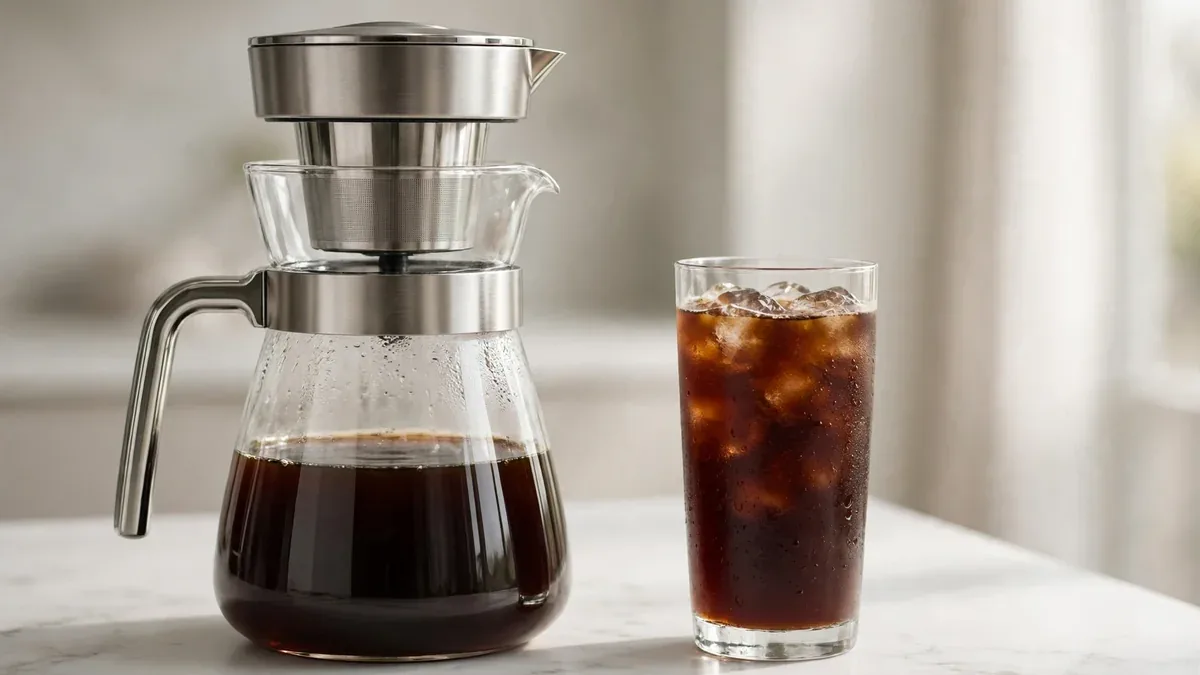
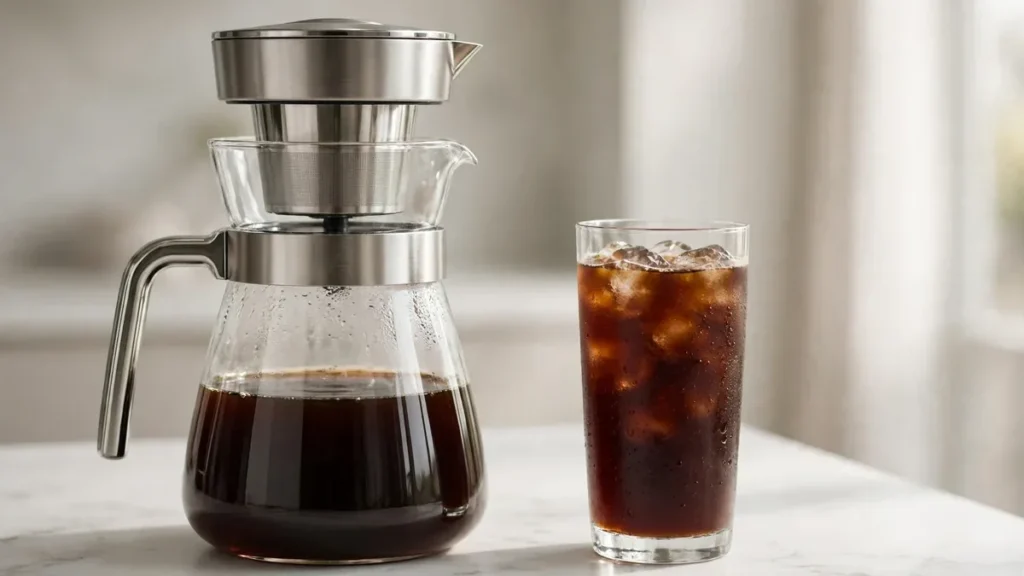
Cold brew is the quiet luxury of the coffee world. It asks for almost nothing, no heat, no pressure, no noise, and in return it gives you a cup that is smoother, sweeter and less acidic than anything a hot brewer can produce. The catch is time. Good cold brew needs twelve to twenty-four hours of slow steeping, and the difference between a rich, chocolatey concentrate and a cloudy, bitter jar of disappointment usually comes down to the maker you use. That is why choosing well among the best luxury cold brew maker brands matters.
A luxury cold brew maker is not simply a prettier jar. The best ones use thick borosilicate glass that does not hold odours, stainless steel filters fine enough to keep sediment out, airtight lids that let a batch keep for two weeks, and proportions that get the coffee-to-water ratio right without guesswork. Cheap makers cut corners in exactly these places, and you taste every one of them.
Below are nine makers worth considering in 2027, from a classic American workhorse to a Japanese glass showpiece and a slow-drip tower. Each one is described by what it does well, what to watch for, and who it suits best.
Key takeaways
- Cold brew is smoother and less acidic than hot coffee because cold water extracts fewer bitter compounds over a long, slow steep.
- A fine stainless steel filter and an airtight lid matter more than looks: they decide whether your brew is clean and whether it keeps for two weeks.
- Use coarse grounds at about one part coffee to eight parts water, then steep for twelve to eighteen hours.
- Glass makers show off the brew beautifully but need care; steel and BPA-free plastic makers travel better and suit busy kitchens.
- No maker fixes stale beans or a wrong grind, and even the best concentrate needs diluting before you drink it.
What cold brew actually is, and why the maker matters
Cold brew is coffee steeped in cold or room-temperature water for many hours, never heated at any point. That slow extraction pulls out the sweet, chocolatey and nutty notes while leaving behind much of the acidity and bitterness hot water draws out. The result is a concentrate you dilute with water or milk, serve over ice, and keep in the fridge for up to two weeks. Unlike iced coffee, which is simply hot coffee cooled down, it tastes rounder, softer, and far easier to drink black.
The maker matters because steeping is a blunt process. With no heat and no pressure to help, the filter is the only thing standing between you and a gritty cup. A coarse mesh lets sediment through and leaves a muddy finish; one that is too fine clogs and slows the drip to a crawl. The best makers balance the two, with a mesh fine enough to catch the grounds but open enough to drain cleanly.
Capacity matters just as much. A maker that brews a single glass is a novelty, not a habit. A maker that brews a litre or more gives you a week of iced coffee from one evening of preparation. Look for one that fits your fridge shelf, seals properly, and pours without a second jug.
How we chose these makers and what to look for
Look first at the filter. A reusable stainless steel mesh filter is the mark of a serious maker: it lasts for years, rinses clean, and keeps sediment out. Look next at the seal. An airtight lid keeps your concentrate fresh and stops it absorbing fridge smells, which cold brew does eagerly. Look finally at the glass. Thick borosilicate glass resists thermal shock and does not stain, while thin soda-lime glass chips and clouds over time.
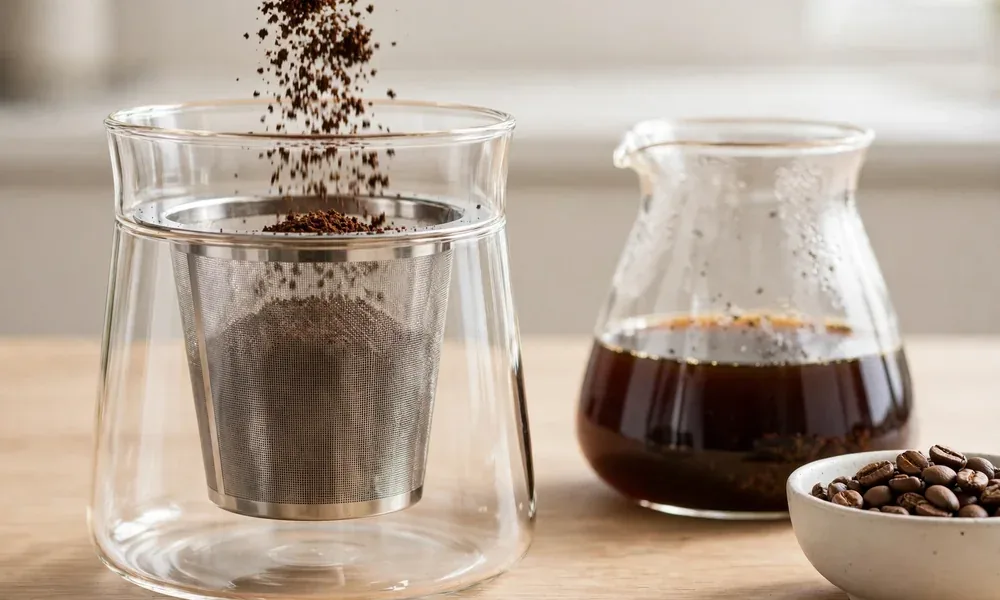
Size, weight and cleaning follow from those three choices. A maker you cannot lift comfortably when full will not get used, and one with corners you cannot reach with a brush will grow stale flavours. If you already enjoy slow coffee rituals, our guide to the best pour-over coffee makers covers the hot-brewed side of the same craft, and many of the same ideas about grind, ratio and patience apply here too.
Toddy Cold Brew System
What we like: The original American cold brew system, in production for decades, with a simple felt-filter design that produces exceptionally smooth, low-acid concentrate in large batches. What to consider: The felt filters need replacing and careful cleaning, and the brewing container is plain plastic rather than display glass. Capacity: About 2 litres of concentrate. Material: BPA-free plastic with felt and paper filters. Best for: Households that drink cold brew every day.
The original, and still the benchmark for smooth, large-batch cold brew.
Hario Mizudashi Cold Brew Coffee Pot
What we like: Elegant Japanese borosilicate glass, a fine permanent mesh filter, and a slim shape that fits a fridge door shelf. What to consider: A smaller capacity than batch brewers, and the glass needs gentle handling. Capacity: 600 ml or 1 litre. Material: Borosilicate glass with a stainless steel mesh filter. Best for: Small households and design-led kitchens.
Fill it in the evening, leave it on the counter overnight, and pour straight from the pot in the morning.
OXO Brew Cold Brew Coffee Maker
What we like: A rainmaker-style lid that spreads water evenly over the grounds, a clear measurement markings, and a neat pour spout with a stopper. What to consider: The plastic body will not suit purists who want all glass, and the filter needs a good rinse after each batch. Capacity: About 950 ml of concentrate. Material: BPA-free plastic with a stainless steel mesh filter. Best for: Beginners who want consistent results first time.
The perforated lid fixes uneven wetting, the most common first-timer mistake, with no extra effort.
Filtron Cold Water Coffee Brewer
What we like: A large, cafe-style batch brewer with a generous capacity and a proven paper-filter system that produces a remarkably clean cup. What to consider: It is bulky, the paper filters are a running cost, and it looks utilitarian. Capacity: About 1.5 litres of concentrate. Material: BPA-free plastic with paper filters. Best for: Serious drinkers and home hosts.
The brewer behind many small cafes: one Sunday brew covers the whole working week.
Yama Glass Cold Drip Tower
What we like: A slow-drip tower in hand-blown borosilicate glass that turns brewing into theatre, producing a bright, delicate cold brew unlike any immersion method. What to consider: It is expensive, fragile, slow, and needs a stable shelf and patience to dial in the drip rate. Capacity: About 600 ml to 1 litre, depending on the model. Material: Borosilicate glass with a ceramic and metal valve. Best for: Collectors and slow-coffee enthusiasts.
Water drips one drop at a time over several hours, giving a lighter, more aromatic cup than immersion brewing.
KitchenAid Cold Brew Coffee Maker
What we like: A handsome glass and stainless steel design that matches the KitchenAid range, with a built-in tap for easy serving straight from the fridge. What to consider: Premium pricing, and the tap needs regular cleaning to stay fresh. Capacity: About 1 litre of concentrate. Material: Glass carafe with a stainless steel brewer and tap. Best for: Kitchens that already love the KitchenAid look.
Open the tap, fill your glass, and the maker goes straight back on the shelf.
Asobu Coldbrew Insulated Portable Brewer
What we like: A vacuum-insulated steel brewer that keeps concentrate cold for hours, with a fine mesh filter and a take-away lid. What to consider: A smaller capacity than countertop makers, and the steel body hides the brew from view. Capacity: About 1 litre. Material: Double-wall stainless steel with a mesh filter. Best for: Commuters, travellers and small fridges.
Brew overnight, screw on the lid, and carry your cold brew to work without a second container.
Ovalware RJ3 Cold Brew Maker
What we like: A slim glass carafe with an airtight steel lid, a fine mesh filter, and a design that pours cleanly with one hand. What to consider: The narrow neck makes the filter slightly fiddly to remove, and capacity is modest. Capacity: About 1 litre. Material: Borosilicate glass with a stainless steel filter and lid. Best for: Fridge-door storage and neat kitchens.
The slim profile slides into a crowded fridge where wider makers will not go.
Coffee Gator Cold Brew Coffee Maker
What we like: A sturdy glass mason-style jar with a steel filter, measurement markings, and a straightforward design at a fair price. What to consider: The glass is thicker and heavier than rivals, and the lid seal needs a firm twist to close fully. Capacity: About 1.4 litres. Material: Borosilicate glass with a stainless steel mesh filter. Best for: Value-seekers who want a large batch.
It brews more than most makers at this price, and the jar doubles as storage.
Glass, steel or plastic: what the material changes
Glass is the luxury default for good reasons. Borosilicate glass does not absorb flavours, so yesterday’s dark roast never haunts today’s light roast. It also shows the brew: you can watch the colour deepen as it steeps. The trade-off is fragility. Even thick glass chips if it knocks against a tap.
Stainless steel solves the fragility problem and adds insulation. A double-wall steel brewer keeps concentrate cold for hours, which suits commuters and travellers, and it will survive a drop that would end a glass maker. The cost is visibility: you judge readiness by time rather than by colour.
BPA-free plastic is the practical middle ground. It is light, it does not break, and it is the material behind the largest batch brewers, because a two-litre glass vessel would be heavy and awkward. Good plastic is neutral in taste and easy to clean, but it can stain over months of dark roasts. Choose for how you actually live: glass for a calm, design-led kitchen, steel for life on the move, plastic for big batches and busy families.
The filter matters just as much as the body. Stainless steel mesh is the standard for luxury makers: permanent, easy to rinse, and fine enough to catch grounds without slowing the drain. Paper filters give the cleanest cup but add a running cost. Felt filters, as used by Toddy, give a famously smooth result but need thorough washing. Whatever the filter, rinse it under hot water as soon as the grounds are out: dried coffee oil turns rancid quickly, and it is the most common reason a good maker starts tasting stale.
How to brew: ratio, grind and timing
The ratio is the single biggest lever on flavour. A good starting point is one part coffee to eight parts water by weight, which gives a strong concentrate you dilute roughly one-to-one with water or milk. If you prefer a ready-to-drink brew rather than a concentrate, use one part coffee to ten or eleven parts water. Weigh both if you can: scoops are inconsistent between beans.
Grind coarse, like raw sugar or coarse sea salt. A fine grind over-extracts during a long steep, tastes bitter, and slips through mesh into your glass. If your coffee tastes bitter and silty, the grind is almost always the cause. If it tastes weak and sour, the steep was probably too short, and an extra few hours will usually fix it.
Steep for twelve to eighteen hours at room temperature. Shorter steeps taste brighter and lighter; longer ones taste deeper and sweeter, but past twenty-four hours the brew can turn woody. Once done, remove the grounds promptly and refrigerate the concentrate sealed. It keeps up to two weeks and tastes best in the first seven days. Dilute to taste and serve over fresh ice.
Bean choice matters too. Medium and dark roasts are the classic choice, giving chocolate, caramel and nut notes. Light roasts can be wonderful as well, brighter and more floral, but they need a slightly longer steep. Whatever the roast, buy whole beans and grind them the evening you brew: pre-ground coffee goes stale quickly, and a stale bean is the one flaw no luxury maker can correct. If you enjoy exploring coffee beyond your own kitchen, the best places for coffee in Seattle show how much the bean and the brew method shape the cup.
The caveats that matter
Cold brew is gentle on the stomach, but not gentle on caffeine. A large glass of undiluted concentrate can carry far more caffeine than a normal cup of coffee, so always dilute, and be careful with a second glass late in the day. Anyone sensitive to caffeine, pregnant, or managing sleep should treat concentrate with the same respect as espresso.
Cleanliness is the other quiet risk. A maker that sits damp with old grounds grows mould quickly, especially in the filter and under the lid seal. Wash every part with hot soapy water after each batch and let it dry fully before storing. A sour or musty note is almost always a cleaning problem, not a bean problem. For a gentler ritual on days when coffee feels like too much, our guide to rooibos tea covers a naturally caffeine-free brew that rewards the same slow approach.
| Detail | What is known |
|---|---|
| Best starting ratio | One part coffee to eight parts water for concentrate, one to ten for ready-to-drink |
| Grind size | Coarse, like raw sugar; fine grinds turn bitter and slip through filters |
| Steep time | Twelve to eighteen hours at room temperature; over twenty-four hours can turn woody |
| How long it keeps | Up to two weeks sealed in the fridge, best within the first seven days |
| Caffeine | Concentrate is strong; always dilute, and treat a large glass like an espresso |
| Best filter | Fine stainless steel mesh for daily use; paper for the cleanest cup |
| Cleaning | Hot soapy water after every batch; dry fully before storing to prevent mould |
| What it does not fix | Stale beans, a wrong grind, or a dirty filter; no maker rescues those |
Price deserves an honest word. A luxury maker costs more than a jar and a sieve, and the difference buys better glass, finer filters, airtight seals and designs that last for years. What it does not buy is better coffee on its own: a careful brewer with fresh beans and a mid-priced maker will always out-brew a careless one with the most expensive tower.
Checklist: choosing a cold brew maker honestly
Use these checks before you buy, and again after your first month of brewing.
- Check the filter: fine stainless steel mesh, or paper if you want the cleanest cup, rinsed clean after every batch.
- Check the seal: an airtight lid that keeps the concentrate fresh and free of fridge smells for two weeks.
- Check the capacity: at least a litre of concentrate, so one evening of brewing covers the week.
- Check the fit: measure your fridge shelf with the lid on before you buy, not after it arrives.
- Check the grind: coarse, like raw sugar, weighed at roughly one part coffee to eight parts water.
- Check the cleaning: every part reachable with a brush, no hidden corners, dry fully before storing.
Frequently asked questions
How long does cold brew take to make?
Twelve to eighteen hours at room temperature. Shorter steeps taste brighter, longer ones deeper, but beyond twenty-four hours the brew can turn woody.
What grind should I use for cold brew?
Coarse, like raw sugar or coarse sea salt. A fine grind over-extracts during a long steep, tastes bitter, and slips through the filter into your glass. If your brew is silty or bitter, grind coarser first.
How long does cold brew keep in the fridge?
Sealed airtight, concentrate keeps for up to two weeks and tastes best within seven days. Remove the grounds as soon as the steep is done.
Is cold brew stronger than hot coffee?
As a concentrate, yes, which is why you dilute it roughly one-to-one with water or milk. A diluted glass is similar to a normal cup; an undiluted one is not.
Can I use any coffee beans for cold brew?
Yes, but medium and dark roasts are the classic choice, giving chocolate and caramel notes that suit the method. Light roasts work too and taste brighter and more floral, though they usually need a slightly longer steep. Buy whole beans and grind them fresh.
Do I need paper filters for cold brew?
No. A fine stainless steel mesh filter is enough for most makers and lasts for years. Paper filters give a cleaner cup but add a running cost, so they are a preference, not a necessity.
The bottom line
The best luxury cold brew maker brands in 2027 are not the ones with the most dramatic designs or the highest prices. They are the ones with a fine filter, an airtight seal, honest capacity and materials that last. Toddy remains the batch-brewing workhorse, Hario the elegant everyday choice, OXO the most forgiving for beginners, and Yama the showpiece for slow weekends.
Choose the maker that fits your fridge, your habits and your taste, buy fresh whole beans, grind them coarse, and give the steep its full twelve to eighteen hours. Do that, and a quiet evening of preparation becomes a week of smooth, sweet coffee that no cafe queue can match.