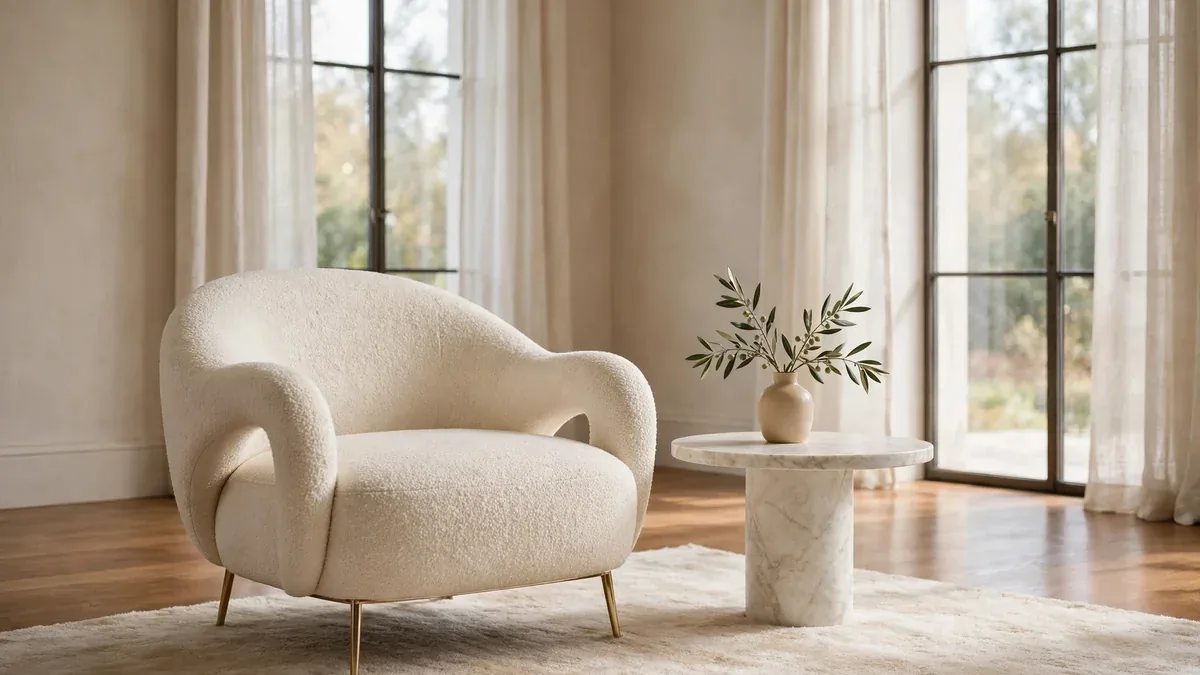

The Best Luxury Accent Chair Brands make the difference between a living room that looks finished and one that only looks furnished. An accent chair is the piece that carries the personality of a room: it adds colour, shape and texture where a sofa has to stay neutral, and it gives you somewhere genuinely comfortable to sit with a book, a coffee or a conversation. When it is made well, it also lasts for decades, ageing gracefully instead of sagging, creaking or losing its shape after two winters.
The problem is that the price of a luxury chair does not always tell you how good it is. Some of the most expensive names in furniture charge a premium for a label while using the same foam and frame construction as a mid-range brand. Others are quieter workshops and design houses whose chairs are built by hand, upholstered in fabrics that survive daily use, and backed by warranties that actually mean something. Knowing which is which matters, because a luxury accent chair is a purchase you will live with every day.
Below are nine brands worth considering in 2027, from Italian design houses to American heritage makers, covering classic wingbacks, modern swivels, sculptural lounge chairs and deep reading chairs. Each one is described by what it does best, what to watch for, and who it suits, so you can choose a chair that fits your room, your body and your budget, not just a showroom photograph.
Key takeaways
- A luxury accent chair is defined by its frame, suspension and upholstery, not by its price tag: look for kiln-dried hardwood frames, eight-way hand-tied or sinuous spring suspension, and high-resilience foam or down-wrapped cushions.
- Measure twice before you buy: a chair that is too deep will swallow a small room, and one that is too narrow will never be comfortable for reading.
- Performance fabrics such as treated linen, wool blends and high-rub-count velvets hold up far better in daily use than delicate silks or loosely woven bouclé in a busy household.
- Lead times for made-to-order luxury chairs are commonly 8 to 16 weeks, and white-glove delivery is worth the cost for a heavy, upholstered piece.
- No chair suits every room and every body, and a brand’s most famous design is not always its most comfortable one, so sit in a chair before you commit when you can.
What makes an accent chair truly luxury
A luxury accent chair starts with what you cannot see. The frame should be kiln-dried hardwood, joined with dowels, corner blocks and screws rather than staples alone, because that is what stops a chair from wobbling after a few years of daily use. The suspension matters just as much: eight-way hand-tied springs are the traditional gold standard for seat support, while high-quality sinuous springs are a reliable modern alternative. Cheap chairs use webbing or thin foam over a softwood frame, and they announce it within a year, with a sagging seat and a creak every time you sit down.
The cushion is the next thing to judge. High-resilience foam holds its shape and springs back after you stand up, while a down-wrapped foam core gives a softer sit without collapsing. Pure down feels wonderful on day one but needs regular plumping. The best brands are honest about what is inside their cushions and offer a choice of fills.
Then there is the upholstery. Luxury is not a single fabric. It is a fabric chosen for the job: a tightly woven wool or a performance linen for a chair that will be used every evening, a rich velvet for a formal sitting room, a full-grain leather that develops a patina instead of peeling. The rub count, which measures how many cycles of abrasion a fabric survives before it shows wear, is a useful guide: a count of 30,000 or above is a sensible minimum for a chair in daily use. Our 2027 guide to luxury fabrics explains how to read those numbers and why the weave matters as much as the fibre.
Finally, luxury shows in the details you touch every day: the smoothness of a swivel mechanism, the finish of wooden legs, the evenness of the piping, the way a cushion cover fits without puckering. These small things separate a chair that feels expensive from one that only looks expensive in a photograph.
How we chose these brands and what to look for
We looked for brands with a proven record of building chairs that last, not just the largest advertising budgets. That means established design houses with their own workshops or long-standing manufacturing partners, clear information about frame and cushion construction, and designs that have stayed in production for years. We also valued brands that offer a real choice of fabrics and finishes, because a luxury chair should be made for your room.

Comfort was judged on seat height, seat depth and back angle, the three measurements that decide whether a chair is pleasant to sit in for an hour. A seat height of around 45 to 48 centimetres suits most adults, while a seat depth of 55 to 60 centimetres gives enough room to curl up without feeling as though you are sliding forward. A back that reclines slightly, at around 100 to 105 degrees, is more relaxing than a bolt-upright one, and a chair with a matching ottoman is worth considering if you plan to read in it for long stretches.
We also weighed practicality. A white bouclé chair looks beautiful in a photograph and shows every mark in a home with children or pets, while a mid-tone velvet or a patterned wool hides daily life far better. Removable cushion covers, a clear cleaning code, and a brand that offers reupholstery all add years to a chair’s life.
Price is included as a guide, not a verdict. The brands below range from around 1,500 pounds for an accessible luxury chair to well over 10,000 pounds for an iconic design piece, and the right choice depends on how the chair will be used.
The 9 best luxury accent chair brands of 2027
RH (Restoration Hardware)
What we like: Large-scale, deeply comfortable silhouettes in Belgian linen and soft velvets, with a relaxed, lived-in look that suits generous rooms. Frames are solid, the cushioning is famously deep and soft, and the range of fabrics and finishes is extensive.
What to consider: The scale is genuinely large, so measure carefully, and the relaxed, sink-in comfort means the chairs need regular plumping. Prices sit firmly in the luxury range, and lead times can be long.
Baker Furniture
What we like: American heritage craftsmanship, hand-built frames, and a catalogue that covers everything from classic English wingbacks to clean-lined contemporary designs. The upholstery work is meticulous, and the brand has supplied fine homes and hotels for over a century.
What to consider: Traditional styling dominates the range, so it suits classic and transitional interiors more than starkly modern ones, and prices reflect the handwork involved.
B&B Italia
What we like: Italian modern design at its most refined, with sculptural forms, excellent engineering, and fabrics and leathers chosen by designers rather than by committee. Chairs such as the Tufty-Time and the Husk are modern classics.
What to consider: The aesthetic is firmly contemporary, and the price reflects both the design pedigree and the Italian manufacturing. Some designs prioritise form over deep, sink-in comfort.
Minotti
What we like: Understated Italian luxury with exceptional proportions, beautiful tailoring, and a calm, architectural feel. The chairs sit well, look elegant from every angle, and pair naturally with a low, modern sofa.
What to consider: The palette is restrained and the styling is quiet, so it suits people who prefer subtlety to statement pieces, and prices are at the top end of the market.
Herman Miller (Eames)
What we like: The Eames Lounge Chair and Ottoman, designed by Charles and Ray Eames in 1956, remains one of the most comfortable and recognisable chairs ever made, with moulded plywood, full-grain leather and a swivel base that still feels modern.
What to consider: It is an investment piece with a premium price, and the classic black leather version suits a study or a modern living room better than a pale, traditional interior. Buy only from authorised dealers to avoid imitations.
Cassina
What we like: A historic Italian design house with the authorised rights to icons such as the Le Corbusier LC2 and the Charlotte Perriand chaise, made to the original specifications with superb materials and construction.
What to consider: The most famous designs are architectural and firm rather than soft and sink-in, and the price reflects their status as design classics.
Ligne Roset
What we like: French design with a playful, sculptural edge, from the famously comfortable Togo to elegant swivel chairs and compact designs that suit smaller rooms. The brand is strong on colour and on innovative, moulded forms.
What to consider: Some designs, including the Togo, are low and deep, which suits lounging more than upright sitting, and the relaxed styling is not for a formal interior.
Soho Home
What we like: Members-club style at a more accessible luxury price, with rich velvets, deep colours and a relaxed, lived-in glamour. The range is wide, the fabrics are chosen for atmosphere, and the designs sit comfortably in both modern and traditional rooms.
What to consider: The velvet-heavy range needs care in a home with pets or small children, and some designs are more about the look than about long, deep reading sessions.
Mitchell Gold + Bob Williams
What we like: American-made comfort with a design-led eye, generous seat depths, excellent fabric choices, and a reputation for chairs that are genuinely comfortable to sit in for hours. The brand offers a wide range of frames and a made-to-order service.
What to consider: The styling is relaxed and contemporary rather than formal, and the brand is less well known outside North America, which can affect resale and service in other markets.
Accent chair styles explained
The style of a chair decides where it belongs and how it will be used. A wingback, with its high back and side wings, is the classic reading chair: it shelters you from draughts, supports your head, and suits a traditional room. A slipper chair has no arms and a low profile, which makes it ideal for a small room or a bedroom corner, though it is less comfortable for long sitting.
A swivel chair turns to face the conversation or the television, which makes it the most flexible choice for a living room that does several jobs. A barrel chair wraps around you with a curved back, giving a cosy, enveloping feel that works well in a corner or beside a fireplace. A lounge chair, such as the Eames, is deeper and lower, designed for relaxing rather than for sitting upright, and it usually pairs with an ottoman.
Scale matters as much as style. A chair should leave at least 45 centimetres of clear space around it, and its seat should sit at a similar height to your sofa so the room feels balanced. Our guide to celebrity home decor shows how designers use a single strong chair to set the tone of a whole room.
The caveats that matter
A luxury chair is a long-term purchase, so the caveats are practical rather than dramatic. The most common mistake is buying a chair that has never been sat in, based on a photograph alone. A chair can look perfect and feel wrong: too deep, too firm, too low, or with arms at the wrong height for reading. Whenever possible, visit a showroom and sit in the chair for at least ten minutes, in the position you will actually use it.
Delivery is the second thing people underestimate. Luxury chairs are heavy, often made to order, and usually delivered by a two-person team. Measure every doorway, hallway and stair turn between the street and the chair’s final position, and check whether the legs come off for delivery. White-glove delivery is worth the cost for a piece of this size and weight.
| Detail | What is known |
|---|---|
| Best frame | Kiln-dried hardwood, joined with dowels, corner blocks and screws |
| Best suspension | Eight-way hand-tied springs, or high-quality sinuous springs |
| Best cushion fill | High-resilience foam, or foam wrapped in down for a softer sit |
| Minimum fabric rub count | 30,000 cycles for daily use; higher is better for a busy household |
| Typical seat height | 45 to 48 centimetres for most adults |
| Typical seat depth | 55 to 60 centimetres for comfortable reading |
| Typical lead time | 8 to 16 weeks for made-to-order chairs |
| What to avoid | Softwood frames, stapled joints, thin foam over webbing, and chairs bought unseen |
Finally, think about how the chair will age. Leather develops a patina and can be conditioned, while fabric can be cleaned or re-covered. A chair with a removable cover or a brand that offers reupholstery will last far longer than one that cannot be refreshed. A soft throw, such as one from our guide to the best cashmere blankets, can protect the arms and back of a chair while adding warmth to the room.
Checklist: choosing a luxury accent chair honestly
Use these checks before you order, and again when the chair arrives.
- Measure the space, the doorways and the stair turns, and leave at least 45 centimetres of clear space around the chair.
- Sit in the chair for ten minutes in your usual reading position, and check the seat height, depth and arm height.
- Check the frame and suspension: ask for kiln-dried hardwood and eight-way hand-tied or sinuous springs.
- Check the fabric: a rub count of 30,000 or above, a cleaning code you can live with, and a colour that suits daily life, not just a photograph.
- Check the lead time, the delivery method and the returns policy before you pay, especially for made-to-order chairs.
- Check the aftercare: removable covers, a reupholstery service, and a warranty that covers the frame for at least five years.
Frequently asked questions
How much should a luxury accent chair cost?
A good luxury accent chair usually costs between 1,500 and 5,000 pounds, with iconic design pieces such as the Eames Lounge Chair or a Cassina classic costing considerably more. Below that range you can still find well-made chairs, but the frame, suspension and fabric are usually where the savings are made.
What size accent chair do I need?
Most accent chairs are between 70 and 90 centimetres wide, with a seat height of 45 to 48 centimetres and a seat depth of 55 to 60 centimetres. Measure your room first, leave at least 45 centimetres of clear space around the chair, and check that its seat height matches your sofa so the arrangement feels balanced.
Which fabric is best for an accent chair?
It depends on how the chair will be used. Wool blends and performance linens are hard-wearing and practical for daily use, velvet is rich and comfortable but needs care, and full-grain leather ages beautifully but feels cold at first. Look for a rub count of 30,000 or above for a chair that will be sat in every day.
Are accent chairs comfortable for reading?
Yes, when they are chosen for comfort rather than looks alone. A wingback or a deep lounge chair with a seat depth of around 55 to 60 centimetres, a slightly reclined back and a matching ottoman is the most comfortable combination for long reading sessions.
How long does a luxury accent chair last?
A well-made chair with a hardwood frame, good suspension and quality upholstery should last 15 to 25 years with normal use, and longer if it is reupholstered. Cheap frames and thin foam are the usual reasons a chair fails early, which is why construction matters more than the label.
Should an accent chair match the sofa?
No, it should complement it. An accent chair works best when it adds contrast, whether that is a different colour, a different fabric or a different shape, while sharing one element with the rest of the room, such as a wood tone or a cushion colour.
The bottom line
The best luxury accent chair brands in 2027 are the ones that build chairs to be sat in, not just looked at. RH and Mitchell Gold + Bob Williams lead on deep, everyday comfort, Baker on heritage craftsmanship, B&B Italia and Minotti on Italian design and proportion, Herman Miller and Cassina on authentic design classics, Ligne Roset on French character, and Soho Home on accessible, club-style glamour. Any of them can produce a chair you will love for decades, provided you choose the right style, size and fabric for your room.
Measure carefully, sit in the chair before you commit, check the frame and the fabric, and buy the chair you will actually use every day. A luxury accent chair is not a decoration. It is the seat you reach for when you want to read, to rest, or to talk, and the best one is the one that earns that place in your home.